

You have probably seen coconut oil listed on the back of natural toothpaste tubes and wondered what it is doing there. It is not just a trendy addition — coconut oil has a long history in oral care traditions around the world, and modern research is catching up to what many cultures have practiced for centuries.

If you are looking for a coconut oil toothpaste that actually delivers, understanding what coconut oil does inside a formula will help you make a smarter choice.
Why Coconut Oil Belongs in Toothpaste
Coconut oil is rich in lauric acid, a medium-chain fatty acid that makes up roughly 50% of coconut oil's composition. Lauric acid is one of the most studied antimicrobial compounds found in natural foods. Research published in the Journal of Medicinal Food has shown that lauric acid is effective against Streptococcus mutans, the primary bacterium responsible for tooth decay and cavity formation. For another powerful antimicrobial in natural toothpaste, explore how colloidal silver supports oral health.
That means coconut oil is not just a filler ingredient — it is actively working against the bacteria that cause the most damage in your mouth.
"Nature gave us tools for oral health long before the lab did. Coconut oil is one of the best."
Antimicrobial Protection Without Harsh Chemicals
Many conventional toothpastes rely on synthetic antimicrobial agents like triclosan (now banned by the FDA in many products) or alcohol-based compounds that can irritate sensitive gums. Coconut oil offers a gentler alternative. Studies have demonstrated that coconut oil can reduce bacterial load in the mouth without disrupting the delicate balance of your oral microbiome.
This matters because your mouth is home to hundreds of bacterial species — many of them beneficial. A toothpaste that kills everything indiscriminately can do more harm than good. Coconut oil targets harmful bacteria while being gentle on the rest.
The Connection Between Coconut Oil and Oil Pulling
Coconut oil in toothpaste builds on the same principle behind oil pulling, the ancient Ayurvedic practice of swishing oil in your mouth for 15-20 minutes. Oil pulling with coconut oil has been shown in clinical studies to reduce plaque accumulation, improve gum health, and decrease the bacterial count in saliva.
When coconut oil is incorporated into a toothpaste formula, you get some of those same benefits in every brush — without the time commitment of a full oil pulling session. For a deeper dive into oil pulling, read our guide on what oil pulling is and why coconut oil works best.
And if you want the full experience, our Antioxidant Oil Pull is designed to make oil pulling easy and effective.
Coconut oil does more than oral care — it is the foundation of our entire body care line. Discover 7 benefits of coconut oil soap for your skin.
Coconut Oil Supports Gum Health
Gum health is one of the most overlooked aspects of oral care. Inflamed, bleeding gums are often the first sign of gingivitis, which can progress to periodontal disease if left unchecked. Coconut oil's anti-inflammatory properties can help soothe irritated gum tissue and support a healthier gum line over time.
A pilot study published in the Nigerian Medical Journal found that oil pulling with coconut oil for 30 days led to significant reductions in both plaque index and gum bleeding scores. When you combine that with daily brushing using a coconut oil-based formula, you are giving your gums consistent, gentle support.
If gum health is a priority, you may also benefit from a natural mouthwash. Our Complete Botanical Mouth Rinse is formulated to complement a coconut oil toothpaste routine. Learn more in our article on natural mouthwash for gum health. If dry mouth is also a concern, our article on natural mouthwash for dry mouth covers what ingredients to look for.
What to Look for in a Coconut Oil Toothpaste
Not all coconut oil toothpastes are created equal. Here is what separates a well-formulated product from a marketing gimmick:
- Organic, cold-pressed coconut oil — Heat processing can degrade lauric acid content. Cold-pressed retains the full antimicrobial benefit.
- No SLS or synthetic foaming agents — Sodium lauryl sulfate can cause canker sores and irritation. A good coconut oil formula should not need it. See our full breakdown of 10 ingredients to avoid in your toothpaste.
- Complementary minerals — Coconut oil works best alongside remineralizing ingredients like micro-hydroxyapatite, which rebuilds enamel at the molecular level. Our complete guide to remineralizing teeth naturally covers the full process. Learn why in our comparison of hydroxyapatite vs fluoride.
- Low abrasion — A toothpaste should clean without scratching. Look for formulas with a low RDA score. Our guide to low abrasion toothpaste and RDA explains why this matters.
- Xylitol — This natural sweetener starves cavity-causing bacteria and supports a balanced oral pH. Read more about xylitol toothpaste benefits.
Why Living Crystal Uses Coconut Oil
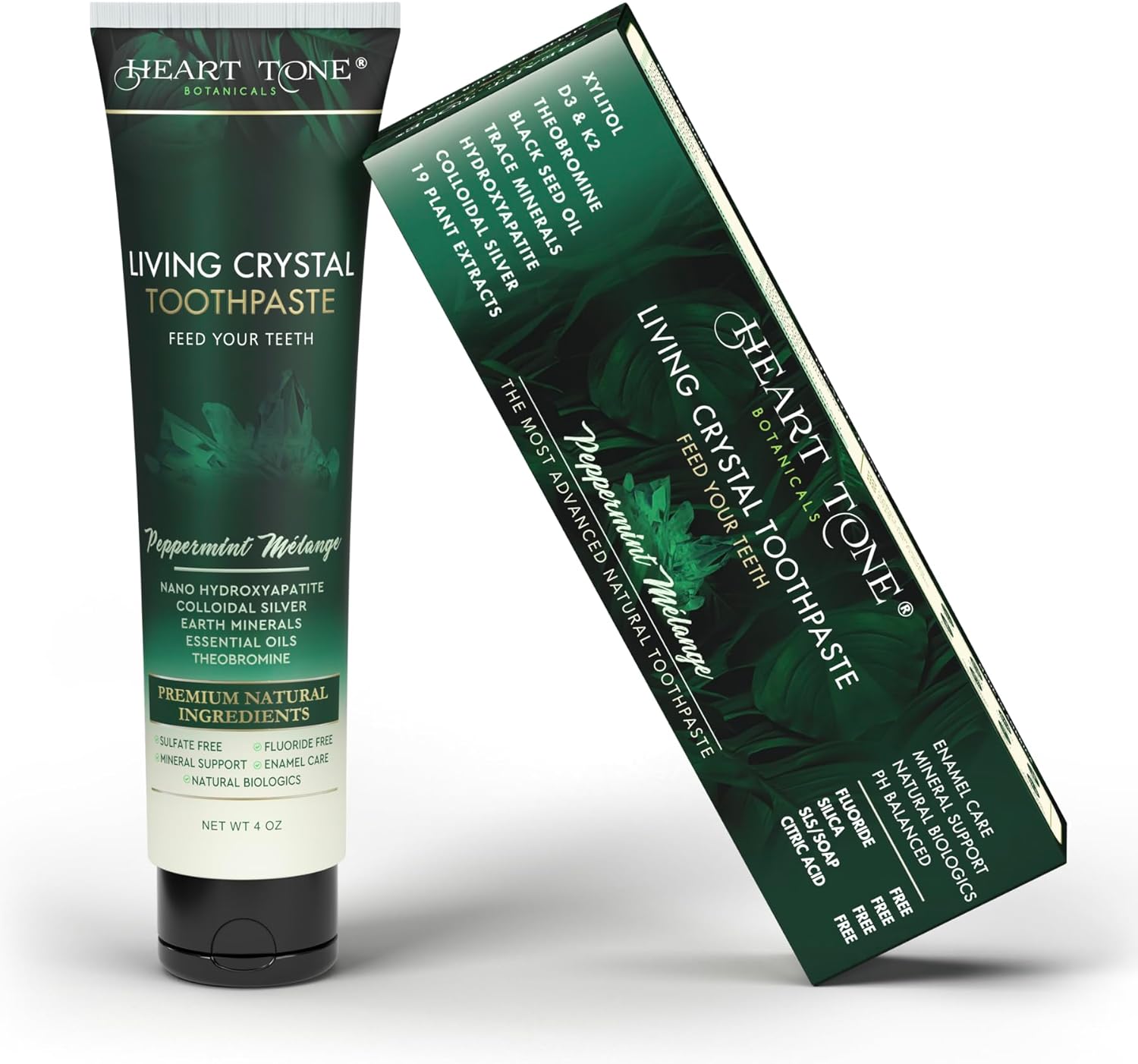
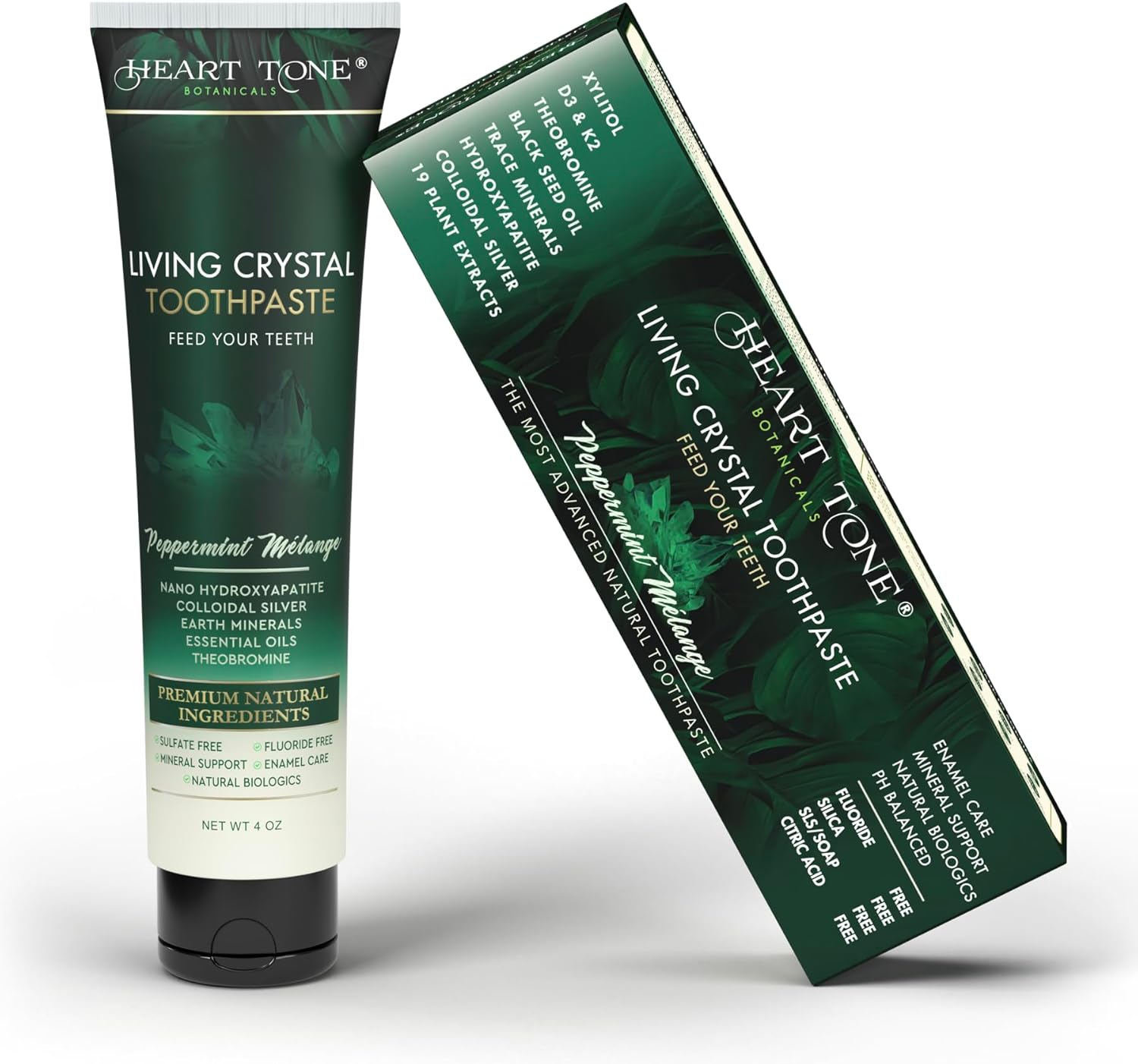
At Heart Tone Botanicals, we formulate Living Crystal Toothpaste with organic coconut oil as a core ingredient — not as an afterthought. It works alongside micro-hydroxyapatite, bentonite clay, kaolin clay, xylitol, neem, and colloidal silver to create a formula that cleans, remineralizes, and protects without any synthetic additives.
Every ingredient in Living Crystal is chosen for a reason, and coconut oil is there because it genuinely supports oral health — antibacterial, anti-inflammatory, and gentle enough for daily use.
For even stronger enamel protection, coconut oil pairs beautifully with theobromine (cacao extract), another natural ingredient in Living Crystal that promotes enamel remineralization.
The Bottom Line
Coconut oil is not a novelty ingredient in toothpaste — it is a functional one with real science behind it. If you are building a natural oral care routine, a coconut oil toothpaste that also includes hydroxyapatite, xylitol, and mineral clays gives you a comprehensive approach to cleaner, stronger teeth.
Ready to try a toothpaste that uses coconut oil the right way? See how Living Crystal compares in our best natural toothpaste 2026 buyer's guide.
Shop Living Crystal Toothpaste →

Frequently Asked Questions
Is coconut oil toothpaste safe for everyday use?
Yes. Coconut oil is gentle, non-toxic, and suitable for daily brushing. It does not contain harsh abrasives or synthetic chemicals that can wear down enamel over time.
Does coconut oil toothpaste whiten teeth?
Coconut oil can help remove surface stains through gentle cleansing action, but it is not a bleaching agent. For natural whitening support — see our guide to natural toothpaste for sensitive teeth for more, look for formulas that also include hydroxyapatite, which restores enamel smoothness and brightness.
Can kids use coconut oil toothpaste?
Most natural coconut oil toothpastes are safe for children, especially fluoride-free formulas. Always check the full ingredient list and consult your pediatric dentist if your child is under 2.
Is coconut oil toothpaste fluoride-free?
Many coconut oil toothpastes, including Living Crystal, are fluoride-free. They use alternative remineralizing agents like micro-hydroxyapatite instead. Learn more about what to look for in a fluoride-free toothpaste.
Going Deeper: Other Natural Remineralizing Ingredients
Coconut oil is just one part of a complete natural oral care formula. If you are exploring fluoride-free toothpastes, two other ingredients worth understanding are micro-hydroxyapatite and theobromine — both of which work alongside coconut oil in Living Crystal Toothpaste to actively rebuild enamel.
- Micro-Hydroxyapatite (mHAp) — the bioidentical mineral your enamel is made of, shown in clinical studies to repair surface lesions and reduce sensitivity
- Theobromine — a cacao-derived compound that stimulates the formation of larger, denser HAP crystals for a harder enamel surface. Read the full breakdown on theobromine and enamel remineralization →
Together, these three ingredients form a synergistic remineralizing system in Living Crystal Toothpaste — a fluoride-free formula designed for people who take their oral health seriously.
The Role of Antioxidants in Daily Oral Care
Coconut oil's lauric acid is one piece of a larger antioxidant picture for oral health. If you're serious about gum support, CoQ10 is another ingredient worth knowing about. Topical CoQ10 delivered via oil pulling has been shown in clinical research to reduce gum inflammation and support tissue repair — and it works best when applied directly against the gumline, which is exactly what oil pulling accomplishes.
See how it all fits together: CoQ10 for Oral Health: What This Antioxidant Does for Your Gums →
Looking to extend your natural care routine beyond oral health? Learn how colloidal silver works in natural deodorant — the same ingredient principle that makes HTB formulas uniquely effective.
Frequently Asked Questions About Coconut Oil Toothpaste
Is coconut oil toothpaste safe for daily use?
Yes. Coconut oil is a food-grade ingredient with a long history of oral use. In toothpaste concentrations, it's gentle enough for daily brushing and is well-tolerated by most people, including those with sensitive gums. Because it's oil-based, it won't cause the drying or irritation that SLS-containing toothpastes sometimes produce.
Does coconut oil toothpaste actually whiten teeth?
Coconut oil doesn't bleach enamel the way hydrogen peroxide does. However, it may reduce surface staining over time by limiting plaque adhesion — the biofilm that causes stains to stick. If whitening is a goal, look for formulas that also include micro-hydroxyapatite or activated charcoal alongside coconut oil.
Can coconut oil toothpaste replace oil pulling?
Not exactly. Oil pulling involves swishing oil in the mouth for 10-20 minutes — a mechanical process that lifts debris and bacteria from between teeth and along the gumline. Toothpaste with coconut oil delivers some of the same antimicrobial benefits during brushing, but the contact time is much shorter. For a complete routine, consider a dedicated oil pulling product alongside your toothpaste.
What makes coconut oil more effective in some toothpastes than others?
Formulation matters significantly. Coconut oil's benefits are most pronounced when it's combined with other antimicrobials (like colloidal silver or neem), remineralizing minerals (like micro-hydroxyapatite), and botanical extracts that support gum health. A toothpaste that uses coconut oil as its only active ingredient is less comprehensive than one that uses it as part of a layered formula.
Is coconut oil toothpaste fluoride-free?
Not necessarily — fluoride is a separate ingredient. Most natural toothpastes that feature coconut oil tend to be fluoride-free by design, but it depends on the brand and formula. Always check the ingredient list. Fluoride-free formulas should compensate with strong remineralizing ingredients like micro-hydroxyapatite.
Coconut Oil Toothpaste: Your Questions Answered
Are coconut oil toothpastes effective for everyday use?
Yes — coconut oil toothpastes are effective for everyday use when formulated with high-quality, cold-pressed coconut oil. The lauric acid in coconut oil actively targets Streptococcus mutans, the primary bacteria behind cavities, making it a functional antimicrobial ingredient you can rely on daily. Paired with remineralizing minerals like micro-hydroxyapatite, a well-made coconut oil toothpaste supports clean teeth, fresh breath, and long-term enamel health with every brush.
Are coconut oil toothpastes safe for sensitive teeth?
Absolutely. Coconut oil toothpastes are among the gentlest options for people with sensitive teeth. Unlike conventional formulas that rely on SLS (sodium lauryl sulfate) — a foaming agent known to cause irritation and temporary sensitivity spikes — coconut oil is oil-based and non-abrasive. It cleans without stripping. For sensitive teeth, look for a formula that combines coconut oil with micro-hydroxyapatite, which fills in microscopic enamel gaps that cause sensitivity over time. Our Living Crystal Toothpaste is specifically designed for this.
Does coconut oil toothpaste whiten teeth naturally?
Coconut oil won't bleach teeth the way peroxide does, but it does support a brighter smile over time by reducing the plaque biofilm that causes surface stains to stick. Daily use helps keep teeth cleaner and less prone to discoloration from coffee, tea, and food. For visible brightness, look for a formula that also includes micro-hydroxyapatite — it smooths enamel at a crystalline level, which naturally reflects more light.
Is coconut oil toothpaste better than regular toothpaste?
For most people who prioritize clean, natural ingredients, yes. Conventional toothpastes often contain SLS, artificial flavors, synthetic abrasives, and triclosan — none of which have a great track record with sensitive gums or long-term microbiome balance. Coconut oil toothpaste works with your mouth's natural defenses rather than against them. The key is finding a formula that also includes a remineralizing agent like micro-hydroxyapatite, so you get both cleanliness and cavity protection — no compromise needed. Living Crystal Toothpaste was built around exactly that principle.

Leave a comment
This site is protected by hCaptcha and the hCaptcha Privacy Policy and Terms of Service apply.