



You brush your teeth twice a day — but have you actually read what's in your toothpaste? Most commercial toothpastes contain ingredients that many health-conscious consumers are choosing to avoid. Here's what to look for on the label, why these ingredients are concerning, and what to use instead.
1. Sodium Lauryl Sulfate (SLS)
What it does: Creates foam. That's it.
The problem: SLS is a known irritant that can cause canker sores, dry mouth, and tissue sloughing. It strips the protective mucous lining in your mouth. The foam feels satisfying, but it's doing more harm than good. Research published in the Journal of Clinical Periodontology found that SLS-free toothpaste users experienced significantly fewer canker sore recurrences.
Use instead: Clay-based toothpastes that clean through gentle adsorption — pulling toxins out without stripping your mouth's natural defenses. Learn more in our deep dive: SLS Free Toothpaste: Why It Doesn't Belong in Your Mouth.

2. Triclosan
What it does: Antibacterial agent.
The problem: Linked to hormone disruption, antibiotic resistance, and environmental damage. The FDA banned it from hand soaps in 2016, but it still appears in some oral care products. A 2017 study in Science Translational Medicine found triclosan promoted intestinal inflammation and tumor growth in mice.
Use instead: Colloidal silver — a natural antibacterial that targets harmful bacteria without disrupting your oral microbiome. See the research: Colloidal Silver in Toothpaste: What the Research Says.
3. Artificial Sweeteners (Saccharin, Aspartame)
What it does: Makes toothpaste taste sweet.
The problem: Synthetic sweeteners may disrupt gut bacteria and offer zero oral health benefit. A 2014 Nature study found that artificial sweeteners altered the gut microbiome and glucose metabolism in both mice and humans.
Use instead: Xylitol — a natural sweetener derived from birch trees that actually fights cavity-causing bacteria. It starves Streptococcus mutans, the primary bacteria behind tooth decay. Read our full guide: Xylitol Toothpaste Benefits.
4. Artificial Colors (Blue 1, Yellow 5)
What it does: Makes toothpaste look pretty.
The problem: Petroleum-derived dyes linked to allergic reactions and hyperactivity in children. The European Food Safety Authority has imposed stricter regulations on these dyes, and several countries have banned them outright. Your toothpaste doesn't need to be neon blue.
Use instead: Nothing. Natural toothpaste gets its color from actual ingredients — clays, botanical extracts, and minerals.
5. Diethanolamine (DEA)
What it does: Another foaming agent.
The problem: DEA can react with other ingredients to form nitrosamines, which are potential carcinogens. It's already restricted in cosmetics in the EU and Canada. The California EPA lists DEA as a possible human carcinogen.
Use instead: Coconut oil — a natural cleanser that helps break down plaque and provides antimicrobial benefits without any synthetic foaming agents.
6. Propylene Glycol
What it does: Keeps toothpaste from drying out.
The problem: This is industrial antifreeze. While the FDA considers it "generally recognized as safe" in small amounts, it's a skin and eye irritant, and there's growing concern about cumulative exposure across multiple daily products (toothpaste, deodorant, moisturizer, food).
Use instead: Plant-based glycerin and aloe vera — natural humectants that keep formulas moist without industrial chemicals.
7. Microbeads (Polyethylene)
What it does: Abrasive scrubbing particles.

The problem: Plastic microbeads are environmental pollutants that end up in waterways and oceans. They can also get trapped under your gumline, creating pockets for bacterial growth. The U.S. banned microbeads in rinse-off cosmetics in 2015, but they still appear in some products.
Use instead: Bentonite clay and kaolin clay — natural minerals that provide gentle cleaning through adsorption (attracting toxins) rather than abrasion. Check our guide to low abrasion toothpaste to understand why RDA matters.
8. Fluoride (Controversial but Worth Discussing)
What it does: Strengthens enamel and prevents cavities.
The debate: Fluoride works — the science is clear on that. But growing research supports effective alternatives like hydroxyapatite, which remineralizes enamel without the toxicity concerns of fluoride ingestion (especially relevant for children). A 2025 peer-reviewed study confirmed that 5% nano-hydroxyapatite performed on par with fluoride for cavity prevention.
Use instead: Micro-hydroxyapatite — a biocompatible mineral that makes up 97% of your tooth enamel. It fills micro-cracks, remineralizes damaged areas, and reduces sensitivity — all without fluoride's risks. Learn more: Hydroxyapatite vs Fluoride: Which Is Better for Your Teeth?
9. Carrageenan
What it does: Thickening agent derived from seaweed.
The problem: Degraded carrageenan (poligeenan) has been linked to gastrointestinal inflammation in animal studies. While food-grade carrageenan is different, the International Agency for Research on Cancer classifies degraded carrageenan as a possible carcinogen. Why take the chance when safer alternatives exist?
Use instead: Natural thickeners like xanthan gum or cellulose from plant sources — or clay-based formulas that don't need synthetic thickeners at all.
10. Parabens (Methylparaben, Propylparaben)
What it does: Preservatives to extend shelf life.
The problem: Parabens mimic estrogen in the body and have been detected in breast tumor tissue. The EU has restricted the use of certain parabens in cosmetics, and Denmark has banned them in products for children under 3.
Use instead: Essential oils with natural antimicrobial properties (like neem and tea tree), theobromine from cacao, and proper formulation techniques that keep products stable without synthetic preservatives.
What Living Crystal Uses Instead
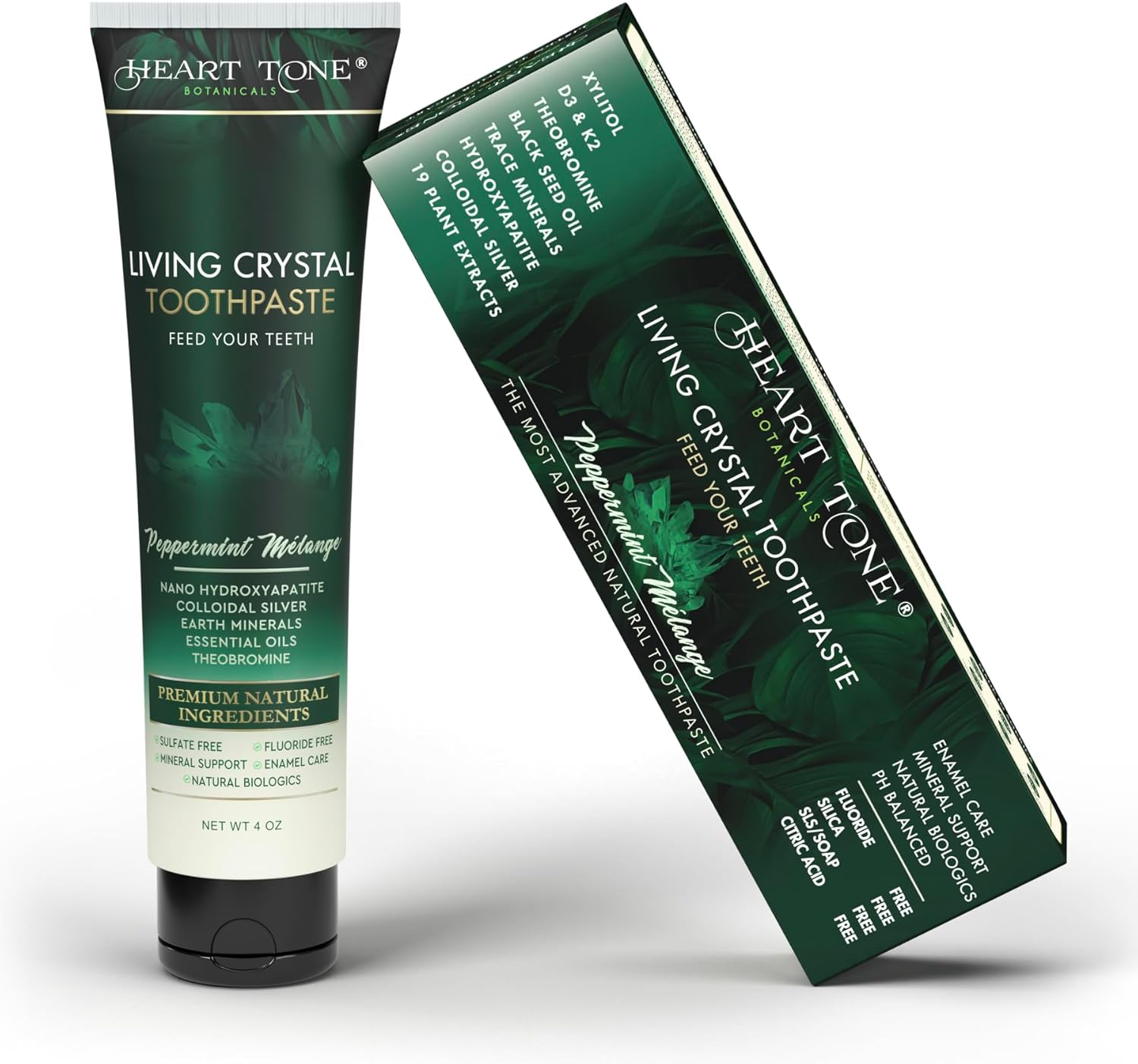
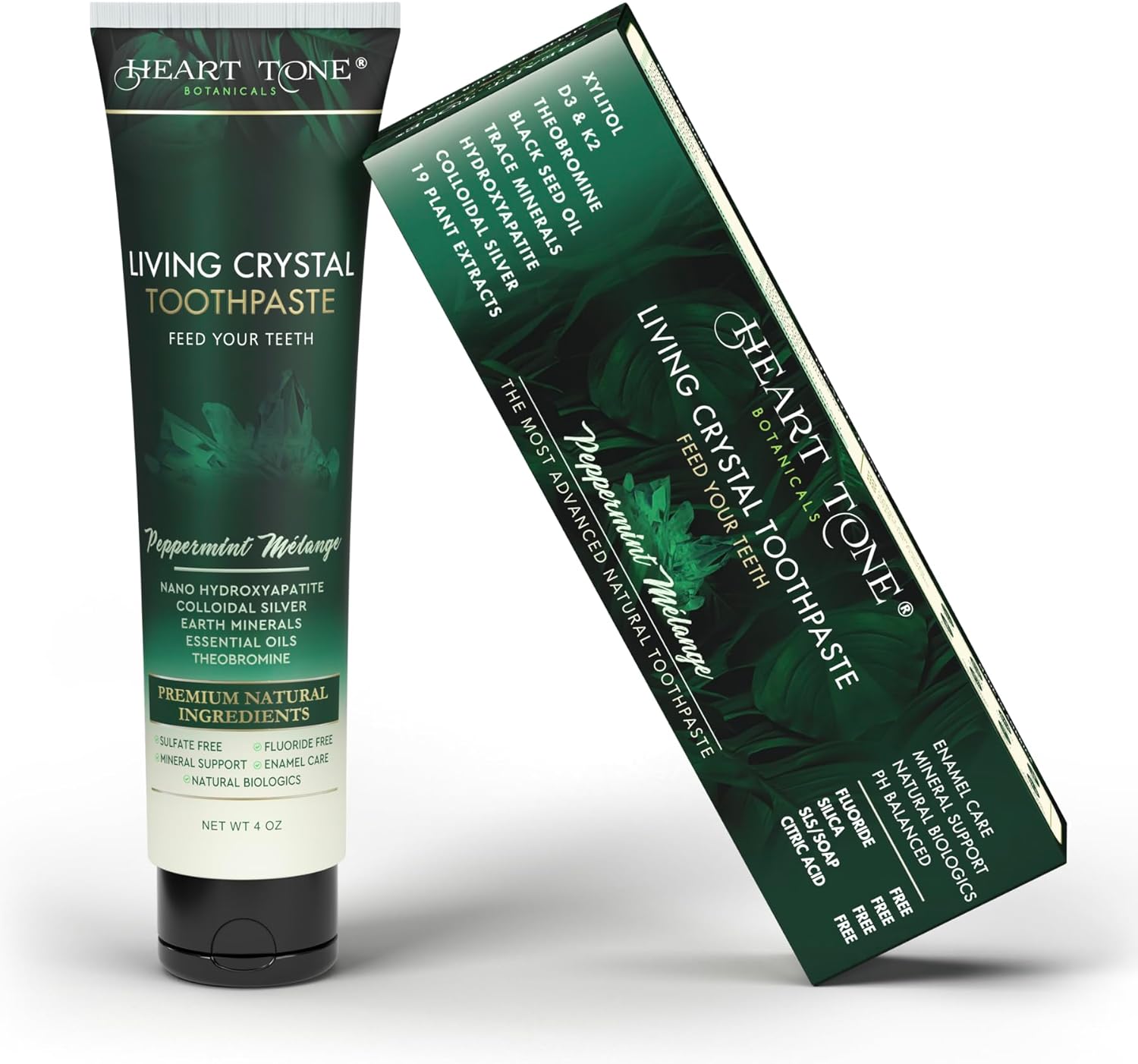
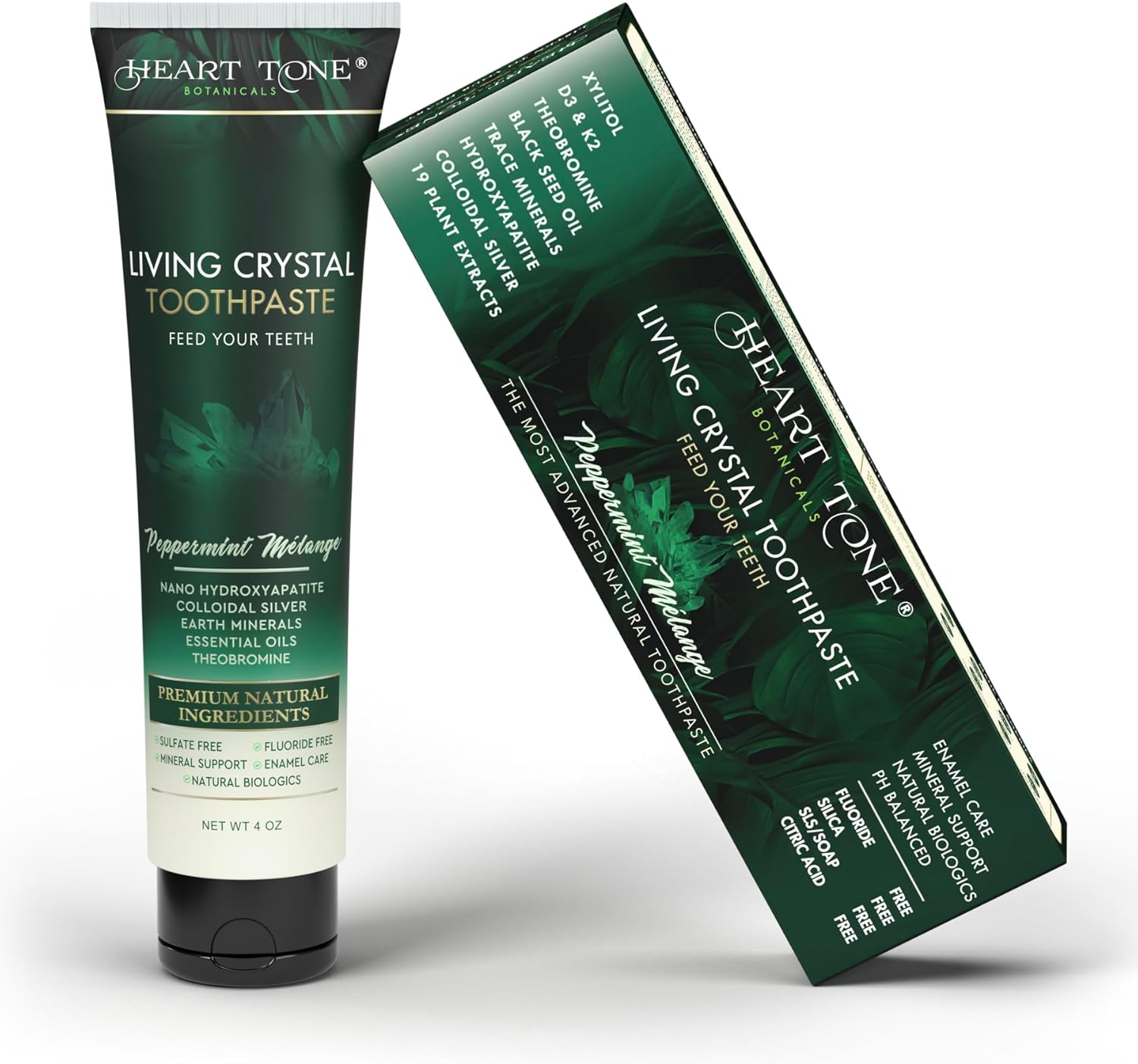
Our Living Crystal Toothpaste contains none of these harmful ingredients. Instead, it's loaded with 19 botanical extracts, micro-hydroxyapatite, colloidal silver, xylitol, coconut oil, and two types of clay — all designed to feed, protect, and remineralize your teeth naturally.
Every ingredient is chosen for a purpose. No fillers, no foam for foam's sake, no artificial anything. Just clean, effective oral care from ingredients you can actually pronounce.
Want to understand exactly how these natural ingredients work? Explore our ingredient deep-dives:
- Hydroxyapatite vs Fluoride — the remineralization comparison
- Colloidal Silver in Toothpaste — the antibacterial science
- Xylitol Toothpaste Benefits — the cavity-fighting sweetener
- Bentonite Clay Toothpaste — the gentle cleanser
- Coconut Oil in Toothpaste — the natural antimicrobial
- Theobromine in Toothpaste — the enamel strengthener from cacao
- Neem for Oral Health — the ancient antibacterial
- Fluoride Free Toothpaste Guide — what to look for
Frequently Asked Questions
Are these ingredients actually dangerous?
Most of these ingredients are considered "generally recognized as safe" by the FDA at low concentrations. The concern isn't usually a single exposure — it's cumulative. You use toothpaste twice daily for your entire life. That adds up. When safer, equally effective alternatives exist, there's little reason to accept unnecessary chemical exposure.
Is fluoride really bad for you?
Fluoride is effective at preventing cavities — that's well established. The concern is primarily about ingestion risk (especially for children who swallow toothpaste) and cumulative exposure from multiple sources (water, food, dental treatments, toothpaste). Hydroxyapatite offers comparable remineralization without the ingestion concerns, which is why it's the standard in Japanese dental care.
How do I know if my current toothpaste contains these ingredients?
Flip the tube over and read the inactive ingredients list. SLS is often listed as "sodium lauryl sulfate" or "sodium laureth sulfate." Parabens appear as "methylparaben" or "propylparaben." Artificial sweeteners show up as "saccharin" or "sodium saccharin." If you see any of these, you have options.
What should I look for in a clean toothpaste?
Look for: micro-hydroxyapatite (remineralization), xylitol (cavity protection), natural clays (gentle cleaning), colloidal silver (antibacterial), and botanical extracts. Avoid: SLS, triclosan, artificial sweeteners, artificial colors, parabens, and microbeads. See our full guide: What to Look For in a Cleaner Formula.
Is natural toothpaste as effective as conventional toothpaste?
When formulated with clinically supported ingredients like hydroxyapatite, xylitol, and colloidal silver — yes. A 2025 study confirmed that 5% hydroxyapatite matches fluoride for cavity prevention. The key is choosing a natural toothpaste with active ingredients, not just one that removes harmful ones. Our Living Crystal has an RDA of just 35 — ultra-low abrasion with maximum effectiveness.
Explore our full Oral Care collection — toothpaste, mouthwash, and oil pulling formulas made with ingredients you can trust.

Leave a comment
This site is protected by hCaptcha and the hCaptcha Privacy Policy and Terms of Service apply.