

Gum health is one of the most underestimated parts of a daily oral care routine. Most people think about cavities, whitening, and fresh breath — but healthy gums are the foundation everything else depends on. When gums start to recede, bleed, or become inflamed, it usually means something in the routine needs to change.

One of the simplest changes? Switching to a natural mouthwash that actually supports gum tissue instead of irritating it.
Why Conventional Mouthwash Can Hurt Your Gums
Most drugstore mouthwashes rely on alcohol as their primary antiseptic agent. While alcohol does kill bacteria, it also dries out the soft tissue in your mouth, strips away the protective mucous layer, and can irritate gums that are already inflamed. Over time, this cycle of irritation can actually make gum problems worse, not better.
Other common ingredients like sodium lauryl sulfate (SLS), artificial dyes, and synthetic fragrances add to the irritation load without contributing anything meaningful to gum health.
If your mouthwash burns, that's not it "working" — that's your gums telling you something is wrong.
What to Look For in a Natural Mouthwash for Gums
A mouthwash that genuinely supports gum health should do three things: reduce harmful bacteria without destroying the entire oral microbiome, soothe inflammation in gum tissue, and help maintain a balanced pH environment in the mouth.
Here are the ingredients that actually deliver on those goals:
Aloe Vera
Aloe vera has been studied for its anti-inflammatory and wound-healing properties in the mouth. Research has found aloe-based mouthwashes to be as effective as chlorhexidine — the gold standard prescription rinse — for reducing plaque and gingivitis symptoms, but without the staining or taste disruption that comes with chlorhexidine use.
Neem
Neem has a long history in Ayurvedic oral care. Its antibacterial and anti-inflammatory compounds help reduce plaque-forming bacteria while calming irritated gum tissue. Neem works gently rather than aggressively, which makes it a better fit for people already dealing with sensitivity or early-stage gum issues.

Sage and Green Tea
Both sage and green tea contain natural compounds — catechins in green tea, and antibacterial terpenes in sage — that support periodontal health. A 2024 study found sage mouthwash significantly improved clinical signs of periodontitis. Green tea catechins fight oxidative stress in gum tissue and help reduce the bacterial load that drives inflammation.
Coconut Oil and Oil Pulling
Oil pulling — swishing coconut or sesame oil for 10 to 20 minutes — has been shown in multiple studies to reduce Streptococcus mutans levels, lower plaque scores, and improve gingival health. While it takes longer than a 30-second rinse, it works through a different mechanism (saponification and bacterial adhesion) that complements a rinse rather than replacing it. Learn more about oil pulling and how it works.
Xylitol
Xylitol doesn't just help prevent cavities — it also reduces the bacterial populations most associated with gum disease. By starving harmful bacteria of the sugars they need to produce acids and biofilm, xylitol supports a cleaner environment around the gum line where plaque tends to accumulate. Read more about xylitol's role in oral care.
What to Avoid
When choosing a mouthwash for gum support, avoid these ingredients that can undermine the goal:
- Alcohol (ethanol): Dries tissue, disrupts the oral microbiome, and can worsen recession over time.
- SLS (sodium lauryl sulfate): A foaming agent linked to canker sores and tissue irritation.
- Artificial dyes and flavors: No clinical benefit, with potential for sensitivity reactions.
- Chlorhexidine (long-term use): Effective short-term but causes staining, taste alteration, and microbiome disruption with extended use.
Building a Gum-Supportive Routine
A good mouthwash matters, but it works best as part of a complete routine:
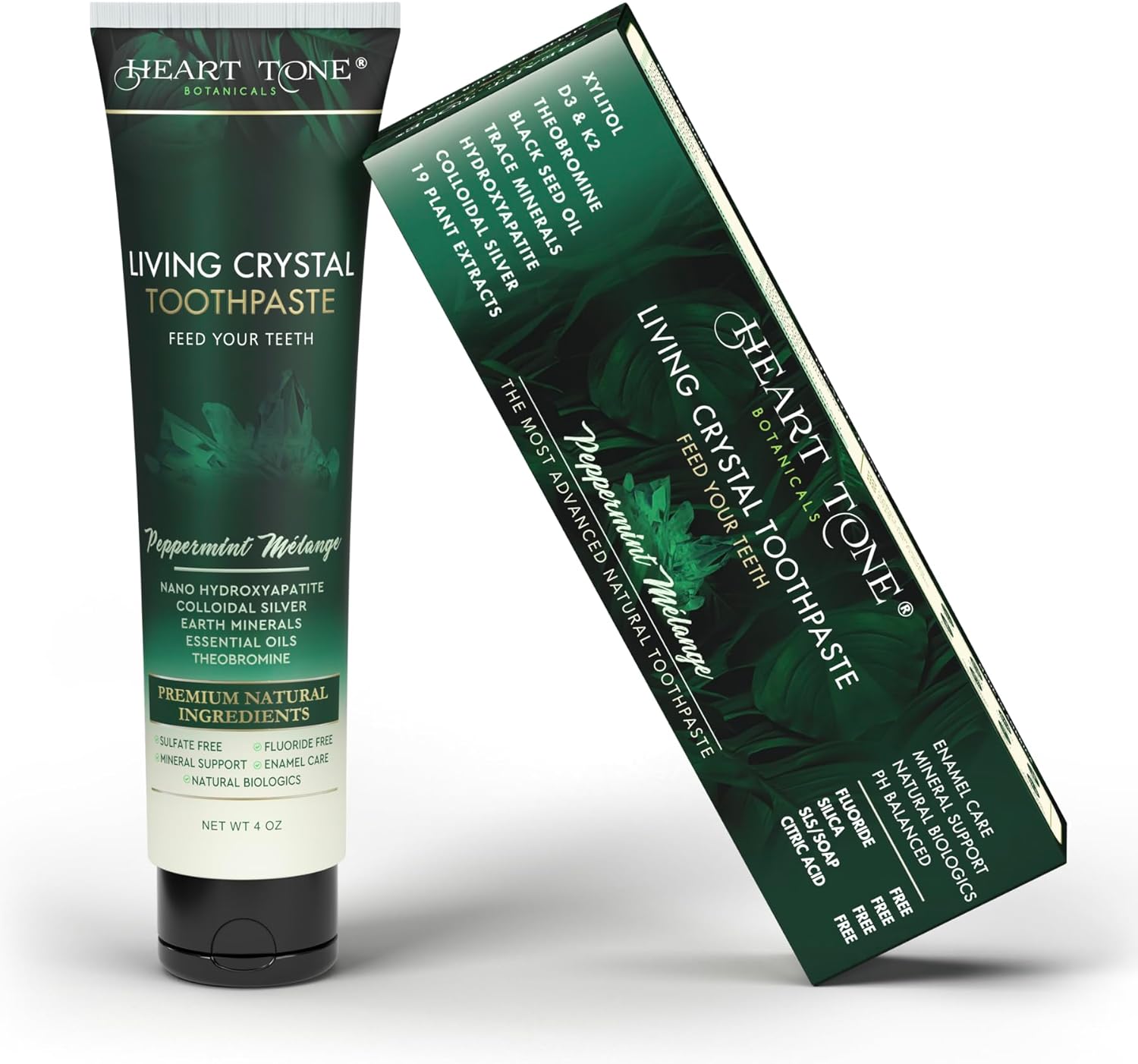
- Brush with a gentle, low-abrasion toothpaste that won't wear down enamel at the gum line. Living Crystal Toothpaste has a lab-tested RDA of just 35 — one of the lowest available — making it a strong choice for anyone concerned about gum recession. Learn why RDA matters for your enamel.
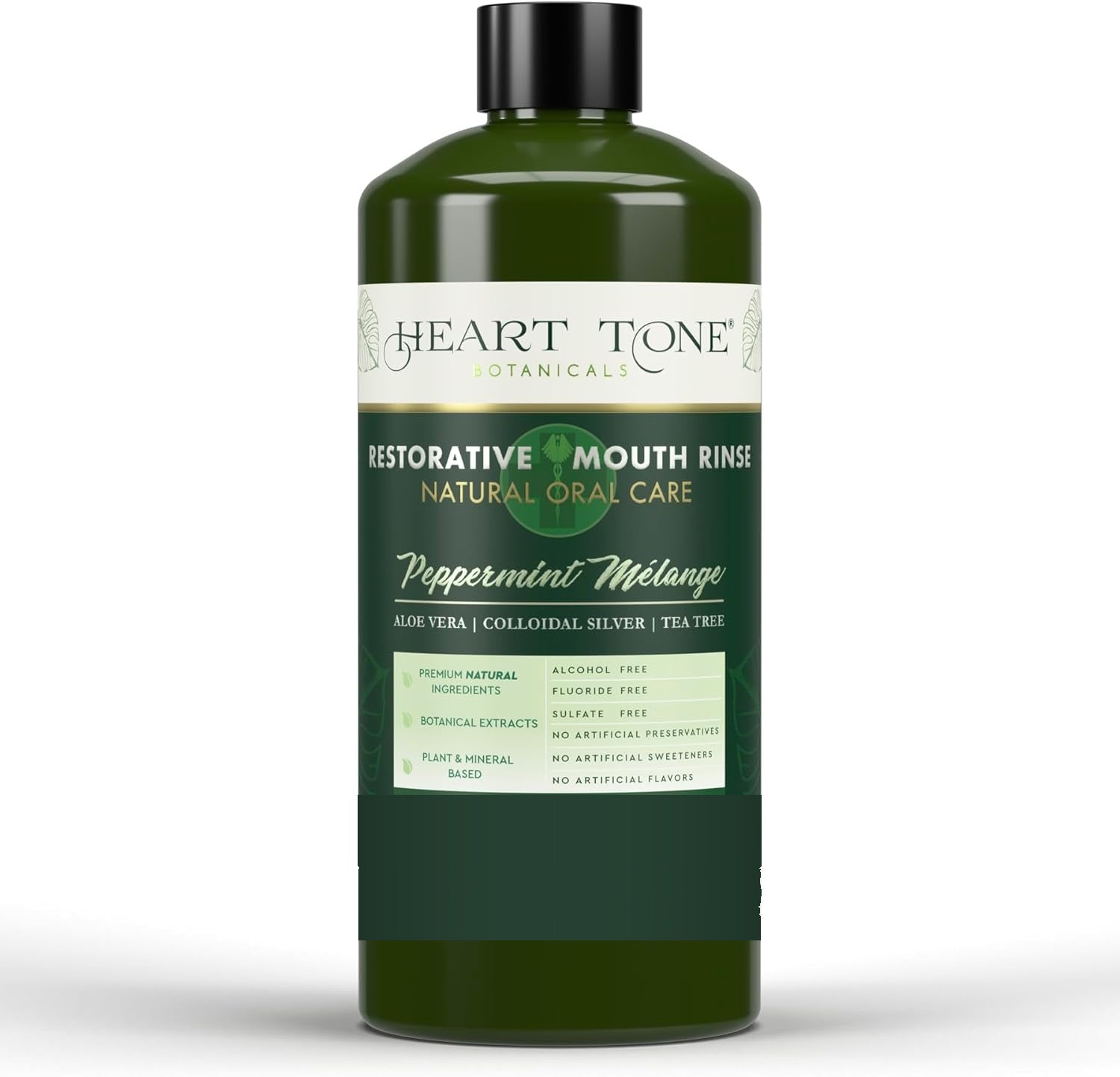
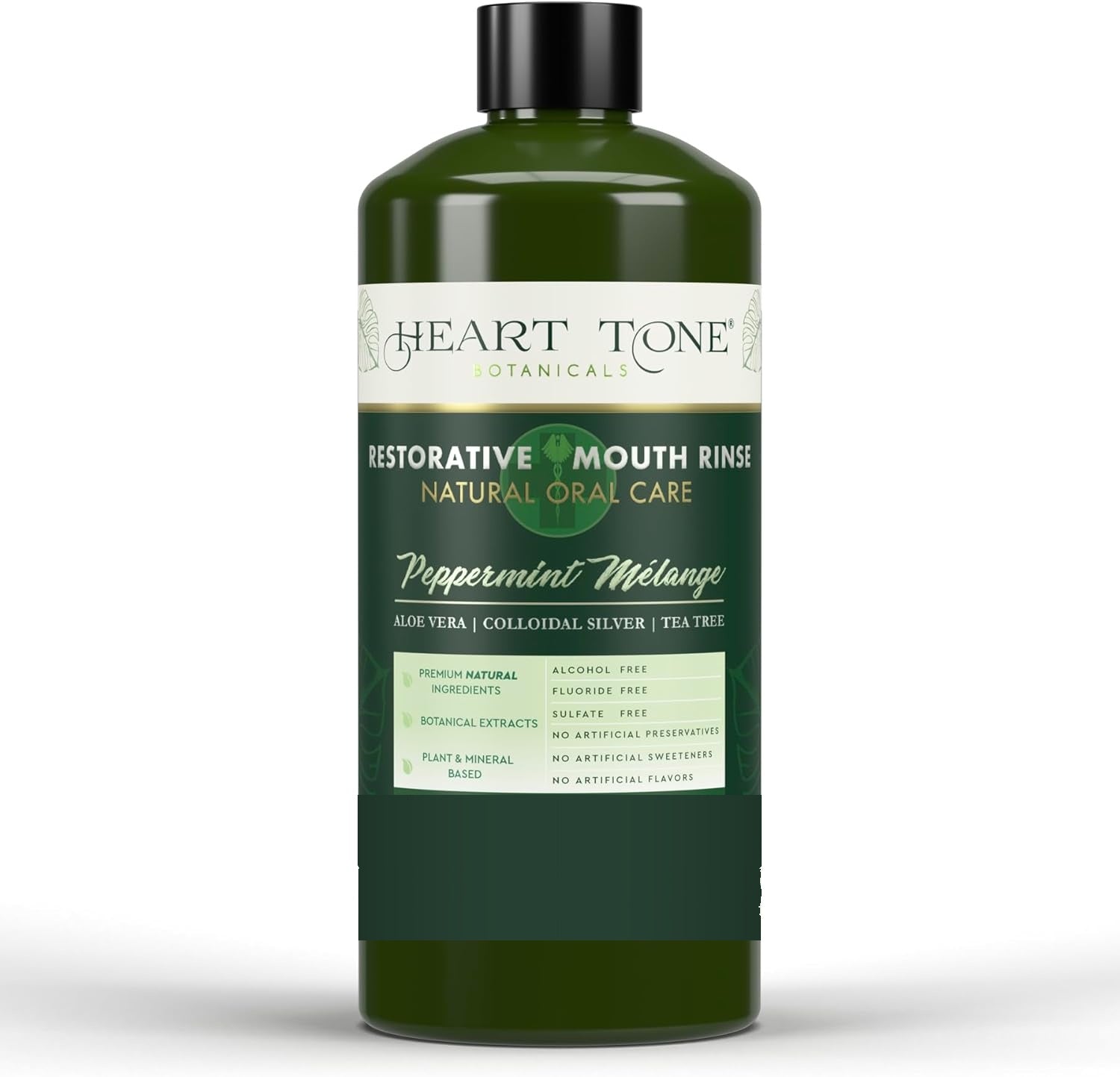
- Rinse with a natural, alcohol-free mouthwash that uses plant-based antimicrobials instead of harsh chemicals. Restorative Mouth Rinse is formulated with aloe, neem, and botanical extracts specifically chosen to support gum tissue. Read about the benefits of alcohol-free mouthwash.
- Add oil pulling 2-3 times per week for deeper bacterial reduction around the gum line. Antioxidant Oil Pull makes the practice easier with a pre-blended formula that includes antioxidant-rich oils.
Healthy gums don't happen by accident. They happen when every part of the routine is working together — and none of it is working against you.
The Heart Tone Approach
At Heart Tone Botanicals, our oral care line was built around the idea that what goes into your mouth matters as much as what goes onto your skin. Every ingredient in our oral care collection is chosen for a reason — grown on our own natural regenerative family farm in Vero Beach, Florida, pesticide-free, and formulated without the synthetic fillers that most brands rely on.
When JD and Christina started Heart Tone, they weren't trying to build a brand. They were trying to find products they could trust for their own family. That mission hasn't changed — and it's why every bottle of Restorative Mouth Rinse is still handcrafted in small batches.

Leave a comment
This site is protected by hCaptcha and the hCaptcha Privacy Policy and Terms of Service apply.