

Walk down any skincare aisle and you will find rose hydrosol and rose water sitting side by side, often at wildly different prices, frequently described in identical language. Most shoppers assume they are two names for the same thing.
They are not — or at least, they are not reliably the same thing. One of those terms describes a specific production process. The other is a loose retail phrase that a brand can attach to several very different liquids without saying anything untrue.
This is a plain-language look at what a hydrosol actually is, the plant behind rose hydrosol, why the naming is such a mess, and how to tell which one is in the bottle by reading the ingredient list. No claims about what it does for your face — just what it is and how to identify it.
What a hydrosol actually is
A hydrosol is the aromatic water that comes off a steam distillation.
The mechanics are simple. Plant material — petals, leaves, wood, resin — is loaded into a still, and steam is passed through it. The steam carries the plant's volatile aromatic compounds with it, then travels into a condenser and turns back into liquid. What collects at the bottom is two layers: a thin film of essential oil floating on top, and a much larger volume of water underneath.
That water underneath is the hydrosol. It is not plain water with something added to it afterward. It is water that went through the plant.
An essential oil and its hydrosol come out of the same still, in the same run, from the same plant material. They are two products of one process, not a product and its leftovers.
You will sometimes see hydrosols described as a “byproduct” of essential oil production. That framing is a historical accident more than a description. For a long time distillers were chasing the oil and the water was poured off; today plenty of distillers run batches specifically for the hydrosol, and the handling — how clean the still is, how the water is collected, filtered, and stored — is treated as its own craft.
The plant behind rose hydrosol
The rose in question is usually Rosa damascena, the damask rose. It is a hybrid species with a very old cultivation history and a fairly narrow set of growing regions: the Kazanlak valley in Bulgaria, Isparta in Turkey, and parts of Iran, with smaller production in Morocco, India, and Afghanistan.
The agronomy is the reason anything rose-derived is expensive:
- The harvest window is measured in weeks. Damask rose blooms for a short stretch in late spring, and that is the whole year.
- Picking happens before sunrise. The blossoms are gathered by hand in the dark and the early morning hours, because the volatile aromatic fraction is at its highest before the sun is fully on the field, and it drops as the day heats up.
- Petals have to reach the still fast. Harvested blossoms are distilled the same day; the material does not keep.
- The oil yield is famously tiny. Rose otto is one of the lowest-yielding essential oils in commercial distillation — the petal tonnage required to fill a small bottle is the reason it is priced the way it is.
The hydrosol comes off that same run. It is far more abundant than the oil, which is why a rose hydrosol is a realistic ingredient to build a formula around and rose otto generally is not.
Where the naming gets messy
Here is the part worth actually memorizing, because it is where the money goes.
“Rose water” is not a regulated production term. On a label it can point to at least three different things:
- A true distillate. Genuine rose hydrosol, sold under the more familiar name. This is the honest use of the phrase, and it is common in culinary and traditional contexts where “rose water” has meant distilled rose water for centuries.
- Water plus a rose extract. A water base with a rose-derived extract mixed into it. Not distilled — assembled. This is a legitimate ingredient in its own right, but it is a different material with a different aroma and a different cost structure.
- Water plus fragrance. A water base scented to smell like rose, sometimes with a small amount of rose material present and sometimes with none at all.
All three can be described in marketing copy with the same soft, romantic vocabulary. Only the ingredient list separates them.
How to read it on an ingredient list
The INCI list settles it. A few things to look for:
- A distillate names the plant and the format. Rosa Damascena Flower Water is the INCI name for the distilled hydrosol. Rosa Damascena Flower Extract is a different material — an extract, not a distillate.
- Check what is listed first. INCI is ordered by concentration. A formula that opens with a hydrosol is built on the distillate. A formula that opens with Aqua and lists a flower water further down is mostly water with some hydrosol in it. Neither is wrong; they are just not the same product.
- Look for Aqua and Parfum together. Water plus fragrance, with the rose living in the fragrance, is a formula whose rose character is a scent decision.
- Watch for the species. A label that writes out Rosa damascena is being specific on purpose — the same discipline a careful label uses when it names the exact form of witch hazel instead of just saying “witch hazel.”
- Water-based means preservation matters. Anything built on a hydrosol is a water-containing formula, and water-containing formulas need a deliberate preservation strategy. A brand that can explain theirs is a brand that has thought about it.
Orange blossom, neroli, and the same confusion again
Rose is not the only botanical with a naming problem. The bitter orange tree, Citrus aurantium, produces one of the most confusingly labeled sets of materials in the whole aromatic trade — and all of it comes from the same tree:
- Neroli is the essential oil steam-distilled from the blossoms.
- Orange blossom hydrosol is the aromatic water from that same distillation. It is also sold as neroli hydrosol and as orange flower water. Three names, one material.
- Petitgrain is the oil distilled from the leaves and twigs of that same tree — a different part of the plant, a noticeably different aroma.
So when you see “orange blossom hydrosol” on one label and “neroli hydrosol” on another, you are most likely looking at the same distillate under two market names. That is worth knowing before you pay a premium for one over the other.
What it smells like — and why that varies
A real rose hydrosol does not smell like rose perfume. That is the most common surprise.
Perfume rose is a constructed accord, built to be loud and consistent from bottle to bottle. A distillate is the water-soluble slice of an actual plant, and it tends to read greener, softer, and more herbaceous than people expect, with the sweetness sitting further back. It is also quieter. If a “rose water” hits you with candy-shop rose from across the room, that intensity is a formulation choice, not a sign of concentration.
It also shifts. Growing season, rainfall, petal maturity, the specific still, and how the batch has been stored all move the aroma year to year. Batch variation is a normal feature of distilled plant material, in the same way it is for a resin extract like frankincense.
Where rose hydrosol shows up in our formulas
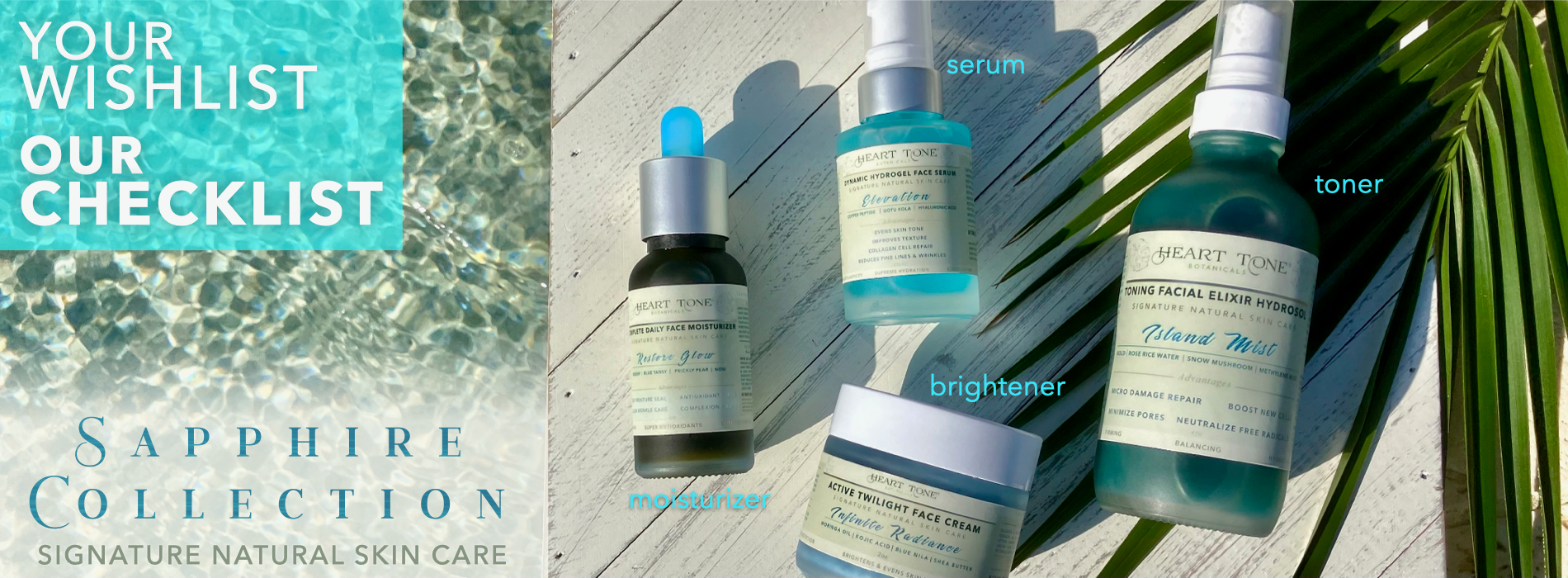
Two of our facial products are built on hydrosols rather than on plain water, and the ingredient lists say so in the first position.
Island Mist Toning Facial Elixir Hydrosol lists rose hydrosol and orange blossom hydrosol near the top of its INCI, alongside fermented rice water, witch hazel, aloe, colloidal gold, snow mushroom extract, frankincense serrata CO2, and methylene blue.
The Dynamic Hydrogel Face Serum opens with rose hydrosol and neroli hydrosol — there it is again, the same distillate under its other name — followed by aloe vera leaf juice, radish root ferment, and lactobacillus ferment.
That is a formulation decision with a cost attached: hydrosols are more expensive than water and they have to be handled more carefully. We think the ingredient list is the honest place to show it, which is why we would rather teach you to read one than ask you to trust an adjective.
The short version
A hydrosol is the aromatic water from a steam distillation — a real product of a real still, not water with something stirred in. “Rose water” may mean exactly that, or it may mean two other things entirely. The ingredient list is the only place the difference shows up, and it takes about five seconds to check.

Leave a comment
This site is protected by hCaptcha and the hCaptcha Privacy Policy and Terms of Service apply.