

Methylene blue has a long history in science and medicine — but its appearance in modern skincare formulas is recent, and the reasons researchers are paying attention are worth understanding for anyone navigating the clean beauty landscape in 2026.
What Is Methylene Blue?
Methylene blue (MB) is a compound first synthesized in 1876 by German chemist Heinrich Caro. Its original applications were industrial — a vivid blue textile dye — but it quickly found serious medical use as an antifungal, antimalarial agent, and treatment for methemoglobinemia, a blood oxygen disorder. It's been on the WHO's List of Essential Medicines for decades.
What distinguishes it in a skincare context is its behavior as a redox-active compound — meaning it can cycle between an oxidized (blue) and a reduced (colorless) form. In doing so, it acts as an electron carrier, shuttling electrons away from reactive oxygen species (ROS) that would otherwise damage cellular structures.
Why Researchers Are Looking at Methylene Blue for Skin
What sets methylene blue apart from most topical antioxidants is its apparent ability to penetrate skin effectively and accumulate near mitochondria — the cellular organelles responsible for energy production and a central focus of biological aging research.
Standard topical antioxidants like vitamin C and vitamin E primarily scavenge ROS at or near the cell surface. Methylene blue, because of its small molecular size and electrical charge, can cross mitochondrial membranes — a property most plant-derived antioxidants simply cannot replicate.
A 2017 study published in Scientific Reports (Lee et al.) explored methylene blue in human fibroblast cell cultures. The researchers found that it reduced markers associated with cellular aging, appeared to support normal cell division cycles, and significantly reduced intracellular ROS — reactive oxygen species that accumulate with age. The authors noted that its mitochondria-targeting behavior distinguished it from conventional antioxidant compounds.
This early research has since generated substantial interest in longevity science and premium skincare formulation — though clinical studies on topical application in live subjects remain ongoing.
Methylene blue doesn't just scavenge surface-level reactive oxygen species — its small molecular charge allows it to reach mitochondria, where most cellular ROS production begins.
Methylene Blue in Skincare Formulations
In skincare applications, methylene blue is used at trace concentrations. At these levels, it contributes antioxidant activity.
Its water solubility makes it well-suited for hydrosol-based and water-phase formulations: toners, mists, and serums where it can be suspended without an oil carrier. This is a distinct advantage over fat-soluble antioxidants like CoQ10 or vitamin E, which require emulsification to appear in water-based products.
In a spray-format facial hydrosol, methylene blue travels alongside water-based actives and deposits on the skin surface when the mist is applied — where its redox cycling can begin immediately on contact.

Methylene Blue in Island Mist Toning Facial Elixir
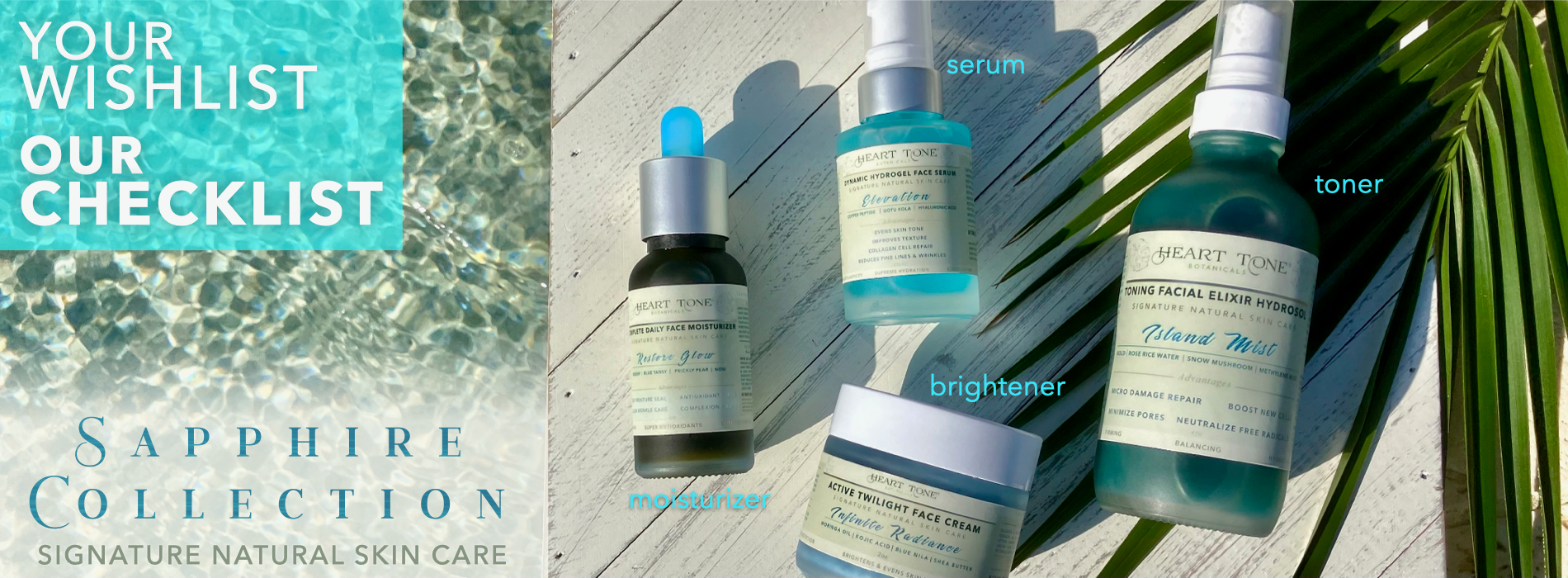
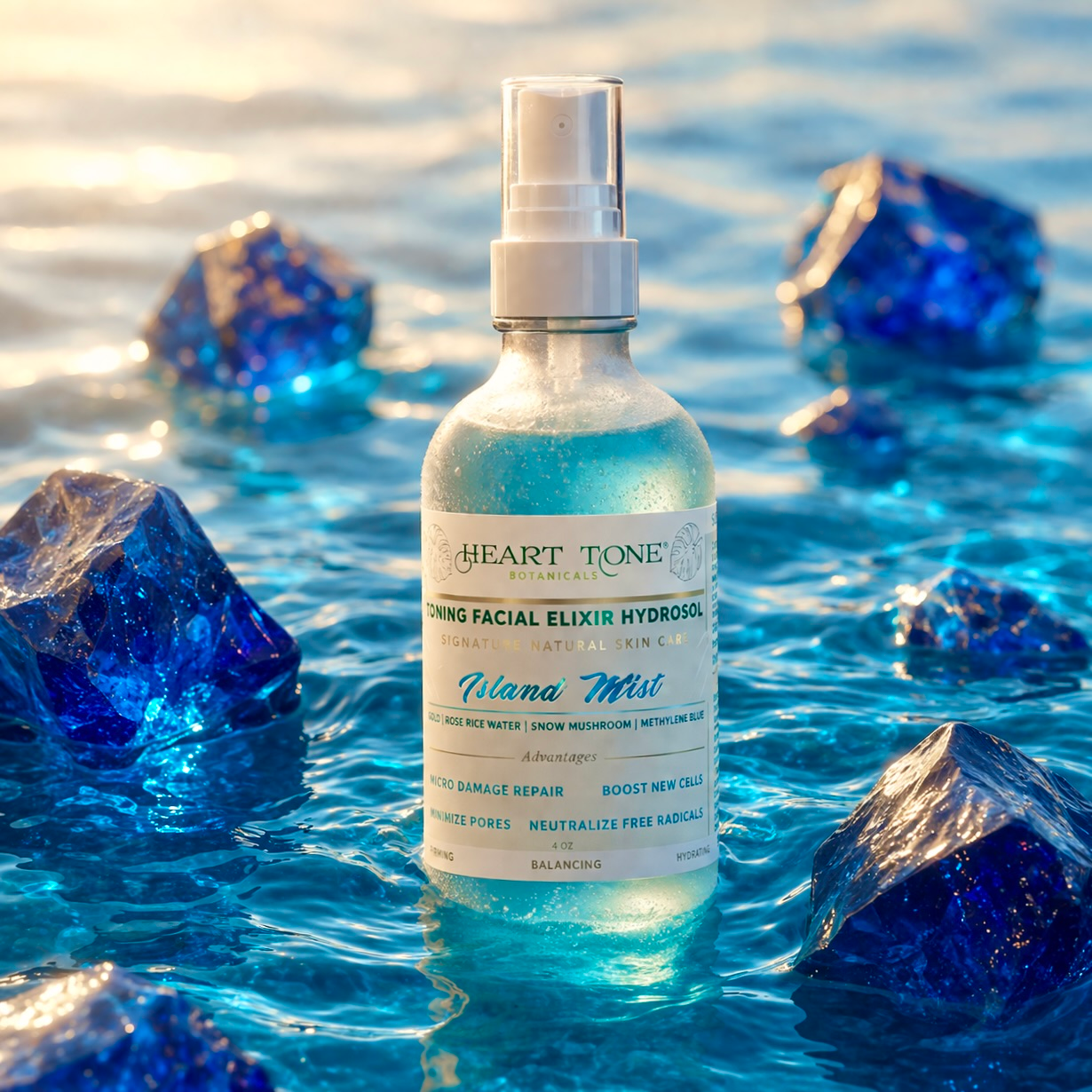
Island Mist Toning Facial Elixir Hydrosol by Heart Tone Botanicals includes methylene blue alongside an unusually layered formula of botanical actives: colloidal gold, snow mushroom extract, rose and orange blossom hydrosols, fermented organic rice water, frankincense serrata CO2 extract, and aloe vera leaf juice extract.
Here's how each key ingredient contributes to the overall formula:
- Methylene Blue: Redox-active compound explored for mitochondria-targeting antioxidant behavior.
- Colloidal Gold: Gold nanoparticles studied for antioxidant. Pairs with methylene blue as a complementary antioxidant mechanism
- Snow Mushroom Extract (Tremella fuciformis): A branched-chain polysaccharide network that creates a moisture-retention film on skin. Research suggests it outperforms hyaluronic acid for surface hydration because its branched structure covers more surface area. Read the full snow mushroom breakdown →
- Rose & Orange Blossom Hydrosols: The water-phase distillates of Rosa damascena and Citrus aurantium flowers. Hydrosols contain water-soluble botanical compounds and mild aromatic actives without the concentration or potential sensitivity of essential oils.
- Fermented Organic Rice Water: Fermentation increases bioavailability of ferulic acid, kojic acid precursors, and amino acids naturally present in rice water. The fermentation process breaks larger polysaccharide molecules into smaller fractions that penetrate more easily into the upper skin layers.
- Frankincense Serrata CO2 Extract: Boswellic acids derived through supercritical CO2 extraction — a process that preserves heat-sensitive terpenic compounds that steam distillation would degrade. Frankincense CO2 is studied for 5-LOX enzyme pathway activity, relevant to skin sensitivity and redness.
The Alcohol-Free, Botanical Context
Island Mist is alcohol-free, paraben-free, GMO-free, and free from synthetic fragrances. This matters in the context of methylene blue because alcohol-based toners can disrupt the skin barrier — reducing the effectiveness of active botanicals. A hydrosol base delivers moisture rather than stripping it.
For people transitioning from conventional alcohol-forward toners, the shift to a hydrosol-based formula with botanical actives represents a meaningfully different skin experience: hydration rather than astringency, softening rather than tightening through dehydration.
How to Use Island Mist
Island Mist is designed for the toning step — after cleansing and before serums or moisturizer. As a mist, it's applied by spraying directly onto clean skin.
- Cleanse and gently pat skin until barely damp
- Hold Island Mist 6–8 inches from face and mist evenly
- Allow to absorb for 20–30 seconds
- Apply serum or moisturizer while skin is still slightly damp
The slight residual dampness creates an ideal surface for serums to penetrate — a technique often referred to as "damp skin application" in professional skincare contexts. The colloidal gold and snow mushroom polysaccharides in Island Mist contribute to this effect by forming a light film that keeps moisture from evaporating too quickly.
Methylene Blue and the 2026 Longevity Skincare Trend
Methylene blue is part of a broader shift in premium skincare toward compounds studied in longevity and cellular biology research. Where previous skincare innovation focused on surface-acting actives — alpha hydroxy acids, niacinamide, retinol — the newer generation of formulations incorporates compounds like NAD+ precursors, CoQ10, methylene blue, and peptides with documented cellular-level research behind them.
Clean beauty brands face a specific challenge here: most compounds studied in this longevity research space are synthetic, not botanical. Island Mist addresses this by pairing methylene blue — a synthesized compound with a century of research behind it — with an otherwise all-botanical ingredient list that keeps the formula free from conventional cosmetic synthetics.
For consumers navigating the landscape of facial toners in 2026, methylene blue represents one of the more interesting differentiators to look for: a compound with a legitimate scientific research portfolio, present in a clean-formulated, alcohol-free botanical mist.
Shop Island Mist Toning Facial Elixir →
Also in the facial care collection:
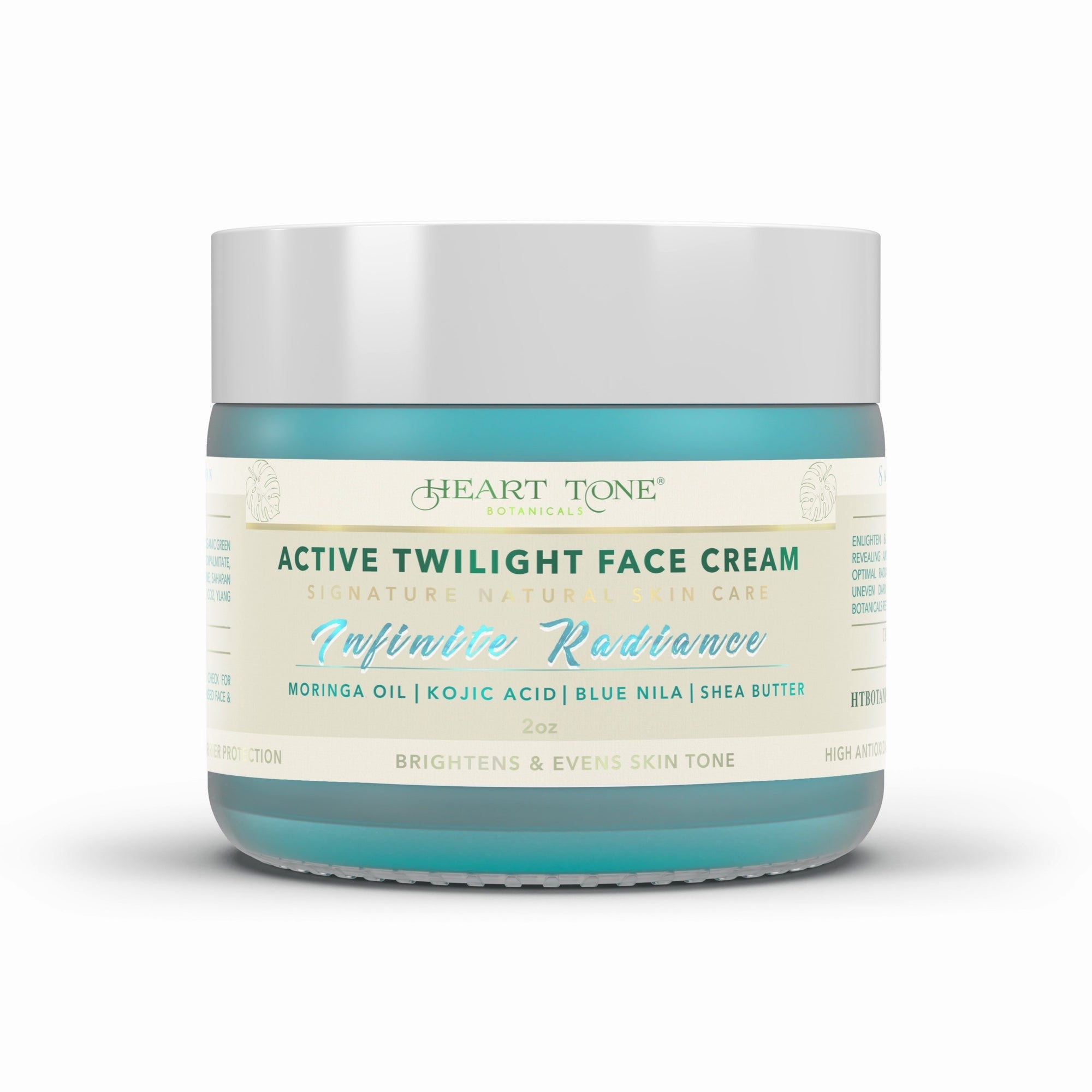
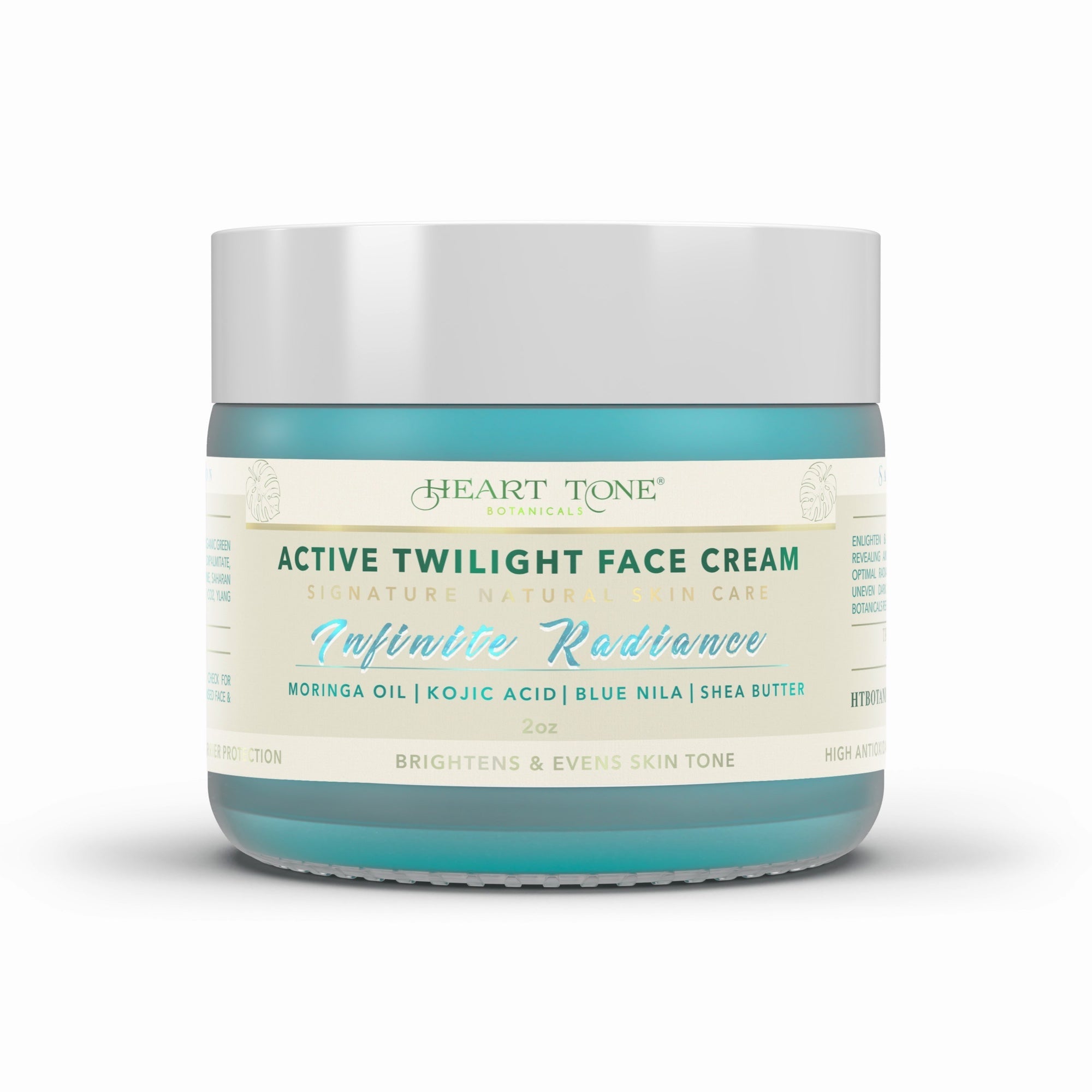
- Active Twilight Face Cream
- Dynamic Hydrogel Face Serum
- Complete Daily Face Moisturizer
- Browse all facial care →
More From the Island Mist Formula: Colloidal Gold in Skincare: What Gold Nanoparticles Actually Do for Your Skin

Leave a comment
This site is protected by hCaptcha and the hCaptcha Privacy Policy and Terms of Service apply.