

Sea buckthorn — Hippophae rhamnoides — is a thorny shrub native to the Himalayas and Siberia that produces small, intensely orange berries. Those berries are unusual in the plant world: they contain one of the highest concentrations of carotenoids found in any fruit, along with a rare fatty acid profile that includes omega-7 (palmitoleic acid) found in almost no other plant source.
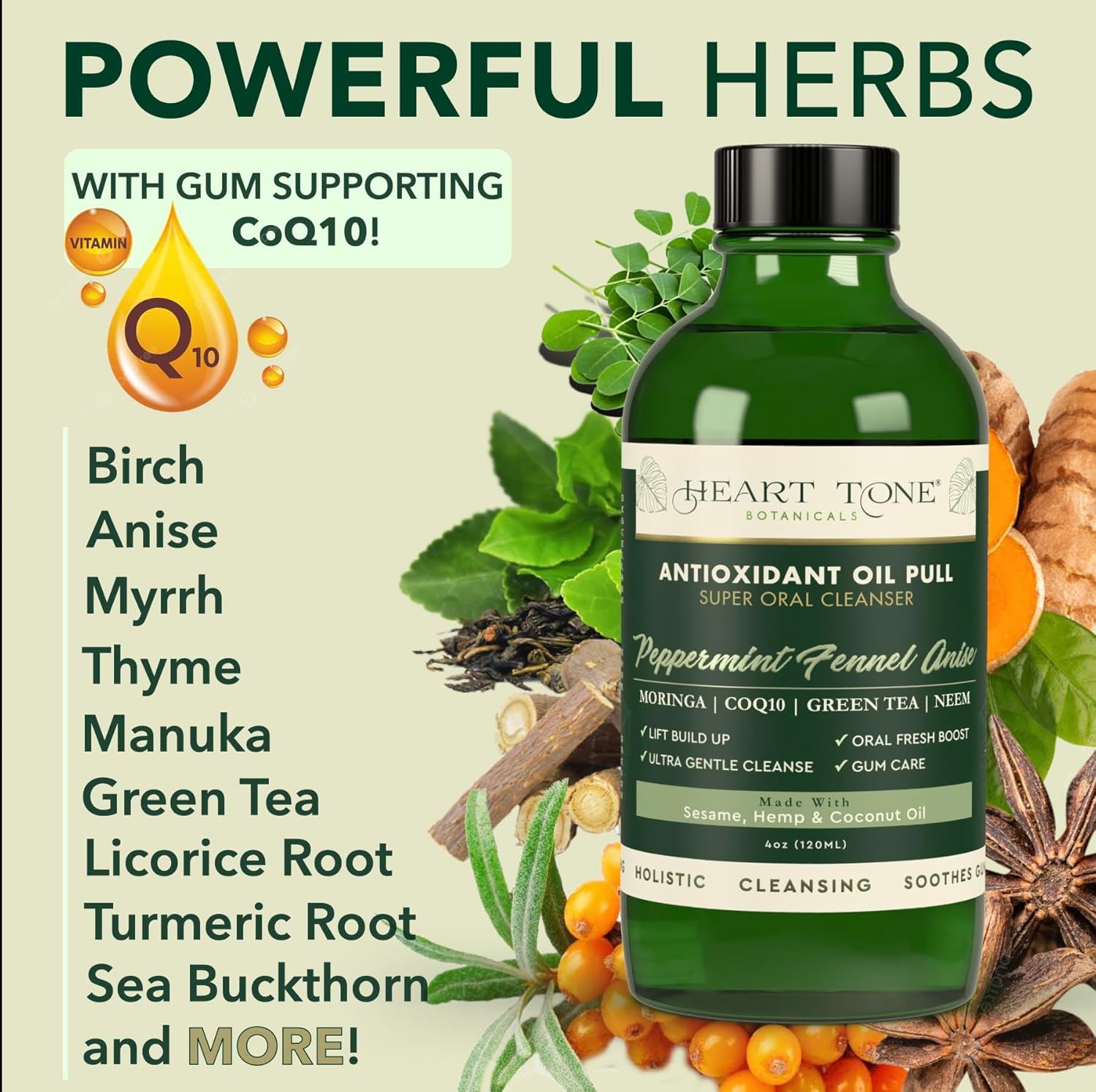
In Heart Tone Botanicals' Antioxidant Oil Pull and Ozonated Oil Pull, sea buckthorn extract appears as a premium oil-soluble active — its fat-soluble antioxidants carried directly into the oral cavity by the oil-pulling medium. Here's what that means, why it matters, and what makes sea buckthorn CO₂ extract a meaningful addition to a botanical oil pull formula.
Sea Buckthorn's Unusual Fatty Acid Profile
Most plant oils are dominated by omega-6 (linoleic acid) and omega-9 (oleic acid). Sea buckthorn is one of the very few plant sources that contains omega-7 — palmitoleic acid — in meaningful concentrations. Omega-7 is otherwise found primarily in macadamia oil and in small amounts in cold-water fish oils.
Why does that matter in an oral care context? Palmitoleic acid is naturally present in human sebum and in the mucous membranes that line the oral cavity. These membranes are lipid-rich environments. Oil-soluble compounds with a fatty acid profile that matches the tissue's own chemistry tend to integrate more readily than synthetic actives that require emulsification. Sea buckthorn's omega-7 content gives it a chemical affinity for oral mucosal tissue that most botanical extracts don't have.
The full fatty acid breakdown of sea buckthorn pulp extract:
- Palmitoleic acid (omega-7): 20–40% — exceptionally rare in plants
- Palmitic acid (saturated): 30–35%
- Oleic acid (omega-9): 15–20%
- Linoleic acid (omega-6): 5–10%
Seed extract (from the seeds rather than pulp) has a more balanced omega-3/omega-6 ratio, closer to flaxseed oil. Premium oil pull formulas that use CO₂-extracted sea buckthorn may include compounds from both fractions — maximizing both the rare fatty acids and the carotenoid content.
CO₂ Extraction and the Carotenoid Question
Sea buckthorn berries get their intense orange color from their extraordinarily high carotenoid content — beta-carotene, lycopene, zeaxanthin, and cryptoxanthin — at concentrations among the highest of any fruit ever measured. But these carotenoids are heat-sensitive. Traditional extraction methods (solvent extraction, cold-pressing at elevated temperatures) can degrade the carotenoid fraction before it makes it into the final ingredient.
CO₂ extraction solves this. Supercritical carbon dioxide at carefully controlled pressure and temperature selectively dissolves the lipid-soluble compounds — carotenoids, tocopherols, fatty acids — without exposing them to the heat that causes oxidative degradation. The result is a deeply pigmented, potent extract that retains the full antioxidant profile from the raw berry.
CO₂-extracted sea buckthorn retains the full carotenoid spectrum that cold-pressing at elevated temperatures would oxidize. The extraction method matters as much as the ingredient itself.
The Ozonated Oil Pull formula uses Organic Seabuckthorn CO₂ specifically — not cold-pressed, not water-extracted. The Antioxidant Oil Pull includes Sea Buckthorn Berry Extract, delivering the berry's antioxidant compounds in the lipid-soluble fraction.
Why Fat-Soluble Antioxidants Work in Oil Pulling
Oil pulling's mechanism is physical: the oil base traps and suspends debris and particles from interdental spaces during the 10–15 minutes of swishing. That physical action is why any oil — even plain coconut oil — does something useful.
But the antioxidant compounds dissolved in that oil can do more than the oil alone. Carotenoids, tocopherols, and fatty acids from sea buckthorn are all fat-soluble. They travel with the oil into biofilm spaces that water-based mouthwashes can't penetrate in the same way.
In vitro, beta-carotene and zeaxanthin have documented free-radical scavenging activity. During the extended contact time of oil pulling — 10–15 minutes versus a quick 30-second mouthwash rinse — these compounds have time to interact with the oral environment in a way that a brief rinse doesn't allow.
For users who oil pull for the oral care experience and the ritual benefit, sea buckthorn adds a genuine antioxidant dimension that most oil pull formulas — built purely on sesame or coconut oil — don't deliver.
Sea Buckthorn in Traditional Oral and Mucosal Care
Tibetan medicine has documented sea buckthorn use for mucosal tissue support since at least the Tang Dynasty (618–907 AD). The plant appears in the classic Tibetan medical text Four Tantras (Gyushi) as a botanical with documented use for oral and digestive mucosal health.
In Ayurvedic practice, sea buckthorn (Chharma in Sanskrit) was used topically and as a nutritional adjunct for mucosal membrane integrity. Russian and Eastern European folk medicine similarly document its use for gingival tissue and oral health — the high Vitamin C and carotenoid content driving most traditional applications.
Modern oil pulling is itself a traditional Ayurvedic practice (kavala graha). The combination of oil pulling as a delivery method with sea buckthorn as an active ingredient aligns with centuries of Ayurvedic botanical integration — using the oil medium to carry plant actives into mucosal tissue.
What to Look for in a Sea Buckthorn Oil Pull Formula
Not all sea buckthorn in oral care formulas is equivalent. Key differentiators:
- Extraction method: CO₂ > cold-pressed at low temperature > solvent extracted. CO₂ preserves carotenoids; heat damages them.
- Organic certification: Sea buckthorn grows in regions with variable agricultural practices. Organic certification reduces pesticide residue risk in the fat-soluble fraction.
- Formula context: Sea buckthorn's antioxidants are synergistic with CoQ10, Vitamin E, and other oil-soluble antioxidants. A formula that combines several fat-soluble antioxidants creates a wider-spectrum antioxidant environment than any single ingredient alone.
Both Heart Tone Botanicals oil pull products deliver sea buckthorn in the context of multi-ingredient botanical formulas:
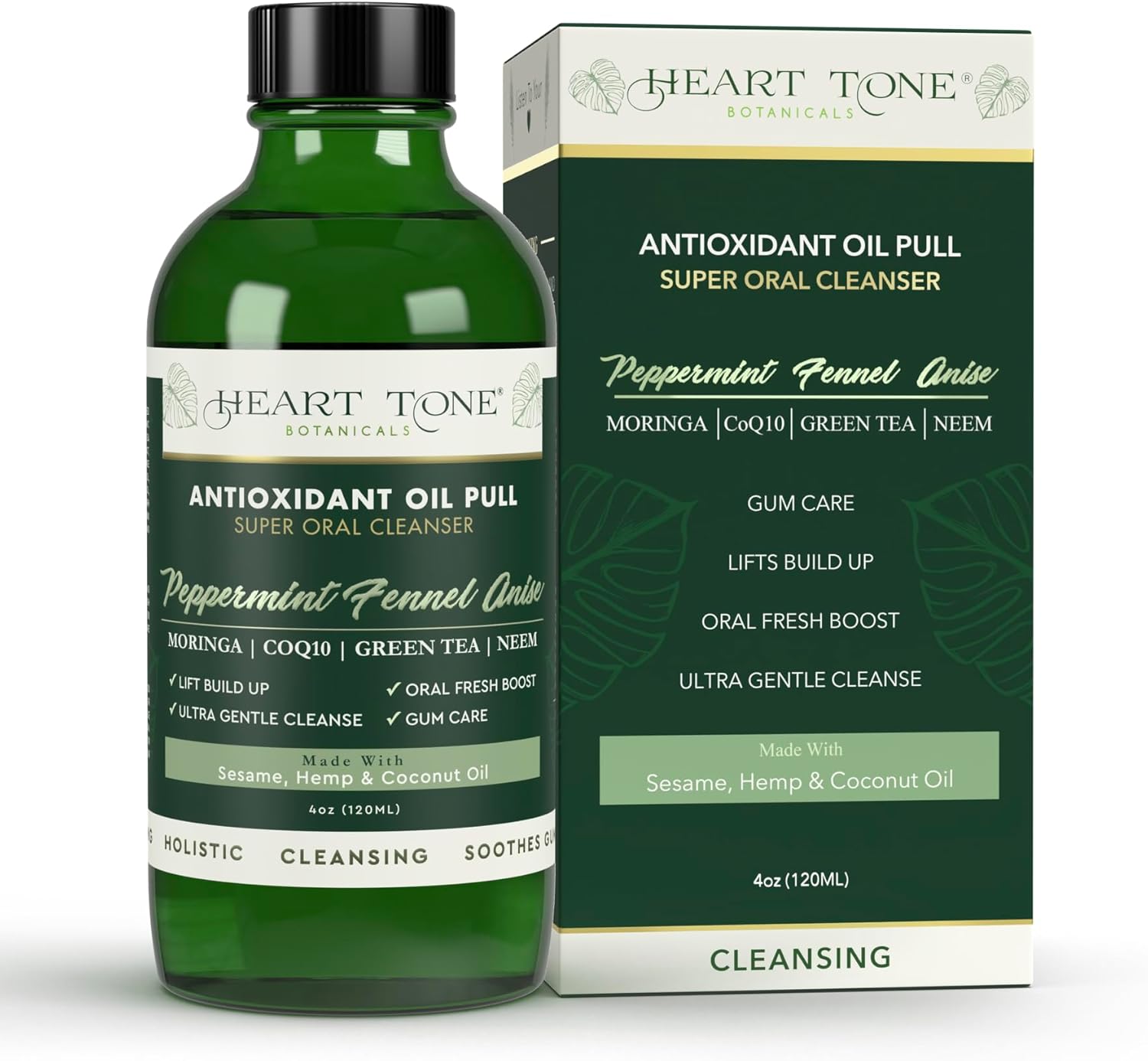
- Antioxidant Oil Pull — includes Sea Buckthorn Berry Extract alongside CoQ10, pomegranate seed extract, moringa seed oil, camellia seed oil, and 7 essential oils (peppermint, oregano, thyme, myrrh, turmeric, manuka, tea tree)
- Ozonated Oil Pull — includes Organic Seabuckthorn CO₂ alongside ozonated sesame seed oil, Resveratrol, CoQ10, Vitamin E, clove, turmeric CO₂, licorice root CO₂, and manuka oil
The ozone in the Ozonated Oil Pull adds a distinct dimension: ozonated sesame seed oil carries active oxygen that interacts with the oral environment. The Antioxidant Oil Pull focuses on the antioxidant canvas — a broader array of botanical antioxidants working together. Both deliver sea buckthorn; the choice depends on what other ingredients you're most drawn to.
FAQ: Sea Buckthorn in Oil Pulling
Does sea buckthorn oil pulling stain teeth?
Sea buckthorn's carotenoids are intensely orange when concentrated — but in an oil pull formula, the extract is present in a minor concentration within a larger oil blend. The brief contact time of oil pulling (10–15 minutes) and subsequent rinsing don't allow time for staining. If you were to apply concentrated sea buckthorn oil to teeth for hours, the orange pigment could temporarily deposit. That's not what oil pulling is.
Is the omega-7 in sea buckthorn the same omega-7 in supplements?
Yes — palmitoleic acid is palmitoleic acid regardless of source. Sea buckthorn pulp extract is one of the few plant sources with meaningful concentrations. Most omega-7 supplements are derived from sea buckthorn or from purified fish oil. In an oil pull context, you're getting topical application of palmitoleic acid rather than systemic delivery, which is a different use case than the supplement research typically studied.
Why use oil pulling instead of a standard mouthwash with these ingredients?
Standard mouthwashes are water-based. Fat-soluble compounds like carotenoids, CoQ10, and tocopherols don't dissolve in water — they require an oil medium. An oil pull formula can deliver these fat-soluble botanicals in a way that a water-based rinse fundamentally cannot. That's the core rationale for botanical oil pull formulas: the oil medium is the delivery vehicle for a class of compounds that water can't carry.
How much sea buckthorn extract is in these formulas?
Exact percentages are proprietary. As with most botanically complex formulas, sea buckthorn is a secondary active rather than a primary oil base. The base carriers (MCT coconut oil, sesame seed oil, camellia seed oil) carry the botanical actives. This is standard in premium oil pull formulations — a concentrated extract is more effective than a high percentage of a less concentrated ingredient.
More From the Oil Pull Botanical Canvas
Each botanical in HTB's oil pull formulas has its own mechanism and history. Explore:
- Oregano Oil (Carvacrol): What It Does for Oral Health
- Turmeric (Curcumin): Traditional Use in Oral Care
- CoQ10 for Oral Health and Oil Pulling
- Shop All Oral Care
Also in this oil pull botanical series: Pomegranate Oil Pulling — what punicalagins and pomegranate CO2 bring to a botanical formula.

Leave a comment
This site is protected by hCaptcha and the hCaptcha Privacy Policy and Terms of Service apply.