

Oregano oil has a bold reputation: warm, herbal, unmistakably aromatic, and used in traditional botanical care for generations. In oral care, the conversation often centers on one naturally occurring compound inside oregano oil: carvacrol.
This guide takes a clearer, more practical look at what carvacrol is, why oregano oil appears in botanical oral-care formulas, and how to think about it inside a daily routine without turning ingredient education into medical claims.
What Is Carvacrol?
Carvacrol is a naturally occurring aromatic compound found in oregano essential oil. It is part of what gives oregano its strong, warming herbal character, along with other plant compounds such as thymol.
When shoppers see oregano oil in an oral-care formula, carvacrol is usually one of the reasons the ingredient is there. It contributes to oregano oil's intense herbal profile and helps create the kind of crisp, botanical experience many people look for when they want something different from a standard mint-only routine.
That matters because oral care is sensory. Taste, aroma, mouthfeel, and after-rinse freshness all shape whether someone actually stays consistent with a product. A formula can look beautiful on paper, but if it feels harsh, tastes artificial, or leaves the mouth dry, it becomes hard to use every day.
Why Oregano Oil Shows Up in Botanical Oral Care
Oregano oil has a long history of use in traditional herbal practices. Modern natural-care formulas often use it because it brings a concentrated botanical aroma, a warm finish, and a distinctly clean-feeling character.
In oral-care products, oregano oil is usually not meant to stand alone. It works best as part of a broader formula where the taste, concentration, and carrier system have already been balanced by the maker. That is especially important with essential oils, which are powerful and should be used thoughtfully.
For a customer reading a label, the presence of oregano oil can signal a formula that is leaning into real plant ingredients rather than artificial flavor systems. But the full ingredient list still matters more than one highlighted botanical.
Carvacrol vs. the Whole Formula
It is tempting to reduce a botanical formula to one compound, but that is not how a good oral-care routine is built. Carvacrol is one part of oregano oil, and oregano oil is one part of the finished product.
The more useful question is: How is the formula designed to feel in daily use? Is it alcohol-free? Is the flavor balanced? Does it leave the mouth feeling fresh without a burning or stripped sensation? Does it fit naturally into a morning or evening ritual?
Those are the details that determine whether a botanical product becomes a real habit instead of a one-time experiment.
Why the Delivery Format Matters
Essential oils need context. Oregano oil directly from a bottle is very concentrated and not the same thing as a finished oral-care product. In a well-designed formula, it is diluted into a broader base so the experience is comfortable, measured, and repeatable.
Oil pulling is one example of a format that changes the experience. Instead of a sharp rinse-and-spit moment, an oil pull creates a slower ritual with a softer mouthfeel. The carrier oils help round out the intensity of the essential oils while giving the whole routine a smoother finish.

A mouth rinse is a different format. It is quicker, lighter, and usually built around a fresher, brighter finish. Both can have a place in a natural oral-care routine, but they should be judged by the finished experience, not by a single ingredient name.
Oregano Oil in Heart Tone's Oral-Care Line
In Heart Tone Botanicals formulas, oregano appears as one part of a larger botanical canvas.
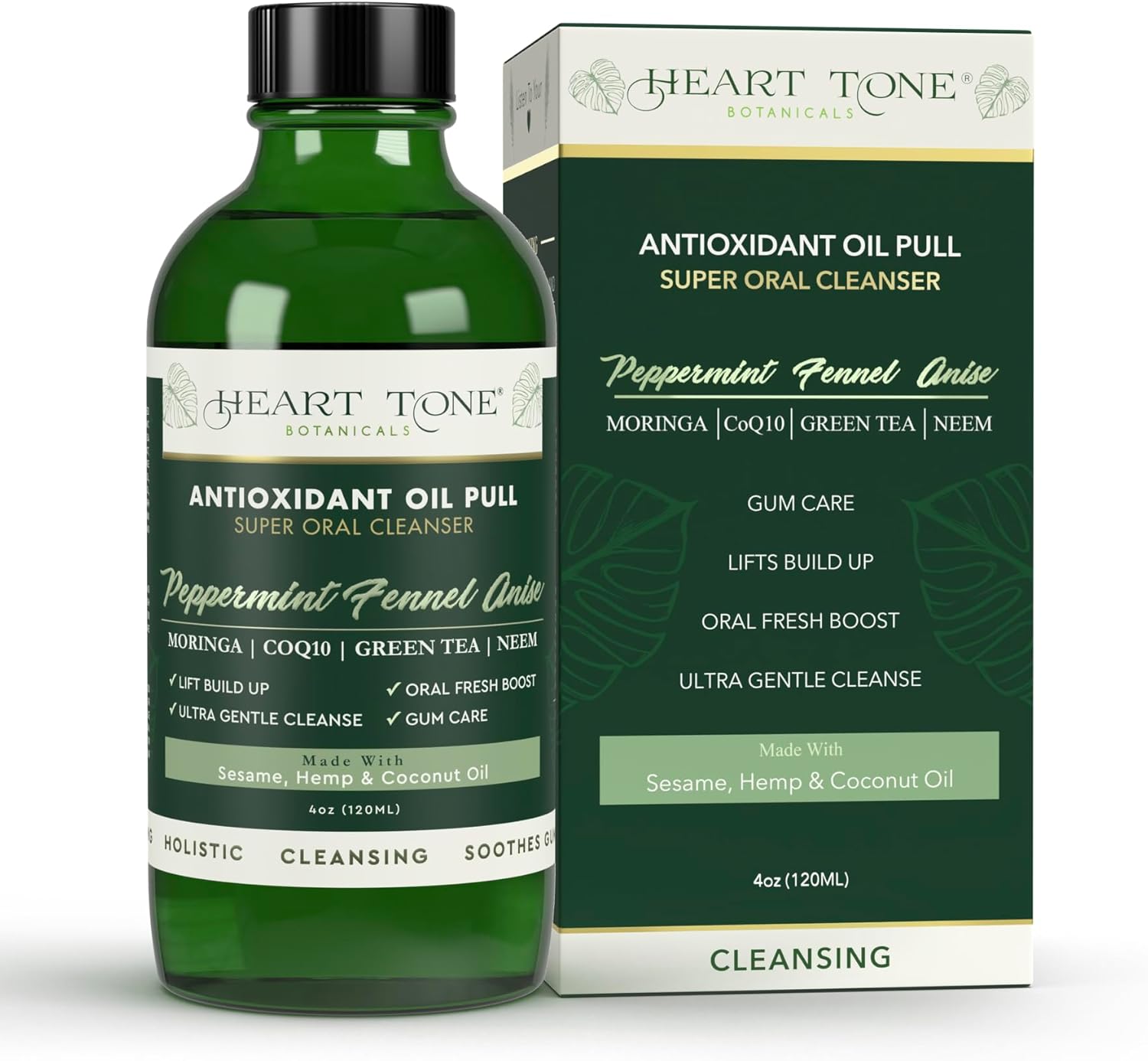
Antioxidant Oil Pull includes Organic Oregano Essential Oil alongside organic sesame seed oil, organic MCT oil, organic moringa seed oil, sea buckthorn berry extract, pomegranate seed extract, CoQ10, peppermint essential oil, star anise extract, spearmint essential oil, manuka oil, tea tree oil, turmeric oil, licorice root extract, organic myrrh extract, and organic thyme essential oil.

Restorative Mouth Rinse also includes oregano in its botanical ingredient list, paired with mint-family essential oils, aloe vera leaf juice, xylitol, colloidal minerals
, acacia gum, licorice root, myrrh, rhatany root, tea tree, turmeric, clove, thyme, and other plant-derived ingredients.
The point is not that oregano oil carries the whole formula. The point is that it sits inside a fuller oral-care ritual: brush, rinse, and oil pull with products that feel fresh, plant-forward, and free from synthetic shortcuts.
What to Look for in an Oregano Oil Oral-Care Product
If you are comparing products that mention oregano oil or carvacrol, read the whole label and look for a formula that makes sense as a daily routine.
- A finished product, not straight essential oil: Oregano essential oil should be properly diluted in a thoughtfully made formula.
- An alcohol-free base: Many people prefer oral-care products that leave the mouth feeling fresh without a harsh burn or dry finish.
- Balanced flavor: Oregano is naturally warm and intense, so it should be rounded out by the rest of the blend.
- Transparent ingredients: Look for real botanical names, clear carrier oils, and a label that does not hide behind vague flavor language.
- A routine you will actually use: Consistency comes from products that feel good, taste good, and fit naturally into your day.
Where Oregano Oil Fits in a Daily Ritual
A simple botanical oral-care routine does not need to be complicated. Most people are looking for a clean brushing experience, a refreshing rinse, and a deeper-feeling ritual when they want something more intentional.
That might look like brushing with a mineral-forward toothpaste, following with an alcohol-free mouth rinse, and using an oil pull a few times a week as a slower self-care step. Oregano oil belongs in that last category for many people: not because it needs to dominate the routine, but because it adds a distinctive botanical note to a more elevated oral-care experience.
Frequently Asked Questions
Can you use oregano oil directly in your mouth?
Undiluted oregano essential oil is very concentrated and can feel too intense for direct use. For oral care, it is better to choose a finished product where the essential oil has already been diluted and balanced into the full formula.
What does carvacrol add to oregano oil?
Carvacrol is one of the naturally occurring aromatic compounds that gives oregano oil its strong herbal character. In a finished oral-care formula, it contributes to the warm, plant-forward profile people associate with oregano.
Does oregano oil taste like pizza seasoning?
Not in a well-balanced formula. Oregano oil is warm and herbal, but when it is blended with mint, anise, fennel, thyme, or other botanicals, the result can feel clean, fresh, and rounded rather than culinary.
Is oregano oil the only ingredient that matters?
No. The full formula matters more than any single ingredient. Carrier oils, flavor balance, concentration, and the overall product experience all determine whether the routine feels comfortable enough to use consistently.
Also explore: Restorative Mouth Rinse for an alcohol-free botanical rinse, or the Heart Tone Botanicals oral-care collection for a full daily routine.


Leave a comment
This site is protected by hCaptcha and the hCaptcha Privacy Policy and Terms of Service apply.