

Most people know pomegranate as a superfood. Fewer know it as an oil pulling ingredient. But once you understand the polyphenol profile of pomegranate seed extract — and what CO2 extraction preserves that standard pressing cannot — the inclusion makes sense. Pomegranate brings something genuinely different to the oil-pulling medium: a rare class of antioxidant compounds found in almost no other plant.
What Makes Pomegranate Extract Unique
Pomegranate (Punica granatum) has been used in traditional wellness practices for thousands of years. The name itself traces back to the Latin pomum granatum — "seeded apple" — and the fruit appears in ancient Egyptian, Ayurvedic, and Mediterranean botanical traditions. Modern phytochemical research has identified why: pomegranate is one of the most antioxidant-dense botanical sources studied.
The key compounds are punicalagins — large ellagitannin molecules found almost exclusively in pomegranate. Punicalagins are the precursors to ellagic acid, and they are responsible for a significant portion of pomegranate's documented antioxidant activity. When punicalagins break down, they release ellagic acid, which is then converted in the gut to urolithin compounds — a class of polyphenol metabolite that has attracted considerable research attention for its role in supporting mitochondrial function.
Pomegranate's punicalagin content is one of the most studied polyphenol profiles in botanical research — and it is found in almost no other plant at comparable concentrations.
Beyond punicalagins and ellagic acid, pomegranate seed oil contains punicic acid — an unusual omega-5 fatty acid also called trichosanic acid. Punicic acid is structurally distinct from the omega-3 and omega-6 fatty acids that dominate most botanical seed oils. It is a conjugated linolenic acid that is largely unique to pomegranate seed.
CO2 Extraction vs. Standard Seed Extract: What's Different
The Ozonated Oil Pull formula uses Organic Pomegranate CO2 — a supercritical CO2 extract of pomegranate seed, not simply cold-pressed oil or a water-based extract. The distinction matters for ingredient quality.
Supercritical CO2 extraction uses carbon dioxide at controlled temperature and pressure to pull compounds from the plant material. Unlike steam distillation (which applies heat that can damage heat-sensitive compounds) or solvent extraction (which leaves chemical residue), CO2 extraction operates at lower temperatures and leaves no solvent trace in the final extract. For pomegranate, this means:
- Punicic acid preservation: CO2 protects the fragile fatty acid structure that heat or aggressive solvents can oxidize
- Higher polyphenol concentration: Supercritical extraction captures a broader range of antioxidant compounds than standard pressing alone
- No solvent residue: CO2 evaporates cleanly at ambient pressure, leaving only the botanical extract
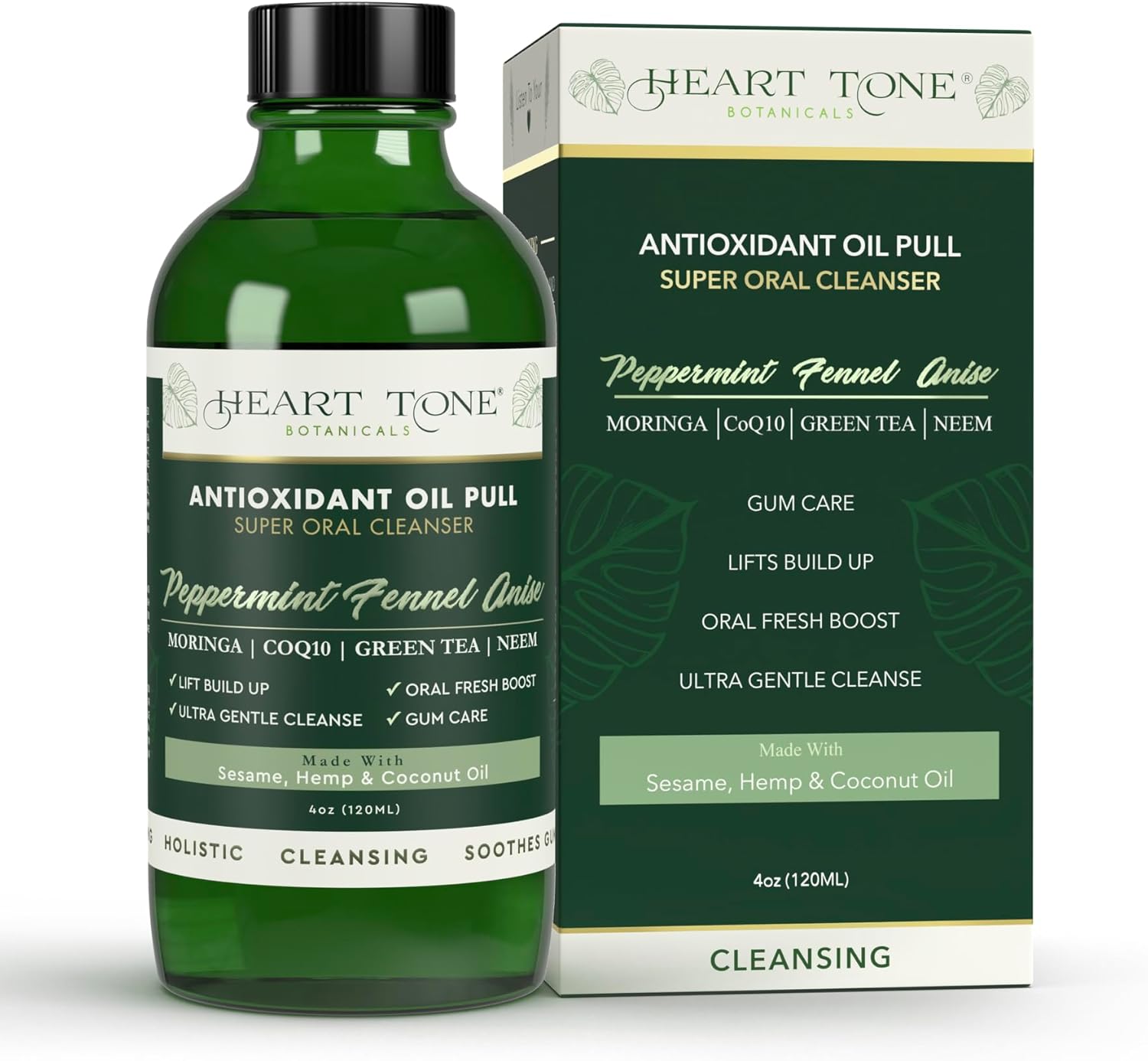
The Antioxidant Oil Pull formula uses Pomegranate Seed Extract — a botanical extract of the seed fraction, providing the full-spectrum polyphenol profile in a form that integrates well with the oil-based pulling medium.
Why Oil Pulling is an Effective Delivery Medium for Fat-Soluble Compounds
Pomegranate's most valuable compounds — particularly punicic acid — are fat-soluble, meaning they are better absorbed and distributed in a lipid environment than in water. Oil pulling creates exactly that environment: a sustained lipid medium that contacts every oral surface for a period of minutes.
This is part of what makes botanical oil pulling formulas different from water-based rinses. A water-based mouthwash can carry water-soluble compounds but cannot effectively deliver fat-soluble botanical actives to the full surface of the oral cavity. An oil-based pulling formula brings those compounds into prolonged contact with oral tissue in a carrier they are chemically compatible with.
Punicic acid and other fat-soluble pomegranate compounds are naturally compatible with an oil-based pulling medium — the lipid environment is where they work best.
Pomegranate Alongside CoQ10, Sea Buckthorn, and Moringa in the Antioxidant Oil Pull
Neither the Antioxidant Oil Pull nor the Ozonated Oil Pull is built around a single star ingredient. Pomegranate appears alongside other botanical actives that each bring a distinct antioxidant profile to the formula.
CoQ10 is a fat-soluble antioxidant produced naturally in human cells. It plays a role in mitochondrial energy production and is depleted with age. In a lipid medium, CoQ10 is well-distributed and bioavailable in a way it is not in water-based formulas.
Sea Buckthorn Berry Extract brings omega-7 palmitoleic acid — one of the rarer fatty acids in botanical sources — alongside high concentrations of beta-carotene and carotenoids. (A dedicated post covers sea buckthorn oil pulling in full.)
Organic Moringa Seed Oil adds oleic acid-rich botanical lipid content and a mild natural antioxidant background.
Together, the formula builds what might be called an antioxidant canvas — not a single compound doing one thing, but a spectrum of botanical actives covering different parts of the antioxidant range. Pomegranate's polyphenol contribution (punicalagins, ellagic acid) is chemically distinct from CoQ10's electron-chain role or carotenoid-based protection. They are additive, not redundant.
Traditional Use: Pomegranate in Ancient Oral and Wellness Practices
Pomegranate has centuries of documented use in traditional wellness systems. In Ayurveda, pomegranate preparations are listed in classical texts for use in the mouth and digestive system. In traditional Middle Eastern and Mediterranean herbal practice, pomegranate rind preparations were used topically for their astringent botanical properties. The use is not modern — the ingredient has a documented traditional footprint that precedes modern extract technology by centuries.
The CO2 extract and seed extract forms used today are modern precision extractions of that same botanical source, designed to concentrate and stabilize the compounds that traditional practice was drawing on through cruder preparations.
What to Look For in a Pomegranate Oil Pull Formula
When evaluating any botanical oil pull formula that includes pomegranate, a few things are worth checking:
- Extract form: CO2 or supercritical extract preserves more polyphenols than a standard cold-press; look for "CO2" or "supercritical" on the INCI
- Organic designation: Pomegranate is a fruit where organic sourcing reduces the pesticide residue that would otherwise concentrate in the seed oil
- Oil base: Fat-soluble compounds like punicic acid work best in a compatible lipid carrier — sesame seed oil, coconut oil, and MCT oil are common bases in botanical formulas
- Complementary actives: A pomegranate-only formula misses the synergistic antioxidant coverage that a multi-botanical canvas provides
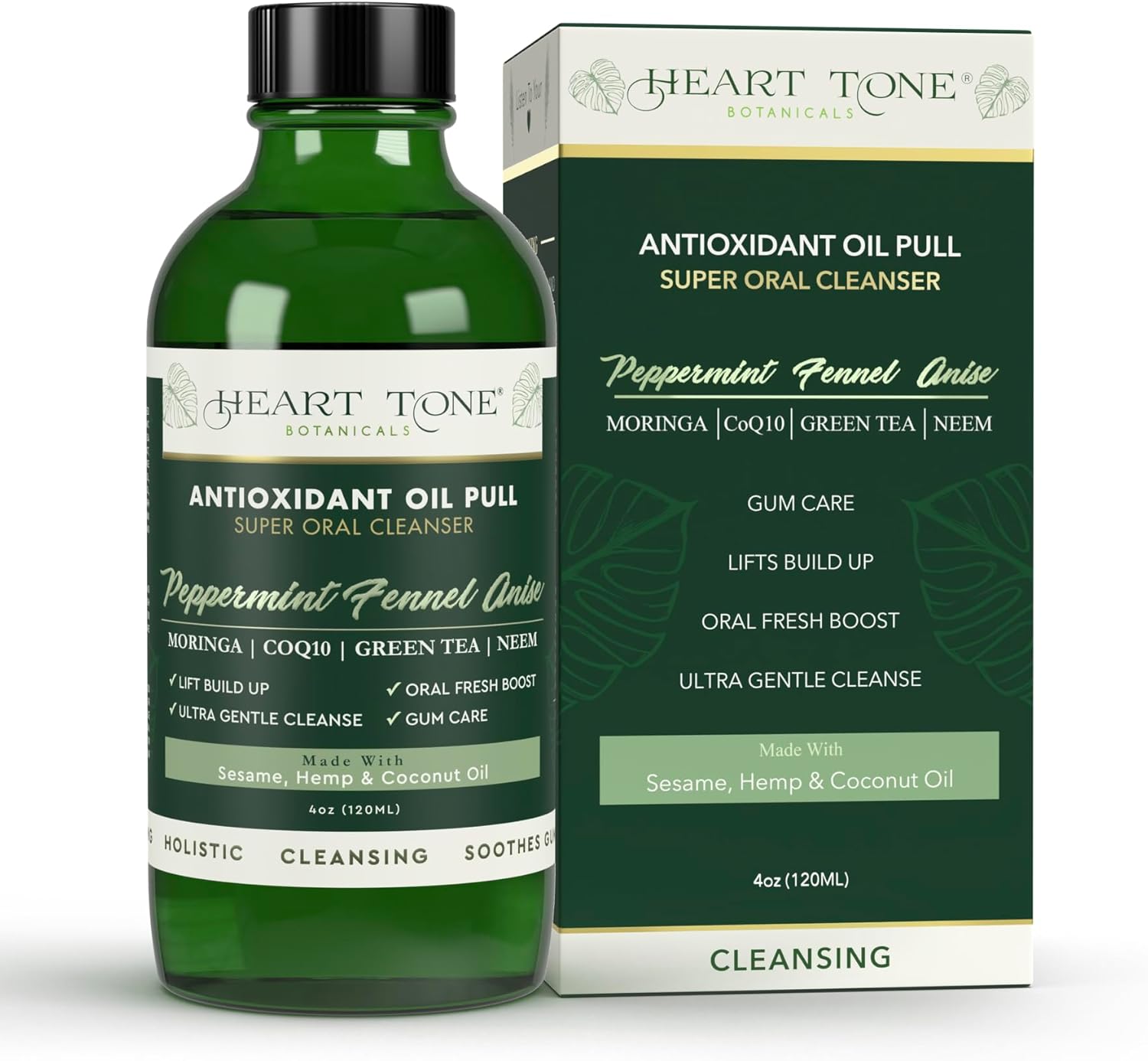
Both the Antioxidant Oil Pull and Ozonated Oil Pull formulas from Heart Tone Botanicals verify all four of these checkpoints — organic pomegranate sourcing, oil-based carrier, and a full botanical canvas of antioxidant actives alongside the pomegranate extract.
How to Use a Pomegranate Oil Pull in Your Daily Routine
Oil pulling with a botanical formula like the Antioxidant Oil Pull or Ozonated Oil Pull is straightforward:
- Start on an empty stomach — morning, before eating or drinking
- Use 1–2 teaspoons of the oil pull formula
- Swish gently for 5–20 minutes — you do not need to swish hard; a relaxed, thorough motion contacts all surfaces
- Spit into a trash can — not the sink (botanical oils can solidify and clog drains)
- Rinse your mouth with water, then proceed with your regular brushing routine
The oil pull works as a pre-brushing botanical ritual, not a replacement for brushing. Pair it with a mineral-based toothpaste like Living Crystal Toothpaste and the Restorative Mouth Rinse for a full botanical oral care routine.
Frequently Asked Questions
Does pomegranate oil pull change the taste?
Yes, slightly. Pomegranate seed extract and CO2 add a faintly fruity, slightly astringent character to the oil base. In formulas like the Antioxidant Oil Pull, the dominant flavor notes are peppermint, spearmint, and anise — the pomegranate contributes to complexity rather than dominating the experience.
Is pomegranate oil pulling safe for daily use?
Oil pulling with a botanical formula is generally appropriate for daily morning use. Individuals with tree nut allergies should check the carrier oils in the specific formula. As with any oral care practice, if you have specific dental conditions, a conversation with your dentist is a good step before adding new practices.
What is the difference between pomegranate seed extract and pomegranate CO2?
Pomegranate seed extract is typically a standard extraction of the seed fraction — it may be cold-pressed, water-extracted, or alcohol-extracted depending on the product. Pomegranate CO2 is a supercritical carbon dioxide extract, which generally produces a higher-concentration, solvent-free extract that better preserves thermally sensitive compounds like punicic acid.
Can I use both oil pull formulas that contain pomegranate?
Yes — the Antioxidant Oil Pull and Ozonated Oil Pull each contain pomegranate in a different extract form (seed extract vs. CO2) and alongside different complementary actives. Some customers alternate between the two to vary the botanical profile of their routine.
Explore Both Oil Pull Formulas
Both the Antioxidant Oil Pull and Ozonated Oil Pull formulas from Heart Tone Botanicals contain pomegranate extract alongside CoQ10, sea buckthorn, moringa, and a full botanical essential oil blend. Alcohol-free, fluoride-free, and handcrafted in Florida.
Also in this botanical oil care series: Sea Buckthorn Oil Pulling | CoQ10 Oil Pulling | Ozonated Oil Pulling
Also in the Oil Pulling Botanical Canvas: Manuka (Leptospermum scoparium) is another botanical in the same formula — a New Zealand shrub used in Māori botanical tradition with a distinctive woody, earthy aromatic profile. Learn about manuka in oil pulling →

Leave a comment
This site is protected by hCaptcha and the hCaptcha Privacy Policy and Terms of Service apply.