

If you've looked at the ingredient list on a premium oil pulling formula, you've likely noticed manuka listed alongside sesame oil, myrrh, and CoQ10. It's a name associated with New Zealand botanicals that turns up across natural oral care and skin care products — but what exactly is manuka, and how does it appear in an oil pulling routine?
This guide covers what manuka is, the important difference between manuka essential oil and manuka honey, and how this New Zealand plant fits into a multi-botanical oil pulling formula.
What Is Manuka? A New Zealand Botanical with Deep Roots
Manuka (Leptospermum scoparium) is a flowering shrub native to New Zealand and southeastern Australia, where it grows across coastal scrubland, hillsides, and river margins. The name comes from te reo Māori — the language of New Zealand's indigenous Polynesian people — where the plant holds genuine cultural significance.
In Māori botanical tradition, manuka was incorporated into wellness preparations and used across a range of ceremonial and practical contexts. Different parts of the plant — bark, leaves, branches, and seed capsules — each had recognized roles in traditional practice. The botanist Joseph Banks, sailing with Captain James Cook on the 1769 voyage to the Pacific, was among the first Europeans to document the plant and its place in indigenous New Zealand plant knowledge.
Today manuka is best known globally through two entirely different products: manuka honey, produced by bees that forage on manuka flowers, and manuka essential oil, steam-distilled from the plant's leaves and small branches. These products share a name and a parent plant but are produced by completely different processes and bring very different botanical profiles to any formula they appear in.
Manuka has a cultural and botanical history in New Zealand that predates its modern wellness reputation by centuries — a genuinely traditional plant with a long track record in indigenous botanical practice.
Manuka Oil vs. Manuka Honey: An Important Distinction
When most people encounter the word "manuka" in a product, they think of manuka honey — the premium New Zealand honey graded by its MGO (methylglyoxal) concentration or its UMF (Unique Manuka Factor) rating. Manuka honey has become a global ingredient story, with high-grade jars commanding prices well above standard honey. But in a botanical oil pulling formula, you're looking at something entirely different.
Manuka honey comes from bees that collect nectar from manuka flowers. It is water-soluble, sweet, and contains the compounds naturally present in the nectar after the bees' processing — including methylglyoxal, which is the basis for the MGO grading system. Honey and an oil-based carrier don't naturally mix, which makes manuka honey a poor choice for oil-based formulas.
Manuka essential oil is produced by steam-distilling the leaves and small branches of the same Leptospermum scoparium plant. It is not sweet, not water-soluble, and has a completely different aromatic character — deep, woody, slightly resinous, with earthy and herbaceous notes. Its key aroma compounds are triketones and sesquiterpenes, giving manuka oil a distinctive profile that sets it apart from its more famous cousins in the myrtle family: tea tree and eucalyptus.
In the Ozonated Oil Pull, you'll find manuka in its essential oil form. This makes botanical sense: the carrier is sesame seed oil, and an oil-soluble plant extract integrates naturally with that base in a way a water-soluble honey product cannot.
Manuka's Aromatic Character in Oil Pulling
Oil pulling is a traditional practice with roots in Ayurvedic oral care, involving swishing a small amount of oil around the mouth for 10–15 minutes before rinsing. Botanical oil pulling formulas extend this practice by incorporating plant extracts that bring the diversity of global plant traditions into a single formula.
Manuka essential oil's sensory contribution to a formula is distinctive and worth understanding before your first experience with it. Unlike the bright, cooling notes of peppermint, fennel, or spearmint that dominate many standard oral care products, manuka brings depth:
- Aromatic base note: Deep, woody, earthy, slightly resinous — anchors a formula the way a bass note grounds a musical chord
- Botanical character: More complex than tea tree (its myrtle-family cousin), less camphoraceous, with an almost floral-herbaceous edge from its sesquiterpene profile
- In combination: Balances the bright, cooling aromatics of peppermint and fennel; softens myrrh's heavier balsamic notes; creates what many people describe as an "apothecary" or "botanical garden" sensory experience
People who have only used mint-forward oral care products often find botanical oil pulling formulas incorporating manuka noticeably different — richer, more complex, with a warmth that lingers lightly after spitting and rinsing.
The Full Botanical Canvas: Manuka in Context
In the Ozonated Oil Pull, manuka essential oil is one ingredient in a multi-botanical formula built around an ozone-infused sesame seed oil base. Understanding the full canvas helps explain why the formula's aromatic experience is as layered as it is:
- Ozone-infused sesame seed oil: Cold-pressed base — mild, nutty, oil-pulled through an ozonation process
- Myrrh CO2 extract: Resinous botanical from northeastern Africa and the Arabian Peninsula, with a warm, balsamic character used in traditional oral and incense preparations across Egyptian, Greek, and Ayurvedic practice for millennia
- Turmeric CO2 extract: Golden root from the Indian subcontinent, earthy and warm, with a long history in Ayurvedic and Southeast Asian botanical traditions. Learn more about turmeric in oil pulling →
- Manuka essential oil: New Zealand's Leptospermum scoparium — the woody, grounding note from the Southern Hemisphere botanical canon
- Green tea extract: East Asian botanical from Camellia sinensis, light vegetal aromatics, with a place in traditional Chinese and Japanese wellness practices
- Tea tree essential oil: Australian Melaleuca alternifolia, a myrtle-family relative of manuka with a sharper, camphoraceous character
- Licorice root: Root extract from Glycyrrhiza glabra, used in traditional medicine across the Mediterranean, Middle East, and China for thousands of years
- CoQ10: A fat-soluble coenzyme found naturally in cells across the body, fat-soluble and therefore compatible with oil-based delivery
- Resveratrol: A polyphenol found in grapes, Japanese knotweed, and certain berries
- Peppermint, fennel, anise: The cooling, bright aromatic finish that balances the warmer base notes
What makes this combination interesting from a botanical history standpoint is the geographic range: you have plants from New Zealand (manuka), Australia (tea tree), India (turmeric), the Arabian Peninsula (myrrh), East Asia (green tea), the Mediterranean (licorice), and the Americas (CoQ10's primary commercial source, though it's biosynthetically universal). A single 15-minute oil pulling session draws on botanical traditions from five continents.
Explore the other posts in the oil pulling botanical canvas series: pomegranate seed extract and sea buckthorn berry extract — each covering a different ingredient from the same Antioxidant Oil Pull formula with its own distinct plant tradition.
How to Build an Oil Pulling Routine
Oil pulling works best as a morning practice, before eating or drinking and before brushing. A straightforward daily protocol:
- Use approximately one tablespoon of oil pull formula
- Swish gently for 10–15 minutes — the oil distributes naturally across oral surfaces without requiring vigorous effort
- Spit into the trash (not the drain — oils can accumulate in pipes over time)
- Rinse with warm water
- Brush as normal with your regular toothpaste
Consistency over time matters more than any single session. Many people who report noticing differences in how their mouths feel with regular oil pulling have been practicing daily for several weeks.
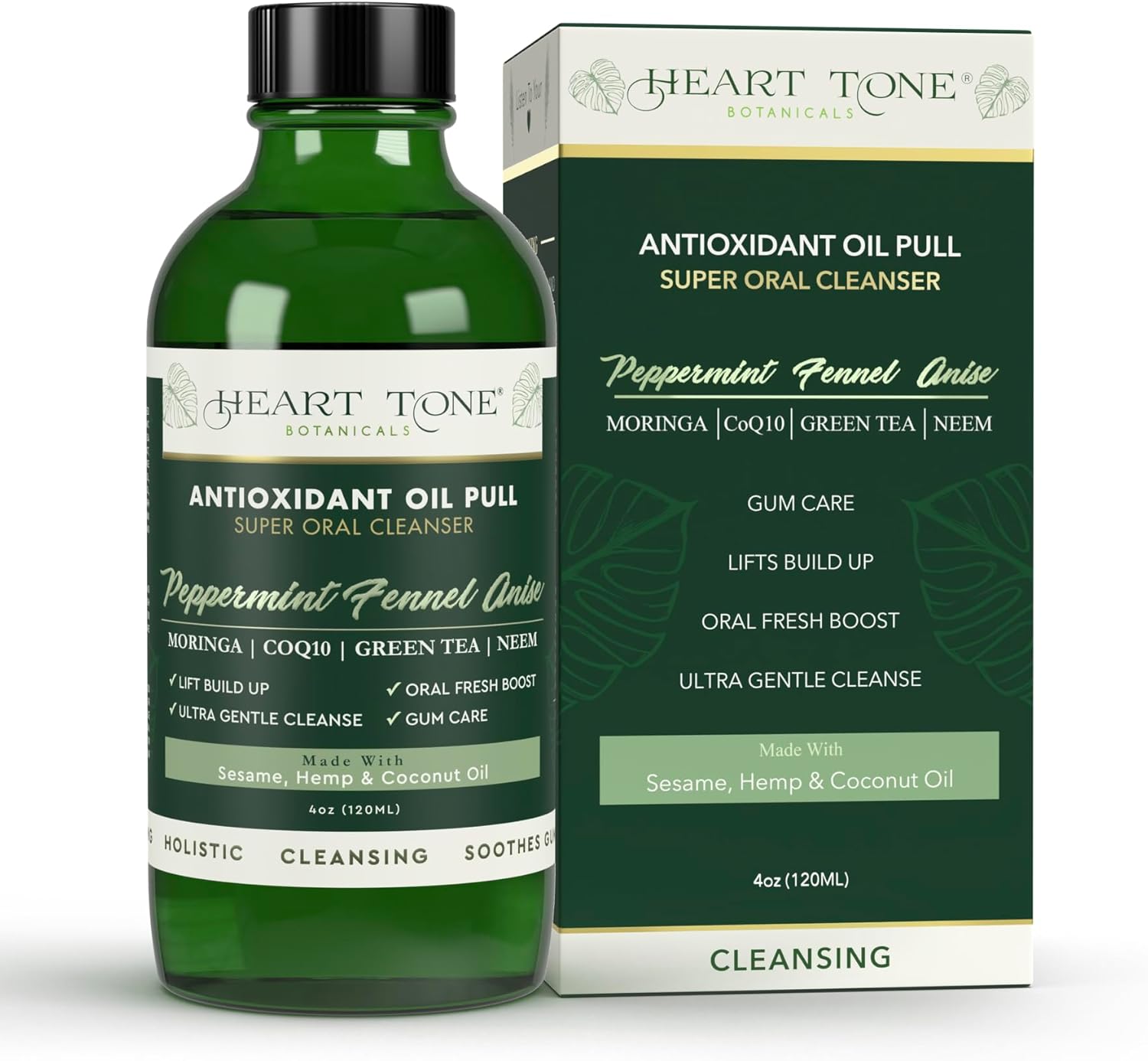
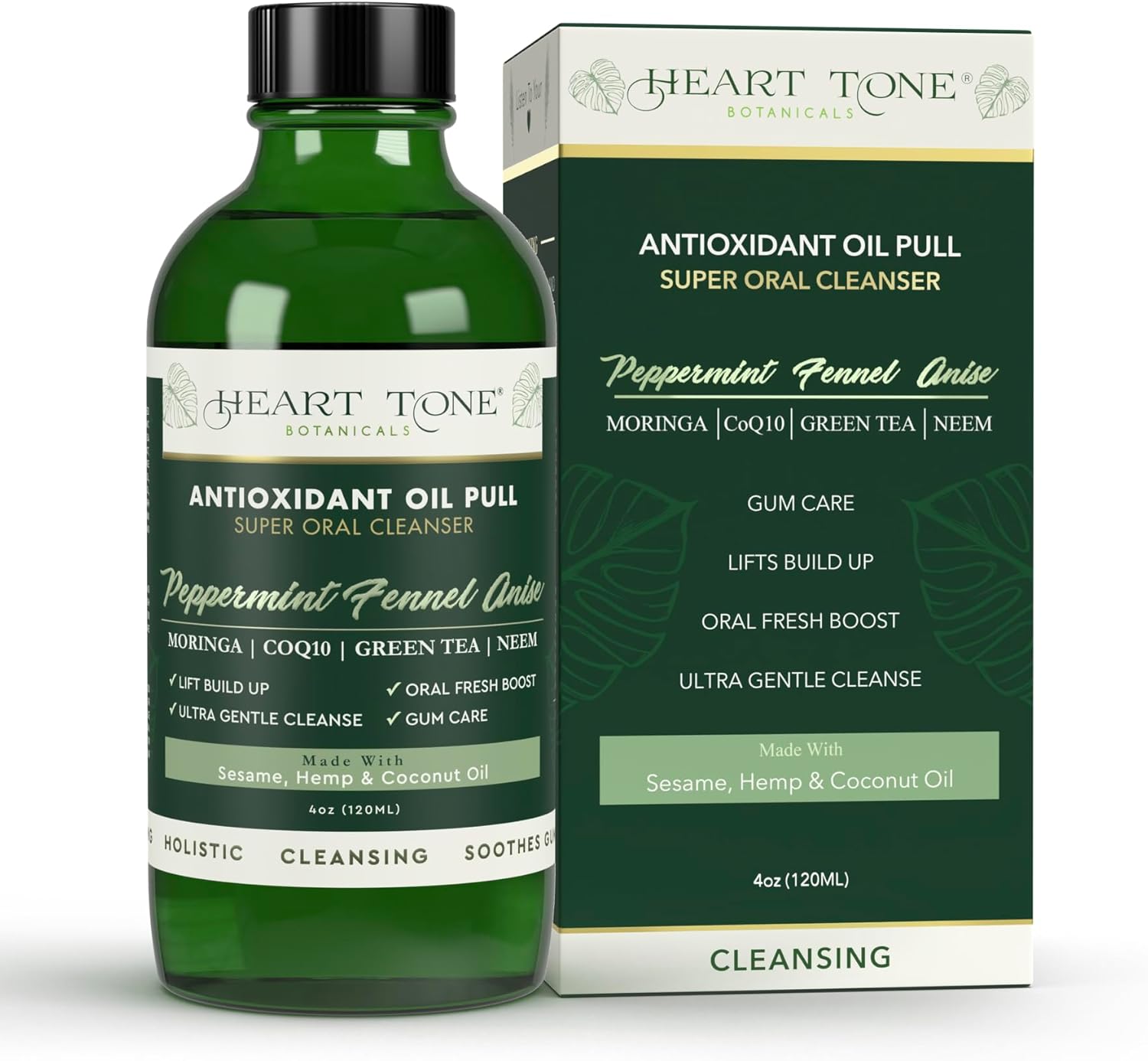
For daily antioxidant-focused oil pulling, the Antioxidant Oil Pull with CoQ10, resveratrol, moringa seed oil, sea buckthorn, and pomegranate seed extract is a complementary formula for alternating use with the ozonated version.
Frequently Asked Questions
Is manuka oil the same as manuka honey?
No. Manuka honey comes from bees that forage on manuka flowers and is a water-soluble sweet substance graded by MGO or UMF concentration. Manuka essential oil is steam-distilled from the leaves and branches of the same plant. The oil is not sweet, not water-soluble, and has a deep, woody aromatic character quite different from honey. In a botanical oil pulling formula built around an oil carrier, you'll always find the essential oil rather than the honey — they work in completely different delivery contexts.
What does a formula with manuka essential oil smell like?
The dominant first impression in a multi-botanical oil pull is usually the peppermint or fennel notes, but the underlying base is warmer and more complex. Manuka, myrrh, and turmeric provide an earthy, resinous depth that gives the formula a character closer to a botanical apothecary than a standard mint rinse. People often describe their first experience as more "herbal," "warm," or "complex" than any single-ingredient oil they've used for pulling before.
Is manuka related to tea tree?
Yes — both manuka (Leptospermum scoparium) and tea tree (Melaleuca alternifolia) belong to the Myrtaceae (myrtle) family, which also includes eucalyptus, clove, guava, and allspice. This botanical kinship means the two plants share certain aromatic characteristics, including some overlapping terpene compound types, but they are distinct species with meaningfully different sensory profiles. Manuka is generally rounder, more resinous, and warmer than tea tree's sharper, more camphoraceous note.
Which oil pull products include manuka?
The Ozonated Oil Pull includes manuka essential oil in its botanical extract complex. The Antioxidant Oil Pull carries a complementary botanical canvas built around CoQ10, resveratrol, moringa, sea buckthorn, and pomegranate — a different set of plant traditions and aromatic notes, well suited to alternating daily use.
Explore the full Antioxidant Oil Pull botanical series: pomegranate | sea buckthorn | turmeric CO2
Also in This Botanical Oil Pulling Series: Tea Tree Oil Pulling: The Australian Botanical in Natural Oral Care

Leave a comment
This site is protected by hCaptcha and the hCaptcha Privacy Policy and Terms of Service apply.