



The Short Answer: Oil Pulling Is an Ancient Morning Habit — Not a Medical Treatment
Oil pulling has been practiced for thousands of years — and in recent years, it has found a new audience among people looking to take a more intentional approach to their oral care routine. If you've been curious about whether it's worth trying, or how it actually fits into a modern routine, this guide covers what the practice involves, where it comes from, and what to look for in a botanical oil pulling blend.
The short version: oil pulling is a simple, time-tested ritual that leaves your mouth feeling clean and fresh. It's not a replacement for brushing and flossing — it's a complement to them.
Where Oil Pulling Comes From
Oil pulling originates from Ayurveda — the ancient Indian system of daily wellness practices known as Dinacharya. In traditional Ayurvedic practice, swishing oil in the mouth is performed first thing in the morning, before eating or drinking, as part of a broader morning ritual that also includes tongue scraping and warm water.
Sesame oil was the oil of choice in traditional Ayurvedic texts, and it has remained a staple in oil pulling formulas for good reason. In recent decades, coconut oil has become a popular alternative — largely because of its pleasant, mild flavor and its smooth, liquid consistency.
Oil pulling is not a trend. It's one of the oldest documented oral hygiene practices in the world, with a history spanning more than 2,000 years.
How to Do Oil Pulling Properly
The process itself is straightforward:
- Do it first thing in the morning — before eating, drinking, or brushing
- Measure out one tablespoon of oil (or use a pre-portioned oil pulling rinse)
- Swish for 10–20 minutes — most practitioners start with 5–10 minutes and work up from there
- Spit into a trash can (not the sink — the oil can solidify and clog pipes over time)
- Rinse with warm water, then proceed with your normal brushing routine
During the swishing process, you'll notice the oil becomes lighter in color and more fluid — that's a normal part of the process as the oil mixes with saliva. Swish gently; this isn't a workout. The goal is thorough coverage, not intensity.
If you're new to the practice, 5–7 minutes is a comfortable starting point. Work toward 15–20 minutes as it becomes part of your daily ritual.
What the Experience Is Actually Like
The sensation of oil pulling is unlike any other oral care step. The oil coats the mouth completely — reaching areas that rinsing alone doesn't touch — and the overall experience is grounding rather than stimulating. By the end of a 15-minute session, most people describe their mouth as feeling noticeably cleaner and fresher than usual.
A botanical oil pulling blend adds layers to that experience. When the oil includes peppermint, spearmint, and wintergreen essential oils, the finish is cooling and fresh. When it includes warming botanicals like myrrh and licorice root, the experience takes on a richness that plain coconut oil alone can't deliver.
Why the Oil You Choose Matters
Not all oil pulling products are the same. Traditional Ayurvedic practice called for sesame oil specifically — and sesame has remained a consistent foundation for oil pulling blends because of its lightweight texture and its neutral, slightly nutty character that pairs well with botanical additions.
Modern oil pulling blends often start with coconut oil or MCT oil, which provide a more neutral base and stay liquid at room temperature — making them easier to use year-round without needing to melt the product first.
The real differentiation comes from the botanical extracts and essential oils added to the base. A basic plain coconut oil pull leaves the mouth feeling clean. A thoughtfully formulated botanical blend elevates the ritual with aroma, sensation, and a depth of traditional ingredients that have been used in oral care for centuries.
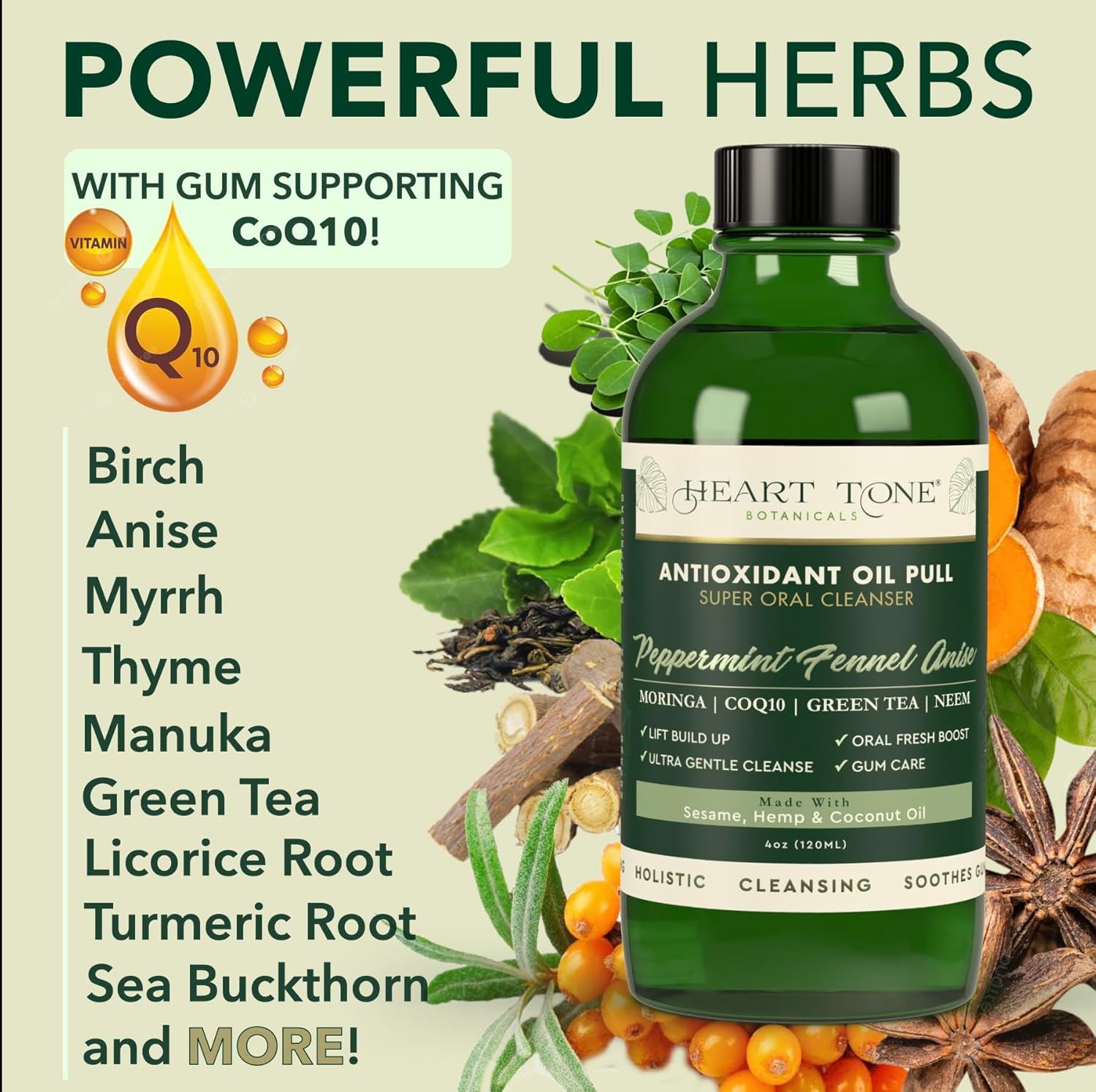
What's in the Heart Tone Antioxidant Oil Pull
The Antioxidant Oil Pull from Heart Tone Botanicals is built on a foundation of complementary oils: Organic Coconut Oil, Organic Sesame Seed Oil and Raspberry seed oil. This triple base delivers a smooth texture with the depth of traditional sesame — the same oil that Ayurvedic practitioners have used for this ritual for millennia.
Beyond the base, the formula includes:
- Organic Moringa Seed Oil — sourced from farm-grown moringa, one of four botanicals Heart Tone cultivates directly at their Vero Beach farm
- Organic Camellia Seed Oil — a light, silky botanical oil with a long history in East Asian personal care traditions
- Organic Hemp Seed Oil — an earthy botanical addition to the oil blend
- Sea Buckthorn Berry Extract and Pomegranate Seed Extract — botanically rich additions with a long history in traditional personal care
- CoQ10 — present in the formula as a traditional wellness addition
- Peppermint, Spearmint, and Wintergreen Essential Oils — a mint complex that delivers an immediate cooling sensation and a fresh, clean finish that lingers
- Organic Star Anise Extract and Birch Essential Oil — warm, slightly sweet botanical aromatics that contribute to the formula's distinctive peppermint-fennel-anise flavor profile
- Manuka Oil — a botanical from New Zealand with an earthy, warm character that has been used in traditional Pacific wellness practices
- Licorice Root Extract and Organic Myrrh Extract — two of oral care's oldest botanicals. Myrrh resin has been used in oral hygiene since antiquity; licorice root has an equally long history in traditional mouth-cleansing preparations
- Organic Thyme, Oregano, Turmeric, and Tea Tree Oils — Mediterranean and botanical traditions, each with a centuries-long history of use in traditional personal care formulations
The result is a peppermint-fennel-anise flavor profile that makes oil pulling genuinely pleasant — not something to push through, but something to look forward to as part of a morning ritual.
Where Oil Pulling Fits in a Complete Oral Care Routine
Oil pulling works best as the first step in a morning oral care ritual — not as a replacement for brushing or rinsing, but as the step that comes before them. After your oil pull:
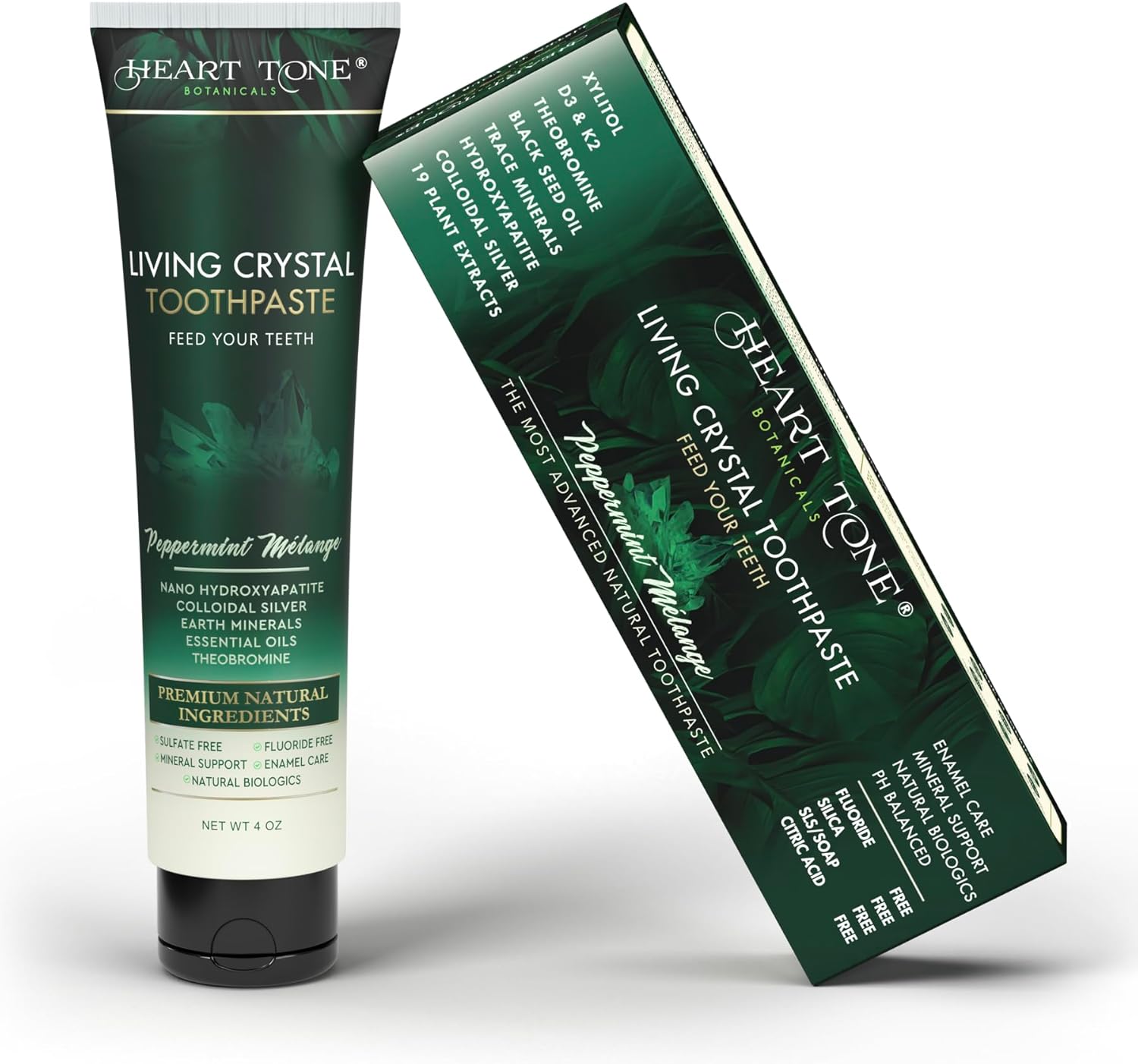
- Brush with a botanical toothpaste — the Living Crystal Toothpaste pairs naturally with an oil pulling routine, built on kaolin clay, xylitol, micro hydroxyapatite, and botanical extracts
- Follow with an alcohol-free botanical rinse — the Restorative Mouth Rinse is crafted with colloidal silver, aloe vera, and 18+ botanicals for a complete fresh finish
Used together, oil pulling, botanical toothpaste, and an alcohol-free rinse create a complete morning ritual that leaves your mouth feeling clean and fresh from the first step to the last.

The Bottom Line
Oil pulling is one of the oldest oral care practices in the world — and one of the simplest. A tablespoon of oil, swished gently for 10–20 minutes, leaves the mouth feeling cleaner and fresher in a way that complements everything that follows. The quality of your oil matters: starting with a botanically rich formula built on sesame and Coconut with a genuine essential oil complex for a fresh, satisfying finish, turns a practical morning ritual into one that actually feels good to do.
Ready to explore oil pulling? The Antioxidant Oil Pull is a good place to start. And if you're building out a complete botanical oral care routine, explore the full Heart Tone oral care collection.
Shop the related Heart Tone routine: Living Crystal Toothpaste, Restorative Mouth Rinse, and Pure Breeze.

Leave a comment
This site is protected by hCaptcha and the hCaptcha Privacy Policy and Terms of Service apply.