

When most people think about natural toothpaste ingredients, they think about baking soda, charcoal, or hydroxyapatite. But there's one ingredient that's been quietly earning a place in premium natural oral care formulas — and it comes from the earth itself.

Zeolite is a naturally occurring mineral with a sponge-like, porous structure that has been used in detoxification, water filtration, and agriculture for decades. Now it's showing up in zeolite toothpaste — and if you care about what you're putting in your mouth a day, it's worth understanding what this mineral actually does.
What Is Zeolite?
Zeolite is a family of microporous, aluminosilicate minerals formed where volcanic ash meets alkaline groundwater over thousands of years. The most common form used in health and oral care products is clinoptilolite — a naturally mined mineral known for its exceptional ion-exchange capacity.
In plain terms: zeolite has an extraordinarily porous, honeycomb-like structure that gives it the ability to attract and hold certain charged particles within its lattice — a property that makes it valuable in water filtration, environmental cleanup, and agricultural use. That same structural character is what's drawing attention in natural oral care formulations.
"Zeolite's cage-like structure — built over thousands of years by volcanic geology — gives it a mineral complexity that fewer, simpler ingredients can match. It's a compelling fit for oral care formulas that take a whole-mineral approach."
Why Zeolite Belongs in Your Toothpaste
Here's what zeolite actually brings to a toothpaste formula:
1. Gentle Polishing Without Harsh Abrasives
Zeolite has a relatively low hardness on the Mohs scale (around 3.5–5.5 depending on particle size), which puts it in a similar range to gentle polishing agents like calcium carbonate. Fine-milled zeolite helps remove surface stains through gentle mechanical action — brightening your smile without the aggressive abrasion that can wear down enamel over time.
Unlike activated charcoal (which has a mixed safety record for enamel abrasion), properly sized zeolite particles are formulated for daily use without the sandpaper effect.
2. A Naturally Alkaline Character
Many people are curious about pH and oral health — and for good reason. When the mouth's environment leans acidic after eating or drinking, it can affect how enamel feels over time. Zeolite is naturally alkaline by character, which is one reason it has been favored in mineral-based toothpaste formulas. It sits comfortably alongside other alkaline mineral ingredients like baking soda and bentonite clay, and is a thoughtful inclusion for people who drink coffee, eat acidic foods, or prefer a mineral-forward approach to their daily oral routine.
3. Mineral Contribution to the Formula
Zeolite is naturally rich in silicon and can carry trace minerals like calcium and magnesium within its lattice structure. It's one ingredient in a broader mineral stack — not a standalone replacement for dedicated mineral ingredients like hydroxyapatite or zinc — but it contributes genuine mineral character to a formula designed from the ground up around earth-derived ingredients.
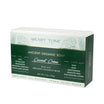
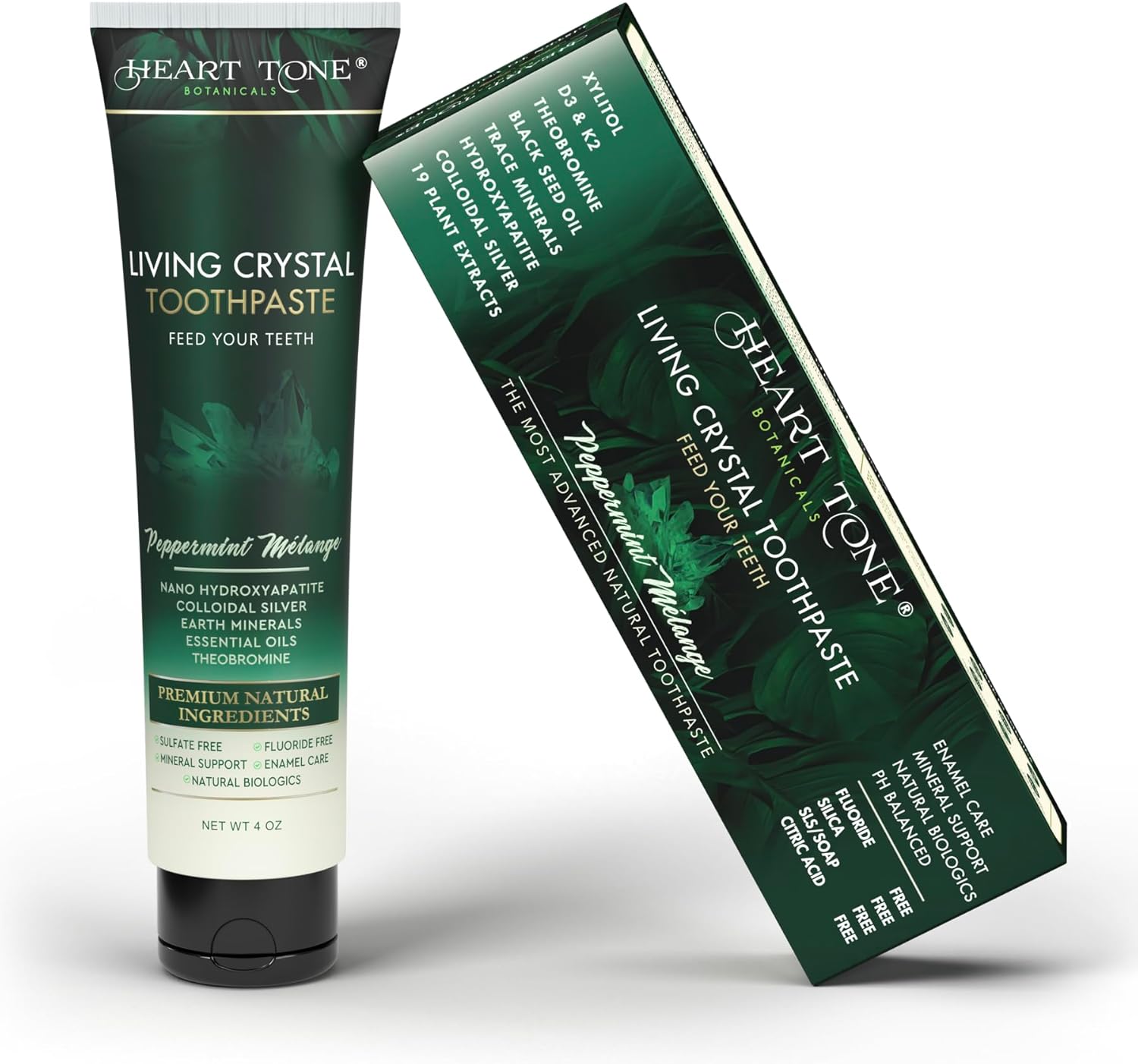
In multi-ingredient formulas like our Living Crystal Toothpaste, zeolite works alongside zinc citrate, L-arginine, and vitamins K-2 and D-3 as part of a complete mineral-based oral care approach.
4. Ion-Exchange Properties
One of zeolite's most studied properties — well documented in water treatment and environmental science — is its capacity to attract and hold certain charged ions within its porous structure. Heavy metal ions like lead and cadmium, for example, are drawn into zeolite's lattice by charge affinity; this is the physical chemistry underlying its use in industrial filtration. While the detox framing around this property can be overstated in marketing, the structural chemistry is real and well understood in non-oral contexts. It's part of why mineral-focused formulators reach for zeolite rather than less structurally complex alternatives.

Zeolite in Context: What It Works With
Zeolite is most meaningful as part of a complete formula, not as a standalone ingredient. Here's how it fits into a well-designed natural toothpaste:
- Bentonite Clay — Another earth-based mineral with deep roots in natural personal care. Like zeolite, bentonite has a layered structure and a natural ion-exchange character — a complementary pairing in a mineral-based formula.
- Zinc — A mineral with a long history in oral care formulations, included for its traditional association with a clean, fresh-feeling mouth.
- L-Arginine — An amino acid with a growing presence in natural oral care formulas, included in Living Crystal Toothpaste as part of its complete ingredient approach.
- Vitamin K-2 + D-3 — Nutritional co-factors that appear in premium oral care formulas alongside mineral ingredients — part of the whole-formula philosophy behind Living Crystal Toothpaste.
This is the philosophy behind Living Crystal Toothpaste — a mineral-rich formula where zeolite works alongside bentonite clay, zinc, L-arginine, and vitamins K-2 and D-3, with every ingredient chosen for a specific role.
Is Zeolite Toothpaste Safe?
For most adults, zeolite in toothpaste is considered safe for daily use when properly formulated. A few things to know:
- Source matters. Zeolite is a mined mineral, and quality varies by source. Look for brands that use pharmaceutical or food-grade zeolite and disclose sourcing.
- Particle size matters. Ultra-fine milled zeolite is necessary for a safe, non-abrasive dental application. Coarse, unmilled zeolite powder is not appropriate for daily toothpaste use.
The Bigger Picture: A Mineral-Based Approach to Oral Care
Conventional toothpaste formulas have long relied on synthetic active ingredients. Many people are now looking for alternatives that take a different path — one built around minerals and botanicals rather than solely synthetic chemistry.
The mineral-based approach draws on ingredients with centuries of use in traditional personal care: zeolite, bentonite clay, zinc, and botanical extracts. These are materials the earth provides, used in forms that have been part of oral care traditions for generations — no synthetic shortcuts required.
That's the core principle behind every product in our oral care collection: use what the earth provides, in forms your body recognizes, without synthetic shortcuts.
How to Get the Most from Zeolite Toothpaste
- Brush for a full 2 minutes — zeolite's mechanical action works best with thorough coverage of all surfaces.
- Use a soft-bristled brush — let the mineral do the work; hard pressure isn't necessary and can cause gum recession over time.
- Spit, don't rinse aggressively — letting the mineral compounds sit on your enamel for a few minutes after brushing maximizes contact time.
- Pair with a botanical mouthwash — follow your brush routine with a rinse like our Restorative Mouth Rinse, formulated with 18 botanical extracts for a complete clean-ingredient system.
"Your mouth is the gateway to your body. What you put in it matters more than most people realize."
Ready to experience what a mineral-based toothpaste actually feels like? Living Crystal Toothpaste brings zeolite, bentonite clay, zinc, L-arginine, and vitamins K-2 and D-3 together in one handcrafted formula — made in the USA by a Heart Tone Botanicals.
Shop Living Crystal Toothpaste →
Complete your oral care routine: pair Living Crystal Toothpaste with our Restorative Mouth Rinse — 18 botanical extracts, alcohol-free, and handcrafted on our Florida farm. Or explore the full Oral Care Collection.
Want to go deeper? Read Zinc in Toothpaste: What This Mineral Does for Your Gums and Breath, L-Arginine Toothpaste: What This Amino Acid Does for Sensitive Teeth, or Theobromine Toothpaste: The Natural Fluoride Alternative.
Try It in Living Crystal Toothpaste
Heart Tone Botanicals' Living Crystal Toothpaste contains zeolite alongside a full spectrum of mineral and botanical ingredients — theobromine, hydroxyapatite, zeolite, L-arginine, kaolin clay, zinc citrate, vitamin K-2, and colloidal silver. No SLS, no fluoride, no synthetic fillers. Small-batch crafted in Vero Beach, FL.

Leave a comment
This site is protected by hCaptcha and the hCaptcha Privacy Policy and Terms of Service apply.