












For decades, fluoride has been the default ingredient in toothpaste. But a growing number of people are looking for alternatives — and hydroxyapatite, the same mineral that makes up 97% of your tooth enamel, has emerged as one of the most compelling fluoride-free choices in modern oral care.

If you're exploring your options because you want a natural toothpaste for sensitive teeth, this distinction matters even more. The right formula should be gentle on enamel and comfortable for daily use — not relying on harsh synthetic compounds.
Here's what four decades of international use — and your daily routine — actually support.
What Is Hydroxyapatite?

Hydroxyapatite (HAp) is a naturally occurring form of calcium phosphate. It's not some exotic lab creation — it's literally what your teeth are made of. When used in toothpaste, hydroxyapatite particles share the same mineral composition as enamel itself, making it one of the most biocompatible ingredients in oral care.
Japan has been using hydroxyapatite toothpaste since the 1980s — it has been a mainstream oral care ingredient there for over 40 years. In 1993, the Japanese government officially recognized hydroxyapatite as an approved oral care ingredient, and it has remained a staple of Japanese oral care ever since.
The global hydroxyapatite market is growing at 4.7% annually, projected to reach $4.4 billion by 2034 — driven largely by the demand for fluoride-free oral care alternatives.
How Fluoride Works (And Its Limitations)
Fluoride works by forming a layer of fluorapatite on the tooth surface. This layer is more acid-resistant than natural enamel, which is why fluoride has been the standard tooth-surface-prevention ingredient for decades.
But fluoride comes with well-documented concerns:
- Fluorosis risk — the CDC reports that overexposure causes white spots and weakened enamel, especially in children. An estimated 65% of American adolescents now show signs of dental fluorosis.
- Toxicity warnings — every fluoride toothpaste in the US carries a poison control warning label, required by the FDA since 1997
- Environmental accumulation — fluoride doesn't break down in the environment and accumulates in water systems and soil
- Not biocompatible — fluoride is foreign to your body's natural chemistry. The fluorapatite layer it creates is chemically different from natural enamel
- Concentration-dependent — too little fluoride is ineffective; too much causes harm. The beneficial window is narrow
How Hydroxyapatite Differs
Unlike fluoride, which introduces a chemically distinct compound to the tooth surface, hydroxyapatite is composed of the same mineral that makes up natural enamel. This is what makes it a biocompatible choice for daily oral care — it works with your body's own chemistry rather than introducing something foreign.
This is why hydroxyapatite is often described as a "biomimetic" ingredient: its composition mirrors the natural mineral structure of your teeth, rather than adding a synthetic layer on top of it.
Hydroxyapatite vs. Fluoride: Head-to-Head Comparison
| Feature | Hydroxyapatite | Fluoride |
|---|---|---|
| Mineral Composition | ✅ Same mineral as tooth enamel (97% of enamel) | ✅ Forms a fluorapatite layer on the tooth surface |
| Biocompatible | ✅ Same material as teeth | ❌ Foreign chemical compound |
| Safe if swallowed | ✅ Non-toxic at any amount | ❌ Poison control warning required |
| Safe for children | ✅ All ages, no risk of fluorosis | ⚠️ Risk of fluorosis in developing teeth |
| Appearance | ✅ Fills surface micro-pores for a visibly cleaner, brighter look | ❌ No brightening benefit |
| Comfort for sensitive users | ✅ Gentle and comfortable for sensitive oral tissues | ⚠️ Limited comfort benefit |
| Track record | ✅ 40+ years in Japan, growing globally | ✅ 70+ years worldwide |
| Environmental impact | ✅ Naturally occurring mineral, biodegradable | ⚠️ Accumulates in water and soil |
Micro vs. Nano Hydroxyapatite: Form Matters
Not all hydroxyapatite is created equal. You'll see two forms on the market:
- Nano-hydroxyapatite (n-HAp) — needle-shaped particles at the nanometer scale. While widely used, there are emerging questions about how nano-scale particles interact with biological systems. Some researchers have raised concerns about needle-shaped nanoparticles penetrating tissue in ways that spherical particles don't.
- Micro-hydroxyapatite (m-HAp) — spherical, micro-ionized particles that are larger and rounder. These particles integrate with the tooth surface without the penetration concerns associated with nano-scale needles.
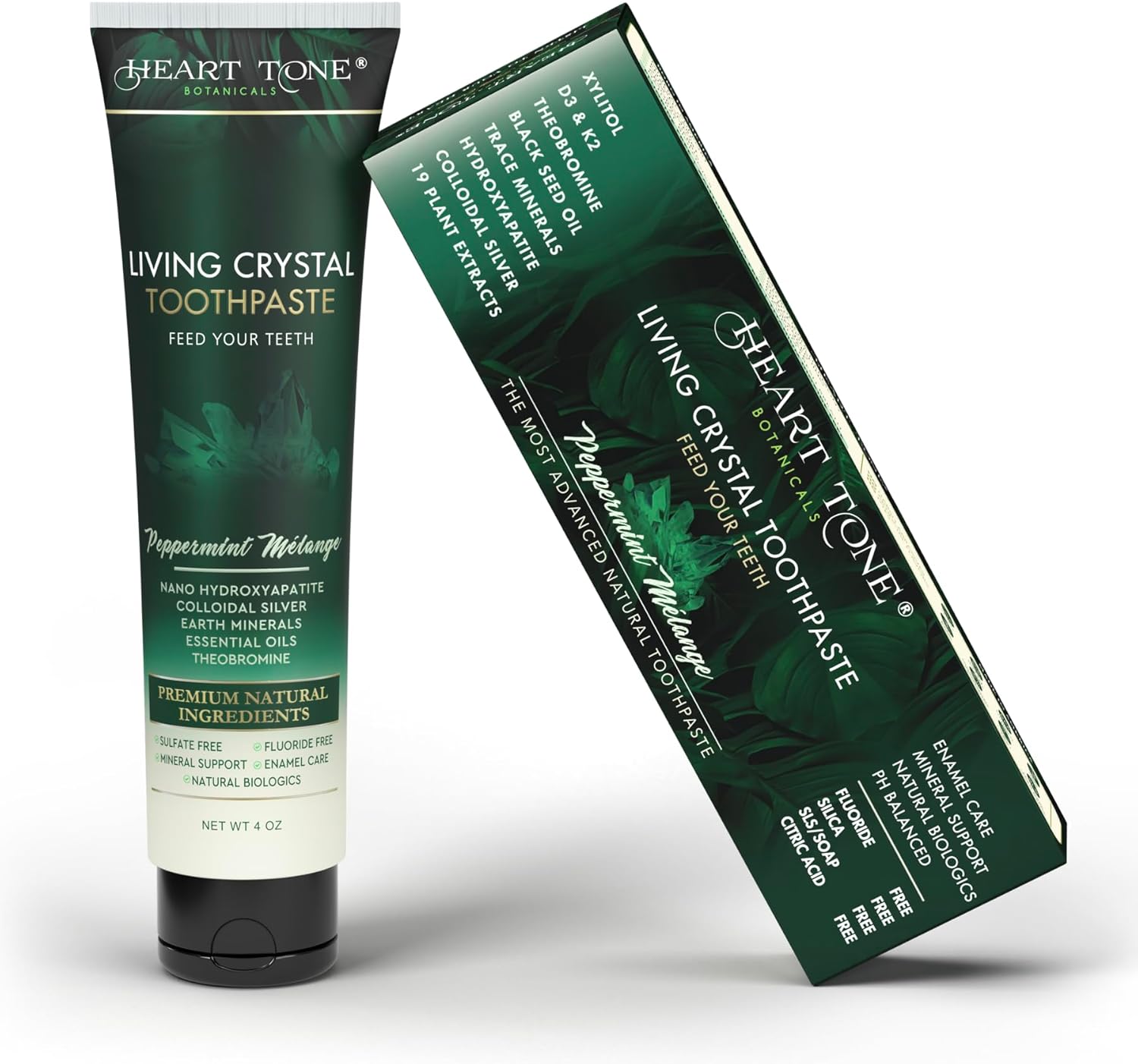
Our Living Crystal Toothpaste uses micro-hydroxyapatite — the spherical, micro-ionized form. We chose this form specifically because it delivers the benefits of hydroxyapatite with a safety profile we're completely comfortable with. Learn more about the difference between spherical and rod-shaped hydroxyapatite →
The Theobromine Advantage
The best hydroxyapatite toothpaste doesn't just stop at one ingredient. Our Living Crystal Toothpaste goes further by adding theobromine — a compound naturally found in cacao beans.
Theobromine has a long history of interest in oral care, and it complements the biocompatible character of hydroxyapatite as part of a complete botanical formula. Read more about what theobromine brings to oral care →
Yes — theobromine actually comes from the same plant as chocolate. Nature offers some interesting ingredients for daily oral care.

Colloidal Silver: A Long-Used Botanical
Living Crystal Toothpaste also features colloidal silver, which has been used in traditional oral care and personal care formulations for centuries. Valued for its gentle character, colloidal silver contributes to a clean, comfortable feeling without the harshness of the synthetic additives found in many conventional toothpastes. Read what the research says about colloidal silver in oral care →
Combined with hydroxyapatite and theobromine, colloidal silver completes a formula that draws from both centuries of traditional use and thoughtful botanical formulation.
Why Abrasivity Matters Too
Even the most carefully selected ingredients can be undermined by an overly abrasive toothpaste formula. The RDA (Relative Dentin Abrasivity) scale measures how much a toothpaste wears down tooth structure:
- 0-70 RDA: Low abrasion (safest for enamel)
- 70-100 RDA: Medium abrasion
- 100-150 RDA: High abrasion
- 150-250 RDA: Harmful (FDA limit is 250)
Living Crystal Toothpaste has a lab-tested RDA of 35 — among the lowest of any toothpaste on the market. That means it works gently on your enamel without the abrasion that wears it down over time. See our RDA lab test results →
If sensitivity is your primary concern, an ultra-low abrasion toothpaste paired with hydroxyapatite gives you the gentlest possible formula for daily use.
The Bottom Line
Hydroxyapatite isn't just an alternative to fluoride — in many ways, it's an upgrade. It's composed of the same mineral your teeth are made of, it's safe at any age, and when combined with theobromine, colloidal silver, and farm-grown botanicals (including aloe vera, neem, and moringa), it delivers a comprehensive oral care approach that works with your body's chemistry instead of against it.
The track record (40+ years in Japan) is proven. The biocompatibility profile is unmatched. And the market is voting with its wallet — hydroxyapatite is one of the fastest-growing segments in oral care.
Ready to make the switch? Try our Living Crystal Toothpaste — crafted with micro-hydroxyapatite, theobromine, colloidal silver, and botanicals grown on our own natural regenerative farm.
Frequently Asked Questions
Is hydroxyapatite toothpaste as effective as fluoride?
Hydroxyapatite has been used as a mainstream oral care ingredient in Japan since 1993 — giving it a 40-year track record in one of the world's most dental-health-conscious countries. It offers a fluoride-free approach to daily oral care with a biocompatibility profile that fluoride simply can't match: it's the same mineral your teeth are already made of.
Is hydroxyapatite safe for children?
Hydroxyapatite is one of the safest toothpaste ingredients available for children. Because it's the same mineral that makes up tooth enamel, there's no toxicity risk if swallowed — unlike fluoride, which requires supervision and carries a poison control warning. It's suitable for all ages from first tooth onward.
What's the difference between nano and micro hydroxyapatite?
Nano-hydroxyapatite uses needle-shaped nanoparticles, while micro-hydroxyapatite uses larger, spherical particles. Both forms are used in oral care, but micro-hydroxyapatite avoids the emerging concerns about nano-scale particle penetration into tissue. Read our detailed comparison here.
Can I use hydroxyapatite toothpaste with sensitive teeth?
Many people find hydroxyapatite toothpaste particularly well-suited for sensitive teeth. It's one of the most biocompatible options available, and combined with an ultra-low RDA formula (ours is lab-tested at 35), it's among the gentlest daily options for sensitive oral tissues.
How long does it take for hydroxyapatite toothpaste to work?
Many people notice a difference in how their teeth feel — including a smoother, cleaner sensation and a visibly brighter appearance — within a few weeks of consistent use. For best results, brush twice daily and let the toothpaste foam sit on your teeth for 1-2 minutes before rinsing.
Complete Your Natural Oral Care Routine
If you're switching from fluoride to hydroxyapatite, it's worth building the rest of your routine around the same philosophy — effective, clean, and free from synthetic additives.
- Living Crystal Toothpaste — micro-hydroxyapatite, theobromine, and colloidal silver. Fluoride-free and thoughtfully formulated for daily use.
- Restorative Mouth Rinse — alcohol-free botanical mouthwash with colloidal silver and 22 botanicals, a natural complement to your toothpaste routine.
- Bamboo Toothbrush — ultra-fine 10,000-bristle design. Gentler on enamel, better mineral contact time, and fully biodegradable.

Leave a comment
This site is protected by hCaptcha and the hCaptcha Privacy Policy and Terms of Service apply.