












The Short Answer: It Binds Odor Molecules — That's the Whole Job

If you've spent any time reading natural deodorant ingredient lists, you've probably seen zinc ricinoleate and skimmed right past it — it's not as recognizable as coconut oil or as talked-about as baking soda. But it's often the ingredient doing the actual odor-control work in a natural formula, and it does that job in a way that's genuinely different from what most people assume a deodorant ingredient has to do. It doesn't work at a microscopic level at all. It works through simple physical chemistry, binding the molecules that carry odor instead of trying to change what's happening on your skin.

What Is Zinc Ricinoleate?
Zinc ricinoleate is a zinc salt of ricinoleic acid, a fatty acid derived from castor oil — the same plant-based oil that has a long history of use in traditional skincare and haircare. Castor oil itself has been pressed from castor seeds for centuries, valued for its thick, emollient texture. Zinc ricinoleate is what you get when that fatty acid is combined with zinc, producing a fine powder that's used almost exclusively for one purpose in cosmetic formulas: managing odor.
It shows up in a wide range of personal care products — not just deodorant, but some foot powders, pet odor products, and air-care formulas — because the way it interacts with odor molecules isn't specific to body chemistry. It's a general-purpose odor-binding ingredient that happens to be very well suited to underarm use.
How It Actually Works
Here's the part that surprises most people: zinc ricinoleate doesn't act on anything happening at a microscopic level on your skin. It works through direct chemistry with the odor molecules themselves. The zinc ion in the compound attaches to the molecules that carry odor — many of which are sulfur-containing compounds — and the long fatty-acid chain wraps around them, holding them in place rather than letting them evaporate off the skin and reach your nose.
Two things follow from that mechanism, and both matter for how a deodorant feels day to day:
- It doesn't block sweat glands. Zinc ricinoleate isn't an antiperspirant ingredient — it doesn't interrupt perspiration the way aluminum compounds do. Sweat continues normally; the ingredient's job is limited to what happens to odor molecules after they reach the skin's surface.
- It doesn't rely on shifting your skin's pH. Some natural deodorant ingredients, baking soda in particular, work partly by making the underarm environment less hospitable — which is also why they can cause irritation for people with sensitive skin. Zinc ricinoleate's binding action happens independently of pH, which is part of why it's often paired with gentler, non-baking-soda formulas.
Why This Distinction Matters for Sensitive Skin
A lot of natural deodorant switchers assume irritation is just the price of going aluminum-free — a few weeks of redness and bumps before your skin "adjusts." Often, though, the irritation isn't from going natural at all. It's from a specific ingredient, most commonly baking soda, whose alkaline pH doesn't sit well with the naturally more acidic pH of underarm skin for a lot of people.
An odor-binding ingredient like zinc ricinoleate sidesteps that problem entirely, since its function doesn't depend on changing the skin's chemistry. That's a meaningful difference if you've tried a baking-soda-based natural deodorant before and found it uncomfortable, but still want a formula that isn't just fragrance covering up odor.
What Else a Natural Deodorant Formula Needs
Odor-binding is only one job a deodorant has to do. A complete formula also needs to manage moisture and actually glide onto skin without feeling greasy or leaving white residue. That's typically where ingredients like arrowroot powder come in — a fine root starch used to absorb excess moisture through the day — alongside clays like kaolin and bentonite, which serve a similar absorbent role. Plant oils and butters (coconut oil, shea, jojoba) round the formula out, giving it a texture that glides on smoothly instead of dragging or crumbling.
No single ingredient carries a natural deodorant on its own. The formulas worth paying attention to are the ones where each ingredient has a distinct, identifiable job — rather than a long list padded with botanicals that sound nice but don't actually do anything for odor, moisture, or texture.
The Bottom Line
Zinc ricinoleate is one of the more quietly effective ingredients in natural deodorant — not because it's flashy, but because its mechanism is fundamentally different from what most people expect. It doesn't interrupt sweat, and it doesn't depend on an aggressive pH shift to do its job. It simply binds the molecules that cause odor and holds onto them. Paired with a moisture-absorbing ingredient like arrowroot and a smooth, plant-based base, it's part of what separates a natural deodorant that actually works from one that's natural in name only.
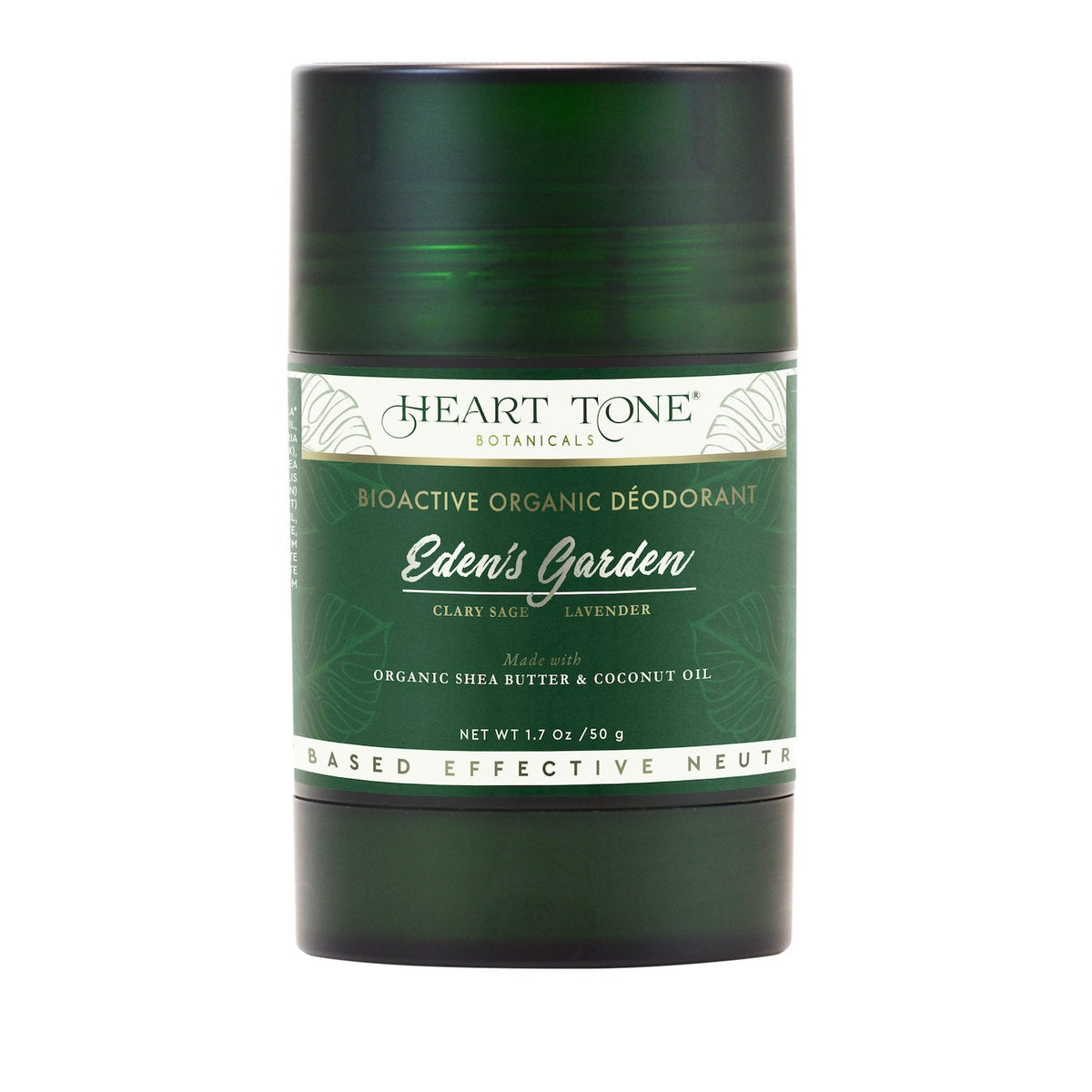
Heart Tone Botanicals' Eden's Garden Bioactive Deodorant and Gentleman's Reserve Bioactive Deodorant are both formulated with zinc ricinoleate alongside arrowroot powder, coconut oil, and shea butter — aluminum-free and baking soda-free, without synthetic fragrance. If citrus and greenery are more your scent, Grove Island and Jamaica Estate Bioactive Deodorant use the same core formula in different scent profiles, and The Classic Bioactive Deodorant carries the same core formula without the added botanical fragrance oils used in the other scent lines. You can browse the full lineup, along with the rest of our body care line, in our Body Care collection.
For more on making the switch to natural deodorant without the adjustment-period discomfort, read our guide to Natural Deodorant for Sensitive Skin: What to Look For (And What to Skip)


Leave a comment
This site is protected by hCaptcha and the hCaptcha Privacy Policy and Terms of Service apply.