












The Short Answer: Most of a Lotion Bottle Is Water — and That's Not Necessarily a Flaw

Pick up almost any lotion, organic or not, and check the first ingredient. In the overwhelming majority of cases, it's water (sometimes listed as aqua). That's not a red flag on its own — water is what makes a lotion light and easy to spread. But it does mean the word "organic" on the front of the bottle tells you almost nothing about how much of what's inside is actually doing the moisturizing work.

Understanding what a moisturizer is actually built from — and what job each ingredient is doing — makes it a lot easier to read a label and know what you're paying for.
What "Lotion" Means, Formulation-Wise
A lotion is an emulsion: water and oil blended together with an emulsifier so they don't separate. That's the whole category, whether it's a $6 drugstore bottle or a $40 "clean beauty" version. The ratio of water to oil is what determines the texture — more water makes a lotion thinner and faster-absorbing, more oil makes it richer and slower to sink in. Neither is inherently better; it depends on how dry your skin is and how it feels to you.
A body butter, by contrast, is typically not an emulsion at all. It's a blend of plant butters and oils with little to no water, which is why it has a thicker, more concentrated texture straight out of the jar.
The Three Jobs Every Moisturizing Ingredient Is Doing
Humectants — Draw Moisture In
Humectants attract water to the surface of the skin. Glycerin, aloe vera, and honey are common examples. They're doing a lot of the "hydrating" work you see promised on lotion labels, and they work best when they're not the only thing in the formula — on their own, in a dry environment, a humectant can pull moisture from deeper skin layers instead of the air.
Emollients — Smooth and Soften
Emollients are lightweight oils that fill in the rough, flaky texture on the surface of dry skin, leaving it feeling smoother. Meadowfoam seed oil and jojoba oil are two examples used in botanical formulations — they absorb relatively quickly and don't leave a heavy residue.
Occlusives — Seal Moisture In
Occlusives sit on top of the skin and slow down water loss. This is where butters — shea, kokum, cocoa — and waxes do their work. They're heavier and slower to absorb, which is exactly why a rich body butter feels different from a light lotion: it's leaning much more heavily on the occlusive layer.
Why "Organic" Doesn't Tell You the Ratio
A product can legitimately use "organic" on the label if a portion of its ingredients — sometimes a fairly small portion — are certified organic, while the base of the formula is still mostly water, a synthetic emulsifier, and a preservative system. None of that makes it a bad product. But it does mean "organic" is a certification claim about specific ingredients, not a promise about the overall concentration of humectants, emollients, and occlusives in the bottle.
The way to actually check is to read past the first three ingredients (usually water, an emollient or emulsifier, and glycerin) and see how far down the list you have to go before you hit a recognizable plant oil or butter. The closer to the top, the more of the formula it makes up.
What a Butter-Based Formula Does Differently
Because a body butter skips the water phase, it doesn't need an emulsifier to hold water and oil together, and it doesn't need to dilute its plant butters and oils to keep a pourable, lotion-like texture. Everything in the jar is there to moisturize, soften, or hold moisture in.
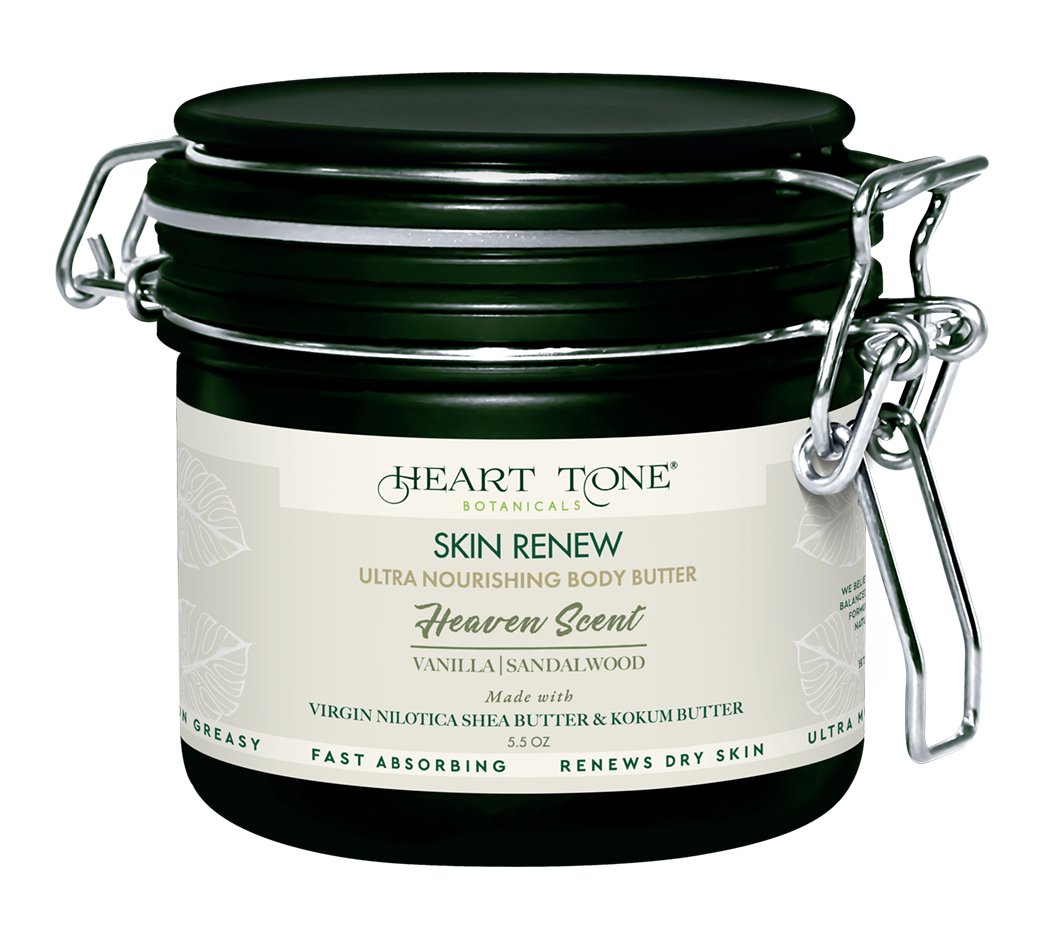
Heart Tone's Botanical Renew Body Butter is built this way: virgin Nilotica shea nut butter and kokum butter for the occlusive layer, meadowfoam seed oil as the emollient, and organic arrowroot powder to keep the texture light and non-greasy rather than waxy. Elderberry extract and non-GMO vitamin E round out the formula, and each of the three scent profiles builds on that same base with a different essential oil or botanical extract layer on top. It's a genuinely different structure from a water-based lotion — not a "cleaner" version of the same thing, but a formula built around plant butters instead of water.
How to Read a Body Care Label in Under a Minute
- Check the first three ingredients — if it's water, an emulsifier, and glycerin, the rest of the formula is diluted around that base
- Look for named plant oils and butters (shea, kokum, jojoba, meadowfoam) rather than generic "emollients" or "conditioning agents"
- Notice texture — a thin, fast-absorbing lotion is leaning on water and humectants; a thick, slow-to-absorb butter is leaning on occlusives
- Remember that "organic" describes specific ingredients, not the formula's overall water-to-oil ratio
The Bottom Line
There's nothing wrong with a water-based organic lotion — for some skin types and some climates, a lighter formula feels better day to day. But if you've tried lotion after lotion and your skin still feels tight and dry an hour later, the issue often isn't the "organic" label — it's that you're still using a mostly-water formula that's light on the occlusive layer doing the actual sealing-in work.
If you want to see what a butter-first formula feels like instead of a water-first one, the Botanical Renew Body Butter is a good place to compare. You can also browse the full Body Care collection for the rest of Heart Tone's bath and body lineup, or read more about how plant butters are graded in Unrefined vs. Refined Shea Butter: What Actually Changes for Your Skin.

Leave a comment
This site is protected by hCaptcha and the hCaptcha Privacy Policy and Terms of Service apply.