












The Short Answer: You Can't Reverse Hair Damage — But You Can Change How It Looks and Feels

Every hair product on the shelf seems to promise "repair," and it's easy to take that word literally. But once a strand of hair grows past the scalp, it's no longer living tissue. There's no blood supply, no cell division, and no biological process that can rebuild a section of hair shaft that's already been damaged. What a well-formulated shampoo and conditioner can do is smooth the surface, add moisture back where it's been stripped away, and make damaged strands look and feel noticeably better in the meantime.

That distinction matters more than it sounds like it should, because it changes what you should actually be looking for on a label — and what's worth skipping.
Why Hair Can't "support" the Way Skin Does
The visible part of a hair strand is made of keratin, a structural protein arranged in overlapping layers called the cuticle. Once that cuticle is raised, chipped, or stripped — from heat, chemical processing, sun exposure, or just daily friction — there's no living cell underneath to rebuild it. Hair grows from the follicle, below the scalp. Everything above the scalp is, in a sense, already "finished," which is exactly why damage accumulates toward the ends and why split ends can only be trimmed away, never undone.
This is also why a product claiming to "repair damage at a cellular level" should raise an eyebrow. Cosmetic formulas work on the surface and the outer structure of the strand — not on living cells, because there aren't any to work on.
What "Repair" on a Label Usually Means
When a genuinely well-formulated product uses the word "repair," it's almost always describing one of these three things:
- Temporarily smoothing the cuticle — filling in rough, lifted areas on the hair's surface so light reflects more evenly and strands feel less snaggy
- Replacing lost moisture — damaged hair loses its ability to hold onto water, and humectants and emollients can restore some of that moisture balance until the next wash
- Reducing friction and breakage going forward — a smoother, better-conditioned strand catches less on itself and on other hairs, which means less mechanical damage accumulating from here on out
None of that reverses existing structural damage. It changes how the hair behaves and looks until the next wash, which for most people is exactly the improvement they're after.
What Actually Causes the Damage
Before chasing a fix, it helps to know what's doing the damage in the first place:
- Heat styling — blow dryers, flat irons, and curling irons above roughly 300°F can weaken the protein structure of the cuticle over repeated use
- Chemical processing — color, bleach, relaxers, and perms all work by breaking down part of the hair's internal structure to change its shape or color
- Mechanical stress — brushing dry hair, tight styles, and friction from rough fabrics gradually lift and chip the cuticle
- Sun and environmental exposure — UV exposure and chlorinated or hard water can dry out and roughen the hair surface over time
- Harsh cleansers — sulfate surfactants can strip more of the hair's natural lipid layer than necessary, leaving strands more porous and prone to moisture loss
What to Look For in a Formula That Actually Helps
A shampoo and conditioner built for compromised strands should lean on ingredients that add moisture, smooth the cuticle, and avoid stripping the hair further:
- Plant-based leaf extracts — botanicals like papaya leaf, moringa leaf, guava leaf, and bay leaf have a long history of use in traditional hair care formulations, valued for how they contribute to a softer, smoother feel
- Shea butter and coconut milk — rich emollients that help seal in moisture and leave strands feeling softer to the touch
- Aloe leaf juice — lightweight and soothing, often used to support a comfortable moisture balance without weighing hair down
- Plant-derived conditioning agents — ingredients like guar-derived conditioning compounds detangle and smooth the cuticle surface without relying on silicones that can build up over time
- Botanical peptide and ferment complexes — pea peptide, bamboo ferment, and radish root ferment are increasingly common in natural formulations aimed at giving strands a fuller, smoother feel
- Sulfate-free surfactants — gentler cleansing bases clean the hair and scalp without stripping away the lipid layer that damaged hair can least afford to lose
What to skip: silicones that coat rather than condition (they can make hair feel smooth in the short term while actually trapping moisture out over time), and formulas that lean almost entirely on fragrance and filler water with only a trace of anything active.
A Routine That Slows Down Further Damage
Since existing damage can only be managed — not reversed — the highest-leverage move is cutting down how much new damage accumulates:
- Use a heat protectant before any hot tool, and keep styling tools under 350°F when possible
- Detangle gently, starting from the ends and working up, ideally on damp conditioned hair
- Space out chemical processing where you can, and give hair time to recover between color or chemical services
- Trim regularly — split ends don't stop splitting on their own; they travel up the strand until they're cut
- Choose a sulfate-free wash routine that cleans without over-stripping natural oils
The Bottom Line
Can hair products actually repair damage? Not in the biological sense — but a well-formulated shampoo and conditioner can meaningfully change how damaged hair looks, feels, and behaves, while a consistent routine slows down how much new damage adds up. That's a realistic goal, and it's the one worth shopping for.
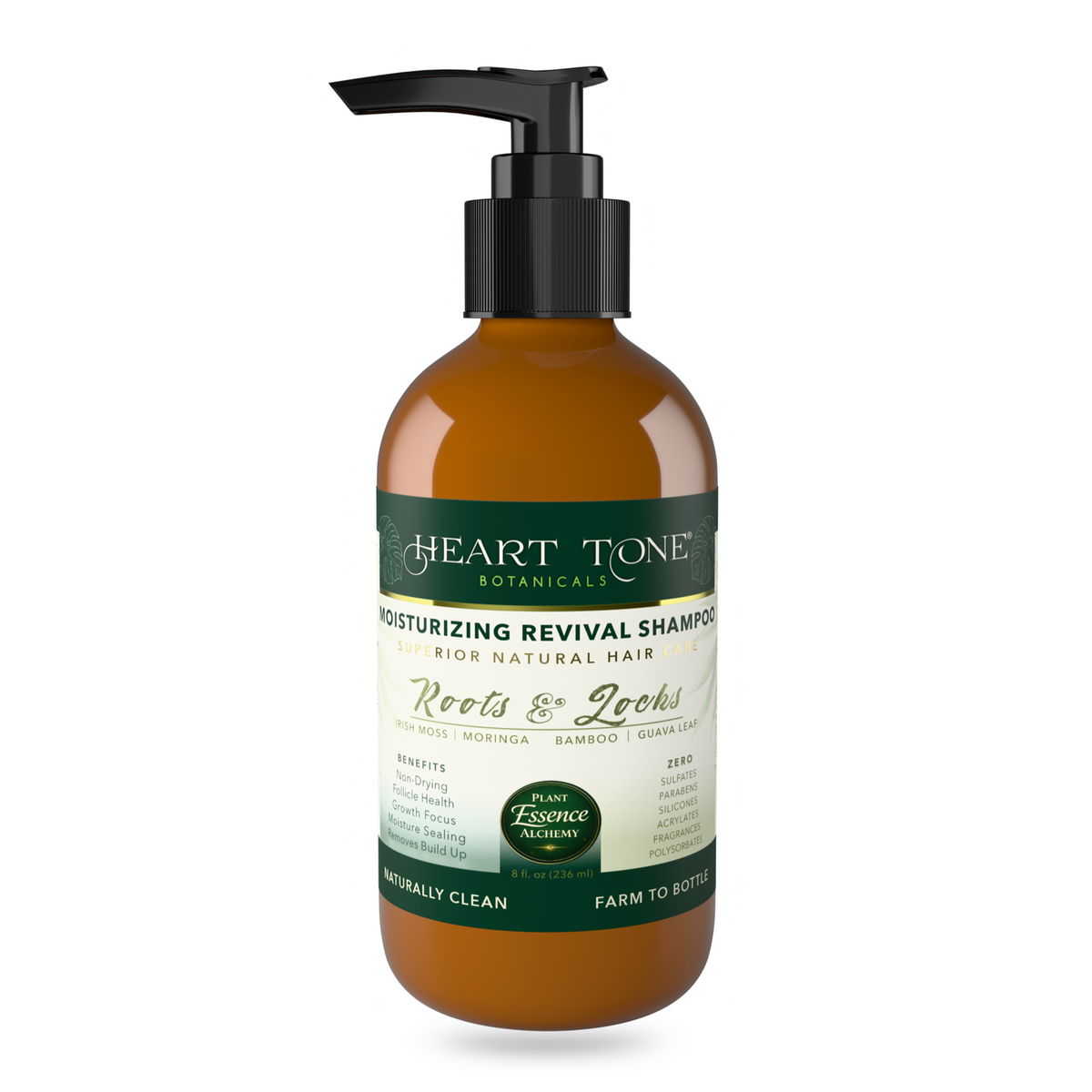
The Roots & Locks Moisturizing Revival Shampoo and Roots & Locks Moisturizing Revival Conditioner from Heart Tone Botanicals share a base of papaya, moringa, neem, guava, and bay leaf extracts, coconut milk, and a sulfate-free, silicone-free formula. The conditioner adds shea nut butter to help seal in moisture, built to leave compromised strands feeling softer, smoother, and more manageable. Explore our full natural hair care collection for a complete botanical wash-day routine.

Leave a comment
This site is protected by hCaptcha and the hCaptcha Privacy Policy and Terms of Service apply.