












The Short Answer: Natural Methods Lift Stains — They Don't Change Your Base Tooth Color

Search "natural teeth brightening" and most of what comes back promises the same thing: a dramatically whiter smile from something already in your kitchen. The real story is narrower and more useful. Natural methods — gentle polishing, oil pulling, a consistent daily habit — work on one specific layer of what makes a tooth look dull: the staining sitting on top of the enamel. They don't reach the layer underneath that actually sets your tooth's base color.
Knowing the difference is the single most useful thing to understand before trying any natural method, because it changes what a realistic result looks like.
Two Different Things People Lump Together as "brightening"
Surface Stains (Extrinsic)
Coffee, tea, red wine, berries, and tobacco leave pigment on the outer enamel surface over time. This kind of staining builds gradually with diet and habit — and it's the layer that responds to gentle polishing, mild abrasion, and a consistent daily routine.
Base Tooth Color (Intrinsic)
Underneath the enamel sits dentin, a naturally yellow-toned layer that shows through to different degrees depending on how thick and translucent a person's enamel is. This base color is set by genetics and enamel thickness — not by anything sitting on the surface — and it's the layer that at-home natural methods aren't built to reach.

What Natural Methods Can Actually Reach
- Gentle polishing — a mild, low-abrasion base, like the traditional clays used in some natural toothpaste formulas, can help lift surface residue with regular use.
- Baking soda, used a few times a week — a mild abrasive on its own, without the acidity of a lemon or vinegar rinse.
- Oil pulling — a swishing ritual with no scrubbing action, which makes it one of the gentler habits people add alongside brushing.
- Crunchy, fibrous produce — apples, celery, and carrots create a light mechanical action from chewing. Nothing chemical about it.
Every one of these works on the same layer: what has settled onto the enamel surface, not what the enamel is built from underneath.
What Natural Methods Can't Change
Actual bleaching — the kind a dentist provides in-office, or the peroxide-based strips sold at drugstores — works through a different mechanism entirely: a chemical agent that reaches into the enamel and alters the pigment molecules themselves. That's a meaningfully different process from surface polishing, and it isn't something a botanical formula or a kitchen ingredient is built to do.
If the goal is a shade lighter than your teeth have ever naturally been, that's a conversation for a dentist, not a home routine. If the goal is getting back to how your teeth looked before years of coffee and red wine, a consistent gentle routine is squarely in reach.
A Quick Way to Tell Which One You're Dealing With
Look at your teeth in natural light. If the tone shifts noticeably after a few days without coffee, tea, or wine, or looks visibly different right after a professional cleaning, that's surface staining — the layer natural methods can influence. If the shade has looked essentially the same for years regardless of diet, that's closer to your base tooth color, and no topical routine, natural or otherwise, is going to shift it.
Building a Daily Habit Instead of a One-Time Fix
The methods above work slowly and cumulatively, not overnight — which is actually the better trade-off, since the aggressive one-time approaches (straight lemon juice, daily charcoal, hard scrubbing) tend to wear at the enamel surface itself over time rather than simply lifting what's on top of it. For steady, surface-level results, look for a toothpaste with a mild, low-abrasion polishing base rather than added grit, no acids doing the work, and consistent daily use over an occasional harsh scrub.
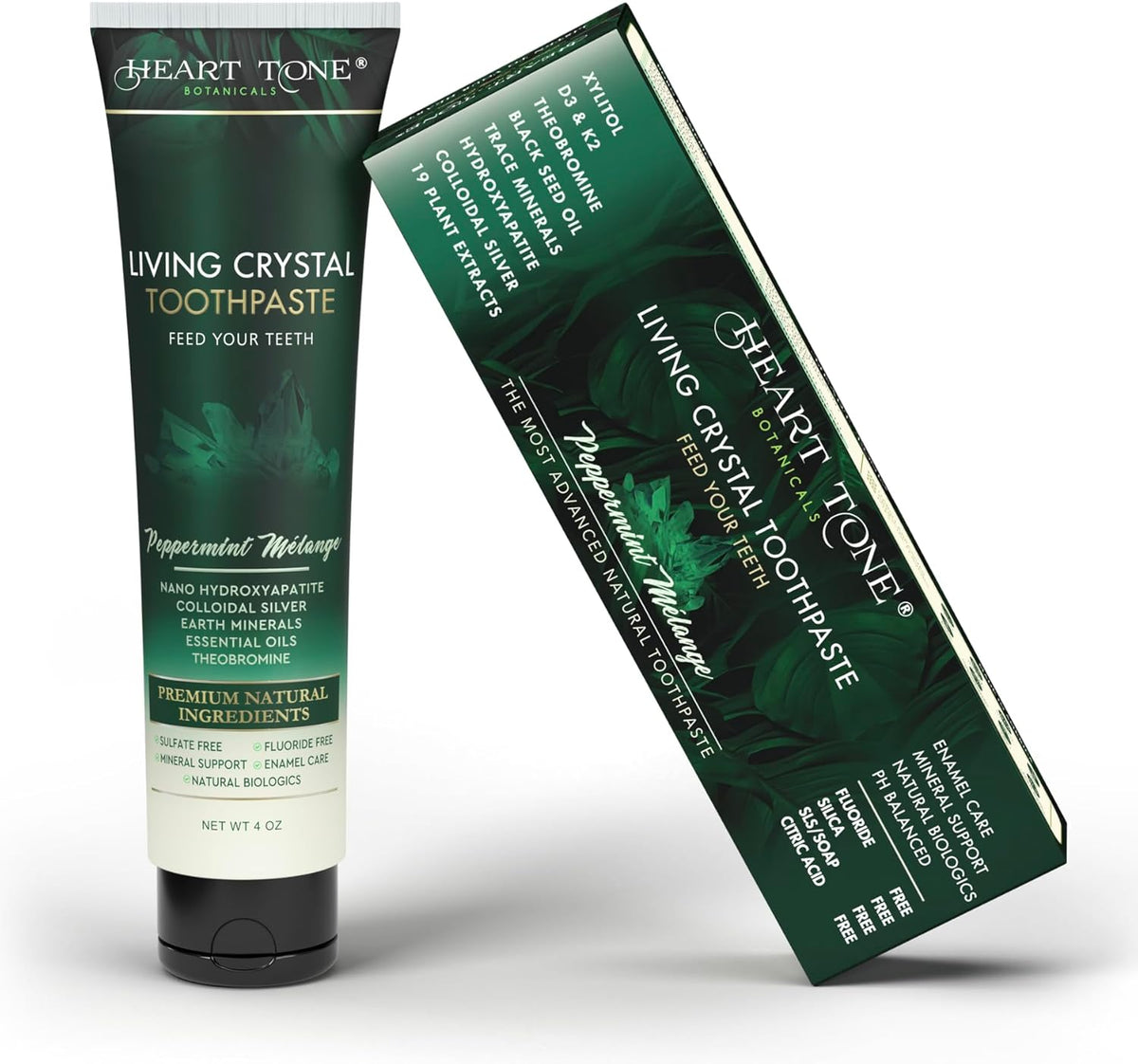
Heart Tone's Living Crystal Toothpaste is built on kaolin and bentonite clays — traditional ingredients chosen for a fine, mild texture rather than a gritty scrub — in a fluoride-free, xylitol-based formula meant for daily use rather than an occasional harsh scrub. It contains no charcoal and no added acids.
A gentle brushing routine pairs naturally with an alcohol-free rinse to finish the ritual. Heart Tone's Restorative Mouth Rinse is formulated without alcohol or fluoride, built for everyday use alongside brushing rather than on its own.
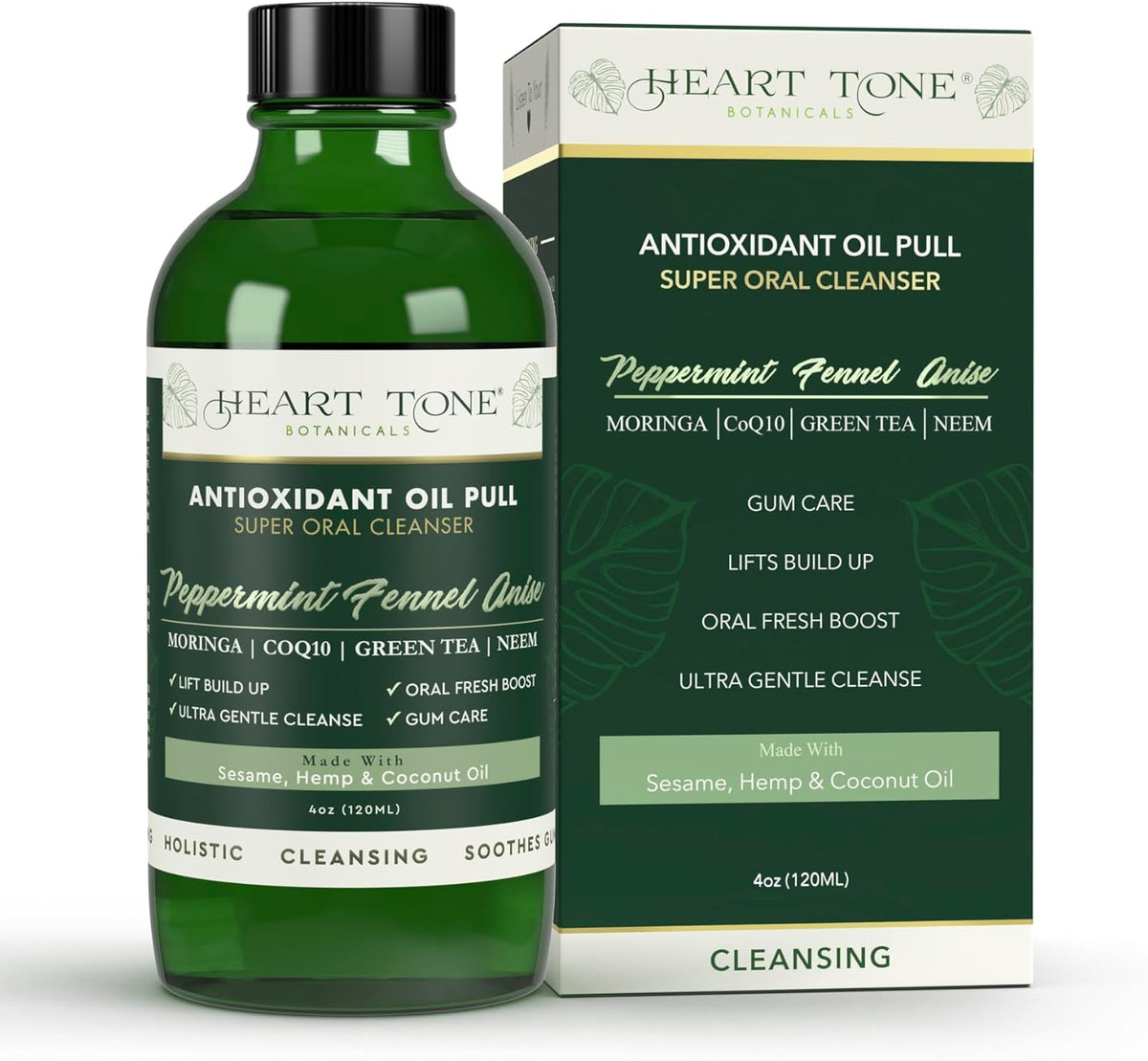
Curious about oil pulling as a gentle addition to the routine? Here's how to actually do it.
The Bottom Line
"Natural teeth brightening" almost always means lifting surface stains, not changing your tooth's underlying color — and understanding that distinction is what keeps expectations realistic. Gentle polishing, oil pulling, and a consistent low-abrasion routine can genuinely brighten the look of a smile by clearing what's sitting on top of the enamel. None of it reaches the dentin layer underneath. That's fine — that layer was never what was causing most of the dullness in the first place.
Explore the full natural oral care collection from Heart Tone Botanicals to build a gentle, daily routine.

Leave a comment
This site is protected by hCaptcha and the hCaptcha Privacy Policy and Terms of Service apply.