

A Plant-Derived Option for Those Who Want to Go Botanical
If you've been looking for a natural retinol alternative, you've probably come across bakuchiol. It keeps appearing in botanical skincare conversations — and for good reason. It's plant-derived, has a long history of use in traditional botanical practice, and has a comfortable, lightweight feel on skin. But if you're new to it, you might be wondering what it actually is, where it comes from, and what to look for in a botanical moisturizer that includes it.
This guide covers the basics.
What Is Bakuchiol?
Bakuchiol is a plant-derived compound extracted from the seeds of Psoralea corylifolia, commonly called the babchi plant. It has a long history of use in Ayurvedic and traditional Chinese botanical practice, where babchi seeds were incorporated into skin care preparations for centuries before appearing in modern Western formulations.
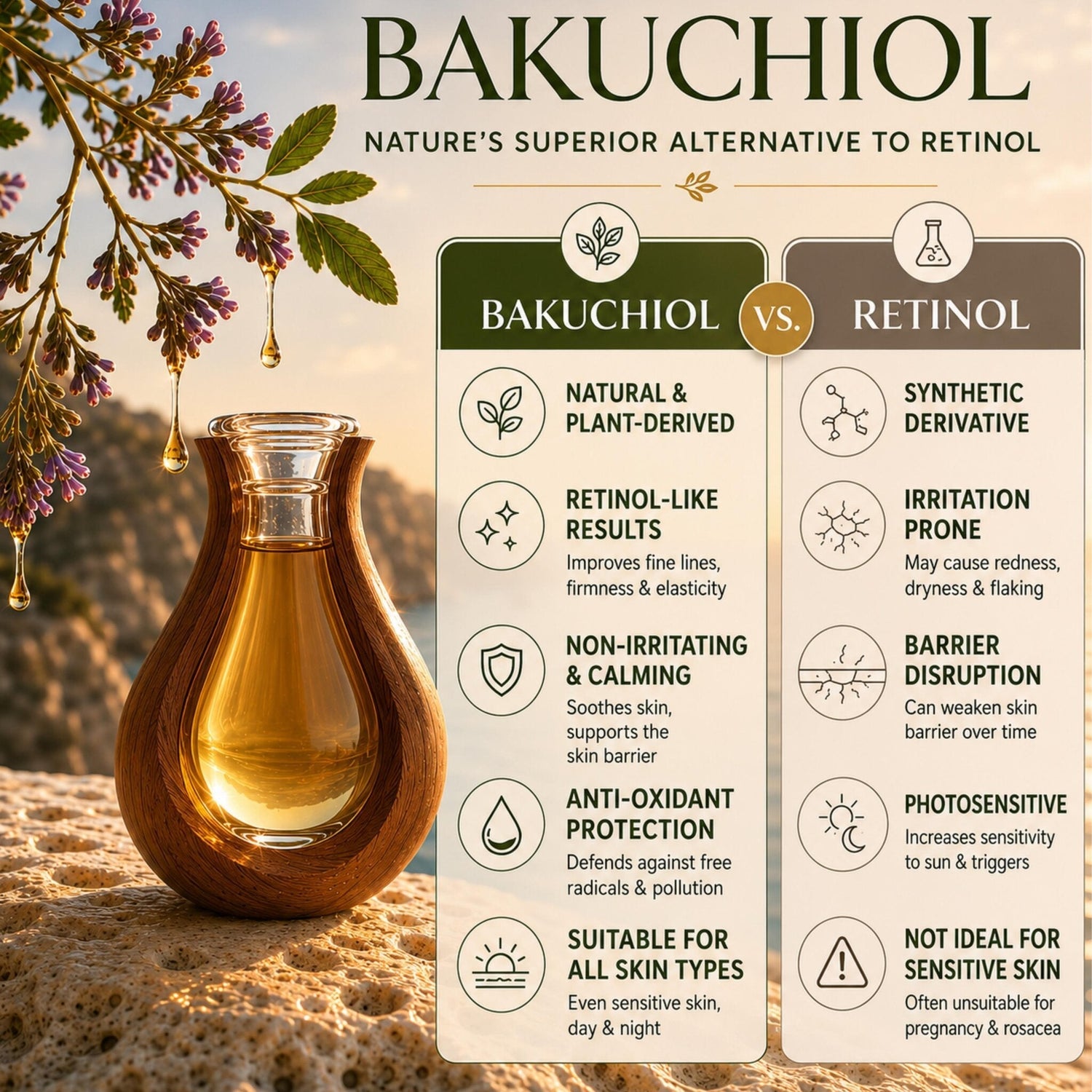
In plant-based skincare today, bakuchiol is valued because it's an entirely plant-sourced option for those who prefer to keep their facial routine botanical and free of synthetic compounds. Unlike retinol — a vitamin A derivative often associated with a period of dryness, flaking, and sensitivity during initial use — bakuchiol tends to have a gentler sensory profile. Many people with sensitive skin reach for it specifically because it feels comfortable and non-irritating during everyday use.
Why People Look for Retinol Alternatives
Retinol has been widely used in conventional skincare for decades. Many people find it effective, but it also comes with a learning curve: a period of dryness, redness, and sensitivity as skin adjusts. Retinol also increases photosensitivity, which means consistent SPF use is required throughout the day.
For people who want a botanical-first approach — or who prefer to avoid synthetic compounds, animal-derived ingredients, and fragrances — plant-based options like bakuchiol offer a different experience: one that starts gently and fits comfortably into everyday use from day one.
There's also a growing group of people who simply want to know what they're putting on their face. Retinol is synthesized in a lab; bakuchiol comes from a plant. For those who read ingredient labels and prefer to see botanical names, that distinction matters.
What to Look for in a Botanical Facial Moisturizer
Bakuchiol works best as part of a formulation — paired with other plant-derived oils and extracts that support it in a rich, stable base. If you're building a botanical skincare routine, here's what separates a thoughtfully formulated product from something that only looks natural on the label:
- Multi-oil blends — a single base oil won't give you the richness or balance of a well-crafted botanical moisturizer. Look for formulas that layer oils with different weights and textures: jojoba (lightweight, absorbs easily), rosehip (rich and nourishing-feeling), moringa (silky and fast-absorbing), and pomegranate or prickly pear seed oils for a luxurious, smooth finish.
- Fat-soluble botanicals — vitamin E and CoQ10 are common in well-formulated botanical oils. They contribute to formula stability and a smooth, finished feel on skin.
- Essential oil aromatics — blue chamomile, ylang ylang, and blue tansy have long histories in botanical skincare and contribute to the sensory character of a well-made facial moisturizer.
- No fillers or synthetic preservatives — a high-quality botanical moisturizer uses oils and extracts as primary ingredients, not water as a filler with trace amounts of actives.

The Complete Daily Face Moisturizer
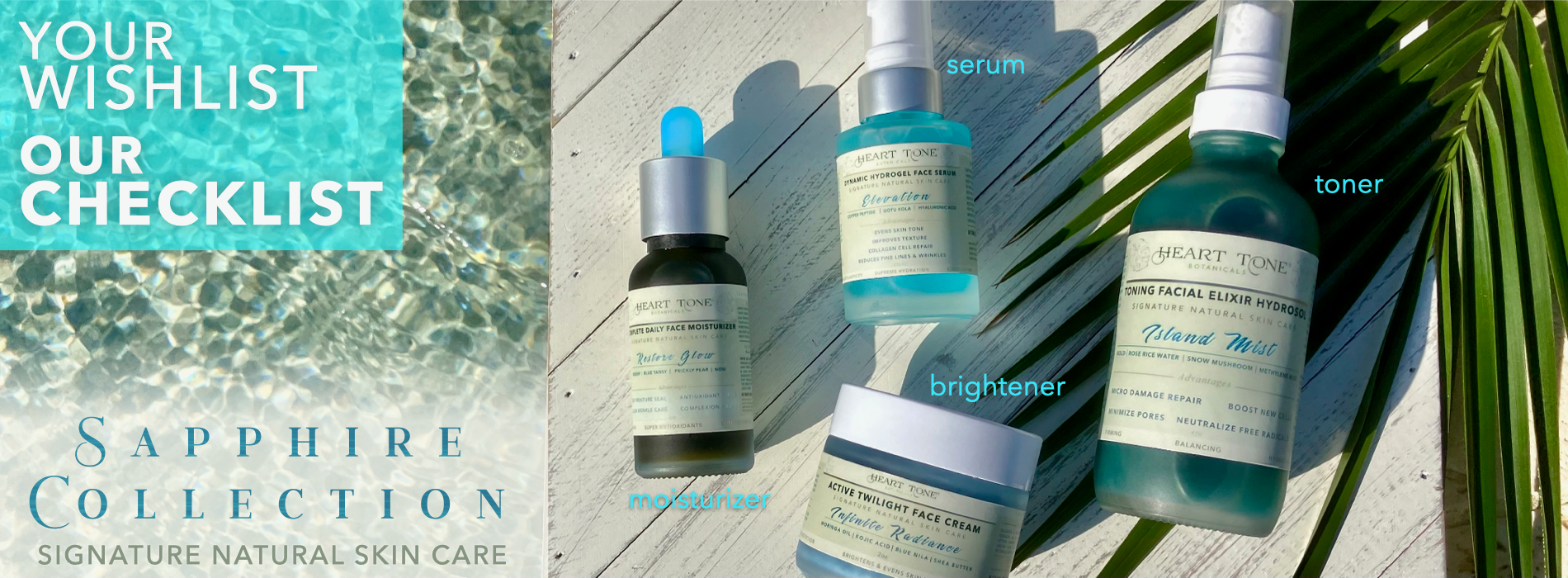
The Complete Daily Face Moisturizer from Heart Tone Botanicals is a pure botanical oil-based face moisturizer built around 22 plant oils and extracts — including bakuchiol, alongside moringa oil, organic jojoba, rosehip oil, prickly pear seed oil, pomegranate seed oil, and sea buckthorn.
Key botanicals in the formula:
- Bakuchiol oil — plant-derived from the babchi seed; used in Ayurvedic and traditional Chinese botanical skincare for centuries
- Organic moringa oil — fast-absorbing and silky; one of the lightest botanical facial oils available, which makes it a natural fit for daytime use
- Organic rosehip oil — prized in botanical skincare traditions from South America for its rich, nourishing feel; leaves skin feeling soft and conditioned
- Prickly pear seed oil — one of the rarer botanical oils in facial skincare; valued for its silky texture and the softness it leaves behind
- CoQ10 — a fat-soluble compound used in botanical formulations; contributes a smooth sensory finish
- Blue chamomile, blue tansy, ylang ylang essential oils — classic botanical skincare aromatics with centuries of traditional use; contribute a subtle, pleasant sensory character to the formula
- Vitamin E — a natural antioxidant used in botanical formulations; contributes to formula stability and a comfortable, non-tacky finish
The formula absorbs easily and doesn't leave a greasy residue. A few drops warmed between your fingertips and pressed into clean skin is all that's needed morning and evening.

Layer It With a Botanical Serum
If you want to go deeper into a botanical routine, layering a serum beneath your moisturizer is a standard step — and the order matters. Serums are water-based and go first; oils and creams seal them in afterward.
The Dynamic Hydrogel Face Serum is built on a water-based hydrogel base — rose hydrosol and neroli hydrosol — and includes hyaluronic acid, copper peptide, pea peptide, niacinamide, and fermented lactobacillus. It has a lightweight, water-gel texture that sinks in quickly and layers comfortably under an oil-based moisturizer. Serum first, moisturizer to seal — a clean botanical two-step without a single synthetic ingredient in either product.

The Toning Step: Don't Skip It
Botanical toning is often the most overlooked step in a skincare routine. A good toner prepares skin after cleansing — clearing away any last traces of residue and giving serums and oils a clean surface to absorb into. It also adds a first layer of hydration before the rest of your routine follows.
The Island Mist Toning Facial Elixir Hydrosol is an all-botanical mist made from rose hydrosol, orange blossom hydrosol, fermented rice water, organic witch hazel, aloe vera, and colloidal silver. A few mists onto clean skin — morning and night, before serum — bring a light, pleasant botanical freshness and leave skin feeling hydrated and ready. It also works as a midday refresh over makeup.

A Richer Option for Nighttime
Many people prefer a richer, more substantial formula at night — something with more body than a facial oil to give skin a more occlusive layer while they sleep.
The Active Twilight Face Cream uses organic shea butter as its base — thicker and more sealing than an oil — combined with moringa oil, green tea oil, organic castor oil, kojic acid dipalmitate, licorice root extract, and ylang ylang essential oil. The texture is noticeably richer than the Complete Daily Face Moisturizer, making it the natural nighttime choice in a layered botanical routine.
Start With a Complete Botanical Face Kit
If you want to try the full routine at once, The AM/PM Face System bundles all four Heart Tone face products together — Island Mist, Dynamic Hydrogel Serum, Complete Daily Face Moisturizer, and Active Twilight Face Cream — in a single set designed to work as a complete morning and evening routine, in the order they were formulated for.
For a three-product introduction to botanical facial care, The Complete Face Ritual pairs Island Mist, Dynamic Hydrogel Serum, and Complete Daily Face Moisturizer.
Both sets — along with the full range of Heart Tone facial care products — are available in the Facial Care collection.
This article now points readers to the current main guide for this topic. Use these links to keep the full retinol alternatives and bakuchiol topic together:

Leave a comment
This site is protected by hCaptcha and the hCaptcha Privacy Policy and Terms of Service apply.