












The Short Answer: Farm-to-Bottle Is a Timeline, Not a Marketing Word

"Farm-to-bottle" shows up on a lot of labels these days, usually next to a photo of a green field. But the phrase is supposed to describe a process — a sequence of steps between a plant in the ground and a finished product on a shelf. If a brand can't walk you through that sequence, the phrase is doing decoration, not description.
So instead of asking what farm-to-bottle means in theory, it's worth asking a more concrete question: what actually happens, in order, between harvest and the jar?
Step One: What Gets Grown, and Why It's Grown There
Every botanical ingredient starts as a decision about climate. Aloe vera needs heat and well-drained soil. Certain herbs need a longer growing season than others. A real farm-to-bottle operation grows what its climate actually supports, rather than sourcing a plant from a catalog because it photographs well.
This is also where seasonality enters the picture. A plant harvested in its prime carries more of what made a grower choose it in the first place — moisture, oil content, color, texture — than one picked out of season and shipped in from somewhere else. Small farms that grow on their own schedule are working with that reality, not around it.
Step Two: The Gap Between Harvest and Processing
This is the step most marketing photos skip entirely. Once a plant is harvested, a clock starts. Fresh-cut aloe, for example, begins to lose moisture and change texture within hours of being cut. The shorter the distance and the shorter the wait between the field and the point where that plant gets processed into a usable form, the more of its original character makes it into the final product.
Large-scale ingredient suppliers solve this with stabilizers, extended shipping, and bulk processing that can happen weeks after harvest. A farm that processes its own harvest is solving it differently — with proximity and timing instead of additives.
Step Three: Small Batches, and What That Actually Changes
"Small batch" gets used loosely, but on a working farm it usually just describes reality: a limited harvest makes a limited batch. That has two honest tradeoffs worth knowing before you assume small batch always means better.
- More variation between batches. A body butter or soap made from this season's harvest may look or feel slightly different from the last one — that's a sign of a real agricultural ingredient, not a defect.
- Less shelf time before use. Smaller runs typically move from production to your bathroom shelf faster than mass-produced lines sitting in a warehouse, which can mean a fresher-feeling product when it arrives.
- Higher cost per unit. Farming, harvesting, and small-batch processing is simply more labor per ounce than buying a drum of pre-processed extract. That cost shows up somewhere — usually the price tag.
Step Four: What Ends Up on the Label
The last step is the one you can actually verify: the ingredient list. A genuine farm-to-bottle product should reflect what was actually grown and processed — not just headline botanicals featured in the marketing copy while the bulk of the formula is filler. Reading past the front label to the ingredient panel on the back is still the most reliable way to check whether the story on the box matches what's inside it.
What This Looks Like at Heart Tone Botanicals
Heart Tone Botanicals grows on a family farm in Vero Beach, Florida, and that timeline shapes several products directly. The Botanical Renew Body Butter is formulated with farm-grown aloe vera alongside shea, kokum, and meadowfoam seed oils, and the Botanical Skin Gel is built around farm-grown herbal extracts, including calendula and comfrey, in a lightweight gel base.
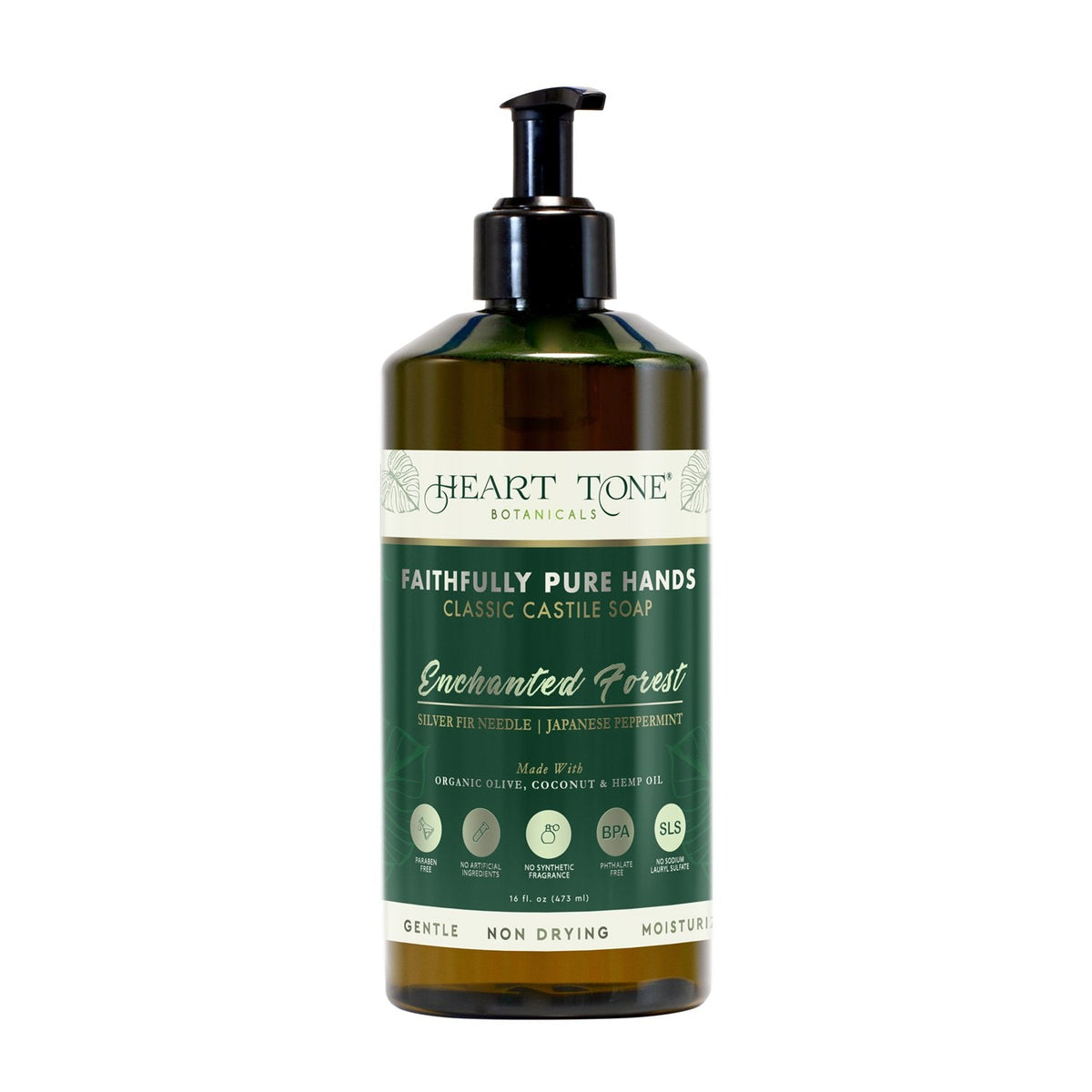
The Faithfully Pure Hands Castile Liquid Soap line takes the same approach from a different angle — organic, farm-grown oils saponified into a true castile base, with no synthetic fillers left in the finished bar or bottle.
For anyone who wants to see the full picture rather than one product at a time, The Farm-to-Face Full Ritual walks through prep, tone, approach, and seal as a complete daily sequence, built from the same farm-grown ingredient base.
The Bottom Line
Farm-to-bottle isn't a single fact you can put on a label — it's a timeline: what's grown, how quickly it's processed after harvest, how small the batch stays, and whether the ingredient panel backs up the story. A brand that can walk you through that sequence, harvest to jar, is describing a real process. One that can only show you a field photo is describing a mood.
Explore the full natural body care collection from Heart Tone Botanicals to see how that timeline shows up across soaps, body butters, and daily rituals — all grown and formulated with the same farm-to-bottle process behind them.

Leave a comment
This site is protected by hCaptcha and the hCaptcha Privacy Policy and Terms of Service apply.