












The Short Answer: Castile Soap Is Meant to Be Diluted, Not Used Straight

If you've ever poured castile soap straight from the bottle onto a washcloth or into a mop bucket and felt like it left skin tight or floors filmy, the soap probably isn't the problem — the ratio is. Castile soap is sold as a concentrate. It's formulated to be mixed with water at different strengths depending on what it's cleaning, and using it undiluted is one of the most common reasons people think it "doesn't work" for them.
Here's a straightforward breakdown of how much water to add for the most common uses, and why the ratio matters more than the brand.
Why Dilution Matters With a True Castile Formula
True castile soap is made through saponification — plant oils like olive, coconut, and hemp combined with an alkali until the mixture fully converts into soap. There's no synthetic detergent doing the work and no filler diluting the formula before it reaches you, which is exactly why a small amount goes a long way. Used at full strength, that concentration can leave skin feeling stripped or leave a residue on surfaces that never fully rinses away. Diluted to the right ratio, the same bottle turns into a hand soap, a body wash, a dish soap, and an all-purpose cleaner — each one working better than the last because the strength actually matches the job.
Castile Soap Dilution Ratios by Use
- Hand soap: 1 part castile soap to 3 parts water in a foaming pump bottle. Foaming pumps need a thinner mix than a regular pump to work properly.
- Body wash: 1 part castile soap to 4 parts water. Start thinner rather than thicker — a body wash that's too concentrated is the most common cause of a tight, dry feeling after rinsing.
- Face wash: 1 part castile soap to 5 parts water, applied with fingertips rather than a washcloth for a gentler cleanse.
- Shampoo: 1 part castile soap to 5–10 parts water, depending on hair length and thickness. Longer or thicker hair generally does better closer to the 5-parts-water end.
- Dish soap: 1 part castile soap to 10 parts water in a squeeze bottle or soap dispenser at the sink.
- All-purpose spray cleaner: 2 tablespoons castile soap per 2 cups of water in a spray bottle. A few drops of an essential oil can be added for scent.
- Mopping floors: 1/4 to 1/2 cup castile soap per gallon of warm water. Hard floors like tile and sealed wood usually need less soap than a heavily soiled floor.
- Laundry: 1/3 to 1/2 cup castile soap per full load, used in place of regular detergent. Skip the fabric softener compartment — it isn't needed with a castile-based wash.
These are starting points, not fixed rules. Water hardness, the level of dirt or oil involved, and personal preference all shift the ideal ratio slightly. It's easier to add a little more soap to a batch that feels too diluted than to fix one that started too concentrated.
Signs You're Using It Too Strong
A few tells that the ratio needs to move toward more water, not more soap:
- Skin feels tight, dry, or squeaky right after rinsing rather than clean and comfortable
- A hand soap pump clogs or dispenses unevenly — most foaming pumps are built for a thin, watery mix
- Floors or countertops feel filmy or slightly sticky once they've dried
- Dishes need multiple rinses to stop feeling soapy
Each of these points back to the same fix: more water in the mix, not a different soap.
Liquid vs. Bar Castile Soap: Does Dilution Change?
Liquid castile soap is the easiest to dilute precisely because it's already a pourable concentrate — the ratios above are built around it. A bar version of castile soap works the same way chemically, but dilution happens differently: instead of pre-mixing a batch, a wet bar naturally releases less soap per swipe than a liquid does per pump, so it tends to self-regulate for everyday hand and body washing without any measuring. For jobs like laundry, mopping, or spray cleaners where a specific ratio matters, the liquid form is the more practical starting point.
Building a Simple Dilution Routine
Most households only need two pre-mixed bottles to cover the everyday basics: a thinner one (roughly 1:4 to 1:5) for hand soap and body wash, and a more diluted one (roughly 1:10) for dishes and general spray cleaning. Label each bottle with its ratio so a refill doesn't turn into guesswork, and mix small batches rather than large ones — a diluted castile mix doesn't need preservatives, so it's best used within a few weeks.
The Bottom Line
Castile soap dilution ratios aren't complicated once the concentrate is treated like one: roughly 1:3 to 1:5 for skin, 1:10 for dishes and surfaces, and a splash more or less water depending on how the results feel. Getting the ratio right is usually the difference between a bottle that seems to "not work" and the same bottle doing the job of five different cleaners.
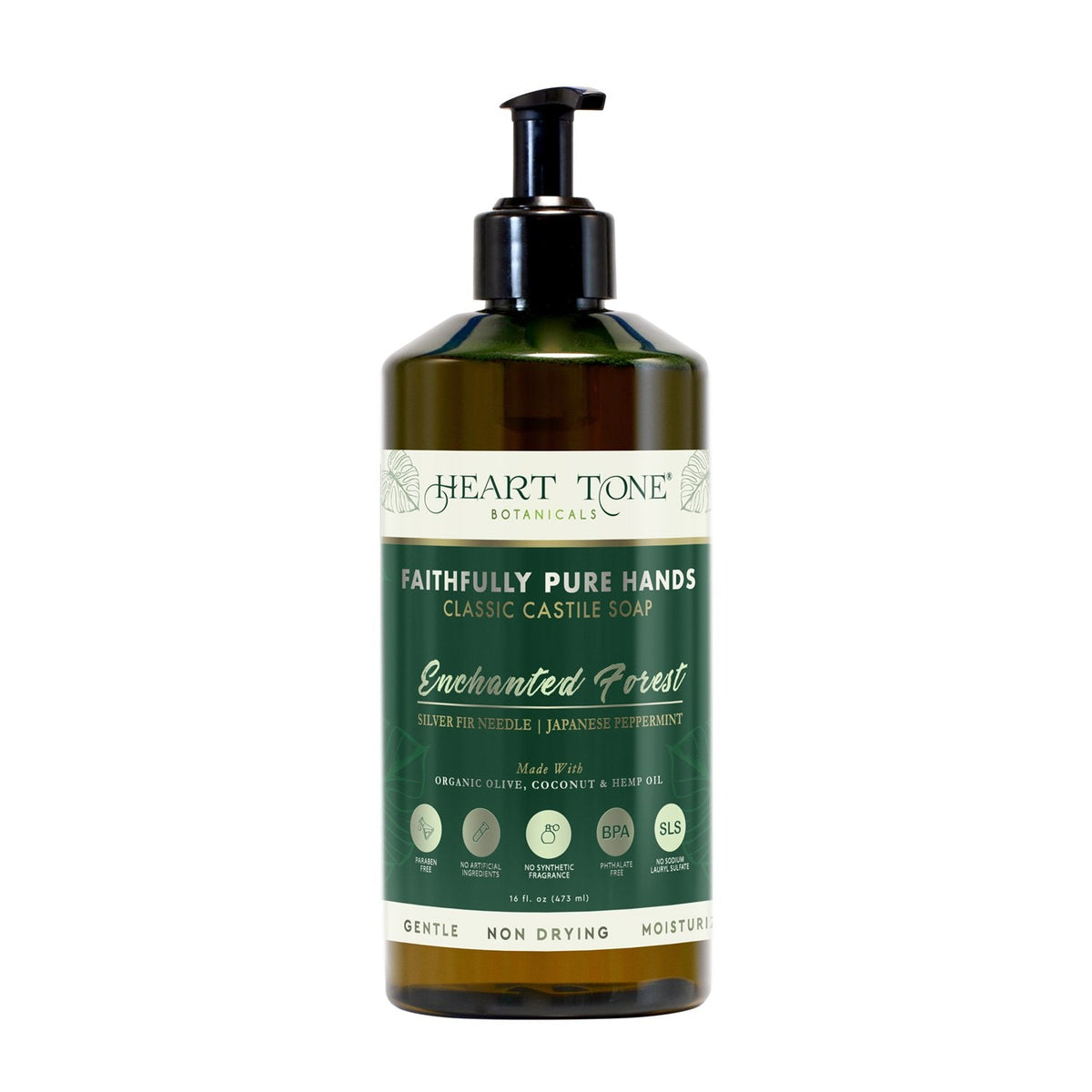
Heart Tone Botanicals' Herbal Castile Liquid Soap and Faithfully Pure Hands Castile Liquid Soap are both true castile formulas made from saponified organic coconut, olive, sunflower, and hemp oils — no synthetic detergents, so the dilution ratios above apply directly. If a bar is more your routine, our Ancient Organic Soap Alpha Bar and Moroccan Exfoliating Black Soap are built on the same olive-oil-based approach in a wet-and-lather format. Explore the full lineup in our body care collection.

Leave a comment
This site is protected by hCaptcha and the hCaptcha Privacy Policy and Terms of Service apply.