












Xylitol Is on Nearly Every Natural Toothpaste Label — But What Does It Actually Mean?

If you've been reading toothpaste ingredient lists lately, you've almost certainly seen xylitol near the top. It appears in conventional formulas, natural toothpastes, chewing gums, and mouth rinses — often without much context. So before you use it as a shortcut for evaluating a formula, it's worth understanding what xylitol actually is, what it contributes, and what it doesn't tell you on its own.

What Is Xylitol?
Xylitol is a plant-derived sugar alcohol found naturally in small amounts in many fruits, vegetables, and trees. Commercially, it's most often extracted from birch wood or from the fibrous husks of corn plants.
In terms of taste and texture, xylitol is very similar to ordinary table sugar — mildly sweet, with a clean, light finish. But unlike sucrose, xylitol doesn't leave the same sticky, filmy sensation in the mouth after use. That characteristic clean finish is a big part of why it became a standard ingredient in oral care products.
Xylitol has been an ingredient in oral care formulations for several decades. It's now recognized widely enough that shoppers tend to look for it by name — which is part of why it's so visible on labels today.
What Xylitol Actually Contributes to a Toothpaste Formula
In a toothpaste, xylitol serves a few practical roles:
- Sweetness without sucrose — it delivers a pleasant, mild sweetness that makes a toothpaste enjoyable to use twice daily, without relying on table sugar or artificial sweeteners like saccharin or aspartame
- Clean-feeling finish — xylitol doesn't leave the sticky, film-like sensation associated with sucrose, which contributes to the clean-mouth feeling after brushing
- Mouthfeel in the formula — as a sugar alcohol, xylitol has a slightly cooling, moisture-retaining quality that improves how a toothpaste feels during use
- Compatibility with botanical ingredients — xylitol doesn't overpower the taste profile of essential oils or botanical extracts, making it a natural fit for complex herbal formulas
What xylitol doesn't do, on its own, is make a toothpaste better or more complete. It's one ingredient in a list — the rest of that list matters just as much.
What to Look For Beyond "Contains Xylitol"
A toothpaste that leads with xylitol can still be mostly water, glycerin, and artificial flavors. When you're reading a natural toothpaste label, here's what to look for alongside it:
A Mineral Cleaning Base
Effective natural toothpastes use mineral ingredients for their cleaning action. Kaolin clay and bentonite (montmorillonite) clay are two of the most traditional — both have long histories of use in personal care for their gentle, non-abrasive properties. They clean without scratching and have a pleasant, mild texture. If a toothpaste lists only silica or calcium carbonate for cleaning, you're getting a more conventional approach with a natural label.
A Genuine Botanical Extract Profile
The difference between a "natural" toothpaste and a genuinely botanical formula is the depth of the ingredient list. Ingredients like licorice root CO2, myrrh CO2, rhatany root, clove CO2, and usnea lichen have centuries of use in traditional oral care. They're not there as decoration — they're what gives a botanical formula its distinctive character and rich sensory experience. If the botanical section of the ingredient list is short or generic, the formula is mostly a conventional toothpaste with xylitol added.
A Layered Mint Profile
Many natural toothpastes use a single peppermint oil for flavor. A more thoughtful formula blends several: peppermint, spearmint, wintergreen, and cornmint each have a slightly different aromatic character, and together they create a freshness that's more nuanced and longer-lasting than a single-note mint. If you enjoy brushing in the morning, a layered mint profile is a significant part of why.
No SLS (Sodium Lauryl Sulfate)
SLS is the synthetic foaming agent in most conventional toothpastes. Some people find it contributes to a drying or irritating sensation, particularly with twice-daily use. An SLS-free formula uses plant-derived alternatives — or relies on the natural foaming action of ingredients like yucca or quillaja saponaria — to create a pleasant cleaning foam without the synthetic surfactant. Xylitol and SLS often appear together in "natural" toothpastes that haven't fully committed to the formulation.
Fluoride-Free (If That Matters to You)
Xylitol does not mean fluoride-free. These are two separate choices, and plenty of conventional toothpastes include both. If you're specifically looking for a fluoride-free formula, confirm it explicitly on the label or product description rather than assuming the presence of xylitol indicates anything about fluoride.

How Xylitol Fits Into a Serious Botanical Formula
When xylitol sits alongside a deep botanical extract profile, it finds its natural place in the formula. It provides the clean, light sweetness and smooth mouthfeel that make a rich, complex toothpaste easy to use every day. A formula built around CO2-extracted botanicals, mineral clays, and a layered mint complex can be intense — xylitol balances that and makes the experience approachable without softening the formula's character.
Think of xylitol as one piece of a larger picture. On its own, it's a functional ingredient with a good track record. In a complete botanical formula, it becomes part of the reason brushing with a natural toothpaste feels genuinely different from brushing with a conventional one.
The Bottom Line
Xylitol on a toothpaste label is a good sign — but it's only the beginning of the story. What matters is the full ingredient list: the mineral base, the botanical extract depth, the mint profile, and what's absent (SLS, artificial sweeteners, fluoride if you prefer). A toothpaste that combines serious botanicals with xylitol, kaolin clay, and a layered mint complex delivers a very different brushing experience than one that checks the xylitol box and stops there.
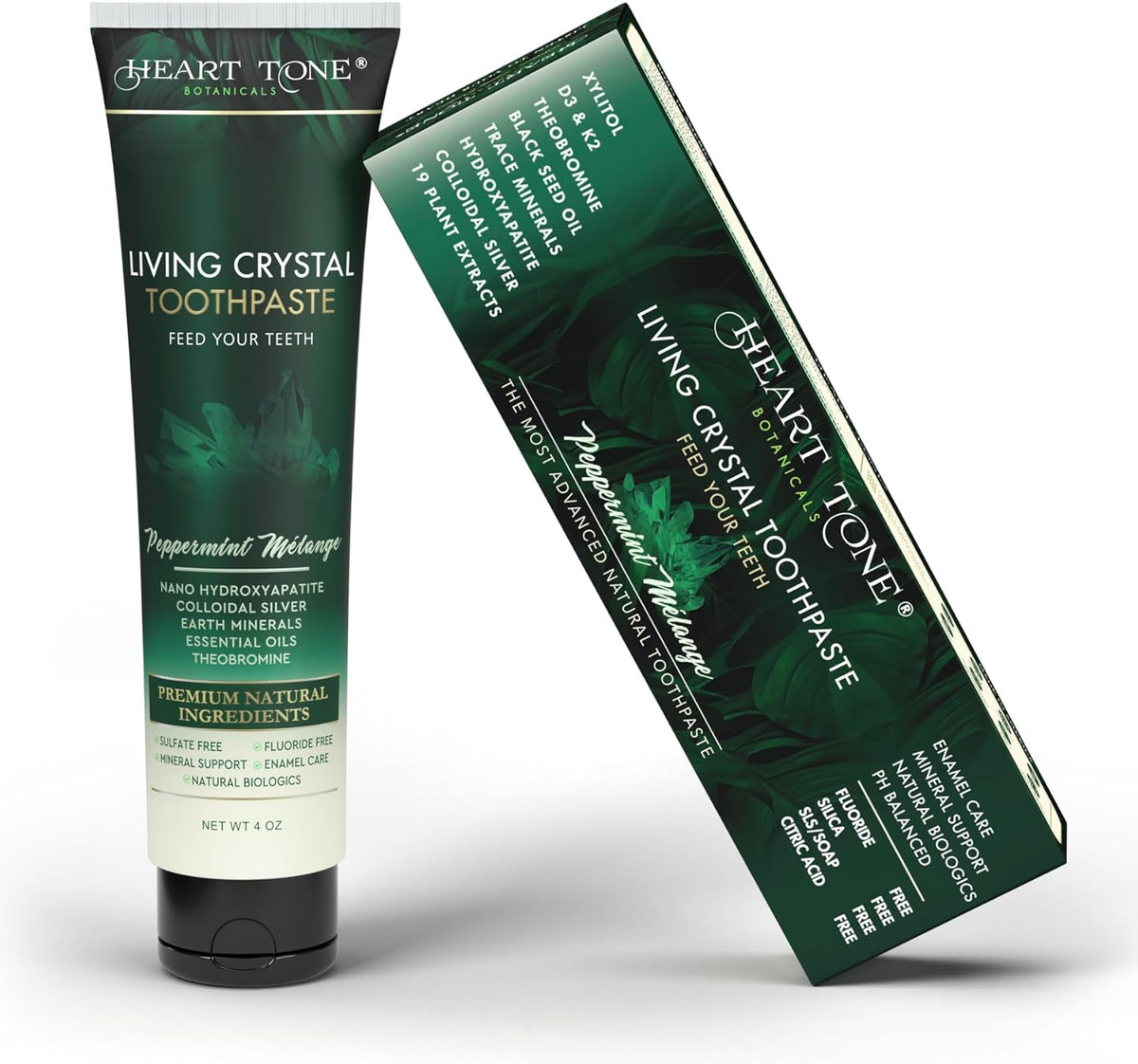
If you're looking for a natural toothpaste where xylitol is part of a complete botanical formula — alongside kaolin clay, bentonite clay, 30+ botanical CO2 extracts, and a peppermint-wintergreen-spearmint-cornmint mint complex — Living Crystal Toothpaste from Heart Tone Botanicals is formulated without fluoride, without SLS, and without artificial sweeteners. Pair it with the alcohol-free Restorative Mouth Rinse — also formulated with xylitol and 22 botanical ingredients — for a complete natural oral care routine. Explore the full natural oral care collection.

Leave a comment
This site is protected by hCaptcha and the hCaptcha Privacy Policy and Terms of Service apply.