












The Short Answer: It's a Seed Oil Known for Its Texture

If you've spent any time reading botanical face oil labels, you've probably noticed that most formulas include a mix of familiar oils — rosehip, jojoba, moringa — alongside a handful of names that are harder to find on a shelf. Abyssinian oil is one of them.
It's not a marketing invention. Crambe abyssinica is a plant in the mustard family, and abyssinian oil is pressed from its seeds. It has been used in cosmetic formulations for decades, largely because of one quality: it absorbs into skin quickly and leaves almost no residue.
That texture profile is the reason formulators reach for it.
What Abyssinian Oil Actually Is
Abyssinian oil — listed on INCI labels as Crambe abyssinica seed oil — is a cold-pressed seed oil with a clear, lightweight consistency. It originates from the Ethiopian highlands, a region historically known as Abyssinia, and has been cultivated for its seed oil since traditional times.
In cosmetic applications, it's valued for its smooth, silky finish. The oil absorbs quickly without the heavy, occlusive feel that thicker botanical oils can sometimes produce. For facial care formulas designed for daily wear — ones you'll put on in the morning before the rest of your day — that finishing behavior matters.
Unlike some botanical oils that have a more distinctive scent, abyssinian oil has a mild, neutral character. It's commonly used in multi-oil blends, where its light texture helps balance heavier oils in the formula without changing the scent profile of the whole product.
The Texture Difference You'll Notice
Not all seed oils feel the same on skin. Some botanical face oils — even excellent ones — have a richness that works best for PM routines, heavy enough to stay on overnight. Abyssinian oil sits in a different category: it's designed to disappear.
When a formula includes abyssinian oil, what you typically notice is how quickly it settles. There's no greasy film, no shine that lingers through the morning. What you're left with is a comfortable, non-heavy skin feel that layers easily under the rest of a daily routine — or works as a finishing step on its own.
That quality is what makes it a good fit for lightweight daily-use facial formulas. It doesn't compete with other layers in your routine. It settles into skin and gets out of the way.
What Abyssinian Oil Is Not
Abyssinian oil is not a treatment ingredient. There's no claim — traditional or otherwise — that it targets specific skin concerns. Like all botanical face oils used in cosmetic formulas, it isn't intended to diagnose, approach, or prevent anything.
What it is: a seed oil with a well-established place in botanical skincare formulation, valued for the feel and the light, fast-absorbing finish it contributes to a formula. Brands that include it are choosing it primarily for texture and wear — not ingredient marketing.
If you see it listed on a face oil label, that's a signal the formulator was thinking carefully about how the product actually feels to use, day after day.
What to Look for in a Formula That Uses It
In a multi-oil face formula, abyssinian oil typically appears alongside other botanical seed oils — each chosen for a different quality it contributes. Rosehip for its light color and long history in botanical skincare. Jojoba for its waxy, skin-compatible consistency. Moringa for its smooth, fast-spreading character.
A well-formulated multi-oil blend uses abyssinian oil to contribute lightness — balancing richer or heavier botanical oils so the finished formula wears comfortably across skin types. When you see it listed alongside a full mix of cold-pressed seed oils, it's usually doing structural work in the blend.
A few things to look for when evaluating a formula:
- The INCI label — abyssinian oil listed as Crambe abyssinica seed oil
- A balanced blend of botanical oils — abyssinian oil performs differently in a multi-oil blend than it does as a single-ingredient oil; a blend gives more range of feel
- No synthetic fillers or mineral oil base — in a quality botanical formula, abyssinian oil should appear in a list of botanicals, not as a light carrier for a synthetic blend
How Abyssinian Oil Fits Into a Botanical Face Routine
Because of its light, fast-absorbing texture, abyssinian oil is well-suited to morning face care — or to anyone who finds richer face oils too heavy for daily daytime wear. In a layered botanical routine, a face oil goes on after a water-based serum has absorbed and before any SPF or finishing product.
Step 1 — Tone and prep. Island Mist Toning Facial Elixir Hydrosol mists onto clean skin first. Formulated with rose hydrosol, orange blossom hydrosol, fermented organic rice water, aloe vera, and colloidal gold, it layers onto skin before any oil and primes the surface for what comes next.
Step 2 — approach with a water-based serum. Dynamic Hydrogel Face Serum applies next — a water-based formula with hyaluronic acid, copper peptide, pea peptide, niacinamide, gotu kola, and plankton extract. A water-based serum absorbs before a face oil goes on top, so both layers get proper contact with skin.
Step 3 — Seal with a botanical oil blend. Complete Daily Face Moisturizer contains abyssinian oil as part of a 22-ingredient blend of botanical oils — jojoba, moringa, rosehip, bakuchiol, prickly pear seed oil, sea buckthorn, blueberry oil, and more. The formula wears as a lightweight daily moisturizer that settles into skin without a heavy or greasy finish.
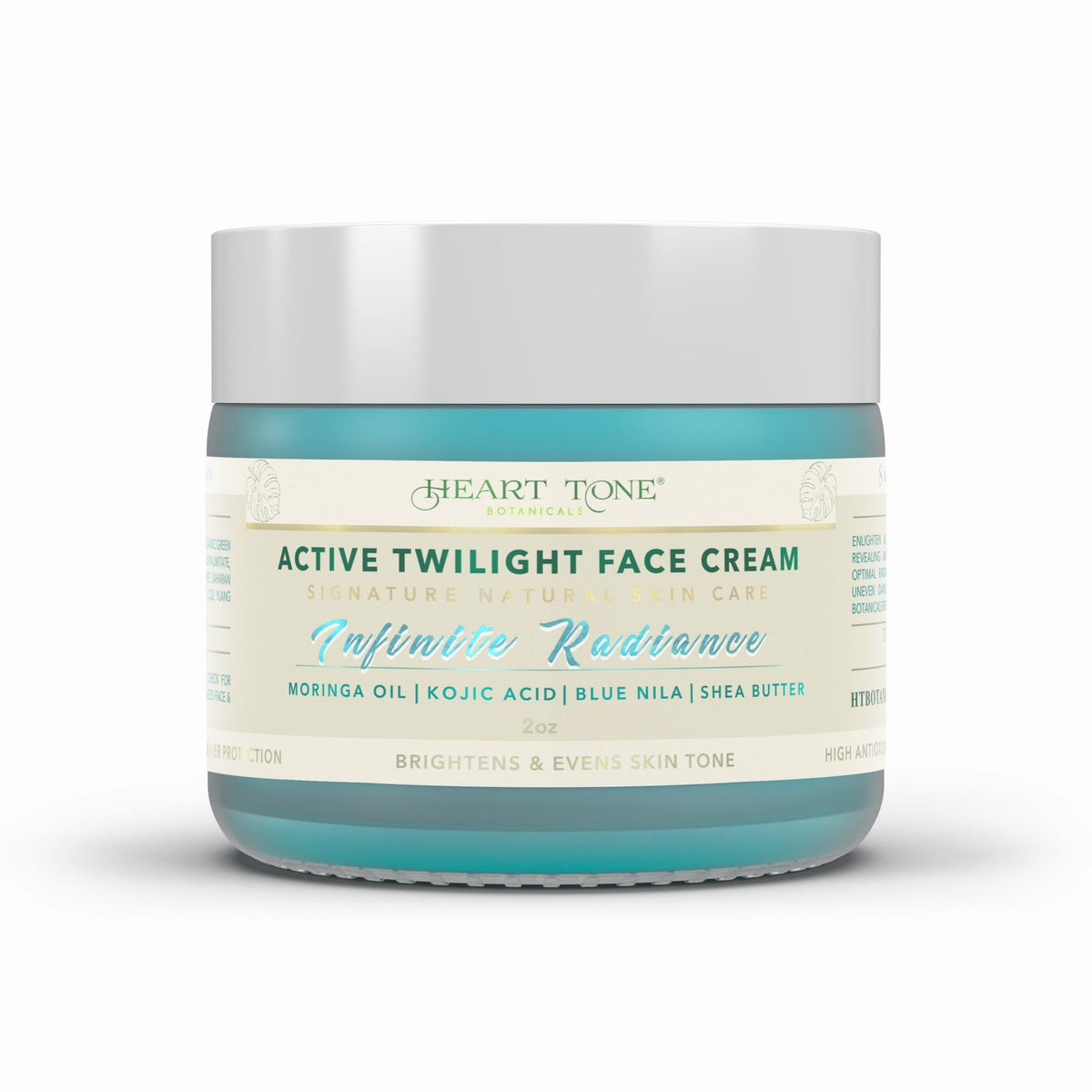
For an evening routine, Active Twilight Face Cream takes the final step — a richer PM formula with organic shea butter, organic moringa oil, and kojic acid dipalmitate, designed to be used overnight.
The full AM/PM routine is available as a bundle in The AM/PM Face System and The Complete Face Ritual, which brings together Island Mist, the Dynamic Hydrogel Face Serum, and the Complete Daily Face Moisturizer as a three-step daily routine.
For a gentle botanical skin gel that layers before a face oil in some routines, Botanical Skin Gel offers aloe vera, willow bark, and gotu kola in a lightweight gel base.
Explore the complete Heart Tone Botanicals facial care collection →

Leave a comment
This site is protected by hCaptcha and the hCaptcha Privacy Policy and Terms of Service apply.