

Walk down any personal care aisle and you'll see them: leafy green labels, kraft paper packaging, soft earth tones, words like "natural," "eco," "clean," "conscious," and "pure." It looks trustworthy. It feels responsible. But increasingly, it's theater — and the name for that theater is greenwashing.
Greenwashing is when a brand's sustainability or "clean" story is significantly more attractive than the reality. The packaging suggests meadows and moonlight; the formula might still contain synthetic fragrances, petrochemical derivatives, or vague "fragrance" compounds hidden under one umbrella word. The gap between what's marketed and what's actually in the bottle is the problem.
In 2025, about 50% of global consumers say they're deeply concerned about greenwashing in personal care. And they should be — because it's not rare. It's the industry default.
Here's how to see through it.
Why Greenwashing Thrives in Beauty
The beauty industry is fertile ground for greenwashing for one simple reason: there is no legal definition of "natural" or "clean" in the United States. Any brand can print "natural" on a bottle without meeting any standard. "Clean" is equally unregulated. "Eco-friendly" requires no proof. Even "organic" can be applied to a single ingredient while the rest of the formula is entirely conventional.
Regulatory frameworks in Europe are tightening — the EU's Green Claims Directive now requires brands to back up environmental claims with verifiable evidence, and France restricts "carbon neutral" branding unless brands can show rigorous lifecycle analysis. But in the US, consumer skepticism is still the main defense.
That means you need to know what you're looking for.
8 Greenwashing Red Flags to Watch For
1. Vague buzzwords with no definitions
Words like natural, eco, green, clean, conscious, sustainable mean nothing on their own. If a brand uses them prominently but never explains what they actually mean for that specific product — what standards they use, what's in or out — treat it as a marketing choice, not a quality signal.
2. "Free from" claims that hide what's still in there
Big "Paraben-Free!" banners on the front can draw your eye away from the ingredient list on the back. A product can be free from parabens and still contain synthetic fragrances, phthalates, mineral oil, or other ingredients that certified natural cosmetics would disallow. Always read the full INCI list, not just the front-of-pack claims.
3. One natural ingredient, mostly synthetic formula
Some brands center an entire product's identity around a single plant extract — aloe, rosehip, green tea — that appears as the last ingredient on the label, meaning it's present in vanishingly small amounts. If that plant is #24 out of 25 ingredients, the "botanical" branding is mostly visual storytelling.
4. Eco packaging on a conventional formula
Bamboo caps on non-recyclable plastic. Brown kraft labels on standard poly bottles. Glass-look containers that are actually PET. Packaging aesthetics can be designed to signal sustainability without any reformulation or supply chain change. The bottle is not the product — the formula is.
5. Misleading percentage claims
"97% natural origin" sounds impressive until you learn that water (often 70-80% of a formula) is counted as "natural origin" in that math. Ask what the percentage actually represents — total formula weight? Active ingredients only? And how does the brand define "natural origin"?
6. Self-created "eco" logos
Some brands design proprietary badges that look like third-party certifications — leaf icons, "Pure Standard" seals, green checkmarks — but are entirely internal and unverified. Look for genuinely independent certifications: USDA Organic, COSMOS, Ecocert, or NSF. If you can't find who awarded the badge and what it requires, it's decorative.
7. Selective sustainability spotlight
A brand might highlight that their bottle uses 30% recycled plastic while remaining silent on ingredient sourcing, supply chain labor, energy use, and formula safety. Pulling focus to one "green" feature while the bigger picture stays murky is a classic greenwashing tactic.
8. Carbon-neutral claims backed only by offsets
Buying carbon credits to claim "climate-neutral" status without actually reducing emissions is increasingly recognized as misleading. Brands that have genuinely reduced their environmental footprint tend to publish the numbers — actual emission reductions, not just offsets purchased.
How to Actually Vet a Brand
Once you know the red flags, verification is simpler than it sounds.
- Read the INCI list. The first five ingredients make up the majority of the formula. If they're primarily petrochemical-based and the plants you were promised appear near the end, you know the ratio.
- Look for silicones and mineral oils. Ingredients ending in -methicone or -siloxane (dimethicone, cyclopentasiloxane) and terms like paraffinum liquidum or mineral oil are incompatible with most serious natural standards.
- Ask about sourcing. Does the brand publish where their ingredients come from? Is there a story behind the supply chain, or just branding?
- Use third-party databases. Tools like the EWG Skin Deep database rate product safety independently. They're not perfect, but they surface data the brand didn't choose to lead with.
- Look for real certifications. USDA Organic on a finished product means the formula meets actual federal standards. COSMOS-certified means independent review. These carry real weight.
What Genuinely Transparent Looks Like
At Heart Tone Botanicals, we think about greenwashing a lot — because our entire model is built to avoid it.
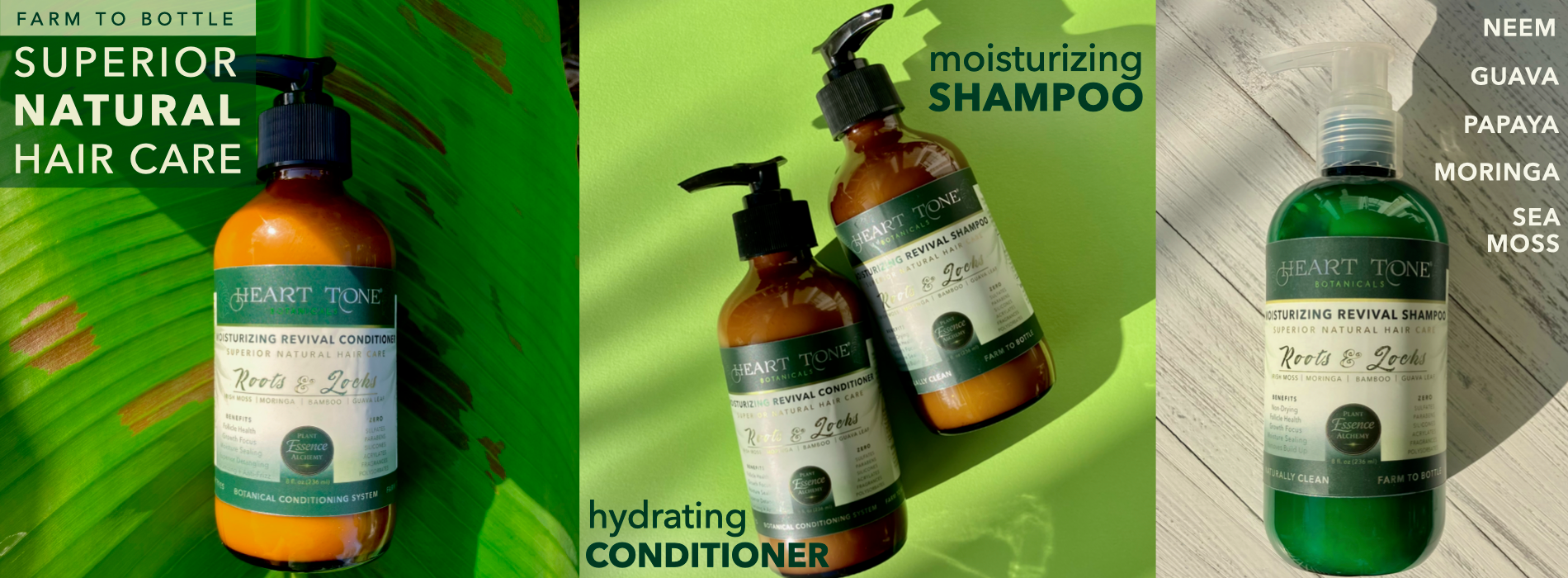
Our founder JD grows many of our botanicals on his farm in Vero Beach, Florida. That's not a marketing line — it's a genuine supply chain decision that gives us traceability most brands can't claim. When we say "botanical ingredients," we mean botanicals that were planted, tended, harvested, and processed under one roof. There's no long chain of undisclosed suppliers between you and the plant.
Every product we make is small batch — not because "artisanal" sounds good on a label, but because small batches let us control quality in ways that mass manufacturing doesn't. We don't swap out ingredients when a cheaper synthetic becomes available. We don't reformulate without disclosure. And we don't put a plant's name on the front of the bottle unless it's meaningfully present in the formula.
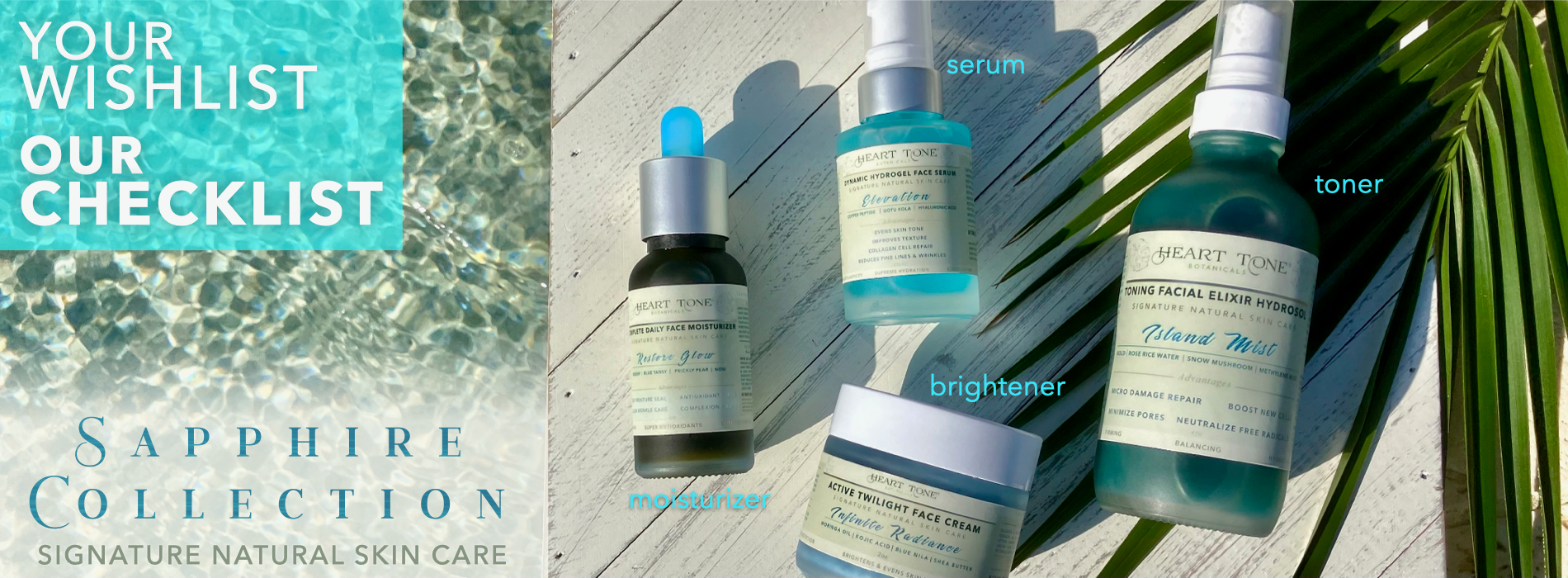
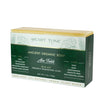
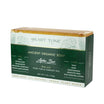
Our Ancient Organic Soaps are formulated around whole botanical ingredients — not fragrance oil that mimics aloe, but actual aloe. Our Active Twilight Face Cream uses bioactive botanical extracts as functional ingredients, not marketing garnish. Our Botanical Skin Gel is built on a plant base, not a water-and-silicone matrix with plant at the end.
We're not perfect. No brand is. But we believe in publishing what's actually in our products, explaining why each ingredient is there, and being clear about what we don't yet know. That's what genuine transparency looks like — not a green label and a leaf icon.
The Bottom Line
Greenwashing is widespread because it works — consumers trust green signals, and the beauty industry has discovered that appearing natural is nearly as profitable as being natural. The good news is that spotting it gets easier with practice.
Read ingredient lists. Ask where things come from. Look past the packaging aesthetics. Seek out brands that show you the farm, name the source, and publish the formula with honesty rather than hiding it in fine print.
The brands that are genuinely doing things differently tend to have a story to tell — not just a color palette. When you find those brands, hold onto them.
Explore our full collection of small-batch botanicals made with traceable, whole-plant ingredients from JD's farm in Vero Beach, FL.

Leave a comment
This site is protected by hCaptcha and the hCaptcha Privacy Policy and Terms of Service apply.