












What Are Parabens — and Why Do So Many People Look for Products Without Them?

If you've ever flipped over a bottle of shampoo, moisturizer, or body lotion and spotted "methylparaben" or "propylparaben" near the bottom of the ingredient list, you've encountered one of the most widely used preservative families in conventional beauty products. Parabens are synthetic preservatives — and understanding what they are, where they show up, and why many consumers actively choose to avoid them is one of the most practical things you can learn about reading a beauty label.

What Parabens Actually Are
Parabens are a class of synthetic compounds used as preservatives in cosmetics, personal care products, and food. Their job is to extend the shelf life of a product by preventing the growth of mold, yeast, and other unwanted microorganisms that can form in water-containing formulas.
The most common parabens you'll encounter on an ingredient label are:
- Methylparaben
- Ethylparaben
- Propylparaben
- Butylparaben
- Isobutylparaben
- Isopropylparaben
The pattern is easy to spot once you know it: any ingredient ending in "-paraben" is, by definition, a paraben. Some products contain a single paraben; others use two or three in combination for broader preservation coverage across a wider range of organisms.
Where Parabens Appear
Parabens are among the most commonly used preservatives in personal care manufacturing, which means they appear across a remarkably wide range of products:
- Shampoos and conditioners
- Body lotions and creams
- Face moisturizers and serums
- Makeup (foundations, mascaras, blushes)
- Body washes and liquid soaps
- Deodorants and antiperspirants
- Sunscreens
- Toothpastes and mouthwashes
- Baby care products
Because parabens are effective, inexpensive, and stable in a wide variety of formula types, they became a default choice for many large-scale manufacturers over the past several decades. As a result, they appear in an estimated majority of conventional personal care products on store shelves today — often in products consumers wouldn't think to check.
Why Many Consumers Choose to Avoid Them
Interest in paraben-free personal care has grown consistently over the past decade, driven largely by consumer awareness of what's in everyday products. Regulatory positions on parabens differ by country and agency, and the conversation is ongoing. But the clean beauty movement has made paraben-free formulation a meaningful purchase signal for a large segment of shoppers.
The most common reasons people choose paraben-free products:
- Skin sensitivity — Some people experience sensitivity or discomfort with certain synthetic preservatives, including parabens, particularly in products used frequently or left on the skin for extended periods.
- Ingredient transparency preferences — Many clean beauty consumers prefer formulas built around plant-derived or naturally derived preservation systems rather than synthetic compounds, regardless of regulatory status.
- Precautionary preference — With a growing range of effective paraben-free formulas now widely available, many consumers find it easy to choose products that fit a simpler, more botanical approach to personal care.
Whatever the motivation, paraben-free labeling has become one of the most consistently sought claims in natural and clean beauty — alongside fragrance-free, sulfate-free, and aluminum-free.
How to Read a Label and Spot Parabens
On U.S. cosmetic labels, ingredients are listed in descending order by concentration. Preservatives typically appear near the bottom of the list — often after the botanical extracts and actives, just before or alongside any synthetic fragrance entries.
A quick scan technique:
- Find the ingredient list (required on all cosmetics sold in the U.S.)
- Scroll to the bottom third of the list
- Look for any word ending in "-paraben"
- While you're there, also look for "parfum" or "fragrance" — each of these can cover dozens of undisclosed synthetic compounds under a single ingredient name
If you're shopping online and the full ingredient list isn't visible, that's worth noting in itself. Genuinely clean beauty brands typically publish their full ingredient lists — because transparency is central to the brand promise.
What Paraben-Free Formulas Use Instead
Removing parabens from a formula doesn't mean removing preservation entirely — it means finding alternatives that align better with a cleaner, more botanical ingredient philosophy. A range of naturally derived and ferment-based preservation systems are now commonly used:
- Radish root ferment — a fermentation-derived preservative increasingly common in natural skincare and hair care formulas
- Vitamin E (tocopherol) — an antioxidant that helps protect oil-containing formulas from oxidation over time
- Rosemary extract — a botanical antioxidant with a long history in natural preservation
- Pure essential oils — certain essential oils have been used for centuries in natural preservation applications, contributing both scent character and longevity to botanical formulas
Water-free formulas — like whipped body butters, balms, and oil serums — require no aqueous preservative at all, since microorganisms need moisture to grow. Many botanical skincare brands use anhydrous (water-free) formats specifically because they allow for a simpler, more natural preservation story.
The Small-Batch Difference
One of the quieter advantages of buying from a small-batch personal care brand is that shorter production runs often mean fresher product. That freshness reduces the need for heavy preservation to maintain shelf stability across years in a warehouse — a requirement that drives many large brands toward aggressive synthetic preservative use.
At Heart Tone Botanicals, JD hand-formulates in small batches on our farm in Vero Beach, FL. Every product is built around botanical ingredients and pure essential oils — no parabens, no synthetic fragrance. The formulas are designed to be fresh, clean, and transparent about what's inside.
A few good places to start if you're building a paraben-free routine:
- Botanical Renew Body Butter — a rich, whipped body butter made with shea butter, elderberry extract, and vitamin E. Water-free formula, naturally preserved.
- Eden's Garden Bioactive Deodorant — aluminum-free, baking-soda-free, formulated without parabens or synthetic fragrances. Built on arrowroot, jojoba, and botanical extracts.
- Faithfully Pure Hands Castile Liquid Soap — a true castile liquid soap with organic olive oil, coconut oil, and pure essential oils. No parabens, no synthetic preservatives.
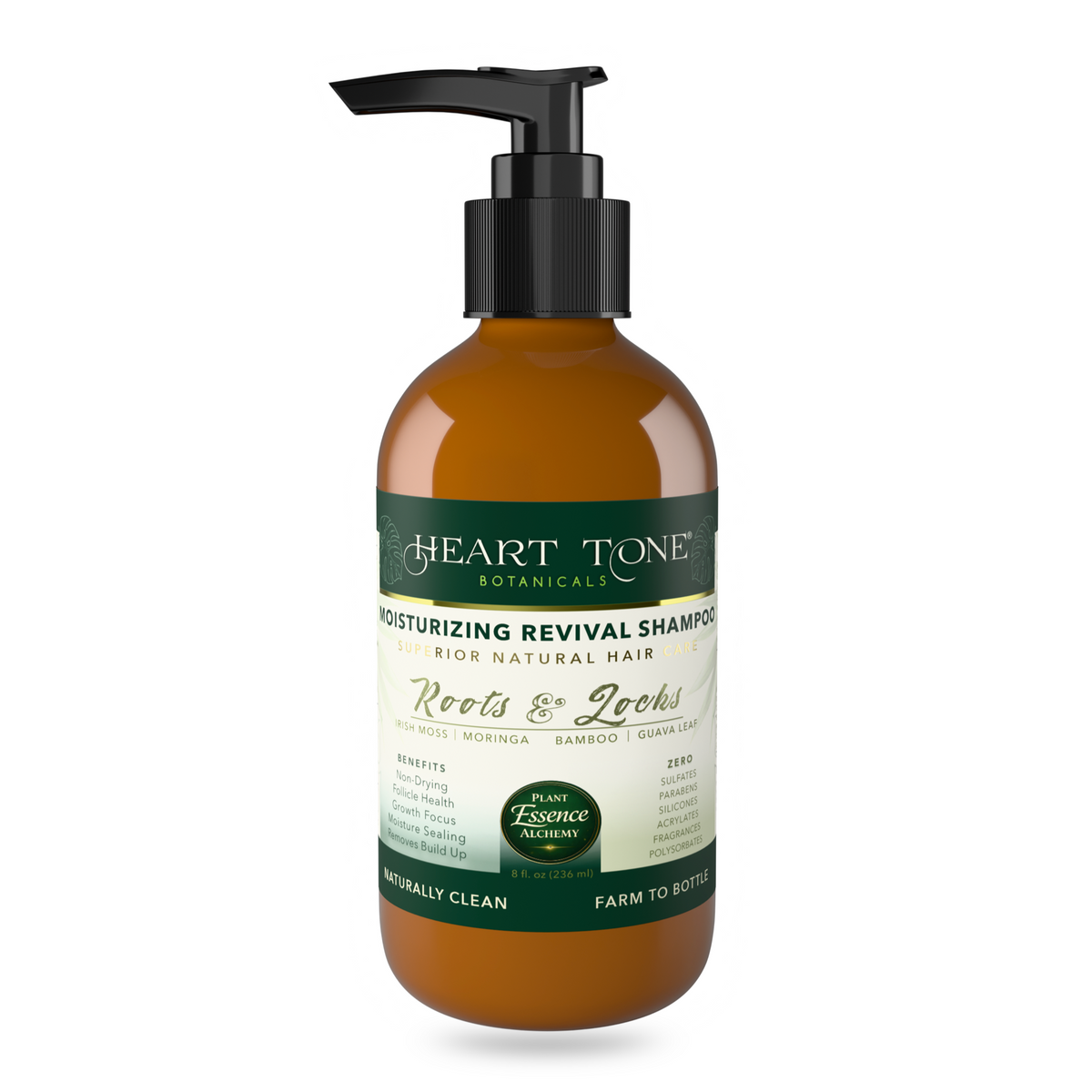
- Roots & Locks Moisturizing Revival Shampoo — botanical hair care formulated with papaya, moringa, neem, and aloe leaf extracts. Paraben-free, preserved with radish root ferment.
For those who want to make the switch in one step, our Clean & Free fragrance-free body care kit offers a practical way to replace multiple conventional products at once — with everything formulated without parabens or synthetic fragrance, specifically for sensitive skin and those with fragrance sensitivities.
The Bottom Line
Parabens are synthetic preservatives found in a wide range of conventional personal care products. They're easy to identify on an ingredient label — look for anything ending in "-paraben," typically near the bottom of the list. Many consumers today prefer formulas built around naturally derived preservation systems, botanical extracts, and pure essential oils.
Whether you're reading labels for the first time or deep into the process of replacing conventional products one by one, knowing what parabens are and where to find them is a practical step toward building a more transparent personal care routine.
Explore our full natural personal care collection — every product formulated without parabens or synthetic fragrance.

Leave a comment
This site is protected by hCaptcha and the hCaptcha Privacy Policy and Terms of Service apply.