












Why Washing Natural Hair Is Different

Natural hair — whether tightly coiled, kinky, or Type 3 and Type 4 curls — has a different structure than chemically relaxed or heat-straightened hair. The curl pattern creates more surface contact between strands, the scalp's natural oils travel more slowly down the hair shaft, and the cuticle layer can lift more easily during washing. This means that how you cleanse matters as much as what you cleanse with.
Harsh sulfate-based shampoos and overly hot water can leave natural hair feeling stripped, dry, and difficult to manage after washing — the opposite of what a good wash day should feel like. A gentler, more intentional approach helps preserve the moisture your strands need to look and feel their best.
Step-by-Step: How to Wash Natural Hair
Step 1 — Detangle Before You Wet
This is the step most people skip — and the one that prevents the most breakage. Working through tangles when hair is dry (or lightly dampened with a spray bottle) is easier and less damaging than trying to detangle soaking wet hair under the shower. Use your fingers or a wide-tooth comb starting at the ends and working your way up to the roots. Section your hair as you go to keep things manageable.
Step 2 — Wet Hair Thoroughly
Before applying shampoo, make sure your hair is completely saturated with warm water. Natural hair can feel damp on the outside while remaining dry at the core. Take time to wet every strand, focusing on the scalp and the back of the head, which often stays drier the longest. Warm water helps the hair open up so your shampoo can rinse away residue effectively.
Step 3 — Apply Shampoo to the Scalp, Not the Length
The scalp is what needs cleansing — not the length of your strands. Apply your shampoo to the scalp in sections, working it in with the pads of your fingertips (not your nails) in gentle circular motions. The shampoo will travel down the length as you rinse, which is enough to cleanse the strands without over-drying them.
If your hair is very long or dense, consider a quick first pass to rinse away most of the residue, then a second, more focused pass on the scalp. This is the same principle as double-cleansing in skincare — the first round removes the surface layer so the second can work more effectively.
Step 4 — Rinse Completely
Insufficient rinsing is one of the most common causes of scalp buildup and post-wash dullness. Rinse until the water runs clear and you can no longer feel any slipperiness in the hair. Take extra time at the back of the head and the nape, which tend to hold product the longest.
Step 5 — Apply Conditioner from Ends to Roots
Conditioner is for the hair, not the scalp — start at the ends, which are the oldest and most exposed part of your strands, and work your way up. Detangle again with a wide-tooth comb or your fingers while the conditioner is in. Let it absorb for at least 3–5 minutes before rinsing, or cover with a plastic cap and let it sit while you finish the rest of your shower routine.
Step 6 — Finish with a Cool Rinse
Cooler water helps smooth the cuticle layer, which contributes to a shinier appearance and less frizz once hair dries. It doesn't have to be ice cold — just noticeably cooler than your shower water. Even 30 seconds of cooler rinsing before stepping out makes a visible difference in how your hair looks and feels when it's dried.
How Often Should You Wash Natural Hair?
There's no single right answer — it depends on your scalp, your lifestyle, and your hair's porosity. As a general guide:
- Weekly or bi-weekly works well for most Type 3 and Type 4 hair — enough to keep the scalp feeling clean without over-stripping
- Every 5–7 days is a common starting point, adjusted based on how your scalp and strands feel
- After heavy product use or exercise, washing sooner makes more sense than waiting for a set schedule
- Co-washing — conditioner-only washing between shampoo sessions — can help extend the interval for those who find more frequent cleansing drying
The goal is a scalp that feels clean and comfortable — not tight, itchy, or irritated — and strands that feel soft and moisturized after washing, not stiff or brittle.
What to Look for in a Shampoo for Natural Hair
The most important thing to look for is what the shampoo doesn't contain: harsh surfactants like sodium lauryl sulfate (SLS) that can leave natural hair feeling stripped and dry. A sulfate-free shampoo built on gentler cleansing agents — like coco taurate or coco betaine — delivers a thorough cleanse without the drying effect.
Beyond surfactants, botanical extracts with long histories of use in hair and scalp care add meaningful richness to the formula. Aloe leaf juice extract has been used in traditional botanical hair care for generations — it lends a conditioning, non-drying feel to the cleanse. Chamomile extract is another classic botanical, valued for the gentle, comfortable scalp sensation it contributes to hair formulas.
Plant-derived ingredients like coconut milk and Irish moss extract have been part of hair care traditions across the Caribbean, West Africa, and Southeast Asia for centuries. They're included in serious botanical formulas for the rich, conditioning feel they add to the rinse. Look for a shampoo that lists real botanical extracts — not just "fragrance" and water.
What to Look for in a Conditioner for Natural Hair
A conditioner for natural hair should deliver genuine slip for detangling and leave strands feeling soft, smooth, and moisturized — not coated or weighed down. Look for botanical conditioning agents like organic shea nut butter, which has a long history in traditional hair and skin care across West Africa, and aloe leaf juice extract for a lightweight, moisturizing feel.
Organic vegetable glycerin is a plant-derived humectant that helps hair feel soft and supple after rinsing. Botanical extracts like moringa leaf, papaya leaf, and guava leaf have been incorporated into hair care preparations for generations. Irish moss extract contributes a pleasant slip that makes detangling easier and leaves a smooth feeling through the strands.
Avoid conditioners that rely heavily on silicones (look for ingredients ending in "-cone" or "-xane") — they can create a smooth feeling initially but tend to build up on the hair shaft over time and may require a clarifying shampoo to remove.
Common Mistakes When Washing Natural Hair
- Washing with water that's too hot — heat opens the cuticle aggressively and can leave hair feeling rough and frizzy after drying
- Skipping the pre-detangle step — leads to unnecessary breakage when working through tangles in soaking wet hair
- Applying shampoo all over the length — over-cleanses the strands; shampoo belongs on the scalp
- Insufficient rinsing — product residue left in the hair causes buildup and dullness over time
- Rubbing hair dry with a terrycloth towel — a microfiber towel or old cotton t-shirt is much gentler and produces less frizz
- Skipping conditioner — the conditioning step is non-optional for most natural hair types, especially high-porosity or fine strands
A Botanical Shampoo and Conditioner Built for Natural Hair
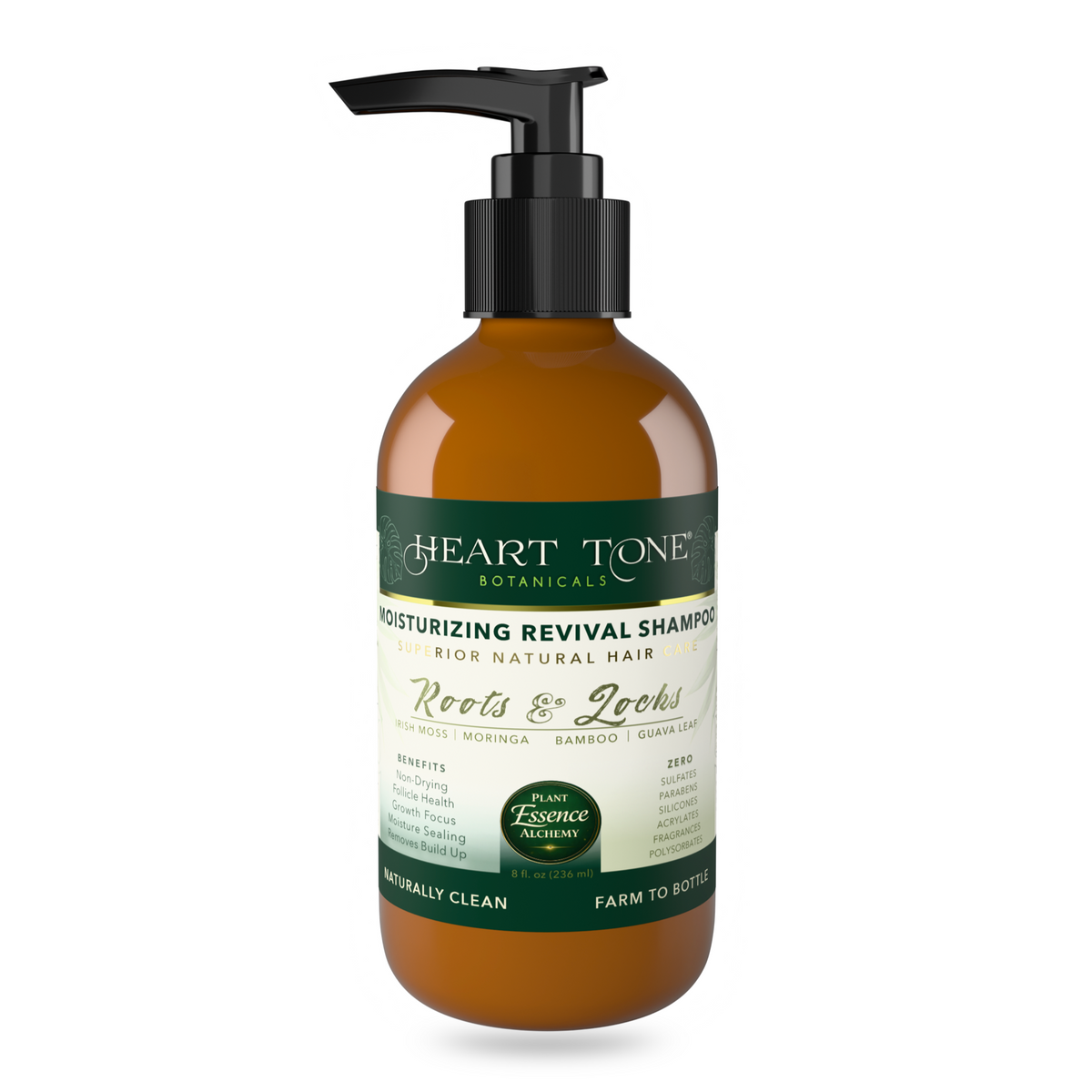
The Roots & Locks Moisturizing Revival Shampoo from Heart Tone Botanicals is formulated without sulfates, silicones, or synthetic fragrance. It cleanses with coco taurate and coco betaine — gentler surfactants that rinse away residue without the stripping feel of SLS-based shampoos. The formula includes aloe leaf juice extract, coconut milk, papaya leaf extract, moringa leaf extract, guava leaf extract, and chamomile extract, alongside a botanical essential oil blend of clary sage, lavender tea tree, rosemary CO2, and vetiver.
The Roots & Locks Moisturizing Revival Conditioner pairs with the shampoo to seal and soften after cleansing. It's built on organic shea nut butter, aloe leaf juice extract, organic vegetable glycerin, and Irish moss extract, with the same botanical extract complex — papaya leaf, moringa leaf, guava leaf, neem leaf, and bay leaf — that runs through both formulas. No silicones, no synthetic fragrance, no heavy coating agents.
Together, they're designed for a wash-day routine that leaves natural hair feeling clean, soft, and manageable — without the ingredient list that requires a chemistry degree to decode.
Explore the full natural hair care collection to find the complete botanical routine for your hair type.


Leave a comment
This site is protected by hCaptcha and the hCaptcha Privacy Policy and Terms of Service apply.