












The Short Answer: SLS Isn't Dangerous — It's Just Not Doing What You Think

Sodium lauryl sulfate (SLS) has been the default foaming agent in mass-market toothpaste for decades. It's not a scary chemical, and it's not the villain some headlines make it out to be. But there's a gap between what SLS actually does and what most people assume it does — and that gap is worth understanding before you decide whether an SLS-free formula is right for you.
Here's the short version: SLS makes toothpaste foam. It does not clean your teeth. Those are two different jobs, and only one of them is happening when your toothpaste bubbles up in your mouth.
What SLS Actually Is
Sodium lauryl sulfate is a surfactant — a detergent-class ingredient also found in shampoo, dish soap, and industrial cleaning products. In toothpaste, its job is purely mechanical: it lowers the surface tension of water so the formula whips into foam when you brush.
That foam feels like it's "working." It spreads, it bubbles, it rinses away with a squeaky-clean sensation. But the foam itself isn't the part of toothpaste doing the cleaning — the mild abrasives and brushing action are. SLS is a sensory ingredient, not a functional one. It's there because foam sells toothpaste, not because foam is required to brush your teeth.
The "Coconut-Derived" Loophole: Sodium Coco Sulfate
If you've started reading ingredient labels, you may have noticed brands swapping SLS for "sodium coco sulfate" (SCS) and marketing it as a gentler, coconut-derived alternative. Technically, that's true — SCS is often made from coconut oil rather than synthetic feedstocks.
But here's what the marketing usually leaves out: SCS is still a sulfate surfactant, and it behaves a lot like SLS on your mouth's soft tissue. Renaming a sulfate and pointing to its coconut origin doesn't change its detergent chemistry. If a brand's entire "clean formula" pitch rests on swapping one sulfate for a slightly different sulfate, that's a labeling story, not a formulation change.
This is the kind of detail that's easy to miss if you're just scanning for "SLS-free" on the front of the box. The real question isn't whether SLS is on the label — it's whether any sulfate detergent is doing the foaming.
What a True SLS-Free Formula Looks Like
A genuinely SLS-free toothpaste doesn't just remove the foaming agent and leave a flat, dry paste. It replaces the entire approach to texture and mouthfeel with different ingredients — usually a combination of:
- Natural saponins — plant-derived compounds like quillaja bark extract that create a light, mild lather without synthetic detergents
- Humectants — organic vegetable glycerin or coconut oil, which give the formula a smooth, workable texture
- Mineral clays — kaolin or bentonite clay, which contribute to a clean-feeling texture as you brush
- Botanical binders — ingredients like organic acacia gum or guar gum that hold a formula together without foam-boosting chemistry
The result feels different from what most people grew up brushing with — less foam, more paste-like texture — but that's the point. It's a formula built around ingredients doing real formulation work, not a formula built around a sensory shortcut.
What to Look For on the Label
If you're evaluating a toothpaste for SLS content, here's a practical checklist:
- Scan for "sodium lauryl sulfate," "sodium laureth sulfate," and "sodium coco sulfate" — all three are sulfate surfactants
- Don't assume "coconut-derived" on the front label means sulfate-free — check the actual ingredient list
- Look for what's creating texture instead: quillaja, coconut oil, glycerin, and clays are common natural substitutes
- Expect less foam. A mild, low-foam brushing experience is a sign the formula isn't leaning on detergent chemistry, not a sign it's incomplete
None of this means foam is harmful or that people using conventional toothpaste are doing something wrong. It just means foam and clean are two separate ideas that toothpaste marketing has spent decades blurring together.
The Bottom Line
SLS isn't the ingredient horror story it's sometimes made out to be — it's a foaming agent doing a cosmetic job, not a cleaning job. The more useful question is whether a "natural" or "SLS-free" claim on the front of a box actually holds up on the ingredient panel, or whether it's just a different sulfate wearing a coconut label.
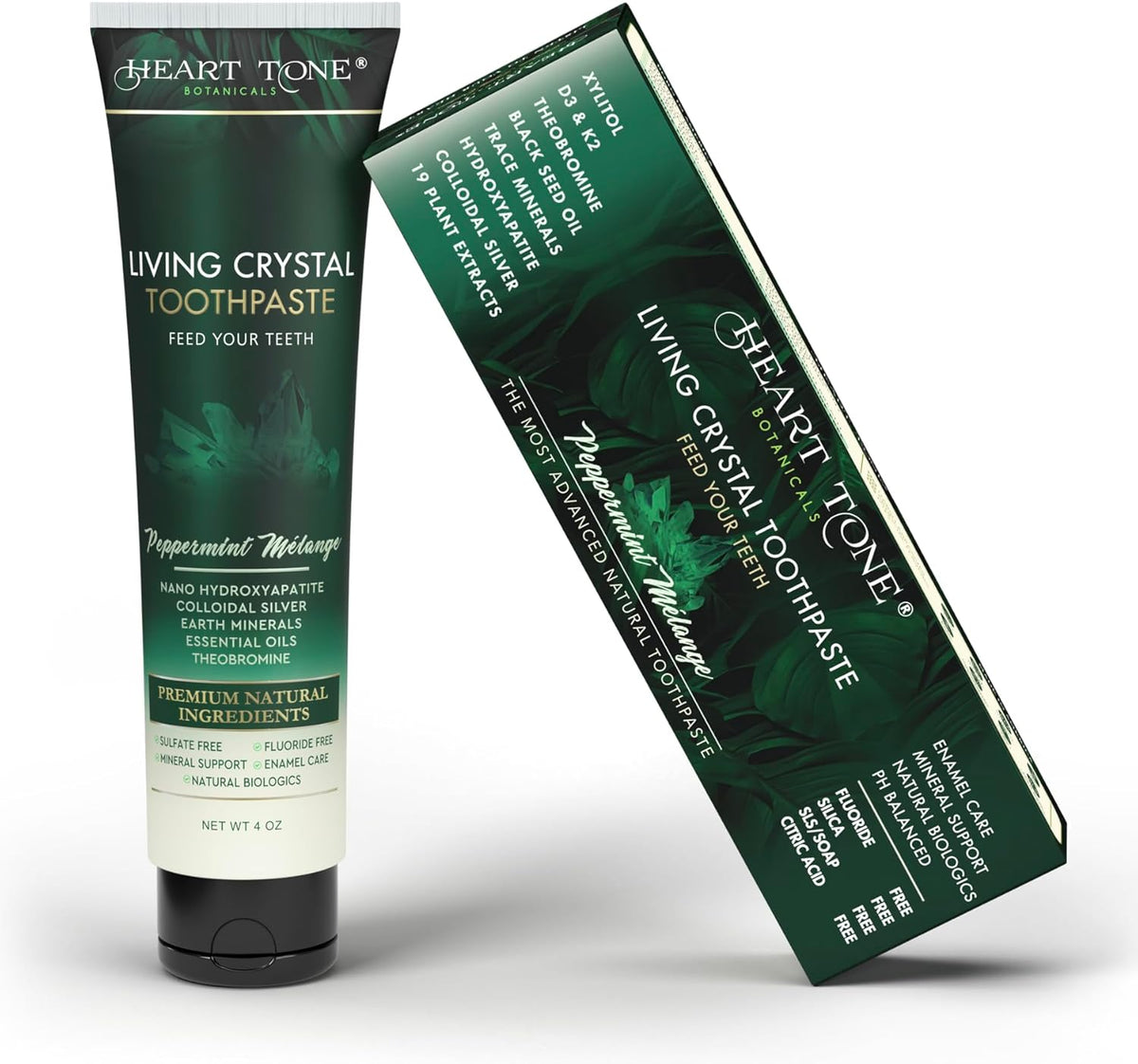
Living Crystal Toothpaste from Heart Tone Botanicals is formulated without SLS, SLES, or sodium coco sulfate. It uses organic quillaja, coconut oil, and mineral clays to create its texture — a formula built on 30+ botanical extracts rather than a detergent foam boost. If you want to round out your routine with an alcohol-free rinse, the Restorative Mouth Rinse is formulated the same way — no SLS, no alcohol, no synthetic foaming agents.
You can browse the full lineup in our natural oral care collection.

Leave a comment
This site is protected by hCaptcha and the hCaptcha Privacy Policy and Terms of Service apply.