












Why the First Few Weeks of Natural Deodorant Can Feel Uncomfortable

If you've recently switched to a natural deodorant and your underarms feel different than they used to, you're not imagining it. It's one of the most common reasons people give up on natural deodorant within the first two weeks — and also one of the most misunderstood parts of the switch.
Conventional antiperspirant works by temporarily plugging sweat ducts with aluminum compounds. Natural deodorant doesn't do that. Underarm skin that has spent years under an antiperspirant is used to a very different daily environment, and it takes time to adjust to a formula that lets skin function normally again. That adjustment can feel like extra dampness, mild tightness, or a formula that "isn't working" the way the old one did.
But an adjustment period and a formula that's genuinely wrong for your skin are two different things — and the difference matters, especially if your skin runs sensitive.
Adjustment Period vs. the Wrong Formula: How to Tell the Difference
A normal adjustment period tends to look like this:
- Underarms feel more damp than usual for the first one to two weeks
- No redness, no bumps, no persistent itching — just a different, less "dry" sensation than an antiperspirant produced
- The feeling gradually becomes less noticeable as the weeks go on
Signs that point to the formula itself, not an adjustment period, tend to look like this:
- Redness, small bumps, or a irritation that shows up within a day or two of applying
- Itching or tightness that doesn't ease up — it gets worse with continued use
- A reaction that appears every time you use that specific product, in the same spot
If you're seeing the second list, the fix usually isn't patience — it's a different formula. And for sensitive skin specifically, the ingredient that causes the most reactions in natural deodorant isn't fragrance. It's baking soda.
Baking Soda: The Most Common Sensitive-Skin Trigger in Natural Deodorant
Baking soda (sodium bicarbonate) is a popular natural deodorant ingredient because it's cheap, widely available, and effective at absorbing moisture. It's also alkaline, with a pH well above what underarm skin is used to. For a lot of people it's genuinely fine. For people with sensitive skin, that pH mismatch is the single most common reason a "natural" deodorant leaves a irritation behind.
If you've tried a natural deodorant before and reacted to it, baking soda is the first ingredient worth checking on the label. A formula built around arrowroot powder, zinc oxide, and magnesium hydroxide instead of baking soda gives skin a gentler starting point without giving up the odor-absorbing job baking soda was doing.
What to Look For in a Sensitive-Skin Natural Deodorant Formula
Baking Soda-Free, Built on Arrowroot and Mineral Powders
Arrowroot powder is a plant starch that has a long history of use in natural body care as a gentle moisture absorber. Paired with zinc oxide powder and magnesium hydroxide powder — two minerals with a long-standing role in natural deodorant formulas — a formula can address moisture and freshness without the pH swing that baking soda introduces.
A Short, Recognizable Botanical Ingredient List
A formula built on coconut oil, shea butter (Vitellaria paradoxa), and jojoba seed oil gives sensitive skin a familiar, well-tolerated base to work from. Kaolin clay, diatomaceous earth, and bentonite clay are traditional botanical ingredients that round out the mineral side of the formula.
A Fragrance-Free Option, Not Just "Lightly Scented"
Essential oils and fragrance blends are the second most common sensitive-skin trigger after baking soda. If your skin reacts to scented products generally — not just deodorant — starting with a completely fragrance-free formula removes that variable entirely, which makes it much easier to tell whether a reaction is coming from the base formula or from a specific scent.
The HTB Bioactive Deodorant Line
All five HTB Bioactive Deodorant scent profiles share the same aluminum-free, baking soda-free base — built on arrowroot powder, zinc oxide, magnesium hydroxide, coconut oil, shea butter, and jojoba oil:
- The Classic — fragrance-free, the starting point for sensitive or scent-reactive skin
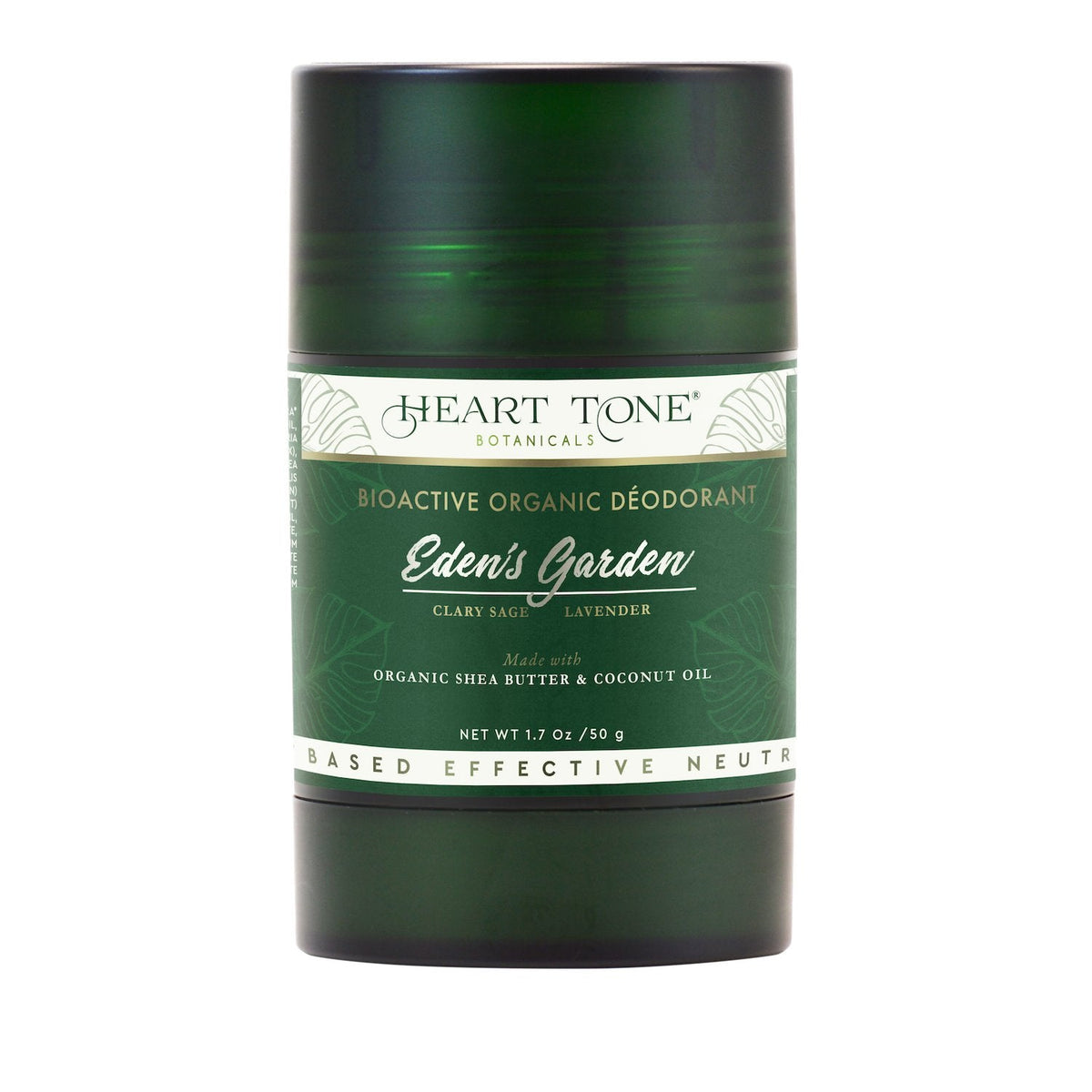
- Eden's Garden — a botanical floral blend with clary sage and lavender
- Grove Island — a bright citrus blend with bergamot and grapefruit
- Jamaica Estate — a warm, earthy blend with frankincense and coriander
- Gentleman's Reserve — a deeper, woodsy blend with fir needle and patchouli
If you have sensitive skin and haven't tried natural deodorant before, The Classic is the most straightforward place to start — it isolates the base formula from any scent ingredients, so you can judge how your skin responds to the formula itself.
A Simple Way to Test Before You Commit
Before switching your daily deodorant entirely, a short patch test can save a lot of guesswork:
- Apply a small amount to a clean, dry patch of underarm skin at night, when you won't be reapplying anything else on top of it
- Check the area the next morning and again 24 hours later
- If skin looks and feels normal, apply as your regular deodorant for one to two weeks before judging the formula overall
- If redness or bumps show up within a day or two, that's a formula-specific reaction — try the fragrance-free option before ruling out natural deodorant altogether
If Underarm Skin Still Feels Reactive
For skin that feels tight, dry, or generally reactive during the switch — not just from deodorant, but from razors, heat, or fabric — a lightweight botanical gel can be a comfortable option to use alongside deodorant rather than instead of it. The Botanical Skin Gel is formulated with organic aloe vera, allantoin, calendula, chamomile, and gotu kola in a lightweight, non-greasy gel base — the kind of traditional botanical profile that's easy to use daily on areas that feel dry or uncomfortable.
The Bottom Line
Most natural deodorant "failures" aren't failures of natural deodorant as a category — they're a mismatch between a specific formula and specific skin. An adjustment period of a week or two, with no redness or bumps, is normal. A irritation that shows up right away and doesn't improve is a sign to change the formula, not to push through it. For sensitive skin, that usually means starting baking soda-free, keeping the ingredient list short and recognizable, and — if scent is a question mark — starting fragrance-free.
Explore the full Heart Tone Botanicals body care collection to find the aluminum-free, baking soda-free deodorant scent that fits your skin.

Leave a comment
This site is protected by hCaptcha and the hCaptcha Privacy Policy and Terms of Service apply.