












The Label Matters as Much as the Formula

If you've ever flipped over a skincare product and felt your eyes glaze at the ingredient list, you're in good company. Skincare labels are written in INCI (International Nomenclature of Cosmetic Ingredients) format — a standardized but often opaque system that can read like chemistry homework.
There are a handful of common additives that increasingly come up in clean beauty conversations. This guide walks through the ones most worth knowing: what they are, why ingredient-conscious shoppers tend to look past them, and what a simpler formula looks like without them.

A quick note before we start: This isn't a scare list. Most of these ingredients are widely used and legally permitted in cosmetics. The clean beauty movement is largely about informed personal choice — reading a label with confidence and deciding what fits your daily routine. That's the spirit this guide is written in.
1. Synthetic Fragrance (Listed as "Fragrance" or "Parfum")
Fragrance is one of the most common entries on any skincare label — and also one of the least informative. The terms "fragrance" and "parfum" are legally permitted to represent a proprietary blend of aromatic compounds. The full composition of that blend doesn't have to appear on the label.
For people with sensitive or reactive skin, this opacity is where the concern starts. A single "fragrance" entry can represent dozens of individual aromatic compounds, none of which are named. Many clean beauty shoppers prefer formulas where every aromatic source is disclosed — peppermint oil, lavender extract, rose hydrosol — with nothing hidden under a blanket term.
What to look for instead: Products that list specific botanical sources for their scent (named essential oils, hydrosols, or plant extracts listed individually on the ingredient panel).
2. Parabens (Methylparaben, Propylparaben, Butylparaben)
Parabens are a family of preservatives that have been used across skincare and cosmetics for decades. They appear in everything from moisturizers to shampoos and cleansers — typically toward the end of the ingredient list, where preservatives usually sit.
Parabens have attracted sustained attention in clean beauty conversations, and "paraben-free" has become a baseline expectation for many shoppers building a clean routine. Whether or not parabens are a priority for you personally is your call — but it's useful to recognize the names when you see them.
They appear as: methylparaben, ethylparaben, propylparaben, butylparaben. If you see any of the above, you're looking at a paraben-preserved formula.
What to look for instead: Formulas preserved with botanical-derived alternatives such as rosemary extract, vitamin E (tocopherol), or plant-based preservation systems where every component is individually named.
3. Sulfates (SLS and SLES)
Sodium Lauryl Sulfate (SLS) and Sodium Laureth Sulfate (SLES) are foaming agents. They're what gives most conventional cleansers their lather — and they're effective at it. The reason they show up in clean beauty conversations is the sensation they can leave behind: a tight, dry, stripped feeling after washing that many people don't love.
For anyone with dry, sensitive, or easily reactive skin, a cleanser that leaves your face feeling taut rather than comfortable is worth reconsidering — regardless of where you land on clean beauty as a category. SLS and SLES do their job efficiently, but gentler alternatives exist.
What to look for instead: Formulas that build lather from plant-derived surfactants (coco glucoside, decyl glucoside) or castile soap bases — both tend to cleanse effectively while leaving skin feeling clean and comfortable rather than tight.
4. Phthalates
Phthalates are compounds sometimes used as carriers or softeners in fragrance formulations. They don't typically appear by name on a cosmetic label — instead, they're most often included as part of a "fragrance" or "parfum" entry (see above). This is one of the recurring reasons fragrance opacity matters to ingredient-literate shoppers.
If avoiding phthalates is a priority for you, the most reliable path is looking for products that either fully disclose their aromatic ingredients or carry an explicit phthalate-free certification from a third-party body like EWG Verified or Leaping Bunny.
5. PEGs (Polyethylene Glycols)
PEGs are petroleum-derived compounds used as emulsifiers and texture agents in a wide range of skincare products. They appear as PEG-4, PEG-8, PEG-100 stearate, and many similar variations — often mid-list or toward the end of the ingredient panel.
They're inexpensive and functional, which explains their prevalence. In botanical and clean-beauty formulas, plant-based emulsifiers derived from sunflower, rice bran, or coconut have largely stepped in to do the same textural work without the petroleum origin. For shoppers who prefer plant-derived ingredient sourcing end to end, PEGs are one of the first swaps worth looking for.
6. Formaldehyde-Releasing Preservatives
A category of preservatives used in cosmetics — including DMDM hydantoin, imidazolidinyl urea, diazolidinyl urea, and quaternium-15 — slowly release small amounts of formaldehyde as part of how they function over the product's shelf life.
These are legal, widely used, and rarely recognized by name. But for shoppers building a routine that minimizes synthetic processing, they're worth being aware of. The EWG Skin Deep database is a reliable resource for looking up any of these preservatives and seeing exactly where they appear.
7. Mineral Oil and Petroleum Derivatives
Mineral oil, petrolatum, and paraffin are petroleum-derived occlusives — they sit on the surface of skin and help slow moisture loss. They're not inherently harmful, but they're also not botanical. For a growing segment of clean beauty shoppers, the preference is simply for plant-based alternatives: shea butter, jojoba oil, plant-derived squalane, or marula.
Plant-based alternatives often feel lighter and more comfortable on the skin — reason enough to prefer them, independent of any other consideration. They also tend to come with a more traceable sourcing story, which matters to shoppers who care about where their ingredients actually come from.
What a Cleaner Formula Looks Like
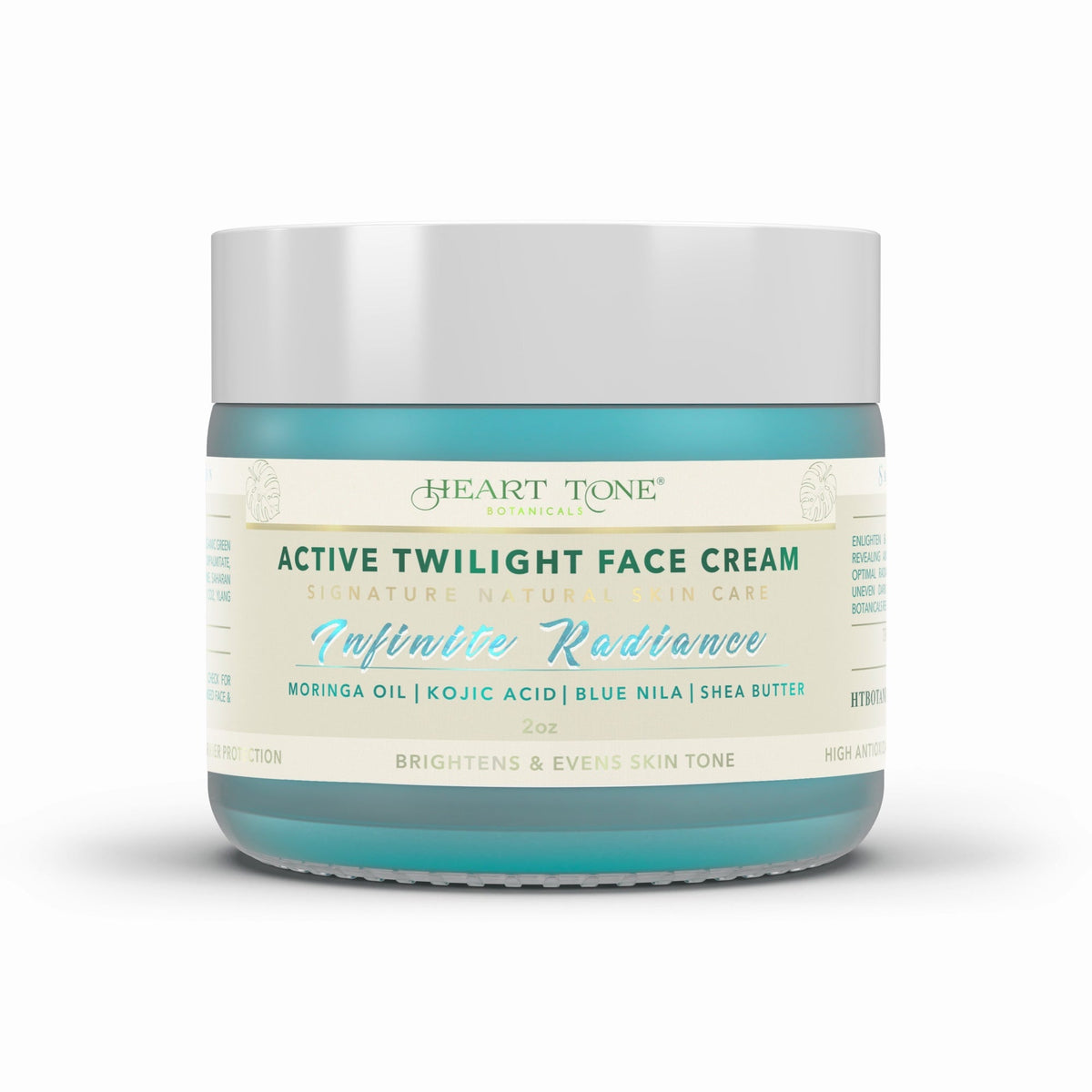
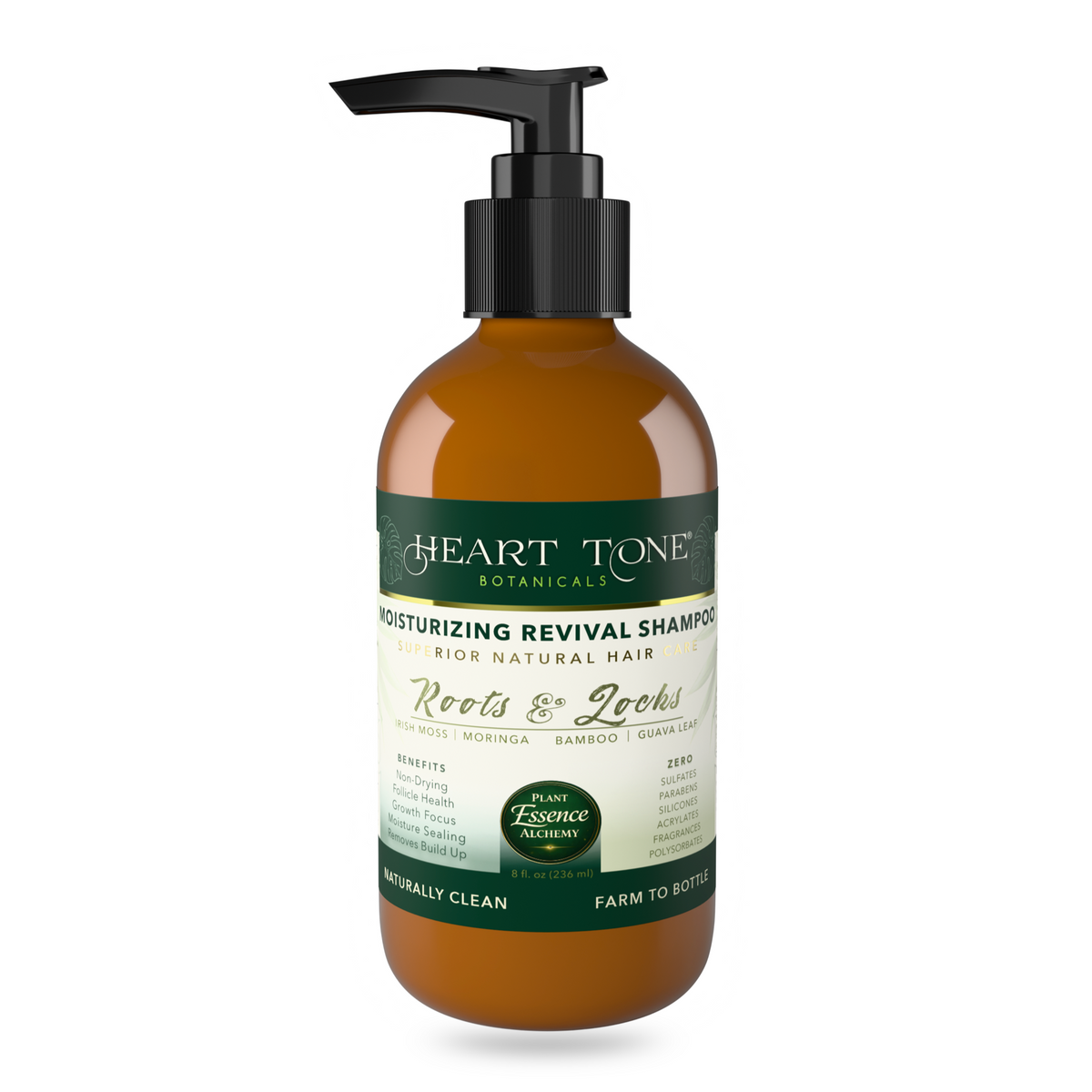
At Heart Tone Botanicals, every formula starts with a clear list of what it doesn't include: no synthetic fragrance, no parabens, no sulfates, no petroleum-derived fillers. What goes in instead is a purposeful selection of botanical ingredients — many grown on JD's farm in Vero Beach, Florida — chosen for the way they feel and perform, not for how cheaply they can be sourced.
That's the core promise of a small-batch botanical formula: fewer ingredients, better sourced, with nothing you'd feel the need to look up at 11pm wondering if it's fine.

How to Actually Read an Ingredient List
The INCI system has a learning curve, but a few rules cover most of what you need:
- Order matters. Ingredients are listed from highest to lowest concentration. The first five to seven entries make up the bulk of the formula.
- Water and aloe as a base. Whether the primary liquid is water (aqua) or aloe vera gel tells you a lot about the overall formulation philosophy.
- Long entries near the top are often fillers. Meaningful botanical extracts typically appear mid-list or later.
- When in doubt, look it up. EWG Skin Deep (ewg.org/skindeep) has a searchable ingredient database — you can look up any INCI name in seconds.
You don't need to memorize 200 INCI names. Recognizing the handful above is enough to read most labels with genuine confidence.
Start With What Touches Your Skin Daily
If you're rebuilding your skincare routine around cleaner ingredients, the highest-impact place to start is whatever you use every morning and evening. A daily moisturizer or cleanser that contains multiple items from the list above is worth replacing before you think about serums or treatments.
The Heart Tone Botanicals skincare collection is formulated without the additives covered in this guide, with full ingredient transparency on every product page. If you're not sure where to begin, our clean beauty transition guide walks through the swap sequence step by step — starting with the changes that have the biggest day-to-day impact.
Ready to see what a cleaner daily routine feels like? Browse the full skincare collection or explore all HTB Botanicals products — every formula is built around the same principle: ingredients you can actually read, sourced from places you can actually trust.

Leave a comment
This site is protected by hCaptcha and the hCaptcha Privacy Policy and Terms of Service apply.