












What Deep Conditioning Actually Is — And Why Natural Hair Needs It

If you have natural hair, you've heard the advice a hundred times: deep condition regularly. But what does that actually mean, and how do you know if you're doing it right? Here's a practical look at what deep conditioning is, what to look for in a formula, and how to build a routine that leaves your hair looking and feeling its best.
Deep conditioning is a treatment step that uses a richer, more concentrated formula than a standard rinse-out conditioner — one you leave on longer (typically 15–45 minutes, often with gentle heat) so that when you rinse, your hair looks and feels noticeably softer, smoother, and more manageable.
For natural hair — which tends to be drier than other hair types because its curl pattern makes it harder for natural oils to travel down the hair strand — a consistent deep conditioning practice is one of the most effective ways to keep hair feeling soft, looking vibrant, and behaving the way you want it to.
How Deep Conditioning Differs from Regular Conditioning
Regular conditioner is a quick step designed to smooth the hair's surface after shampooing, help with detangling, and add a light layer of moisture. You rinse it out in a minute or two, and it handles everyday maintenance well.
Deep conditioner is a longer-treatment step with more concentrated botanicals and humectants. Leaving it on for an extended period — especially under a shower cap or with gentle warmth — gives the formula more time to work into the hair. When you rinse, the difference in how your hair looks and feels is more pronounced.
Hair that's deep conditioned regularly tends to look shinier, feel more pliable, and detangle more easily than hair that only gets a quick rinse-out conditioner after washing.
What to Look for in a Natural Deep Conditioner
Not every deep conditioner labeled "natural" is worth your time. Here's what actually matters in a formula:
Humectants That Draw Moisture
Humectants are ingredients that attract moisture and help hair feel soft and hydrated. Aloe vera, honey, and glycerin are among the most widely used botanical humectants in natural hair care. Look for these near the top of the ingredient list — their placement in the formula matters.
Rich, Slip-Providing Botanicals
Slip is what makes detangling manageable. Shea butter, cocoa butter, and plant-based oils like avocado and coconut have a long history of use in natural hair care for the smooth, supple feeling they leave behind. A deep conditioner without enough slip will leave your hair feeling conditioned, but detangling will still be a struggle.
No Silicones
This is especially important for natural hair. Silicones (ingredients ending in -cone, -xane, or -siloxane) build up on the hair over time, leaving a coating that can make hair look dull and feel heavy. A clean, silicone-free formula lets your hair hold moisture more easily and keeps curl definition looking natural.
No Harsh Sulfates
Some conventional deep conditioners include surfactants that can leave hair feeling stripped rather than conditioned. Clean botanical formulas skip these entirely in favor of gentler alternatives.
How Often to Deep Condition Natural Hair
For most natural hair types, deep conditioning once a week or every two weeks is a reasonable starting point. A few things to consider:
- Higher porosity hair (hair that loses moisture quickly) tends to benefit from more frequent deep conditioning — once a week is often a good baseline.
- Lower porosity hair (hair that can feel weighed down easily) may do better with every two weeks, and may benefit from applying the deep conditioner to damp — not soaking wet — hair.
- Activity and environment matter too. If you've been using heat tools, doing styles that require a lot of manipulation, or spending time in sun, saltwater, or chlorinated pools, your hair will likely benefit from a session sooner rather than later.
How to Deep Condition Natural Hair: Step-by-Step
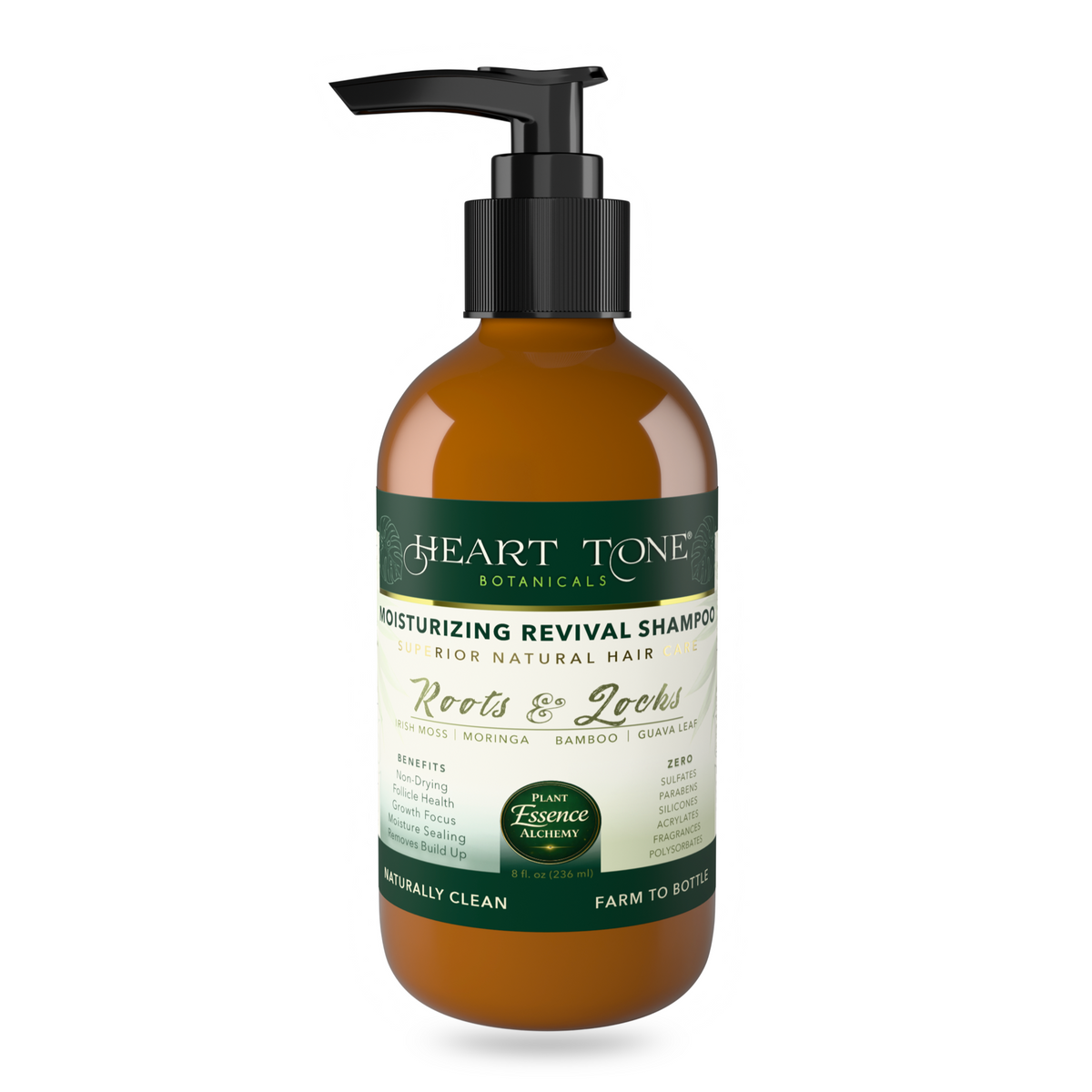
1. Shampoo first. Deep conditioner works best on a clean canvas, so start your session with a gentle, sulfate-free shampoo that won't leave your hair or scalp feeling stripped. The Roots & Locks Moisturizing Revival Shampoo is formulated without sulfates or harsh surfactants — a natural lead-in to a deep conditioning session.
2. Apply to damp hair, section by section. Work the deep conditioner through your hair in sections so every strand gets coated. Focus on the ends and mid-lengths, which tend to feel drier. A wide-tooth comb helps distribute the product evenly.
3. Cover and add gentle warmth (optional but effective). A plastic shower cap or heating cap traps your body heat and helps the formula absorb more fully. Even 20–30 minutes under a cap can make a visible difference in how your hair looks and feels when you rinse.
4. Rinse with cool water. Cool water helps smooth the hair cuticle after a deep conditioning session, leaving the surface looking glossier and feeling less rough to the touch. Avoid rinsing with hot water here.
5. Follow with a light conditioner or leave-in if needed. After rinsing, some hair types benefit from a lighter conditioner to layer in additional softness. The Roots & Locks Moisturizing Revival Conditioner works well in this step for natural hair that benefits from a lighter moisture layer on top of the deep conditioning base.
Signs Your Hair Is Ready for a Deep Conditioning Session
Pay attention to how your hair looks and feels between sessions. These are common signs that a deep conditioning treatment is overdue:
- Hair that feels dry, crunchy, or stiff even after your regular wash-and-go routine
- More visible frizz than usual, or frizz that you can't smooth down
- Hair that tangles easily and takes a long time to work through
- Ends that look dull or feel rough when you run your fingers down the strand
- Curl definition that looks less consistent or more irregular than your usual pattern
The Bottom Line
Deep conditioning is one of the most effective practices in a natural hair care routine — not because of any single ingredient, but because of the combination of time, concentrated botanicals, and consistent care. A formula with real humectants, slip-providing butters, and no harsh chemicals gives your hair the conditions it needs to look and feel its best.
If you're building a routine around clean botanicals, start with the Roots & Locks Moisturizing Revival Shampoo and Roots & Locks Moisturizing Revival Conditioner — and explore the full hair care collection for other natural hair essentials built around the same philosophy.

Leave a comment
This site is protected by hCaptcha and the hCaptcha Privacy Policy and Terms of Service apply.