












If You've Started Reading Ingredient Labels, You've Probably Seen Them

Parabens appear in an enormous share of conventional cosmetics — shampoos, moisturizers, deodorants, body washes, and more. They're preservatives, and for decades they were the industry default. Now they appear near the top of almost every "what to avoid in personal care" list. But what exactly are parabens, how do you find them on a label, and what do cleaner formulas use instead? Here's a clear breakdown.
What Are Parabens?
Parabens are a family of synthetic preservatives used in cosmetics and personal care products to extend shelf life and prevent contamination. They're inexpensive, effective across a wide range of product types, and easy to formulate with — which is why they became so common in the late twentieth century and remain widespread today.
The most frequently used parabens in cosmetics are:
- Methylparaben
- Ethylparaben
- Propylparaben
- Butylparaben
- Isobutylparaben
You'll often see two or three of these listed together in a single formula, since combinations provide broader preservation coverage than any one paraben alone.
How to Find Parabens on an Ingredient Label
The good news: parabens are easy to spot once you know the pattern. Any ingredient ending in -paraben is one. Scan the INCI (International Nomenclature of Cosmetic Ingredients) list on the back of the product — parabens tend to appear near the end of the list, since preservatives are used at low concentrations relative to the primary ingredients.
Common label appearances:
- Methylparaben
- Propylparaben
- Butylparaben
- Ethylparaben
If you see any ingredient ending in -paraben, the product contains synthetic parabens. If no -paraben suffix appears anywhere in the list, it doesn't.
One thing worth knowing: some products advertise "paraben-free" on the front label while using a different category of synthetic preservative instead — like phenoxyethanol or DMDM hydantoin. If your goal is to reduce synthetic additives broadly, reading the full INCI list is more reliable than relying on front-of-label marketing claims alone.
Why More Consumers Are Looking for Paraben-Free Products
Consumer awareness around parabens grew significantly in the early 2000s after research detected paraben compounds in certain tissue samples. The findings prompted a broader public conversation about the cumulative presence of synthetic chemicals in everyday personal care routines — a conversation that has only grown as ingredient transparency has become a mainstream expectation rather than a niche concern.
Regulatory responses have varied. The European Union has restricted the use of certain parabens — specifically butylparaben and propylparaben — in cosmetics intended for use on children under three. The U.S. FDA has not established specific restrictions, though the topic continues to be reviewed.
Many consumers have decided to act independently of regulatory timelines. For anyone building a cleaner personal care shelf, going paraben-free is one of the most practical places to start: parabens are easy to identify by name, widely avoided by clean beauty brands, and replaceable with effective botanical alternatives.
What Do Cleaner Formulas Use Instead?
Natural preservation is genuinely effective — and modern clean beauty formulas have improved dramatically. Common alternatives to synthetic parabens include:
- Vitamin E (Tocopherol) — a fat-soluble antioxidant that helps stabilize oil-rich formulas and is well-tolerated by most skin types
- Rosemary Extract (Rosmarinus officinalis) — widely used in botanical body care for its traditional role in preserving oil-based preparations
- Radish Root Ferment Filtrate — a fermentation-derived stabilizer increasingly common in clean skincare; gentle and effective in water-based systems
- Low-water and anhydrous formulations — products built on oils and waxes rather than water naturally require fewer preservatives, since most microbial growth requires free water to thrive
- Traditional botanical preparations — ingredients like aloe vera and neem have long been incorporated into botanical personal care traditions partly because of their natural stability characteristics
A well-formulated paraben-free product doesn't sacrifice shelf life or safety — it takes a different approach to achieving the same goal.
What to Actually Look for When Shopping Paraben-Free
A "paraben-free" front label is a starting point, not the full picture. Here's what to look for when building a cleaner personal care routine:
- Short, readable ingredient lists — simpler formulas leave less room for hidden synthetics
- Botanical ingredients you recognize — aloe vera, shea butter, coconut oil, jojoba, neem — these have long histories in traditional personal care
- Full INCI disclosure on every product — a brand that lists complete ingredients, not just the ones they're proud of, is giving you what you need to make an informed choice
- Honest fragrance disclosure — "fragrance" on an ingredient list can represent dozens of undisclosed compounds. Clean brands either list the specific fragrance materials or use labeled essential oils instead
- Certified organic ingredients where relevant — organic certification has a defined, verifiable standard; "natural" as a front-label claim does not

Farm-to-Bottle and Paraben-Free: How Heart Tone Botanicals Formulates
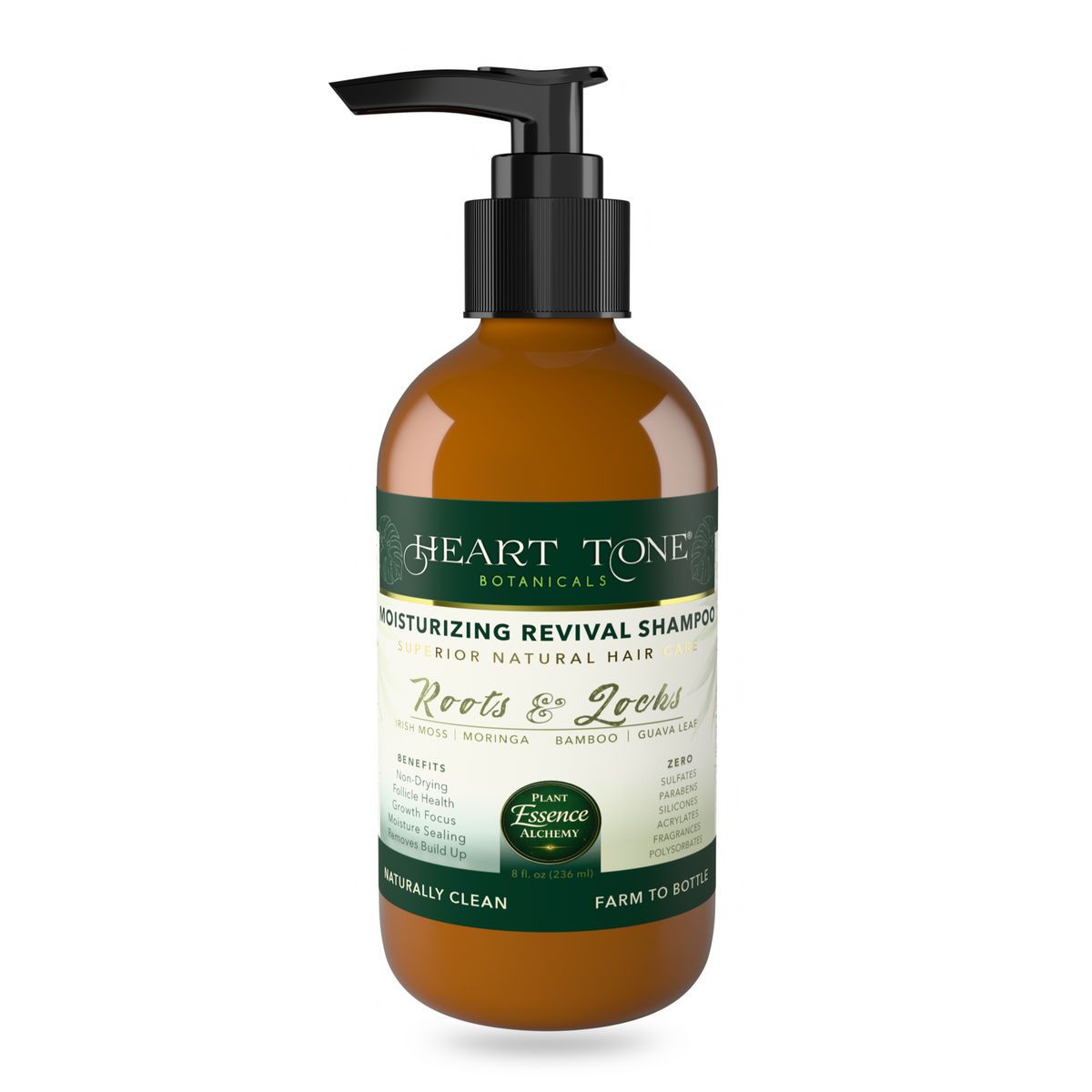
Heart Tone Botanicals was started by JD and Imani on their family farm in Vero Beach, Florida, because they wanted personal care products they actually trusted for their family. That meant a clear line from the beginning: no synthetic parabens, no aluminum compounds, no synthetic fragrances, no artificial preservatives of any kind.
Across the entire HTB line — soap, deodorant, castile liquid soap, oral care, body butter, and facial care — every formula is built without synthetic parabens. Preservation comes from vitamin E, plant-derived antioxidants, and botanical ingredients with long traditional use in personal care preparations. Key botanicals like aloe vera and neem are grown on the Vero Beach farm itself — hand harvested and extracted into the formulas without synthetic shortcuts.
Every product lists every ingredient. There are no hidden fragrance blends, no undisclosed preservation systems, and no greenwashing. What's on the label is what's in the bottle.
If you're building a paraben-free routine from the ground up, the Ancient Organic Soap and Eden's Garden Bioactive Deodorant are natural starting points — both are paraben-free, built without synthetic preservatives, and formulated with full ingredient transparency. For a broader look at the full body care line, explore Faithfully Pure Hands Castile Liquid Soap and Botanical Renew Body Butter — both free of synthetic parabens from first ingredient to last.
For more on reading ingredient labels and what to avoid in conventional beauty products, see our guide to greenwashing and our breakdown of fragrance in skincare.

Leave a comment
This site is protected by hCaptcha and the hCaptcha Privacy Policy and Terms of Service apply.