












The Word "Organic" on a Face Cream Doesn't Mean What Most People Assume

Walk down any skincare aisle and you'll see it everywhere: "organic" printed across the front of a jar in confident green lettering. It's one of the most persuasive words in beauty marketing — and one of the least regulated on a cosmetic package. In the U.S., there's no single federal standard that governs how "organic" can be used on the front label of a face cream the way there is for food. That doesn't mean the word is meaningless. It means the real answer isn't on the front of the jar at all — it's in the ingredient list.

If you're trying to build a genuinely clean face care routine, learning to read past the front label is the single most useful skill you can pick up. Here's what to actually look for.
Where "Organic" Actually Lives: The Ingredient List, Not the Front Label
A cosmetic ingredient list is written in INCI format — the International Nomenclature of Cosmetic Ingredients — which uses Latin botanical names alongside common names. This is where an individual ingredient's organic sourcing is actually disclosed, ingredient by ingredient, rather than as a blanket claim about the whole product.
Take a face cream formulated with shea butter, moringa oil, and green tea oil. If those ingredients are organically grown, a transparent ingredient list will say so directly next to each one — "Organic Shea Butter," "Organic Moringa Oil" — rather than relying on the word "organic" doing all the work from the front of the package. The ingredients that aren't labeled organic are usually specialty extracts, minerals, or essential oils sourced for a specific botanical character rather than through an organic supply chain.
This ingredient-by-ingredient disclosure matters more than a single front-label word, because it tells you exactly which parts of the formula are organically sourced and which aren't — instead of asking you to take the whole claim on faith.
What "Certified Organic" Actually Requires
There's a real difference between a product that uses organic ingredients and one that carries third-party organic certification (like USDA Organic or COSMOS). Certification requires a paper trail: verified organic sourcing for every qualifying ingredient, facility audits, and restrictions on how the final product can be processed. Most botanical face creams — including many with genuinely high-quality organic ingredients — aren't certified, simply because certification is a separate, costly process from sourcing organic raw materials in the first place.
That's not a red flag by itself. It just means the certification badge and the ingredient quality are two different questions, and you can't assume one from the other. The ingredient list is still your most reliable source of truth either way.
Reading a Botanical Face Cream Ingredient List Like a Formulator
A few habits make ingredient lists much easier to decode:
- Order matters. Ingredients are listed by concentration, highest to lowest. The first few ingredients make up the bulk of the formula — that's where to look for your primary carrier oils and butters.
- Latin names are normal, not a red flag. "Simmondsia Chinensis (Jojoba) Seed Oil" and "jojoba oil" are the same ingredient — INCI just requires the botanical name alongside the common one.
- "Organic" should sit next to the specific ingredient it applies to. A trustworthy list marks organic sourcing ingredient by ingredient, not as a vague claim about the whole product.
- A long list of botanical oils isn't automatically a good thing or a bad thing. What matters is whether each oil is disclosed clearly and sourced the way the label says it is.
Organic-Sourced Botanical Oils in a Daily Face Cream
Our Complete Daily Face Moisturizer is a good example of what a fully disclosed, multi-oil formula looks like on paper. The ingredient list includes Organic Moringa Oil, Organic Jojoba Oil, Organic Apricot Oil, Organic Green Tea Oil, and Organic Rosehip Oil, alongside other botanical oils like raspberry oil, pomegranate seed oil, and bakuchiol oil that round out the blend. Each one is listed individually rather than folded into a generic "botanical oil blend," so you can see exactly what's organically sourced and what isn't.
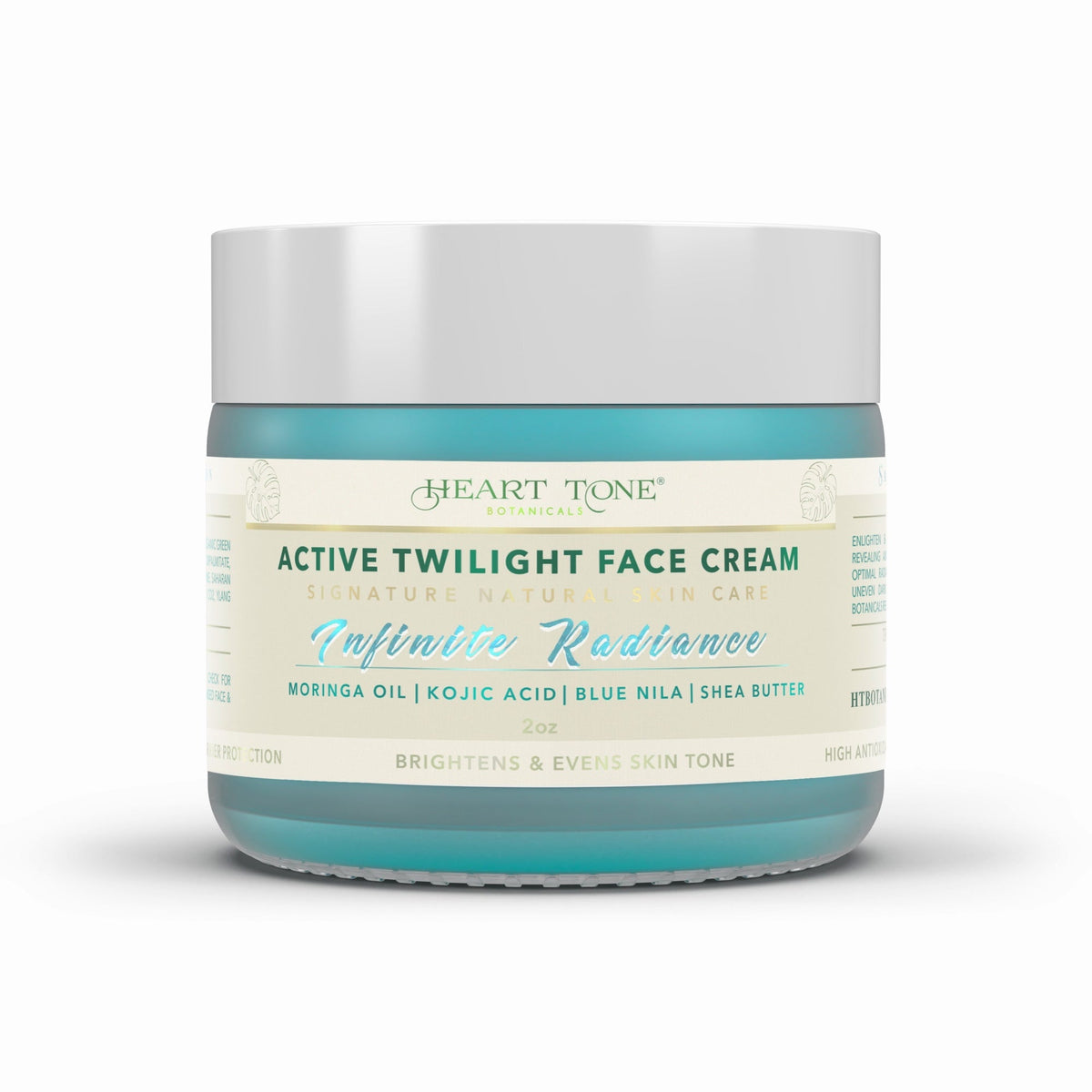
Our Active Twilight Face Cream takes a shorter, more concentrated approach — Organic Shea Butter, Organic Moringa Oil, Organic Green Tea Oil, and Organic Castor Oil form the base, with botanical extracts like licorice root and coriander seed CO2 layered on top for texture and scent. Fewer ingredients, same principle: organic sourcing disclosed at the ingredient level, not just claimed on the jar.
The takeaway either way is the same. A face cream doesn't have to be "certified organic" to be transparent about its organic sourcing — it just has to tell you, ingredient by ingredient, where those claims actually apply.
The Bottom Line
The word "organic" on the front of a face cream is a marketing claim, not a guarantee. The ingredient list is the actual disclosure — and reading it ingredient by ingredient, in order, with attention to which specific oils and butters are labeled organic, tells you far more than the front label ever will. Look for individual organic sourcing next to specific ingredients, understand that certification and organic sourcing are separate questions, and approach a long, clearly disclosed ingredient list as a feature, not a red flag.
If you want to see what a fully disclosed, organically-sourced oil blend looks and feels like on skin, the Complete Daily Face Moisturizer and Active Twilight Face Cream from Heart Tone Botanicals both list every botanical ingredient in full — no vague "botanical blend" catch-alls. You can also browse our full facial care collection for the rest of the daily lineup.
For more on where organic claims fit into a full routine, read our earlier guide, Organic Face Cream: What to Look for in a Truly Clean Botanical Formula.

Leave a comment
This site is protected by hCaptcha and the hCaptcha Privacy Policy and Terms of Service apply.