












The Short Answer: It Depends on the Type of Stain

"Does natural teeth brightening actually work?" is one of the most common questions in botanical oral care — and the honest answer is: it depends on what kind of stain you're dealing with. Some discoloration sits on the outer surface of your teeth and responds well to gentle, natural methods. Other discoloration comes from deeper inside the tooth, and no amount of brushing — natural or otherwise — is going to touch it.
Understanding the difference is the key to setting realistic expectations, and to picking a product that's actually suited to the kind of staining you have.
What Actually Causes Tooth Stains
Dental researchers generally split tooth discoloration into two categories, and they behave completely differently:
- Surface (extrinsic) stains — caused by pigmented compounds in coffee, tea, red wine, dark berries, tomato-based sauces, and tobacco. These pigments cling to the thin outer film that naturally coats enamel, building up gradually with everyday habits.
- Deep (intrinsic) stains — discoloration that originates inside the tooth structure itself, from developmental factors, the natural yellowing of dentin as enamel thins with age, or old dental work. This kind of change happens below the surface, not on top of it.
Most people dealing with everyday "my teeth look duller than they used to" discoloration are dealing with surface staining from diet and lifestyle — which is also the kind of staining that a natural approach is actually built to address.
Why Natural brightening Methods Work on Surface Stains — and Only Surface Stains
Natural teeth brightening approaches — fine mineral clays, gentle bicarbonate, and low-abrasion polishing agents — work mechanically. They act like a very fine polish, gently lifting pigment buildup off the outer surface of the tooth so the tooth's own natural color can show through more clearly. That's a physical, surface-level action.
This is fundamentally different from how a professional or peroxide-based brightening treatment works, which chemically alters stain molecules and can reach discoloration below the surface. A natural, mineral-based approach doesn't do that — and honestly, it isn't designed to. It's built for daily maintenance of surface brightness, not for altering the tooth from the inside.
What Natural Methods Can't Do
To be clear about the limits: a natural, mineral-polish approach isn't going to change discoloration that comes from inside the tooth, from certain medications taken during tooth development, or from old dental restorations. If that's the kind of staining you're dealing with, that's a conversation for a dental professional — no amount of botanical toothpaste is a substitute for that.
What natural methods are genuinely good at is keeping the surface stains from your morning coffee, your afternoon tea, or last night's glass of wine from building up in the first place — and gently lifting the ones that already have.
Everyday Habits That Make Natural brightening More Effective
- Rinse after stain-heavy drinks — a quick water rinse after coffee, tea, or wine keeps pigments from settling in before your next brushing.
- Use a straw for dark beverages — it reduces how much liquid contacts the front surfaces of your teeth.
- Brush consistently, not aggressively — twice-daily consistency matters more than pressure. Over-scrubbing doesn't speed up results and can feel harsh on gums.
- Give it time — surface polishing is cumulative. Visible change in the appearance of surface stains builds over weeks of consistent use, not overnight.
What to Look for in a Natural brightening Toothpaste
Not every "brightening" toothpaste on a shelf is actually gentle. Some rely on harsh abrasives that can feel rough on enamel with daily use. A few markers of a formula worth using:
- Fine, low-abrasion mineral clays — kaolin and bentonite clay are gentle enough for twice-daily use while still providing a genuine polishing action
- Sodium bicarbonate in a balanced formula — a well-known gentle polishing agent when it isn't the only ingredient doing the work
- No fluoride, if that's your preference — plenty of people want a fluoride-free daily formula and don't want to sacrifice a real botanical ingredient list to get one
- A formula gentle enough for daily use — if a brightening product feels harsh or leaves teeth feeling sensitive, that's a sign the abrasive load is too high for everyday brushing
The Bottom Line
Natural teeth brightening isn't a myth, and it isn't magic — it's mechanical. It works by gently polishing away the everyday surface stains that build up from coffee, tea, wine, and food, and it does that job well when the formula uses fine, well-balanced mineral ingredients. What it can't do is change discoloration that starts below the enamel — that's a different problem with a different solution.
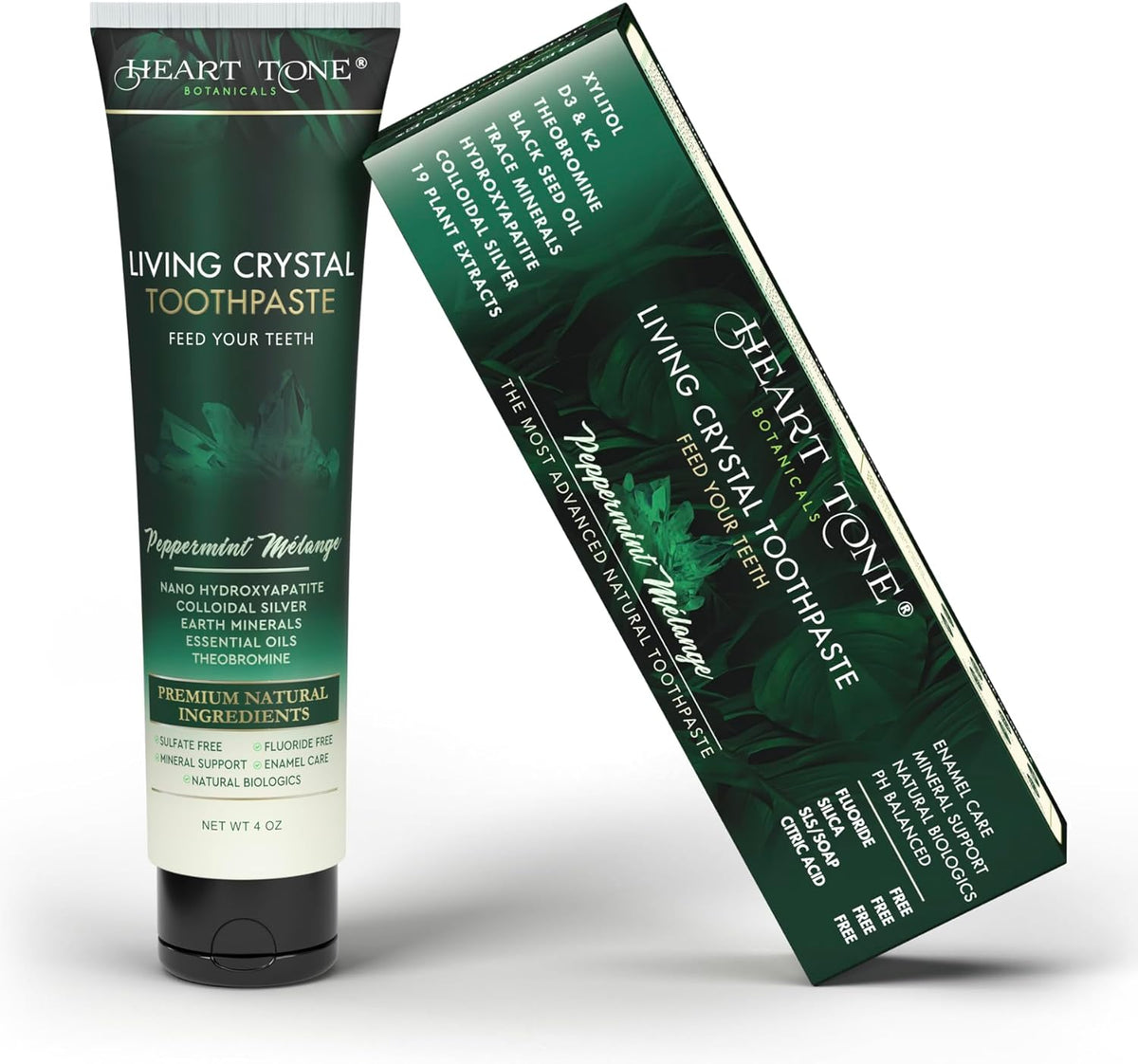
If daily surface staining from your coffee habit is what you're trying to manage, Living Crystal Toothpaste from Heart Tone Botanicals is a fluoride-free formula built with kaolin clay, bentonite clay, and sodium bicarbonate alongside 30+ farm-grown botanical extracts — gentle enough for daily use, without harsh synthetic abrasives.
Pair it with the Restorative Mouth Rinse for a complete alcohol-free, fluoride-free daily routine, or explore the full natural oral care collection to see everything Heart Tone Botanicals offers.

Leave a comment
This site is protected by hCaptcha and the hCaptcha Privacy Policy and Terms of Service apply.