












What Does "Organic" Actually Mean on a Face Cream Label?

Walk down any skincare aisle and you'll see "organic" printed on everything from a $8 drugstore jar to a $90 luxury cream. But the word itself isn't regulated the way it is for food. A face cream can legally call itself "organic" with just one certified-organic ingredient buried at the bottom of the list — while the first five ingredients are water, synthetic emulsifiers, and preservatives.

That's why the label isn't where you evaluate a face cream. The ingredient list is. A genuinely organic, botanical face cream reads like a garden — plant oils, plant extracts, and very little else. If you have to scroll past a wall of unrecognizable chemical names before you hit anything botanical, that's your answer.
Why the Ingredient List Matters More Than the Word "Organic"
Here's what actually separates a clean botanical face cream from a filler formula wearing an organic label:
- Ingredient order — ingredients are listed by concentration, so if water and a synthetic thickener lead the list, the "organic" claim is doing more marketing work than formulation work
- Number of active botanicals — one organic oil isn't a formula, it's a footnote. A serious botanical face cream layers multiple plant oils and extracts to do real, complementary work
- What's absent — no synthetic fragrance, no parabens, no mineral oil, no silicones sitting on top of the skin instead of absorbing into it
- Texture and finish — botanical oil blends tend to absorb rather than sit on the surface; a heavy, waxy finish often signals petroleum-derived filler ingredients
Botanical Ingredients Worth Knowing
Shea Butter
Organic shea butter has a long history of use in traditional African skincare, prized for its rich, emollient texture. It's a common base ingredient in nighttime face creams because of how deeply it layers into a moisture-sealing routine.
Moringa Oil
Moringa oil is pressed from the seeds of the moringa tree and has been used in botanical skincare for generations. It has a light, fast-absorbing texture that makes it a popular oil for both day and night formulas.
Rosehip and Sea Buckthorn Oil
Rosehip seed oil is a longtime favorite in botanical face oil blends, valued for its lightweight feel and traditional use in skin care rituals. Sea buckthorn oil has a distinctive deep orange color from its natural carotenoid content and a similarly long history in traditional skin care.
Bakuchiol
Bakuchiol is a plant-derived compound extracted from the babchi plant, traditionally used in Ayurvedic practice. It's become a popular botanical ingredient for people looking for a plant-based addition to their evening routine.

Licorice Root Extract
Licorice root has a centuries-long history in traditional botanical skincare across multiple cultures, often included in facial formulas for its gentle character and long-standing place in plant-based beauty traditions.
What an Organic Face Cream Should NOT Contain
A truly clean formula is defined as much by what's missing as by what's included:
- Synthetic fragrance — listed simply as "fragrance" or "parfum," these can mask dozens of undisclosed chemical compounds
- Parabens and formaldehyde-releasing preservatives — common in mass-market "natural" lines despite the organic branding
- Mineral oil and petrolatum — inexpensive filler ingredients that sit on the skin's surface rather than working with a botanical oil blend
- Silicones — create a smooth, silky feel instantly, but they're synthetic and unrelated to the plant-based formula around them
If a face cream markets itself as organic but still leads with any of the above, the "organic" claim is describing one ingredient, not the formula.
Building a Full Organic Face Routine
A single organic face cream is a good start, but a complete botanical routine layers products for morning and night. Heart Tone's Complete Daily Face Moisturizer is formulated with 22 botanical oils — including organic moringa, organic jojoba, organic rosehip, bakuchiol, and prickly pear seed oil — designed as a daily layer that absorbs rather than sits on the skin.
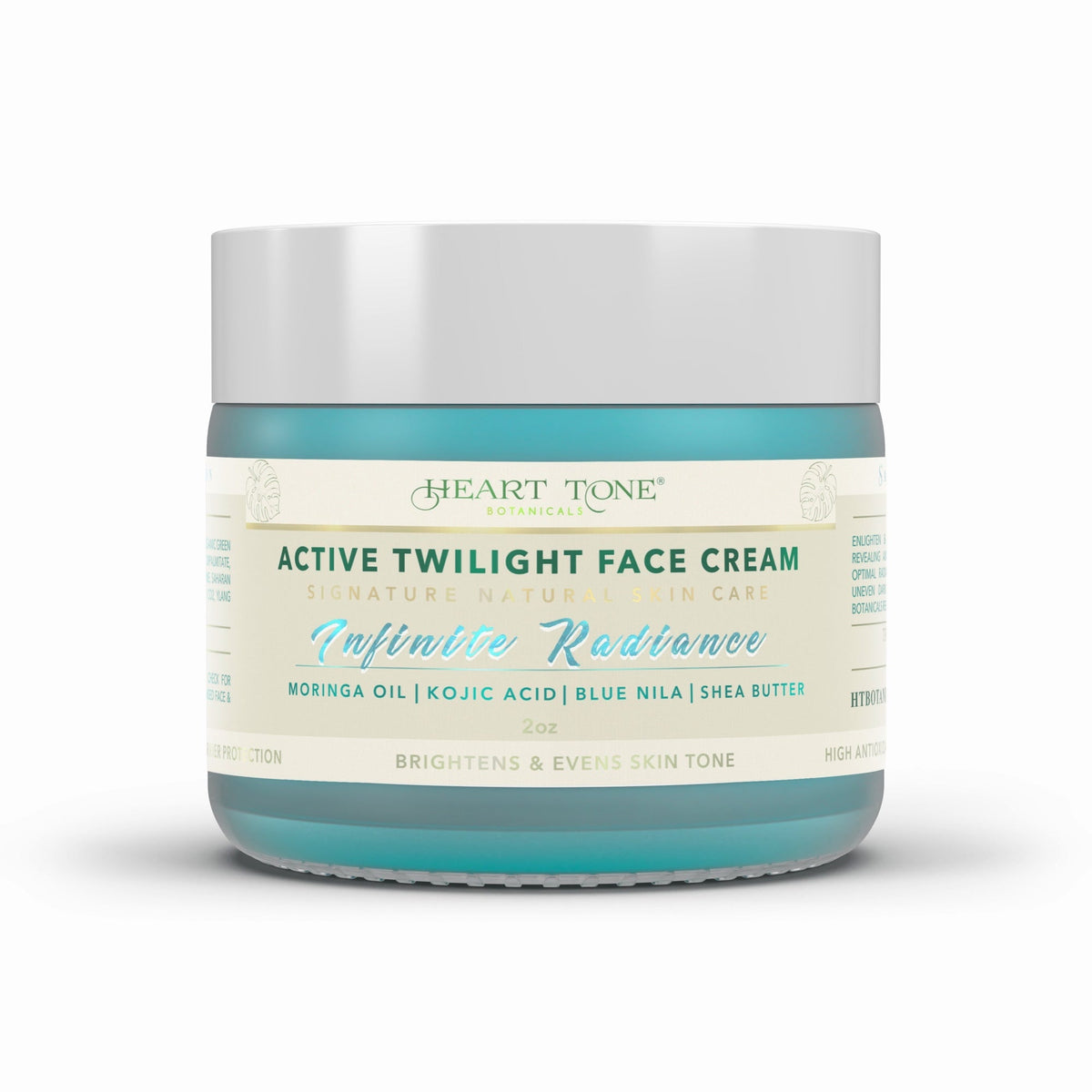
For nighttime, the Active Twilight Face Cream uses organic shea butter, organic moringa oil, and licorice root extract in a richer, overnight-weight formula. Both are part of The AM/PM Face System and The Complete Face Ritual, which pair a full botanical routine — toning mist, serum, and moisturizer — in the order they're designed to be used.
You can browse the full lineup, including Dynamic Hydrogel Face Serum and Island Mist Toning Facial Elixir Hydrosol, in the Facial Care collection.
The Bottom Line
"Organic" on a label is a starting point for a question, not an answer. The real work is in the ingredient list: how many botanical oils and extracts are actually in the formula, where they sit in the ingredient order, and what synthetic fillers are left out. A face cream built from a real botanical oil blend — not a single organic ingredient sprinkled into a conventional base — is what separates a genuinely clean formula from a marketing label.

Leave a comment
This site is protected by hCaptcha and the hCaptcha Privacy Policy and Terms of Service apply.