












The Short Answer: Some "Natural" brightening Methods Are Gentler Than Others

Search "natural teeth brightening" and you'll find dozens of home remedies — charcoal, lemon juice, baking soda, apple cider vinegar, strawberries. Some of these are genuinely gentle additions to a daily routine. Others are abrasive or acidic enough that dentists actively warn against them. The difference between the two comes down to one thing: what the method actually does to your enamel while it's working.
Here's how to tell the gentle methods from the ones that trade a brighter-looking smile today for a rougher, more porous tooth surface down the road.
Why Enamel Safety Matters More Than People Realize
Tooth enamel is the hardest substance in the human body, but it isn't invincible. Dental researchers measure how abrasive a substance is using the Relative Dentin Abrasivity (RDA) scale — the same framework used to evaluate toothpaste formulas. Once enamel is worn down, it doesn't grow back. That's why the method matters as much as the result: a brightening approach that scratches or thins the enamel surface can leave teeth looking duller and more yellow over time, since thinner enamel reveals more of the naturally yellow dentin layer underneath.
Natural Methods Worth Approaching With Caution
Activated Charcoal
Charcoal powders and charcoal toothpastes are popular for their dramatic before-and-after appeal, but they rank among the more abrasive options on the market. Used daily, a gritty charcoal product can wear down enamel faster than most people realize — and once that surface texture changes, teeth can actually pick up stains more easily, not less. We covered this in more detail in Charcoal Teeth brightening: What It Actually Does.
Lemon Juice and Apple Cider Vinegar
Both are highly acidic, and acid softens enamel on contact. Rubbing lemon juice directly on teeth or swishing with straight vinegar may look like it's "cleaning" the surface, but repeated exposure is one of the more well-documented ways people accidentally erode their own enamel at home.
Strawberry-and-Baking-Soda Scrubs
This one shows up constantly in home-remedy roundups. The problem is the fruit acid in strawberries, which offsets any gentle polishing the baking soda provides. Combining an acidic ingredient with an abrasive one is generally the wrong direction for enamel.
Gentler Natural Approaches
Baking Soda — Used in Moderation
On its own, and used a few times a week rather than at every brushing, baking soda is a mild abrasive that can help lift surface residue without the acidity problem of lemon or vinegar. Daily, aggressive use is where people run into trouble — moderation is the entire game with any abrasive ingredient.
Oil Pulling
Oil pulling is a traditional Ayurvedic practice that involves swishing oil in the mouth for several minutes. It's non-abrasive by nature, since there's no scrubbing action involved — it's simply a swishing ritual, which makes it one of the gentler pieces people add to a brightening-focused routine.
Crunchy, Fibrous Produce
Apples, celery, and carrots have a natural mechanical cleaning action from chewing — not through any chemical process, just the physical act of eating something fibrous. It's a low-effort habit that doesn't carry any of the abrasion or acidity risk of the methods above.
What to Look for in a Natural Toothpaste If Appearance Is Your Goal
If the goal is a brighter-looking, more polished smile without the harsh trade-offs above, the formula matters more than any single "brightening" ingredient. Look for:
- A gentle, low-abrasion polishing base — clays like kaolin and bentonite are traditional ingredients used for their fine, mild texture rather than harsh scrubbing power
- No added acids — a formula shouldn't be relying on citric or acetic acid for any part of its "brightening" effect
- No charcoal grit — if a natural toothpaste feels sandy or gritty between your teeth, that's the abrasive ingredient doing its work, for better or worse
- Consistent, gentle daily use over dramatic quick fixes — the appearance of a smile responds better to a formula you'll actually use twice a day than to an aggressive treatment used once a week

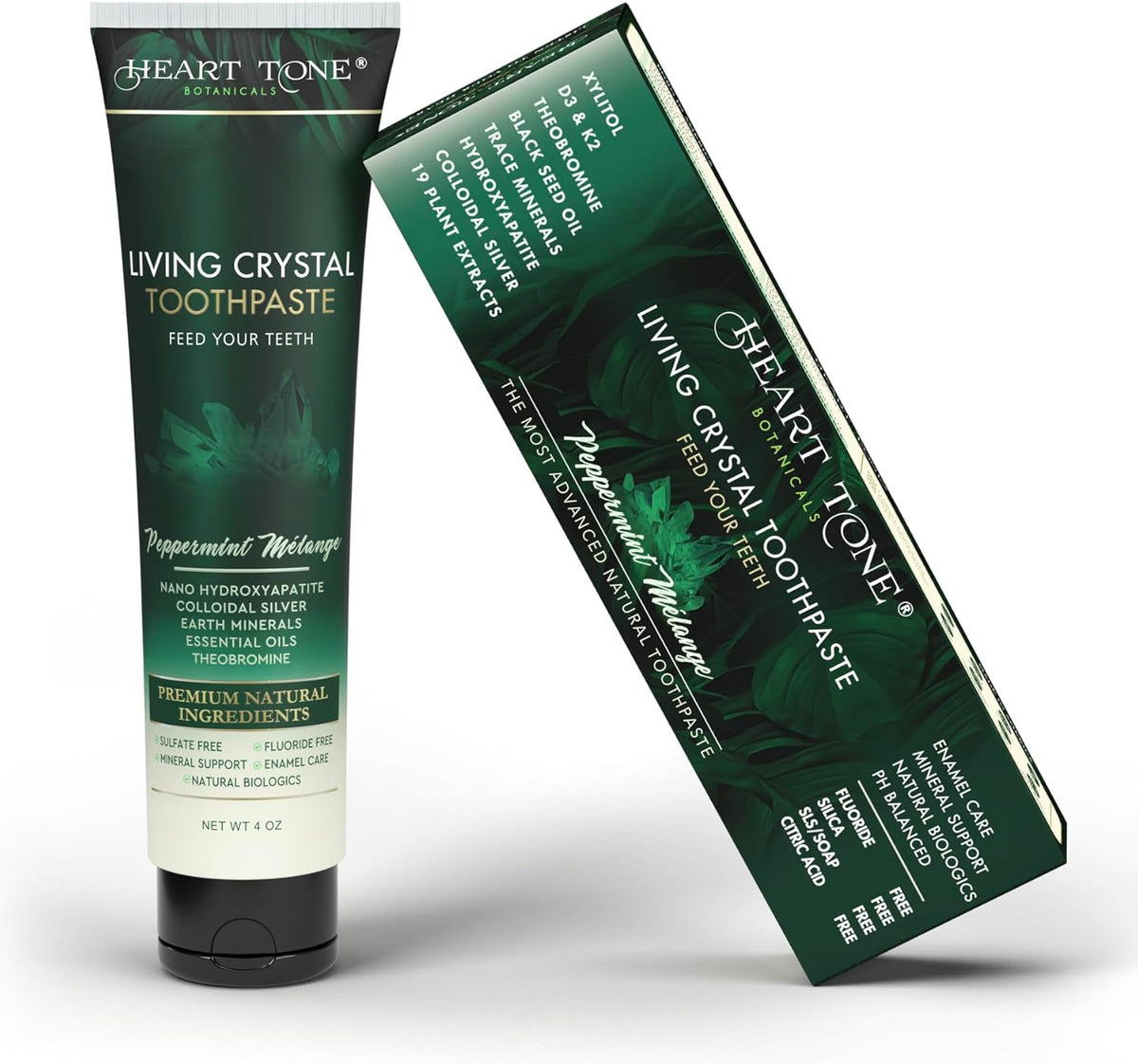
Heart Tone's Living Crystal Toothpaste is built on kaolin clay, bentonite clay, and micro hydroxyapatite alongside 30+ botanical extracts — formulated as a fluoride-free daily toothpaste rather than a harsh, occasional-use brightening treatment. It contains no charcoal and no added acids.
Building a brightening-Safe Daily Routine
A routine that supports a brighter-looking smile without the enamel trade-offs generally looks like this: brush twice daily with a gentle, non-abrasive natural toothpaste, rinse with an alcohol-free botanical mouthwash to finish the routine, and save any stronger abrasive ingredient — like baking soda on its own — for occasional use rather than daily. Skip the acidic scrubs entirely.
Heart Tone's Restorative Mouth Rinse is an alcohol-free, fluoride-free daily rinse built on botanical extracts, formulated to complement a gentle brushing routine rather than replace it.
The Bottom Line
Natural doesn't automatically mean gentle. Charcoal, lemon juice, and vinegar are natural — and they're also some of the more damaging things you can put on your enamel. Baking soda in moderation, oil pulling, and a genuinely gentle, non-gritty toothpaste formula are the safer path to a brighter-looking smile without wearing down the surface that's doing the reflecting.
Explore the full natural oral care collection from Heart Tone Botanicals to build a gentle, daily routine.

Leave a comment
This site is protected by hCaptcha and the hCaptcha Privacy Policy and Terms of Service apply.