












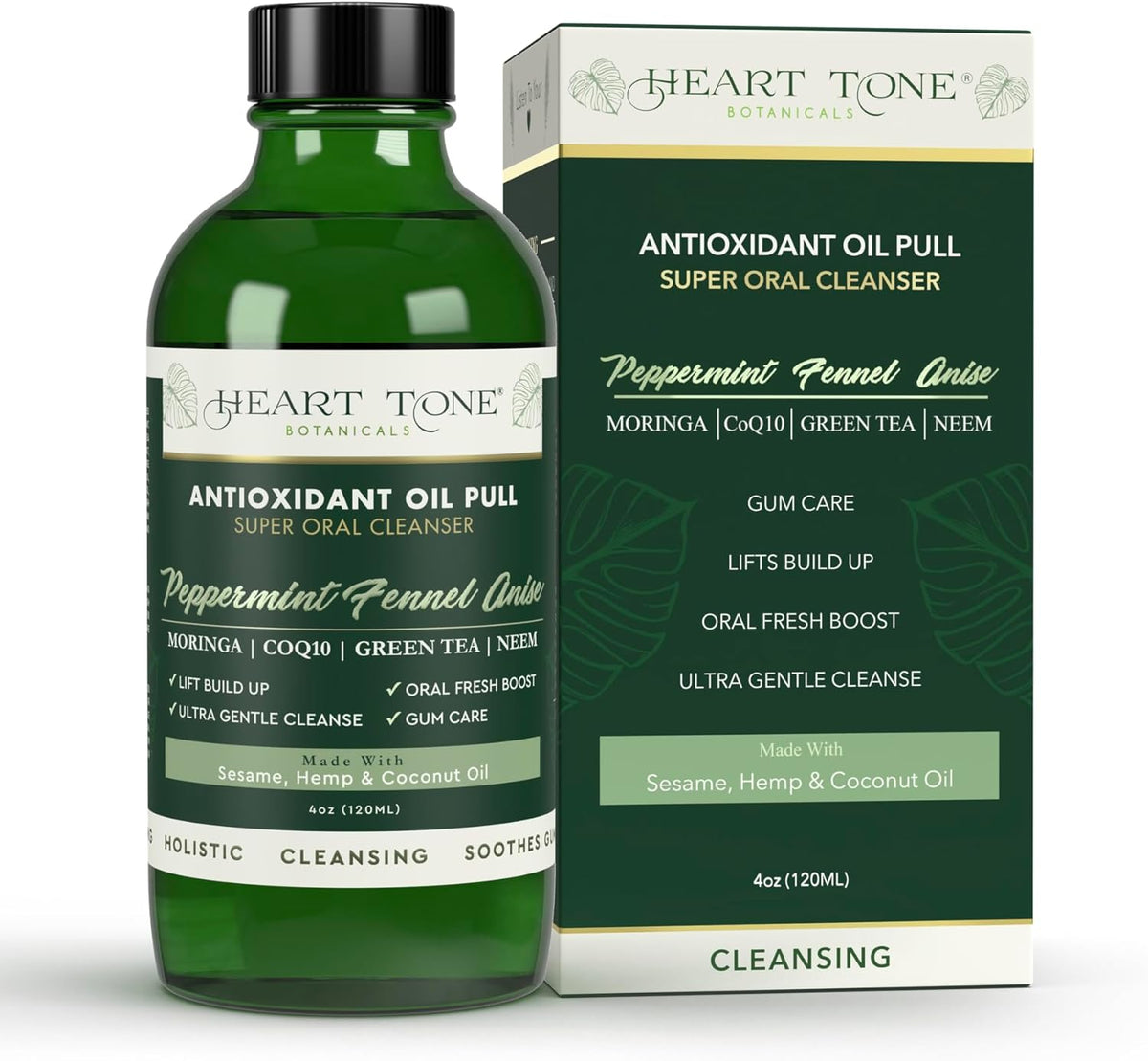
If you've spent any time in natural oral care circles, you've probably heard about oil pulling. It's old — centuries old, rooted in Ayurvedic tradition — and it's one of those practices that tends to stick once people actually try it. Not because of any dramatic claims, but because of how your mouth feels afterward.
Here's what it is, how it's done, and what to look for when choosing a botanical oil pull for your routine.
What Is Oil Pulling?

Oil pulling is the practice of swishing a small amount of oil in your mouth for an extended period — typically 10 to 20 minutes — and then spitting it out. No fluoride. No alcohol. No synthetic ingredients. Just oil, your mouth, and a little patience in the morning.
The practice has roots in Charaka Samhita, one of the foundational texts of Ayurvedic medicine, where it was known as kavala or gandusha. Traditional practitioners used sesame and coconut oils — both of which remain the most common base oils in modern oil pulling formulas.
In recent years, oil pulling has found a new audience among people looking to move away from conventional oral care products and toward simpler, plant-based routines. Whether you're curious about Ayurvedic traditions or just looking for something different in your morning ritual, it's worth understanding what the practice actually involves.
How Oil Pulling Works (The Mechanics)
You take a tablespoon of oil, swish it through your teeth and around your gumline for 10 to 20 minutes, then spit it into a trash can — not the sink, since oil can clog pipes over time. Rinse with water, then proceed with the rest of your oral care routine.
During those minutes, the oil moves through the spaces between your teeth, around the gumline, and across the surface of your tongue. When you spit it out, it looks noticeably different from when you started — it turns white and becomes more liquid as it emulsifies with saliva during the swishing process.
Most people notice that their mouth feels cleaner and fresher immediately after. That sensation is what keeps people coming back to the practice.
Which Oil to Use
Traditionally, sesame oil was the Ayurvedic oil of choice. Coconut oil has become popular in Western natural wellness circles for its pleasant taste and smooth texture. Today, many botanical oil pull formulas combine both.
Beyond the base oil, the experience varies significantly based on what else is in the formula. A plain coconut oil pull has a very different sensory profile than a botanical blend formulated with peppermint, wintergreen, spearmint, and botanical CO2 extracts — the latter tend to leave the mouth feeling noticeably fresher.
If you're new to oil pulling, starting with a flavored botanical formula can make the practice much easier to stick with. Twenty minutes with plain oil feels different from twenty minutes with something that tastes like a bright botanical mint blend.
What to Look for in a Botanical Oil Pull
Not all oil pulls are the same. Here's what to look for on the label:
- Base oil quality. Look for organic sesame seed oil or organic coconut oil — or both. MCT coconut oil tends to have a lighter texture and more neutral taste than whole coconut oil, which makes it easier to swish for extended periods.
- Added botanicals. Peppermint, spearmint, and wintergreen essential oils dramatically improve the experience. Botanical extracts like myrrh, licorice root, and turmeric have long histories of use in traditional oral care preparations from Ayurvedic and folk herbal traditions around the world.
- No alcohol or synthetic additives. The appeal of oil pulling is its simplicity. A formula with a short, clean ingredient list fits the spirit of the practice.
- No fluoride. Oil pulling sits naturally in the fluoride-free oral care category by design.
HTB's Two Oil Pull Formulas
Heart Tone Botanicals makes two oil pull options, both built on an organic coconut and sesame oil base with botanical additions that make the experience noticeably different from plain oil pulling.
Antioxidant Oil Pull
The Antioxidant Oil Pull combines organic MCT coconut oil, organic sesame seed oil, and organic coconut oil with a botanical lineup that includes sea buckthorn berry extract, pomegranate seed extract, CoQ10, peppermint essential oil, spearmint essential oil, birch essential oil, wintergreen essential oil, manuka oil, licorice root extract, organic myrrh extract, and organic thyme and oregano essential oils.
The flavor profile is bright and minty with a warm herbal finish — distinctly different from plain coconut oil and considerably more enjoyable during an extended swishing session. After 15 to 20 minutes, the freshness sensation is noticeable.
Ozonated Oil Pull
The Ozonated Oil Pull takes the base formula further, featuring ozone-infused organic sesame seed oil alongside organic MCT coconut oil, organic coconut oil, organic hemp seed oil, organic camellia seed oil, organic neem oil, fennel essential oil, peppermint essential oil, spearmint essential oil, birch essential oil, CoQ10, resveratrol, manuka oil, organic clove essential oil, organic turmeric CO2, licorice root CO2, and vitamin E.
The ozonated sesame seed oil gives this formula a distinct extra-clean sensation during swishing. If you're looking for the most botanically complex option in the lineup, this is it.
Where Oil Pulling Fits in Your Routine
Oil pulling is traditionally done first thing in the morning, on an empty stomach, before drinking water or eating. Most people do it while going about their morning — making coffee, getting dressed — rather than sitting still for 20 minutes.
After you spit and rinse, you can move through the rest of your oral care routine. A natural follow-up is brushing with Living Crystal Toothpaste — a fluoride-free formula with kaolin clay, xylitol, micro hydroxyapatite, colloidal silver, and botanical CO2 extracts — followed by rinsing with Restorative Mouth Rinse, an alcohol-free botanical rinse formulated with peppermint, spearmint, wintergreen, licorice root CO2, myrrh CO2, and colloidal silver.
The three-step routine — oil pull, toothpaste, rinse — creates a thorough, all-botanical morning oral care experience without synthetic chemicals, fluoride, or alcohol. Explore the full HTB oral care collection at htbotanicals.com/collections/oral-care.
How Long Does It Take to Get Used To?
Most people find the first few sessions the hardest — not because the experience is unpleasant, but because 15 to 20 minutes is longer than any other step in a typical oral care routine. The most common feedback from people who've built it into their morning: by week two, it feels normal. By week four, skipping it feels noticeable.
Start with five minutes if 15 feels like too much. Work up gradually. The botanical oil pull formulas make the time pass faster than plain oil.
Is Oil Pulling Right for You?
Oil pulling isn't a replacement for brushing and rinsing — it's a complement to them, and that's how it's traditionally been understood in Ayurvedic oral care. If you're already using a natural toothpaste and botanical mouth rinse and want to take your morning routine a step further, oil pulling is a logical next addition.
It requires no special tools, no complicated technique, and no investment beyond a good bottle of botanical oil pull. Just oil, your morning, and fifteen minutes.
Ready to try it? Start with the Antioxidant Oil Pull for a bright botanical entry point, or go straight to the Ozonated Oil Pull for the most botanically advanced experience in the lineup.

Leave a comment
This site is protected by hCaptcha and the hCaptcha Privacy Policy and Terms of Service apply.