












More people than ever are making the switch from conventional antiperspirants to natural deodorant. Whether you're trying to simplify your routine, cut out synthetic ingredients, or just curious about cleaner alternatives, the transition is real — and knowing what to expect makes all the difference.
Here's an honest, practical guide to making the switch.
Why People Switch to Natural Deodorant

Conventional antiperspirants work by temporarily blocking sweat glands — that's the mechanism. Most people are fine with that for years, but at some point the formula itself becomes the focus: long ingredient lists, synthetic fragrances, aluminum compounds.
Natural deodorant doesn't block sweat. Sweating is a natural function, and natural deodorants are designed to let that happen while keeping you feeling fresh. That's a different job than an antiperspirant, and it works differently.
That difference is what most of the adjustment period is about.
What to Expect During the First Few Weeks
The most common question people have: Will I smell worse at first?
Honest answer: maybe, and temporarily.
After years of using antiperspirant, your underarm skin is adjusting to the absence of aluminum compounds. The skin recalibrates. Some people notice more odor in the first week or two. Some people don't notice much change at all. The experience varies considerably.
What typically happens over two to four weeks:
- Week 1–2: Your body adjusts. You may perspire more noticeably as the aluminum-free routine takes hold. This is normal and expected.
- Week 3–4: Most people find their experience settles into a rhythm. The underarm skin shifts, and many find they need to reapply less than they expected.
Tip: Give it at least three full weeks before deciding if a formula is working for you. Switching products after five days doesn't give your skin enough time to settle into the new routine.
Tips for a Smoother Transition
Start on a lower-sweat week. If you have a big presentation or an outdoor event coming up, wait. Transition during an ordinary week when you can monitor how your body responds without extra pressure.
Apply to clean, dry skin. Natural deodorant performs best on freshly washed, completely dry underarms. Product applied to damp skin doesn't adhere as well, which affects how the formula feels throughout the day.
Don't over-apply. A thin, even layer is more effective than a thick one. Butter-based formulas in particular need less product than you might expect from a conventional stick.
Exfoliate occasionally. Gentle exfoliation once or twice a week keeps the underarm area comfortable and prevents product buildup. This isn't a daily step — occasional is plenty for most people.
Choose breathable clothing. During the first few weeks, natural fibers like cotton can make you more comfortable as your skin adjusts to the new routine.
Have a backup plan for big days. Some people bring their natural deodorant with them and reapply mid-afternoon during the transition. That's not a failure — it's just part of the routine while your body finds its new normal.
What to Look For in a Natural Deodorant Formula
Reading the ingredient label on a natural deodorant is worth the thirty seconds. Here's what each category of ingredients is doing:
Base oils and waxes. Coconut oil, jojoba oil, shea butter, and beeswax create the texture and application feel. These carrier oils and waxes have been used in botanical body care for centuries. They give the stick its structure and make it glide on smoothly — and they leave skin feeling soft and conditioned rather than stripped.
Absorbent powders. Arrowroot powder and kaolin clay are traditional botanical powders that give natural deodorant its dry, comfortable feel. They've been used in natural body care formulations for generations and contribute to that clean, comfortable sensation after application.
Mineral ingredients. Magnesium hydroxide and zinc oxide powder are traditional mineral ingredients with a long history of use in natural body care. They appear in most well-formulated natural deodorants because they've been part of botanical body care traditions for generations.
Zinc ricinoleate. Derived from castor oil, zinc ricinoleate is a naturally sourced ingredient with a long history of use in natural deodorant formulas. It contributes to the fresher-feeling experience that botanical deodorant users are after.
Botanical extracts and oils. Ingredients like elderberry extract, neem CO2, tamanu oil, and hops CO2 have deep roots in traditional botanical body care and have been used in plant-based traditions around the world. They add depth to the formula and give each scent profile its character.
What to look for on the label:
- No aluminum compounds — you want a deodorant, not an antiperspirant
- No baking soda, if you have sensitive underarm skin — baking soda is a common irritant, especially when combined with essential oils
- No synthetic fragrances — essential oil-based scents are generally better-tolerated
- No parabens or petroleum-derived ingredients
The Heart Tone Botanicals Natural Deodorant Line
HTB makes five aluminum-free, baking soda-free deodorant options — all sharing the same botanical base formula with different scent profiles, so you can find the one that fits your routine.
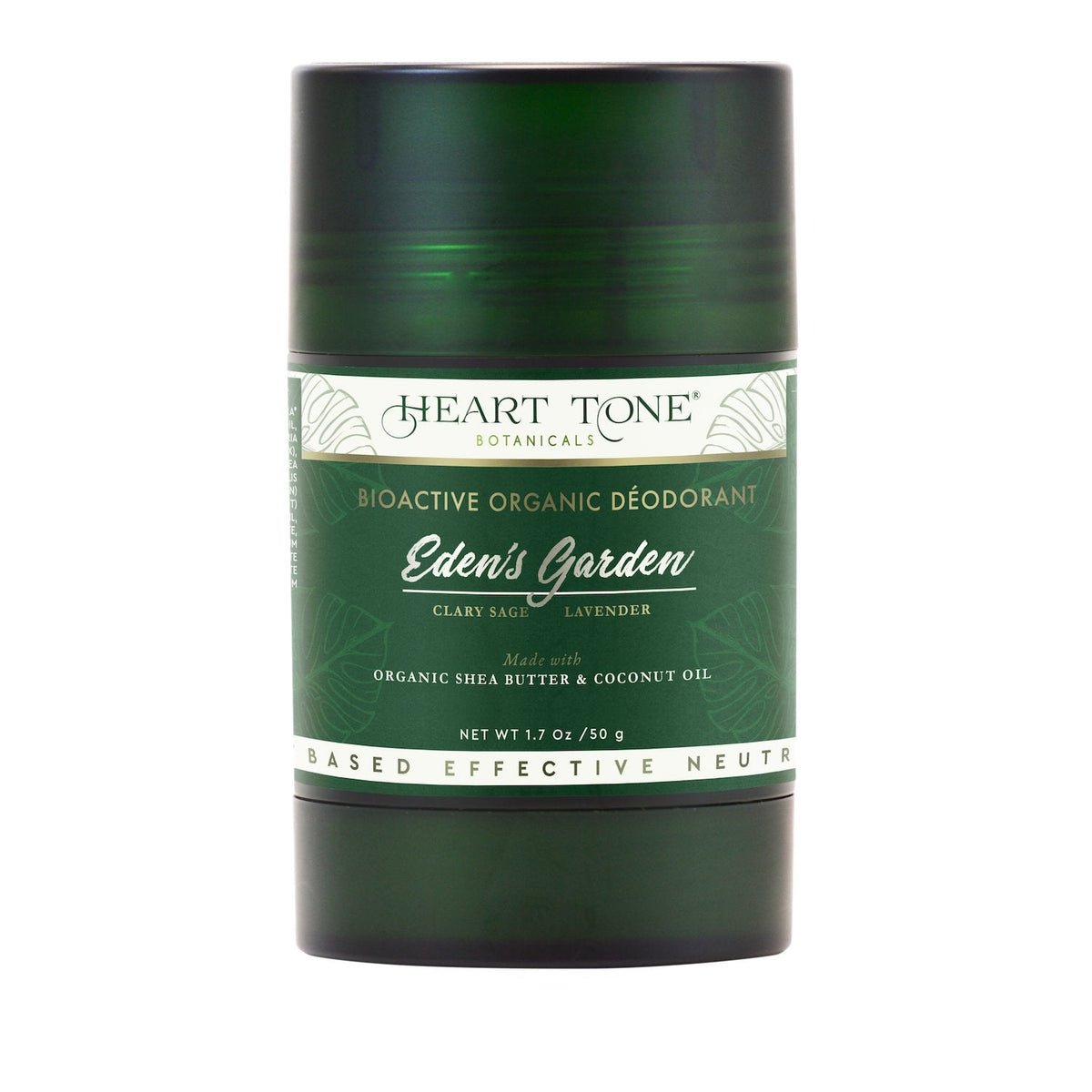
Eden's Garden Bioactive Deodorant — A soft floral blend with lavender CO2 and clary sage. A popular starting point for anyone new to natural deodorant who wants something familiar and gentle.
Grove Island Bioactive Deodorant — Bright citrus character with bergamot, grapefruit, and lime. Light and energizing, especially in warmer months.
Jamaica Estate Bioactive Deodorant — Earthy and grounded, with frankincense, patchouli, and balsam fir needle. A distinctive blend for those who prefer richer, more complex scent profiles.
Gentleman's Reserve Bioactive Deodorant — A deeper botanical blend with vetiver, clove CO2, and patchouli. A more traditionally masculine profile, though it works for anyone who loves that kind of warmth and depth.
The Classic Bioactive Deodorant — Fragrance-free. The same botanical base as the scented options, with no essential oil additions. The right choice for fragrance sensitivity or anyone who simply prefers unscented products.
All five share the same base: coconut oil, sunflower oil, jojoba oil, shea butter, beeswax, and carnauba wax — with arrowroot powder, magnesium hydroxide, zinc oxide, kaolin clay, and bentonite clay contributing to texture and feel. No aluminum. No baking soda. No synthetic fragrances.
Browse the full body care collection for all options.
One Last Thing
Switching to natural deodorant isn't complicated, but it does ask for a few weeks of patience. The people who make the switch successfully almost always say the same thing: they stuck with it through the adjustment period, found a formula that worked for their skin, and didn't look back.
The transition is shorter than most people expect. The payoff — a simpler routine, a shorter ingredient list, and skin that gets to breathe — is what keeps people from going back to conventional antiperspirants.

Leave a comment
This site is protected by hCaptcha and the hCaptcha Privacy Policy and Terms of Service apply.