












The Label Is Where It Starts

Something shifts when you have kids. You start reading labels you never paid attention to before — the back of the shampoo bottle, the ingredient panel on the sunscreen, the fine print on the toothpaste tube. And once you start, it's hard to stop.
For a lot of parents, kids' toothpaste is one of the first personal care products they really look at. It's some of the most heavily marketed personal care on the shelf — bubblegum flavors, cartoon characters, bright colors. But the ingredient panel tells a different story than the packaging does.
What Conventional Kids' Toothpaste Usually Contains
Standard kids' toothpastes often include one or more of the following:
- Sodium lauryl sulfate (SLS) — a foaming agent that creates the lathering effect most people associate with "cleaning." It's not necessary for toothpaste to work, and some people find it irritates soft tissue.
- Artificial sweeteners — sodium saccharin is common in many kids' formulas. Naturally-sourced alternatives like xylitol, stevia, and sorbitol are what you'll find in natural versions instead.
- Synthetic flavoring and colorants — the neon pinks and blues in conventional kids' toothpaste are typically synthetic dyes. Many parents switching to natural products find their kids actually prefer simpler, botanically-flavored mint formulas once they make the transition.
- Preservatives and texturizers — carrageenan, propylene glycol, and titanium dioxide are common in conventional formulas as thickeners, stabilizers, or brightening agents.
None of these are catastrophic on their own. But when parents are already reading labels on food and other personal care products, seeing the same synthetic additives in their child's toothpaste starts to feel inconsistent with the direction they're heading.
What Parents Actually Look For
When parents start searching for natural toothpaste for kids, the wish list is usually consistent:
- No SLS
- No artificial dyes or synthetic fragrances
- No saccharin or artificial sweeteners
- Ingredients they recognize, or can actually look up
- A taste their kids will use without a nightly standoff
That last one matters more than it sounds. The most compliant-with-natural-values toothpaste is the one sitting unused because nobody liked the flavor.
Key Ingredients to Know in Natural Toothpaste
Here's a practical look at the ingredients you'll see in natural formulas — what they are, where they come from, and what they're doing in the tube.
Xylitol
A naturally-occurring plant-based sweetener found in birch trees, corn cobs, and other plant sources. It's been used in oral care products for decades and adds a clean, pleasant sweetness without refined sugar. You'll find it in most quality natural toothpastes.
Kaolin Clay
A fine, naturally-mined mineral clay used for its smooth, non-abrasive texture. It's one of the mildest cleansing materials used in toothpaste and contributes a silky, polished feel during brushing — quite different from the coarser abrasives in some conventional brightening formulas.
Hydroxyapatite
A mineral that occurs naturally in the body. It's been used in oral care formulas for decades, and the spherical micro form is the most refined version — contributing a very smooth feel and a clean, polished sensation that people often notice right away.
Theobromine
A naturally-occurring compound found in cacao — the same plant chocolate comes from. It's increasingly common in fluoride-free formulas as an alternative mineral ingredient, and contributes a very mild, slightly earthy note to the overall flavor profile.
Colloidal Silver
A traditional ingredient with centuries of use across many cultures and oral care traditions. In toothpaste, it contributes a clean mineral note to the formula without adding sweetness or strong flavor.
Bentonite Clay
A mineral clay with a long history of use in natural personal care. Like kaolin, it contributes texture and a smooth feel; it's also part of what gives many natural toothpastes their thick, paste-like consistency rather than a conventional gel.
Organic Coconut Oil
A plant-based oil with a mild, pleasant taste that helps bind natural toothpaste formulas together. It contributes a smooth, creamy mouthfeel — one of the noticeable differences people comment on when switching from conventional gel toothpaste.
Stevia and Other Natural Sweeteners
Stevia is derived from the Stevia plant and contributes gentle sweetness without refined sugar. In natural toothpaste, it's one of the key reasons the formula can taste pleasant without saccharin or artificial flavor enhancers.
Botanical Essential Oils
Peppermint, spearmint, wintergreen, cornmint, and clove are common in natural formulas. These are what give botanical toothpaste its distinctively clean, fresh, cooling sensation — and often what converts skeptical kids after the adjustment from bubblegum flavor. Real botanical mint smells and feels different than synthetic mint flavoring. Many people prefer it.
A Note on Age and Essential Oil Concentration
Natural toothpaste formulated for adults and older children typically contains meaningful concentrations of botanical essential oils — peppermint, clove, wintergreen. This is what gives them their character and cleansing sensation, and it's generally appropriate for school-age children and adults.
For very young children — toddlers and children under 6 — look for formulas specifically designed for that age range, which typically use lower essential oil concentrations and a gentler botanical profile. Your child's pediatric dentist is the best resource for choosing the right formula for your child's specific age and needs.
What the Switch Actually Feels Like
A few things are genuinely different when you switch from conventional to natural toothpaste. It helps to know what to expect:
- Less foam. Natural formulas without SLS don't lather the same way. This is normal — foaming is an aesthetic effect, not a functional one. Your mouth gets just as clean.
- Different texture. Clay-based toothpastes are thicker and pastier than conventional gels. Some people love it immediately. Some take a week.
- More botanical mint. Real peppermint and spearmint from essential oils taste different than synthetic mint flavoring — more herbal, more layered, and genuinely cooling rather than sweet-mint. Many kids prefer it once they've used it a few times. Some need a short adjustment.
If your kids are skeptical, letting them be part of the decision helps. Give them a trial week rather than a hard switch, and let the experience speak for itself.
What We Use at Heart Tone
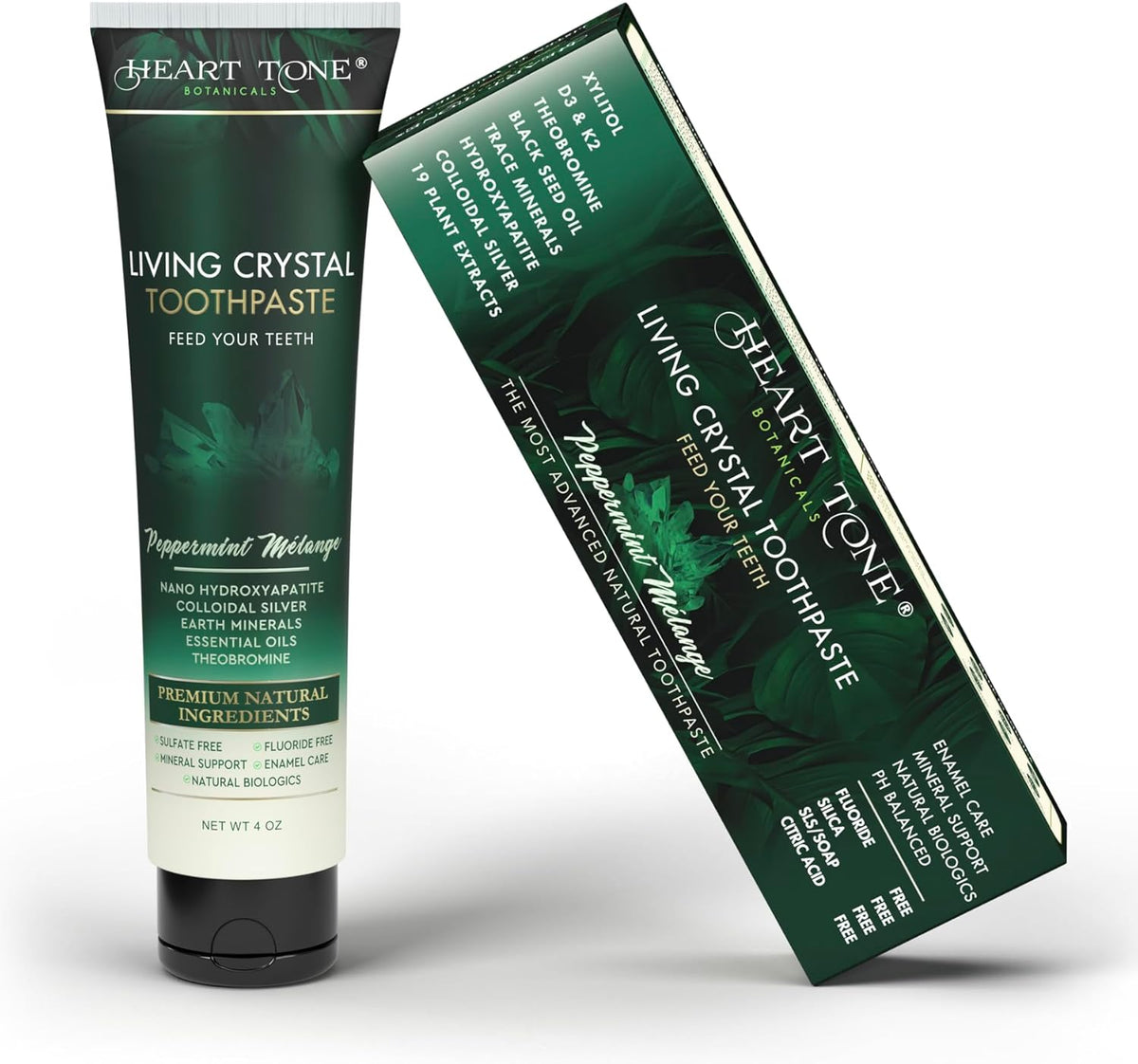
Our Living Crystal Toothpaste is a fluoride-free, SLS-free formula built around spherical micro-hydroxyapatite, theobromine, and over 30 botanical extracts — including xylitol, kaolin clay, bentonite clay, colloidal silver, organic coconut oil, and organic stevia. The flavor comes from a blend of peppermint, spearmint, cornmint, and wintergreen essential oils for a genuinely fresh, clean sensation.
It's what our founders JD and Imani use in their own household — and it's formulated for adults and older children who are ready for a fully botanical oral care experience. No artificial dyes. No SLS. No synthetic sweeteners. Just a transparent ingredient list you can actually look up.
If you're building a complete natural oral care routine for your family, our Pure Breeze bundle pairs Living Crystal Toothpaste with Restorative Mouth Rinse for a two-step botanical ritual that covers brushing and rinsing in one set. The Restorative Mouth Rinse is alcohol-free, fluoride-free, and built on colloidal silver, aloe vera, and 20 botanical extracts — no burning, no synthetic additives.
Browse our full natural oral care collection to see everything we offer.
The Bottom Line
When parents look for natural toothpaste for kids, they're really asking a few simple questions: What's in this? Will it work? And — practically — will my kid actually use it?
The answer to all three starts with finding a formula that's transparent about its ingredients, uses botanicals you recognize, skips the synthetic additives you're trying to leave behind, and tastes good enough that brushing isn't a battle every night.
Reading the label is the right instinct. The ingredient panels on natural toothpaste are longer and stranger-looking than their conventional counterparts. But they're also more honest about what they're doing — and that's exactly what parents who have made it this far on the label are looking for.

Leave a comment
This site is protected by hCaptcha and the hCaptcha Privacy Policy and Terms of Service apply.