












One of the Most Searched Skincare Terms — and One of the Most Confusing Labels

Vitamin C serum is one of the most talked-about products in natural skincare. Walk into any conversation about face routines and it will come up — usually alongside words like "brightening," "glow," and "radiant." But when you add "natural" to the search, the results get complicated fast.
Not every product that calls itself a natural vitamin C serum is formulated the same way. And if you're trying to build a botanical face routine with clean ingredients, the gap between the marketing language and the actual formula can be significant. Here's what you actually need to understand before you buy.
What Is Vitamin C in Skincare?
In most conventional skincare formulations, vitamin C refers to L-ascorbic acid — a synthesized or derived form of ascorbic acid, the compound most widely associated with vitamin C in nutritional science. It's one of the most commonly included actives in face serums and is valued in skincare for contributing to the look of a more radiant, even-toned complexion.
However, L-ascorbic acid is notoriously unstable. It oxidizes quickly when exposed to light, heat, or air — turning products orange or brown over time. That instability has pushed formulators toward derivatives like ascorbyl glucoside or sodium ascorbyl phosphate, which are more stable but less studied in terms of how they perform on skin.
What "Natural Vitamin C" Actually Means
When a product is labeled "natural vitamin C serum," that phrase can mean several things — and they're not equivalent.
Sometimes it refers to plant-sourced ascorbic acid — vitamin C derived from botanicals like kakadu plum, acerola cherry, or rosehip rather than synthesized in a lab. The chemistry may be similar to synthetic L-ascorbic acid, but the sourcing approach is different. Some formulators and consumers prefer this direction.
Other times, "natural vitamin C" signals a whole-botanical philosophy: instead of isolating and concentrating a single active compound, the formula uses botanicals that have a long history of use in skincare traditions — oils, hydrosols, and extracts that appeared in skincare preparations long before modern cosmetic chemistry made vitamin C a hero ingredient.
These are fundamentally different approaches. Understanding which one a product is using — and why — matters when you're choosing what to put on your face.
The Stability Challenge
Even when a formula uses a well-sourced form of vitamin C, stability remains the biggest formulation challenge. L-ascorbic acid requires a low pH (typically below 3.5) to remain active, which can make it too harsh for sensitive skin or for daily use. It also requires airtight, opaque, light-blocking packaging — otherwise it degrades before you've used half the bottle.
If you pick up a vitamin C serum and the packaging is a clear glass bottle sitting in bright light, that's a practical concern worth noting. Oxidized vitamin C won't harm your skin, but it won't deliver what you paid for either.
This is one reason some formulators move toward a broader botanical serum approach — building a formula around hydration, skin-conditioning plant extracts, and well-tolerated ingredients rather than high concentrations of a single unstable compound.
Botanicals With a Long History in Facial Skincare
Rosehip Oil
Rosehip oil has been used in botanical skincare for generations and remains one of the most widely valued face oils in the natural beauty world. Cold-pressed from rose hips, it has a light, fast-absorbing feel and has been used in traditional skincare across South America and the Mediterranean. It's one of the botanicals that consistently shows up in serious botanical facial oil formulations.
Sea Buckthorn
Sea buckthorn is a small bright orange berry with a long history in traditional botanical skincare across Central Asia. In skincare formulations, sea buckthorn oil is valued for its rich, nutrient-dense character and the visibly warm, luminous quality it can add to skin. Its striking orange pigment and distinctive profile make it a recognizable ingredient in botanical face oils.
Pomegranate Seed Oil
Cold-pressed pomegranate seed oil has been part of traditional Ayurvedic and Mediterranean skincare for centuries. Valued for its distinctive color and lightweight feel, it's an ingredient that appeared in botanical skin preparations long before modern cosmetic chemistry — and it remains a well-regarded choice in serious botanical face oil formulations.
What to Look for in a Natural Serum — and What to Skip
When evaluating any face serum, natural or otherwise:
- Look for real botanical ingredients near the top of the list — not as trace amounts in the last few lines of the INCI
- Check the packaging — opaque, airless, and light-blocking matters for any formula with sensitive active ingredients
- Read the full ingredient list, not just the marketing language on the front label
- Skip synthetic fragrance — "fragrance" or "parfum" on an INCI list is a catch-all term that can include dozens of undisclosed compounds
- Avoid parabens, phthalates, and petroleum derivatives if you're building a genuinely clean routine
- Look at the full formula, not just one hero ingredient — the best serums layer multiple botanicals that work well together
A Botanical Serum Approach
If you're building a face routine around clean, botanical ingredients, you don't have to anchor it to a single concentrated active. A layered approach — hydrosol mist, hydrogel serum, and nourishing oil moisturizer — lets multiple botanicals do different work across the full surface of your skin.
The Dynamic Hydrogel Face Serum from Heart Tone Botanicals is built on rose hydrosol, neroli hydrosol, hyaluronic acid, niacinamide, and botanical extracts including gotu kola and green tea — formulated as a lightweight hydrogel designed to layer under a moisturizer. No synthetic fragrance, no petroleum derivatives, and no need for specialty low-pH packaging because it's not built around a single unstable acid.
The Complete Daily Face Moisturizer layers on top — 22 botanical oils including rosehip, sea buckthorn, pomegranate seed, moringa, and bakuchiol. These are the same botanicals that have appeared in traditional skincare formulations for generations, combined in a single everyday face oil designed for daily use.
Together, they form the foundation of a botanical face routine that doesn't depend on a single high-concentration active to deliver visibly nourished, radiant-looking skin.
How to Layer It Into Your Routine
If you're transitioning from a conventional vitamin C serum or just starting to build a botanical face routine:
- Start with a clean, dry face
- Mist with the Island Mist Toning Facial Elixir Hydrosol to tone and prep the skin
- Apply the Dynamic Hydrogel Face Serum while the mist is still slightly present
- Seal with the Complete Daily Face Moisturizer
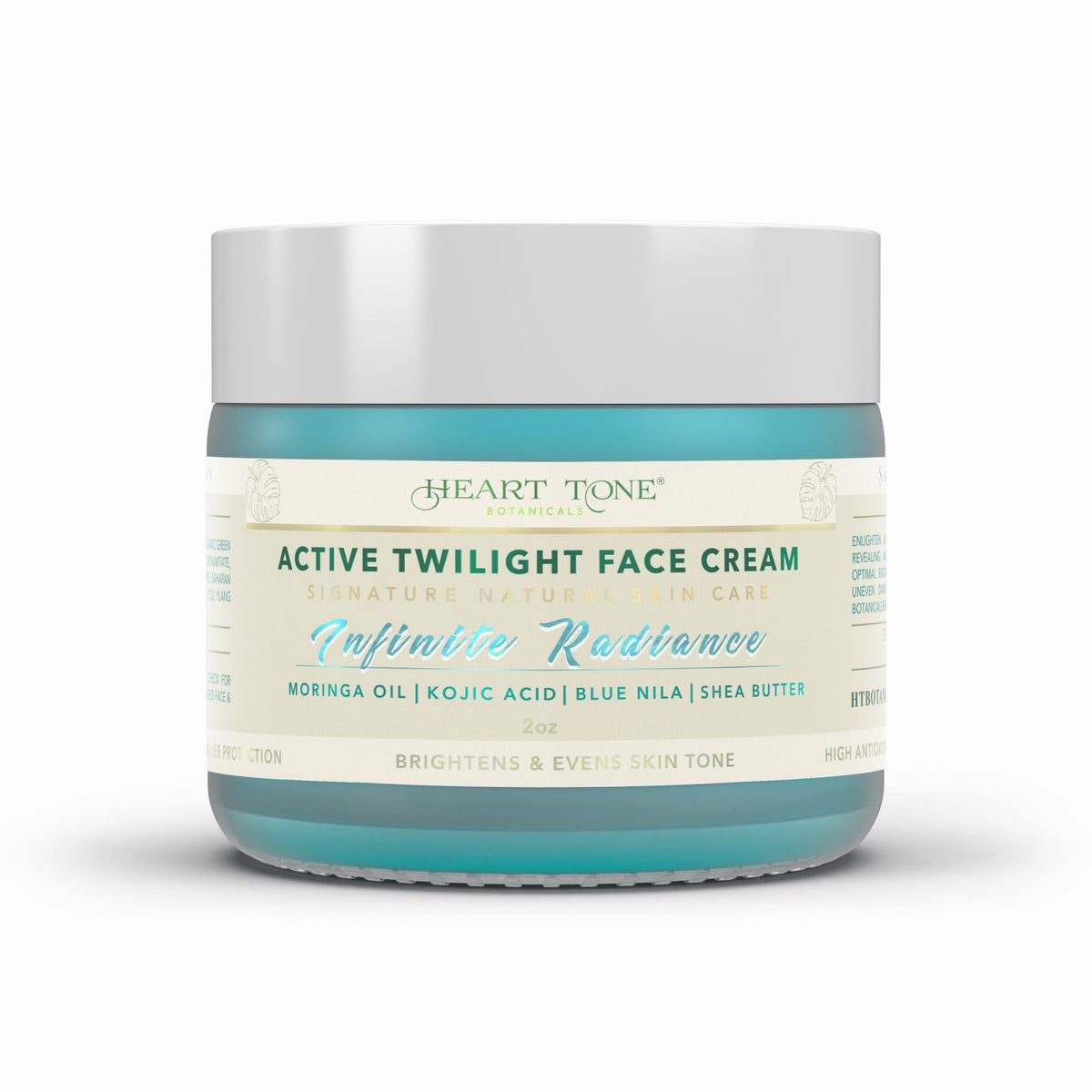
- At night, swap the moisturizer for the Active Twilight Face Cream
This is the layered routine behind the AM/PM Face System — designed so each product in the sequence has a defined role. You can also build your own starting point at the Heart Tone Botanicals Facial Care Collection.

Leave a comment
This site is protected by hCaptcha and the hCaptcha Privacy Policy and Terms of Service apply.