

What Actually Makes a Face Moisturizer "Natural"?
Walk down any beauty aisle and nearly every bottle promises "natural" hydration. But flip it over and read the label: you'll often find a long list of synthetic emulsifiers, petroleum-derived humectants, artificial fragrances, and preservatives that have little to do with the plant world. True botanical moisturizers take a different approach entirely — they start with real plant oils, botanical extracts, and natural waxes as the foundation, not as a marketing afterthought.
The difference matters — both for what goes onto your skin and for how it actually feels throughout the day.
Oil-Based vs. Water-Based Moisturizers: What's the Difference?
Most conventional moisturizers are water-based — they start with water or aqueous bases, then use synthetic emulsifiers to blend in small amounts of oil. The result is a light, fast-absorbing texture that often requires synthetic preservatives to keep from spoiling, and synthetic film-formers to create the appearance of moisture on the skin's surface.
Botanical oil-based moisturizers work differently:
- No water means no preservatives needed — anhydrous (water-free) formulas are inherently stable without synthetic preservatives
- Richer ingredient profiles — whole botanical oils carry the plant's full complement of fatty acids, waxes, and botanical compounds, not isolated synthetic fractions
- Long sensory life — a small amount of a well-formulated botanical oil blend tends to leave skin feeling hydrated and comfortable for hours
- Nothing hidden in "fragrance" — clean botanical formulas use real essential oils with disclosed ingredients, not the catch-all "fragrance" or "parfum" label
For those navigating sensitive skin or ingredient transparency, the oil-based approach eliminates a significant source of synthetic additives from the routine.
Botanical Oils With a Long History in Traditional Skincare
Jojoba Oil
Jojoba has one of the most distinctive profiles in botanical skincare — technically a liquid wax rather than a true oil, it has a silky, lightweight texture that absorbs readily without feeling heavy on the skin. It has been used in traditional botanical skincare for generations and is valued for how comfortable it feels across all skin types, including those that tend to run oily or combination.
Rosehip Seed Oil
Pressed from the seeds of wild rose hips, rosehip oil has been used in traditional botanical skincare across cultures for centuries. It has a beautiful reddish-amber color and a rich, nourishing texture. Rosehip is a staple of traditional botanical formulation — appearing in artisanal skincare from South America to Eastern Europe long before it appeared on shelves.
Moringa Oil
Cold-pressed from the seeds of the Moringa oleifera tree, moringa oil is prized in tropical botanical traditions for its lightweight feel and remarkable shelf stability. It absorbs quickly, leaves a clean, non-greasy finish, and has been used in traditional personal care from North Africa to the Indian subcontinent. It is also one of the farm-grown crops cultivated at Heart Tone's Vero Beach farm.
Sea Buckthorn Oil
One of the most visually distinctive ingredients in botanical skincare, sea buckthorn seed oil has a vibrant, deep-orange color and a complex botanical profile. Long used in traditional Tibetan, Chinese, and Ayurvedic botanical traditions, it is valued for its rich, concentrated character and has become a hallmark of premium botanical formulations.
Prickly Pear Seed Oil
Pressed from the seeds of the Opuntia cactus, prickly pear seed oil is among the rarest and most labor-intensive botanical oils to produce — it takes roughly a ton of cactus fruit to yield just one liter of oil. Traditionally used in North African beauty rituals, particularly in Morocco, it has an exceptionally light texture and a rich botanical heritage.
Bakuchiol
Extracted from the seeds and leaves of the Psoralea corylifolia (babchi) plant, bakuchiol has a centuries-long history of use in Ayurvedic botanical tradition. It has become one of the most sought-after plant-derived skincare ingredients in recent years partly due to the natural retinoids found within the plant — appreciated for its gentle, well-tolerated character compared to synthetic alternatives. Bakuchiol is a natural fit for those seeking a plant-based approach to their evening skincare routine.
Blue Tansy and Blue Chamomile
Both botanicals are known in the skincare world for their striking deep-blue color — a distinctive visual signature of the chamazulene compound found in their essential oils. Blue tansy (Tanacetum annuum) and blue chamomile (Matricaria recutita) have long histories of use in botanical skincare traditions, particularly across Morocco and Central Europe. They contribute a distinctive aromatic character and a beautiful color to botanical blends.
What to Avoid When Choosing a Natural Face Moisturizer
Not all "natural" moisturizers are created equal. These are the label red flags that suggest a product is more marketing than botanical:
- "Fragrance" or "parfum" — these single-word entries can contain dozens of undisclosed synthetic chemicals, some of which are known hormone-disrupting compounds
- Mineral oil and petrolatum — petroleum-derived ingredients that sit on the skin's surface rather than absorbing; not harmful for everyone, but not botanical
- PEG compounds — synthetic polyethylene glycols used as emulsifiers; look for anything starting with "PEG-"
- Synthetic preservatives — parabens, phenoxyethanol, and formaldehyde-releasing preservatives are common in water-based formulas; a truly anhydrous botanical formula doesn't need them
- Dimethicone and silicones — they create a smooth, silky feel by coating the skin's surface, but they're synthetic and can build up over time
A clean botanical moisturizer lists ingredients you recognize — real plant names, essential oils disclosed in full, no synthetic filler hiding behind a trade name.
How to Apply a Botanical Oil Moisturizer
Oil-based facial moisturizers reward a slightly different application technique than conventional lotions:
- Start with a toner or mist — applying a botanical oil over slightly damp skin helps it absorb more evenly and distribute further; just a light mist from a facial toning elixir is enough
- Use less than you think — two to three drops warmed between the palms is usually sufficient for the full face and neck; more isn't better with a concentrated oil blend
- Press, don't rub — press the oil into the skin with gentle palm pressure rather than rubbing; this distributes evenly without dragging or pulling
- Let it absorb before layering — give it 30–60 seconds before applying sunscreen or makeup over top
The result: skin that feels genuinely moisturized, comfortable, and non-greasy throughout the day — not just immediately after application.
AM vs. PM: Should You Use Different Moisturizers?
Many botanical skincare practitioners prefer to distinguish morning and evening moisturizers — not because skin needs dramatically different things at different times, but because texture and layering preferences often change:
- Morning — a lighter oil blend that sits comfortably under sunscreen and makeup; a quick-absorbing formula like a multi-oil blend is ideal
- Evening — a richer, more occlusive formula can be a good choice for overnight wear; a cream with botanical butters or a heavier oil base feels luxurious before bed
A complete facial routine covers both — a daytime moisturizer that layers beautifully under everything else, and a nighttime cream that seals and conditions while you sleep.
Heart Tone Botanicals Facial Care
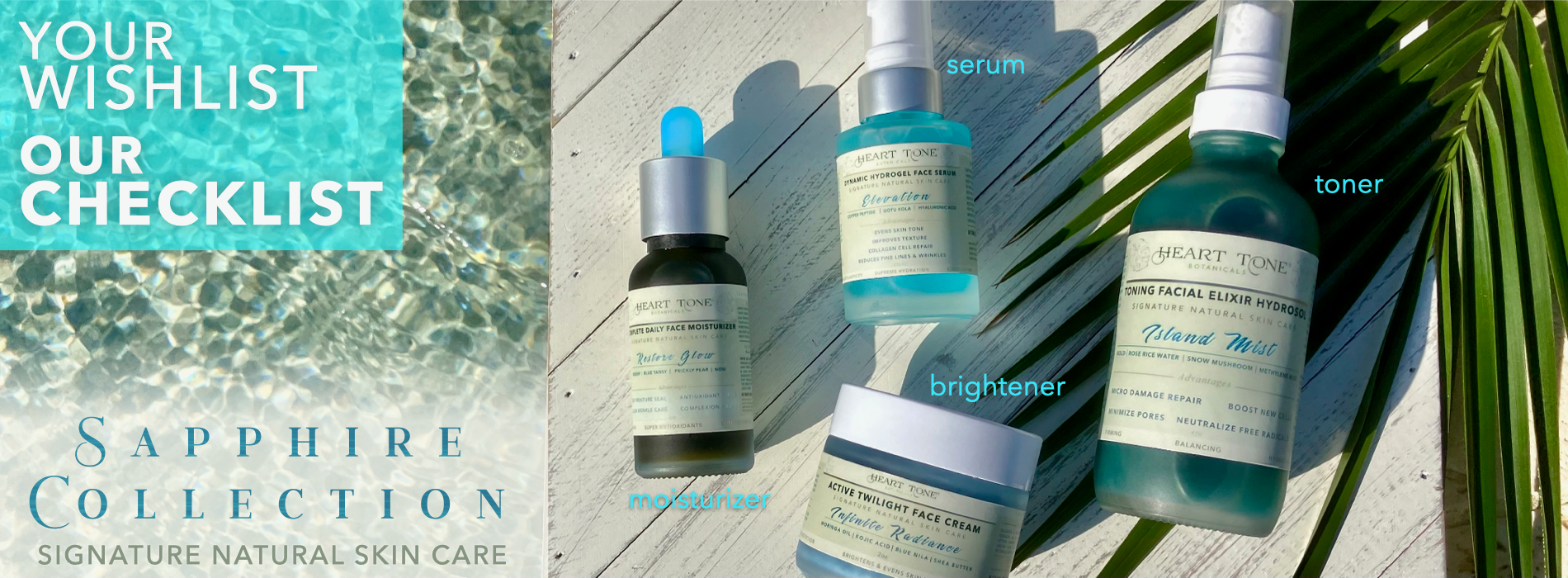
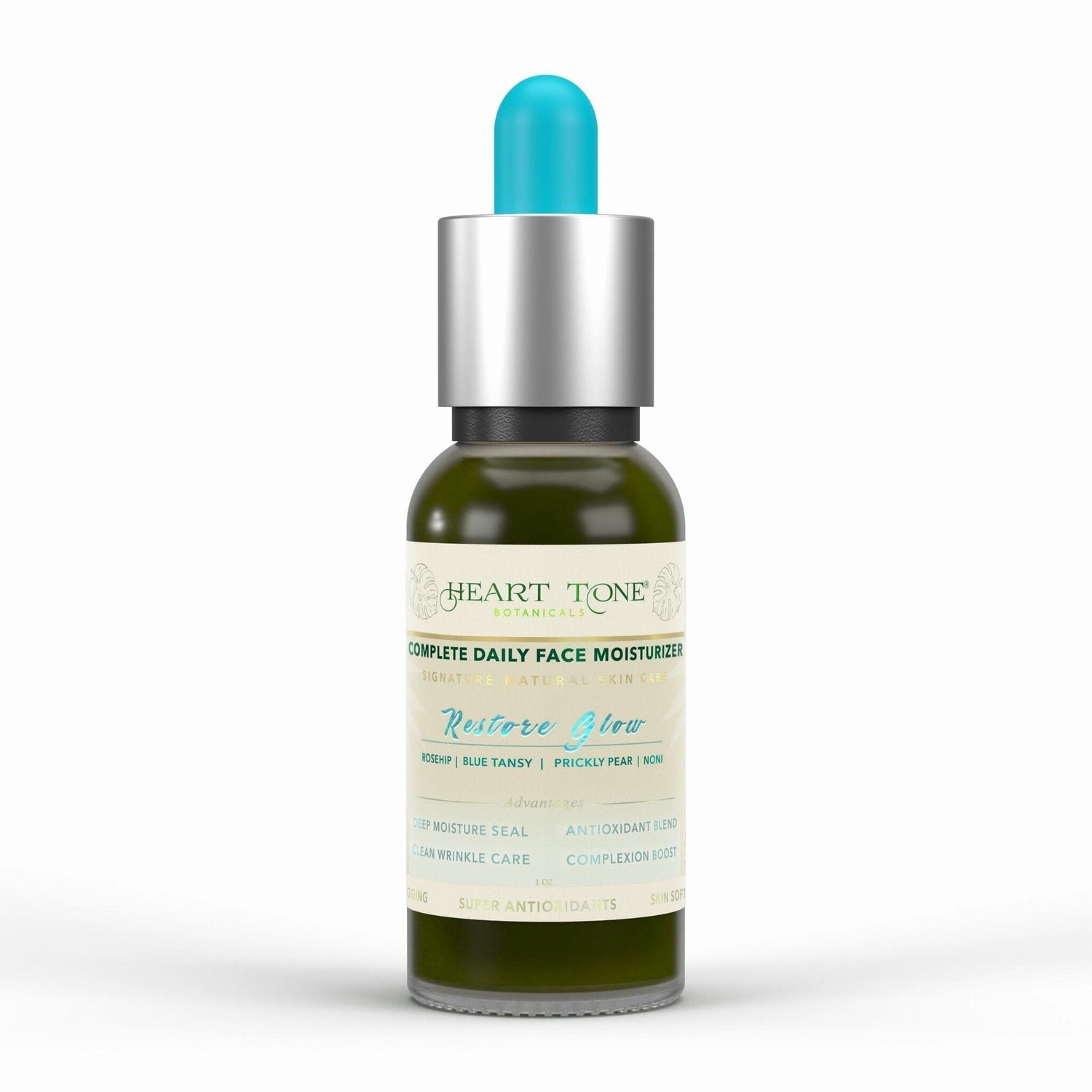
The Complete Daily Face Moisturizer is an anhydrous blend of 22 botanical oils — including moringa, jojoba, rosehip, prickly pear seed, bakuchiol, sea buckthorn, blueberry, and pomegranate seed oil — with blue chamomile, blue tansy, vitamin E, and CoQ10. Formulated without water, synthetic emulsifiers, or artificial fragrance. Applied daily, it leaves skin feeling genuinely soft, comfortable, and nourished.
For an evening ritual, the Active Twilight Face Cream offers an ultra-rich botanical cream base with organic shea butter, moringa oil, green tea oil, licorice root extract, and vitamin E — designed for overnight wear.
To prep the skin before moisturizing, the Island Mist Toning Facial Elixir Hydrosol provides a botanical toning mist with rose hydrosol, neroli, witch hazel, colloidal gold, snow mushroom extract, and frankincense — applied before oils to improve absorption and leave skin feeling refreshed.
The Dynamic Hydrogel Face Serum layers under oil moisturizers as a water-based treatment step — hyaluronic acid, niacinamide, copper peptide, aloe vera, and botanical extracts in a lightweight hydrogel base.
If you want a complete botanical face routine — toner, serum, and moisturizer in the right order — the Complete Face Ritual bundles all three for AM and PM use. For the full four-product system including the nighttime cream, the AM/PM Face System covers every step.
For skin areas beyond the face, the Botanical Skin Gel is a lightweight botanical gel with colloidal silver, aloe vera, willow bark, calendula, and comfrey — suitable for everyday use on the body or targeted areas.
Explore the full facial care collection to find the right starting point for your routine.
This is the main guide for this topic. Use these links to keep the full natural face moisturizer topic together:


Leave a comment
This site is protected by hCaptcha and the hCaptcha Privacy Policy and Terms of Service apply.