

If you have sensitive underarms, switching to natural deodorant can feel like a minefield. You have probably heard that natural deodorant is better for you — and it is. But the first time you try one and end up with a burning, itchy rash under your arms, it is hard not to wonder if the trade-off is worth it.

Here is the truth: natural deodorant rash is almost always caused by one ingredient — baking soda. And once you understand why, finding a natural deodorant that actually works for sensitive skin becomes a whole lot simpler.
Why So Many Natural Deodorants Irritate Sensitive Skin
Most conventional "natural" deodorants use baking soda (sodium bicarbonate) as their primary odor-fighting ingredient. It is cheap, it absorbs moisture, and it neutralizes odor-causing bacteria. On paper, it seems like a smart choice.
The problem? Baking soda is highly alkaline, with a pH of around 9. Your underarm skin has a natural pH of 4.5 to 5.5 — slightly acidic, which is exactly what it needs to maintain a healthy skin barrier and support beneficial microbes. When you introduce baking soda, you throw that balance off dramatically.
The result for sensitive skin types: irritant contact dermatitis. That means redness, raw patches, itching, and a burning sensation that can last for days. If you shave your underarms, you are at even higher risk — freshly shaved skin is more vulnerable and absorbs ingredients faster.
This is not a "detox reaction." It is a chemical irritation response. And it has nothing to do with the transition away from antiperspirant.
What to Look for in a Natural Deodorant for Sensitive Skin
The good news: you do not need baking soda to control odor naturally. A new generation of plant-based, bioactive deodorant formulas uses gentler actives that work with your skin biology instead of against it.
1. Magnesium Hydroxide
Magnesium hydroxide neutralizes odor at a gentler pH than baking soda, without the harsh alkalinity that triggers rashes. It works by creating an environment where odor-causing bacteria cannot thrive — without stripping your skin barrier. Many sensitive-skin deodorant formulas use this as their primary active ingredient.
2. Colloidal Silver
Colloidal silver is a time-honored antimicrobial ingredient with a long history in natural wellness. As a deodorant active, it targets odor-causing bacteria without disrupting skin pH or causing irritation. It is particularly well-suited for sensitive and reactive skin types because it is gentle and non-drying.
3. Zinc Ricinoleate
Derived from castor oil, zinc ricinoleate traps and neutralizes odor molecules rather than killing bacteria indiscriminately. It is one of the gentlest odor-control ingredients available and is commonly found in sensitive-skin deodorant formulations.
4. Arrowroot Powder or Tapioca Starch
For managing moisture without the alkalinity of baking soda, arrowroot powder and tapioca starch absorb sweat gently and help the formula glide on smoothly. These are among the safest moisture-management ingredients for reactive underarm skin.
5. Soothing Carrier Ingredients
Look for formulas that pair these actives with skin-loving carriers: shea butter, aloe vera, jojoba oil, coconut oil, or castor oil. These nourish and protect the underarm skin barrier rather than stripping it.
What to Avoid If You Have Sensitive Underarms
- Baking soda (sodium bicarbonate) near the top of the ingredient list — this is the number one culprit for deodorant rash
- High concentrations of essential oils, especially tea tree, which can cause contact dermatitis in sensitive individuals
- Synthetic fragrance — listed as "fragrance" or "parfum" on the label — a common allergen for reactive skin types
- Alcohol at high concentrations, which can sting and dry out underarm skin
Heart Tone Botanicals Bioactive Deodorant Line: Formulated Without Compromise
At Heart Tone Botanicals, we built our deodorant line around a simple premise: natural deodorant should be effective without sacrificing skin health. Every formula in our bioactive deodorant collection is:

- Aluminum-free
- Baking soda free
- Free of harsh synthetic fragrance
- Formulated with colloidal silver as the primary bioactive odor-control agent
- Paired with plant-based carriers that condition and protect underarm skin
Here is a look at the individual formulas and what makes each one right for different sensitive-skin needs:
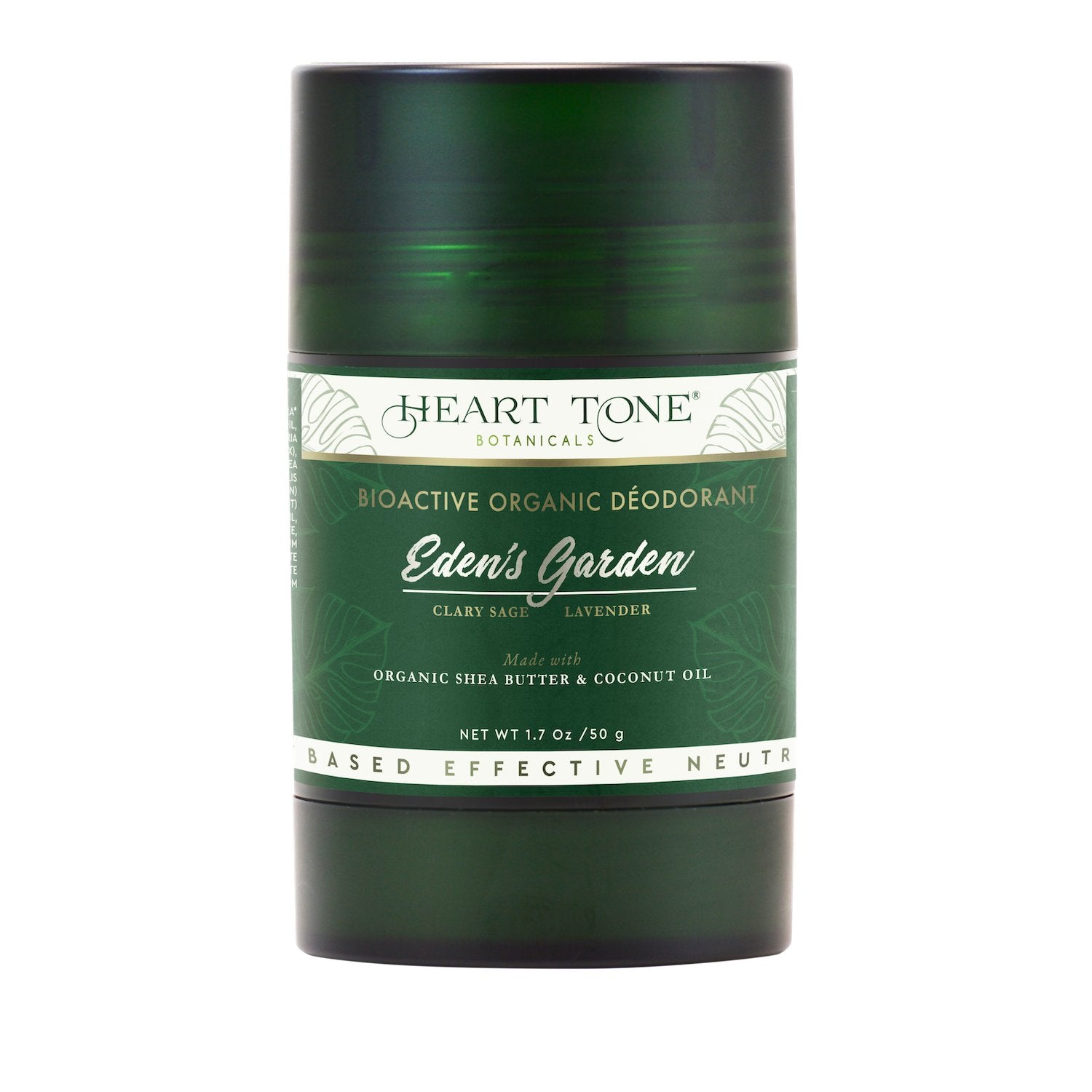
Eden's Garden Bioactive Deodorant
A fresh, botanical blend built around colloidal silver and soothing plant extracts. If you are new to natural deodorant and looking for a gentle entry point that will not irritate reactive skin, this is an excellent starting place. The scent is light, clean, and botanical — never overpowering.
The Classic Bioactive Deodorant
Our original formula — clean, effective, and built to last through the day without the baking soda spike. If you want something familiar and reliable without any of the harsh ingredients found in mainstream natural deodorants, The Classic delivers exactly that.
Gentleman's Reserve Bioactive Deodorant
A warmer, woodsy formula for those who prefer a more traditional masculine scent profile. Same gentle bioactive base, elevated with notes that feel grounded and sophisticated — not synthetic or medicinal.
Grove Island Bioactive Deodorant
Bright and tropical without being sweet or cloying. Grove Island is a favorite for people who want their deodorant to feel like a subtle, uplifting experience rather than just a functional product.
Jamaica Estate Bioactive Deodorant
A richer, warmer scent with a grounding quality. Well-suited for those who want a natural deodorant that feels luxurious and works hard — even through a long, active day.
Tips for Sensitive Skin When Starting Natural Deodorant
Even with a baking soda-free, gentle formula, here are a few practices that help your skin adapt and reduce any chance of irritation:
- Apply to clean, dry skin only. Damp or freshly-shaved underarms absorb ingredients faster and are more prone to irritation. Wait at least 20 to 30 minutes after shaving before applying deodorant.
- Start with a patch test. Apply a small amount to your inner arm and wait 24 hours before full use, especially if your skin is highly reactive.
- Use sparingly at first. A little goes a long way with stick or cream formulas. Using too much can contribute to pilling, residue, and irritation.
- Give it a week. The first few days with any new deodorant can feel different as your skin adjusts — especially if you are coming off of an antiperspirant. Stick with it for at least five to seven days before evaluating effectiveness.
- Wash gently at night. Rinsing the underarms at the end of the day with a gentle, non-stripping cleanser helps prevent buildup and keeps the skin barrier healthy.
If you are also in the market for a natural liquid soap that will not dry out or irritate sensitive skin, our Herbal Castile Liquid Soap is plant-based, gentle, and works beautifully as both a body wash and hand soap. It pairs naturally with a sensitive-skin deodorant routine.
The Bottom Line
Natural deodorant for sensitive skin is not a unicorn. It exists — but you have to look past the baking soda formulas that dominate the "natural" deodorant market.
When you choose a bioactive, baking soda-free formula built on colloidal silver, plant-based moisture management, and skin-conditioning carriers, you get real odor protection without the rash, the irritation, or the compromise.
Your underarm skin deserves the same care as the rest of your body. Our full deodorant collection was built with that in mind — explore it and find the formula that fits your skin and your day.
Also explore our full body care collection for clean, plant-based products made to work with your skin natural balance.

Leave a comment
This site is protected by hCaptcha and the hCaptcha Privacy Policy and Terms of Service apply.