












The Short Answer: Most Failed Switches Aren't About the Deodorant

If you've tried natural deodorant before and gone back to your old antiperspirant within a week or two, you're not alone — and it probably wasn't the formula's fault. Most people who "try natural deodorant and it didn't work" made one of a handful of avoidable mistakes along the way: applying it wrong, storing it wrong, or quitting right before things settled down.
Switching formats is a habit change, not just a product swap. Here's what actually derails the transition, and how to set yourself up so it sticks the first time.
Why the First Two Weeks Feel Different
Many people notice an adjustment period during the first one to two weeks after switching away from an antiperspirant. Your underarm skin has been wearing the same product, applied the same way, for a long time — and any change in routine, texture, or ingredients takes a little time to feel normal. Some people notice this window more than others, and it typically settles down well before the one-month mark.
Knowing this in advance is half the battle. The people who succeed at switching almost always plan for a few weeks of adjustment. The people who go back to their old product usually judge the whole category on day three.
Mistake #1: Applying It to Damp or Sweaty Skin
A natural deodorant is typically an oil-and-butter-based balm, not a liquid or an aerosol. That means it needs a clean, completely dry surface to glide on evenly. Applying it right out of the shower, before your skin has fully dried, or after you've already started sweating, is one of the most common reasons people feel like the product "isn't working" — it's not that the formula failed, it's that it never had a dry surface to sit on. Pat your underarms fully dry first, then apply.
Mistake #2: Using Too Much Product
More is not better with a balm-based deodorant. A thin layer is meant to glide on smooth and absorb into the skin. Piling on a thick layer — especially in the first week, when you're trying to "make sure it works" — creates buildup that sits on top of the skin instead of absorbing, which can feel tacky, leave marks on clothing, and create more friction under the arm, not less. Start with less than you think you need.
Mistake #3: Storing It Somewhere Hot
Natural deodorants are built around plant oils and butters — coconut oil, shea butter, sunflower oil — that are solid at room temperature but soften or melt well below body temperature. Leave the tube in a hot car, a gym bag in direct sun, or a bathroom shelf near a heater vent, and the texture can turn soft, oily, or separated by the time you go to use it. Keep it somewhere cool and consistent, the same way you'd store a lip balm or a solid perfume.
Mistake #4: Expecting a Baking-Soda Formula to Feel the Same as an Aluminum One
A lot of first-generation natural deodorants lean heavily on baking soda, which some people find irritating with daily use, especially after shaving. If your first natural deodorant burned or left your underarms red, that's a formulation issue with that specific product — not a sign that the entire category doesn't work for you. Formulas built around ingredients like magnesium hydroxide powder, kaolin clay, and arrowroot powder instead of baking soda are worth trying if a baking-soda formula didn't agree with your skin the first time.
Mistake #5: Giving Up Before You've Actually Tested It
Switching deodorants, testing the adjustment period, judging the scent, and deciding on the texture all take time — and a lot of people compress all of that into three or four days. Commit to a real trial: at least two to three weeks with the same product, applied correctly, to a dry underarm, in reasonable amounts, stored somewhere cool. That's the version of "trying natural deodorant" that actually tells you whether the category works for you.
What to Look For When You Try Again
- No aluminum, no baking soda — a formula built around arrowroot powder, kaolin clay, and magnesium hydroxide powder instead, for people whose skin didn't get along with a baking-soda formula
- A scent you actually like — you're far more likely to stick with a routine built around a scent profile you look forward to, whether that's bright citrus, warm spice, or something unscented
- A texture that goes on dry — a balm that absorbs cleanly rather than sitting on top of the skin
- No synthetic fragrance — botanical essential oils and CO2 extracts for scent instead
The Bottom Line
Switching to natural deodorant is less about finding a miracle formula and more about giving a genuinely different format a fair, correctly-applied trial. Dry skin, a thin layer, cool storage, and a few weeks of patience solve most of what people blame on "natural deodorant doesn't work."
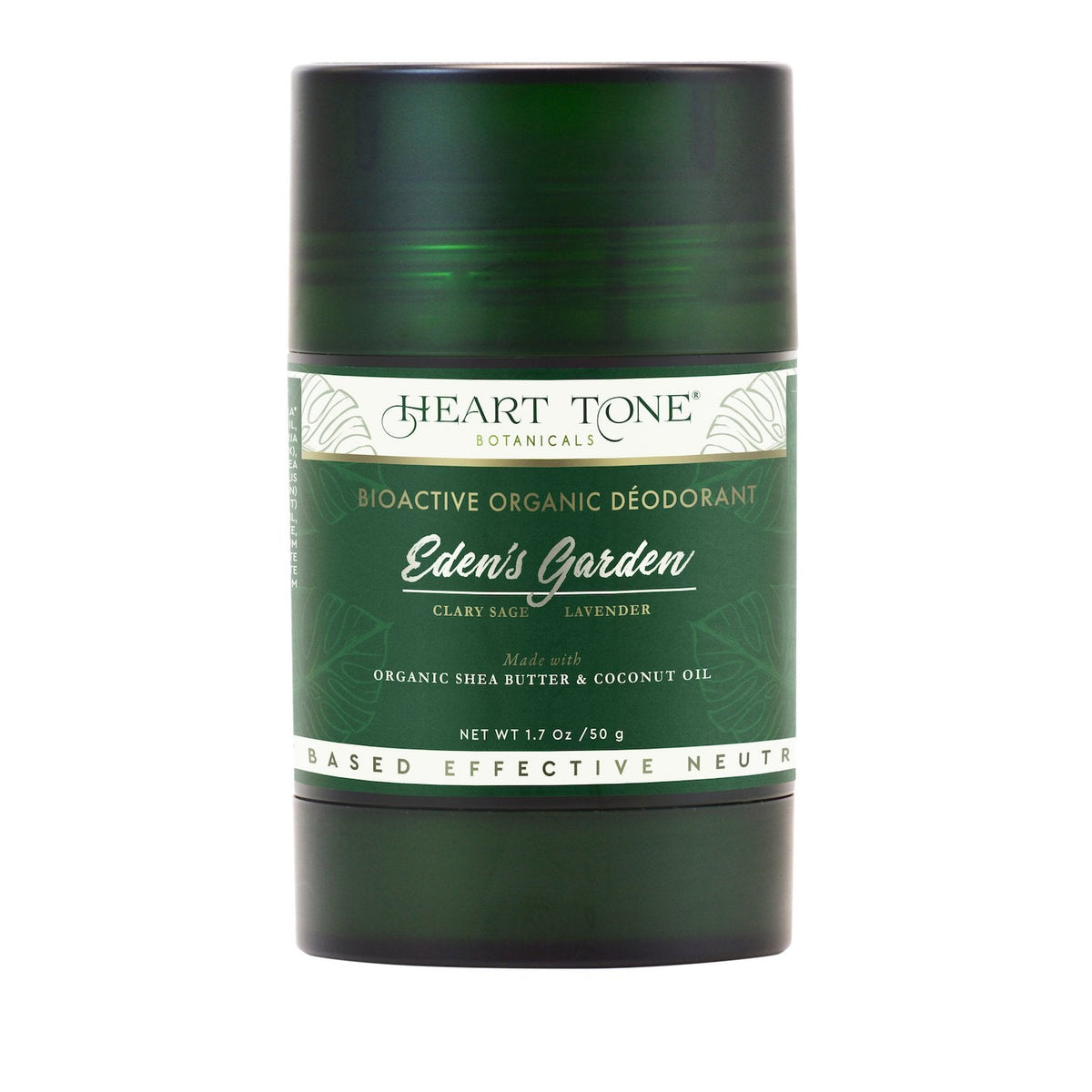
Heart Tone Botanicals makes its full deodorant line — Eden's Garden, Grove Island, Jamaica Estate, The Classic, and Gentleman's Reserve — without aluminum or baking soda, built instead around arrowroot powder, kaolin clay, and magnesium hydroxide powder, with botanical oils and CO2 extracts for scent. Browse the full natural deodorant collection to find a scent worth sticking with.
Pair your deodorant switch with an Ancient Organic Soap Alpha Bar for the shower and a Botanical Renew Body Butter for after, and you've got a complete natural body care routine that starts clean and stays comfortable all day. Explore the full body care collection for everything else in between.

Leave a comment
This site is protected by hCaptcha and the hCaptcha Privacy Policy and Terms of Service apply.