












The Short Answer: It Depends on Age, Not the Brand

If you've ever stood at the bathroom sink wondering whether your toddler just squeezed out too much toothpaste, you're not alone. It's one of the most common questions parents ask about oral care — and the answer has more to do with your child's age than with which toothpaste is in the tube, natural or otherwise.
The short version: less is more, at every age, and the habit of spitting instead of swallowing matters as much as the amount.
Why Toothpaste Amount Became a Guideline in the First Place
Toothpaste portion guidance for young children was built around fluoride: swallowing large amounts of fluoride toothpaste repeatedly during the years teeth are forming can lead to mild fluorosis — faint white marks on developing adult teeth. That's a fluoride-specific concern, and it's why dental guidance limits how much paste a small child swallows, not just how much they brush with.
It's useful history to know, even if the toothpaste in your house is fluoride-free — because portion control and a good spit-don't-swallow habit are worth keeping regardless of which formula you use.
The Age-by-Age Amounts
General dental guidance breaks toothpaste amount into three simple stages:
- From first tooth to about age 3: a smear about the size of a grain of rice.
- Ages 3 to 6: a pea-sized amount.
- Supervised brushing: an adult should supervise brushing until a child can reliably spit rather than swallow — often closer to age 6 or later.
A full-length ribbon across the brush — the amount most adults use, and the amount shown in most toothpaste commercials — is more than a young child needs, no matter what's in the tube.
A Few More Habits That Help
Amount is one piece of a kid's brushing routine, and it works better alongside a few other habits:
- A soft-bristled, age-sized brush. A smaller head and softer bristles are easier for a young child to manage and control than an adult brush.
- Twice a day, for about two minutes. A visual timer or a favorite two-minute song makes this easier to hold to than watching a clock.
- A fresh brush every few months. Frayed bristles clean less effectively and are a good, simple reminder to check in on the whole routine.
- Brushing together. Kids brush more consistently, and with better technique, when they're watching an adult do it alongside them rather than being sent off to do it alone.
Fluoride-Free Doesn't Mean "Any Amount Is Fine"
It's a common assumption that switching to a fluoride-free toothpaste removes the need to think about portion size. That's not quite right. A toothpaste — natural or conventional — is still formulated to be used on teeth and spit out, not swallowed as a matter of routine. Botanical extracts, essential oils, and minerals are included at levels meant for topical brushing, the same way a face oil is meant for skin and not for eating.
The practical takeaway for parents: keep the portion small, keep an eye on brushing until your child has a reliable spit habit, and approach "small amount, supervised" as the default no matter which toothpaste is in the house.
What to Look for on a Family Toothpaste Label
Beyond portion size, a handful of label habits make it easier to build a routine that works for the whole family:
- A short, readable ingredient list. If you can't tell what half the ingredients are, it's harder to make an informed choice for a child's routine.
- No foaming detergents like SLS. Sodium lauryl sulfate is what creates the heavy foam in most conventional toothpaste, and some kids find a high-foam formula uncomfortable or hard to manage without swallowing.
- A flavor you'd actually want to use. A toothpaste that tastes unpleasant gets used less consistently — flavor is a real factor in whether brushing becomes a habit, not just a preference.
- No artificial dyes. A simple, clean color palette is one more thing you don't have to think about.
Building a Whole-Family Routine
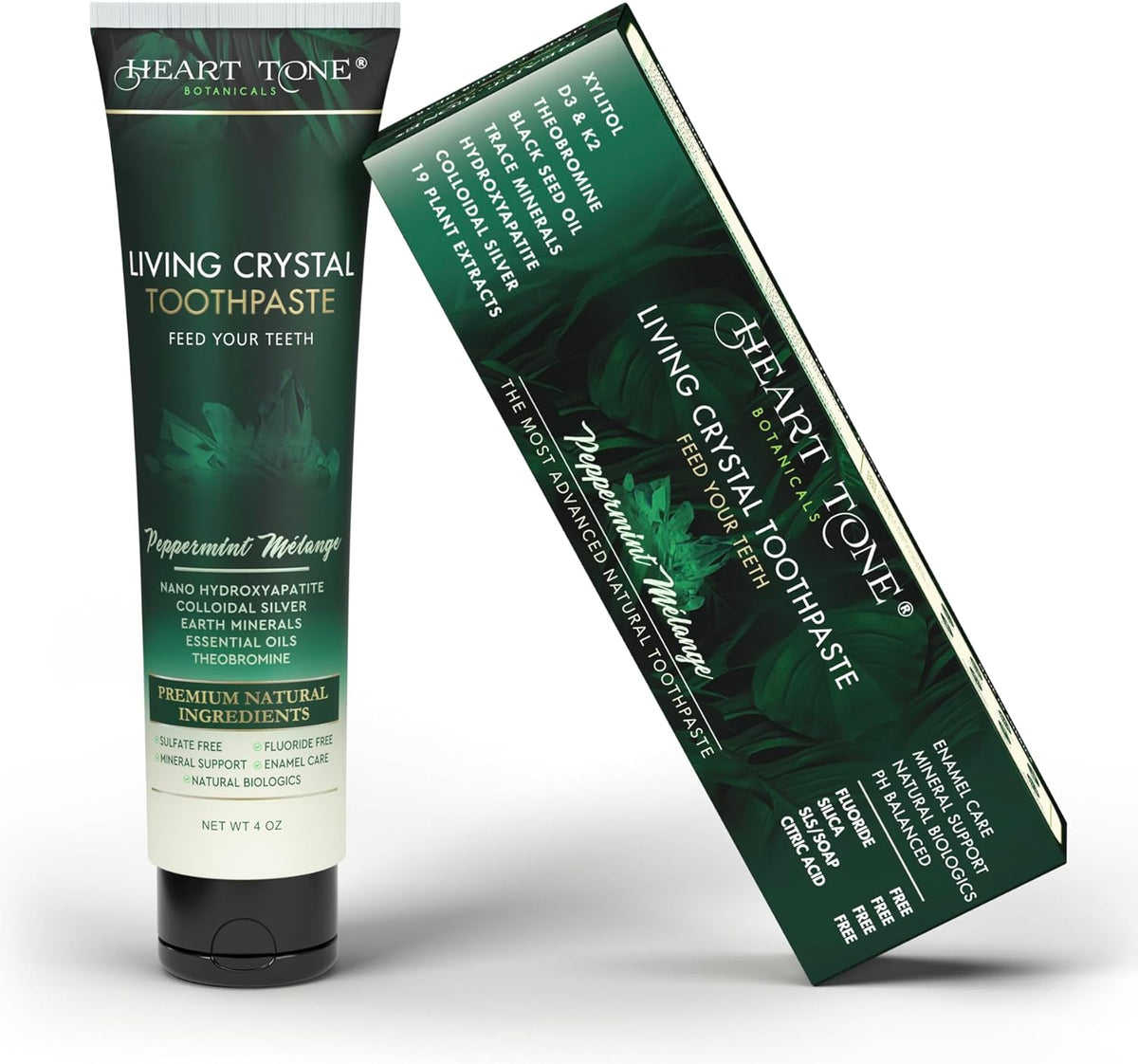
For older kids, teens, and adults, Living Crystal Toothpaste is a fluoride-free formula built on kaolin and bentonite clays, colloidal silver, and 30+ farm-grown botanical extracts — with a full mint blend and no synthetic foaming agents. As with any toothpaste, it's meant to be used in a small amount and spit out, not swallowed.
When it's time to add a rinse to an older child's or teen's routine, an alcohol-free option is generally easier on the mouth than a conventional alcohol-based mouthwash, which can feel harsh and isn't recommended for young children at all. Our Restorative Mouth Rinse is alcohol-free and built on 22 botanical ingredients, including farm-grown aloe vera and colloidal silver — a gentler starting point once a child is old enough to reliably rinse and spit.
You can browse the full natural oral care collection to see the rest of the family routine, from toothpaste to oil pulling to mouth rinse.
The Bottom Line
The amount of toothpaste kids should use comes down to age and supervision, not the ingredient list. A grain-of-rice smear under age 3, a pea-sized amount from 3 to 6, and supervised brushing with a solid spit-don't-swallow habit until your child has that down — that's the guidance, whether the tube says fluoride-free or not.

Leave a comment
This site is protected by hCaptcha and the hCaptcha Privacy Policy and Terms of Service apply.