












The Short Answer: Low Porosity Hair Needs Less, Not More

If your hair takes forever to get wet in the shower, seems to repel conditioner instead of soaking it in, and ends up feeling coated or weighed down no matter how "light" the product claims to be — you're likely dealing with low porosity hair. It's one of the most misunderstood hair types, because most of the advice out there (more oil, more protein, more product) is built for the opposite problem.

Low porosity hair has a cuticle layer that lies flat and tight against the hair shaft. That's not a flaw — it's actually why low porosity hair tends to look shiny and holds a style well. But that same tight cuticle makes it harder for moisture and product to get past the surface, and easy for product to sit on top instead, leading to the buildup and heaviness so many people with this hair type know well.
How to Tell If You Have Low Porosity Hair
A few common signs point to low porosity:
- Hair takes a long time to get fully saturated in the shower
- Products tend to sit on the surface rather than absorb, leaving a slight film
- Hair air-dries slowly
- Oils and heavier butters can leave strands looking greasy or flat rather than moisturized
- A water spritz tends to bead up on the strand before it's absorbed
If that sounds familiar, the good news is that low porosity hair care isn't about using less product overall — it's about choosing the right kind of product, and helping the cuticle open up enough to let it in.
What Actually Helps Low Porosity Hair
Warmth Over Force
Because the cuticle lies flat, product applied to cold, dry hair has a harder time getting past the surface. Applying conditioner to damp, warm hair — and adding gentle heat with a warm towel or a few minutes under a shower cap — can help the cuticle relax enough for moisture to move in more easily. No steam tools required; a warm towel wrapped around freshly conditioned hair for 10–15 minutes is often enough.
Lightweight, Water-Based Formulas
Heavy butters and thick oils are the products most likely to sit on top of low porosity strands rather than absorb into them. Lighter, water-based formulas with humectants like glycerin and aloe tend to work with this hair type instead of against it, since they're carried into the hair shaft along with water rather than layered on top of it.
A Light Hand With Protein
Low porosity hair's tightly-packed cuticle already gives strands a fair amount of structure, so heavy protein treatments aren't usually the first thing this hair type needs — and can sometimes leave strands feeling stiff rather than soft. If protein is part of your routine, it's worth using sparingly and paying attention to how your hair responds.
Regular, Gentle Clarifying
Because product is more likely to sit on the surface of low porosity strands rather than absorb, buildup can accumulate faster than it does for other hair types. A gentle clarifying rinse every few weeks helps keep the hair shaft clear so your regular shampoo and conditioner can actually do their job, rather than working against a layer of old product.
Building a Wash-Day Routine for Low Porosity Hair
A simple, consistent routine tends to outperform a complicated one for this hair type:
- Wash with a gentle, sulfate-free cleanser using warm water to help the cuticle relax before you even reach for conditioner.
- Apply conditioner to damp, warm hair and let it sit for a few extra minutes — this is where the cuticle has its best chance to let moisture in.
- Rinse with cool water at the very end to help smooth the cuticle back down and support shine.
- Apply leave-in products sparingly on damp hair rather than dry — a little goes further when the cuticle is already open from washing.
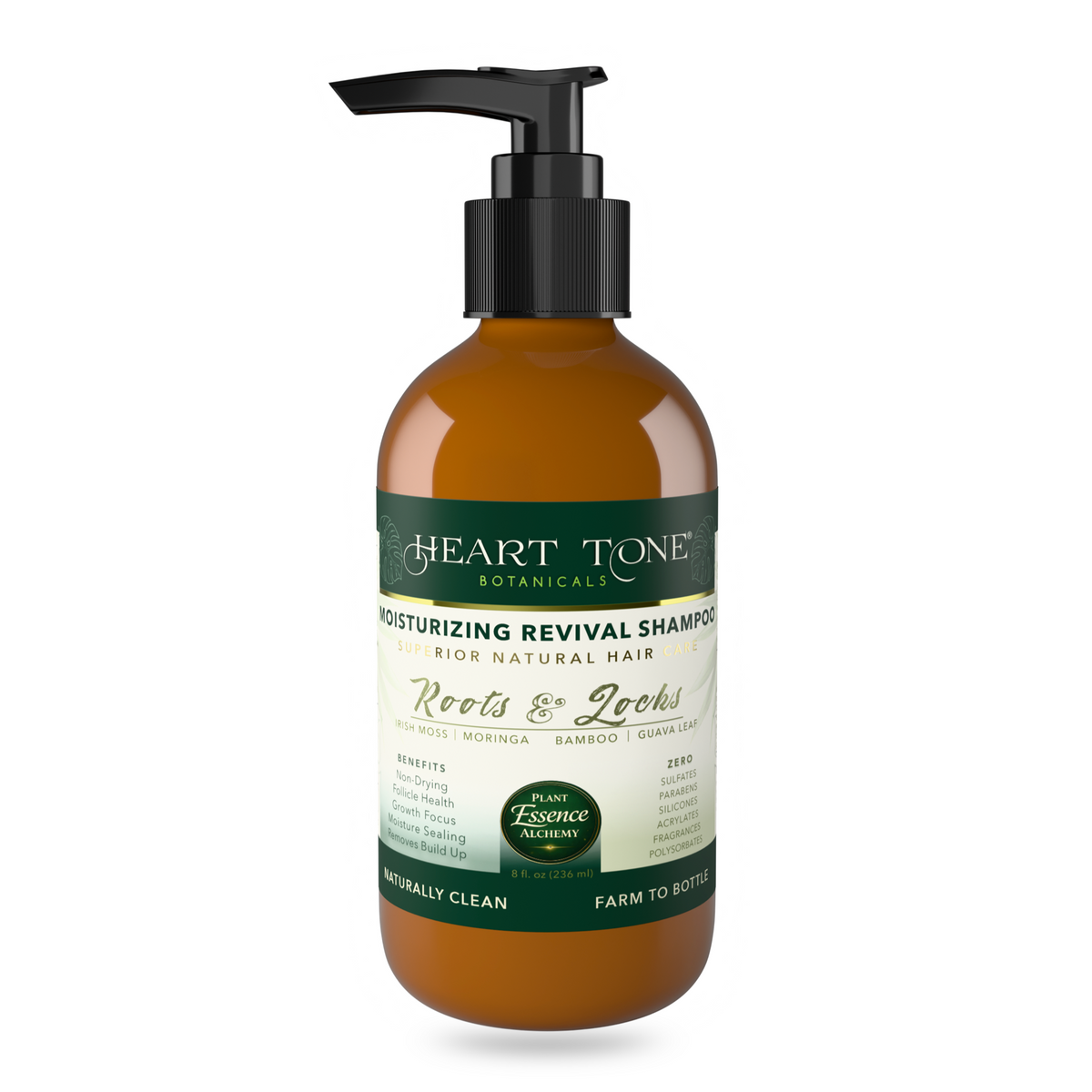
Roots & Locks Moisturizing Revival Shampoo is formulated as a gentle, botanical cleanse built around aloe leaf juice extract and coconut milk, without harsh sulfates — a good fit for low porosity hair that needs a wash step that cleans without adding a heavy residue. The Roots & Locks Moisturizing Revival Shampoo is designed to work alongside the Roots & Locks Moisturizing Revival Conditioner, which pairs aloe leaf juice extract and organic vegetable glycerin with organic shea nut butter for a formula that leaves hair feeling soft without weighing it down.
What to Avoid
- Heavy oils and butters applied straight onto dry hair — these are the most likely to sit on the surface and leave strands looking greasy rather than nourished.
- Frequent heavy protein treatments — low porosity hair usually needs less protein reinforcement than other hair types, not more.
- Silicone-heavy formulas — silicones build up on the hair shaft over time and can be especially stubborn to remove from low porosity strands, compounding the very buildup problem this hair type already deals with.
- Skipping clarifying entirely — for a hair type prone to product sitting on the surface, an occasional clarifying wash isn't optional, it's maintenance.
The Bottom Line
Low porosity hair isn't difficult hair — it just responds best to a different approach than the "more product, more oil" advice aimed at other hair types. Warm, damp application; lightweight, water-based formulas; a light hand with protein; and regular gentle clarifying are the four habits that tend to make the biggest difference. The goal isn't more product — it's helping the product you already use actually get where it needs to go.
Ready to build a wash-day routine that works with your hair instead of against it? Explore the Roots & Locks Moisturizing Revival Shampoo and Roots & Locks Moisturizing Revival Conditioner, or browse our full natural hair care collection for more botanical options.

Leave a comment
This site is protected by hCaptcha and the hCaptcha Privacy Policy and Terms of Service apply.