

One Word. Potentially Hundreds of Ingredients.
Most people scan a personal care label looking for things they recognize — aloe vera, shea butter, jojoba oil. But there is one word worth pausing on, not because it is inherently alarming, but because it is a legal category rather than a single ingredient: Fragrance (or its international equivalent, Parfum).
Under U.S. labeling law, cosmetic brands are required to list every ingredient on the label — with one major exception. Fragrance formulas are considered trade secrets. This means the individual aromatic compounds that make up a scent can all be listed under a single word: "Fragrance." A product with a complex proprietary scent blend can legally list it as one item, regardless of how many individual components went into it.
Understanding what that one word actually represents — and knowing what the alternatives look like — is one of the most practical skills you can develop as an ingredient-aware beauty consumer.
What U.S. Law Actually Allows
The Fair Packaging and Labeling Act requires cosmetic ingredient disclosure, but it creates a specific carve-out: fragrance and flavor formulas may be listed as a single term to protect proprietary blends. The FDA's guidance confirms that the word "Fragrance" on a product label can represent a complex mixture of aromatic ingredients, and companies are not required to disclose those individual constituents.
This is why ingredient-conscious shoppers have learned to treat "Fragrance" or "Parfum" as a category flag rather than a single entry. It tells you a scent was added. It does not tell you what is creating that scent.
Unscented vs. Fragrance-Free: These Mean Different Things
This is one of the most common label misreads in personal care.
- Fragrance-free means no fragrance ingredients were added to the formula — synthetic or natural. The product has no scent because nothing was formulated to give it one.
- Unscented does not mean the same thing. A product labeled "unscented" may still contain fragrance ingredients — often added specifically to mask the natural smell of other components — just not in enough concentration to create a detectable scent.
If your goal is to avoid all added fragrance, look specifically for "fragrance-free" on the label, and then confirm by scanning the ingredient list for Fragrance or Parfum.
Natural Botanical Scents: What They Look Like on a Label
Not everything that creates a pleasant scent in a formula is a synthetic compound. Many botanical personal care brands use plant-derived aromatic ingredients — and when they do, those ingredients typically appear on the label under their specific names rather than the catch-all "Fragrance" term.
Natural aromatic ingredients you may recognize on a label include:
- Essential oils — listed by plant name: Lavandula Officinalis (lavender), Cedrus Atlantica (cedarwood), Citrus Bergamia (bergamot)
- CO2 extracts — supercritical extractions that preserve aromatic compounds from plant material, listed as "[Plant] CO2" (e.g., Azadirachta Indica CO2 for neem)
- Hydrosols — the aromatic water byproduct of steam distillation, listed as "[Plant] Hydrosol" (e.g., Rose Hydrosol)
- Naturally occurring isolates — aromatic compounds like Linalool, Geraniol, or Citronellol that are naturally present in many botanical essential oils; they may be listed separately when present at levels that trigger EU allergen disclosure requirements
When a product's aromatic character comes from botanicals, a transparent label will name each one specifically. When you see a long list of named essential oils and CO2 extracts rather than a single "Fragrance" entry, that is ingredient transparency in practice.
How to Read a Label for Fragrance
Here is a practical approach for any personal care ingredient list:
- Scan for "Fragrance" or "Parfum" — these are the catch-all terms. Their presence tells you a scent was formulated in; it doesn't tell you what ingredients created it.
- Look for named botanicals — essential oils, CO2 extracts, and hydrosols listed by specific plant name mean you know exactly what aromatic ingredient is in the formula.
- Check "fragrance-free" label claims — and confirm by looking for the absence of both Fragrance/Parfum and named aromatic botanicals in the ingredient list.
- Recognize isolates — names like Linalool, Geraniol, and Limonene are naturally occurring aromatic compounds. They appear individually when extracted or when labeling regulations require separate disclosure. They are not synthetic catch-all terms the way "Fragrance" is.
HTB's Approach: Full Botanical Transparency — Scented and Unscented Options
At Heart Tone Botanicals, every product that has a scent gets it from named botanicals. No "Fragrance," no "Parfum" catch-all appears anywhere in an HTB ingredient list. You can see exactly what is creating each product's aromatic character — whether it is a single essential oil or a layered botanical blend.
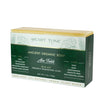
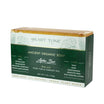
The handcrafted bar soaps, cold-processed in small batches from the Heart Tone farm in Vero Beach, Florida, are a good example of what botanical transparency looks like in practice. The Ancient Organic Soap Aloe Fields gets its fresh character from lavender oil, bergamot oil, and eucalyptus lemon oil — each listed individually. The Ancient Organic Soap Alpha Bar carries a bold, woodsy quality from cedarwood oil, patchouli oil, cypress oil, and spruce oil — all named on the label.
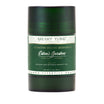
The Eden's Garden Bioactive Deodorant uses clary sage essential oil, lavender CO2, and lavandin essential oil for its botanical scent — all fully disclosed. No synthetic fragrance blend, no catch-all listing.
For those who want zero added fragrance, HTB's Ancient Organic Soap Coconut Creme is made with organic coconut oil, coconut milk, and coconut pulp — no essential oils or aromatic botanicals added to the formula. The Classic Bioactive Deodorant is formulated without synthetic fragrances for those who prefer their daily deodorant without synthetic scent blends.
JD started Heart Tone Botanicals growing aloe vera, neem, and moringa on the farm in Vero Beach — and that same commitment to ingredient transparency extends to how every aromatic ingredient is listed on the label.
Two Kits for the Fragrance-Free Routine
For anyone building a fully fragrance-free personal care routine — or anyone who simply prefers to know every ingredient by name — HTB offers two purpose-built starter kits:
- Clean & Free — a starter set with bar soap, liquid soap, and deodorant, all fragrance-free. Designed for anyone transitioning to natural body care or anyone who wants a complete personal care routine with zero added scent.
- Native & Free — the complete unscented kit: soap, liquid soap, and deodorant with zero fragrance ingredients of any kind.
The Bottom Line
Reading a beauty or personal care label well means knowing that "Fragrance" is a legal category — not a single ingredient. It means understanding the difference between "unscented" and "fragrance-free." And it means recognizing what genuine botanical transparency looks like: a label that names every aromatic ingredient by what it actually is, rather than collecting them under one opaque word.
The brands that do this well give you enough information to make an informed choice. Whether you are looking for a naturally-scented product with full botanical disclosure, or a completely fragrance-free option — the label should tell you clearly which one you are holding.

Leave a comment
This site is protected by hCaptcha and the hCaptcha Privacy Policy and Terms of Service apply.