












Two Oils, One Ritual, Very Different Reputations

Ask three people what oil pulling is supposed to use and you'll likely get three answers: coconut oil, because it's the one everyone's heard of; sesame oil, because it's the traditional choice; or "whatever's in the bottle I bought." Both oils show up constantly in oil pulling guides, and the internet tends to approach the choice as a personal preference with no real substance behind it. It isn't quite that simple — the two oils are genuinely different in texture, taste, and tradition. Here's what actually changes depending on which one you swish with.

Sesame Oil: The Traditional Base
Sesame oil is the oil named in the original Ayurvedic texts that describe oil pulling — the practice usually called kavala or gandusha. It's a thicker, denser oil than coconut oil, with a warm, slightly nutty flavor and a texture that stays liquid at room temperature year-round. Because it doesn't solidify in cooler weather, sesame oil tends to be easier to measure and swish straight out of the bottle without waiting for it to melt.
The flavor is the biggest adjustment for most people. Raw sesame oil has a stronger, more distinct taste than coconut oil, and it's noticeably different from the neutral or sweet flavor most people expect from an oral care product. That's part of why most modern oil pulling formulas built around sesame oil add mint or other botanical flavoring — the base oil alone isn't designed to taste pleasant on its own.
Coconut Oil: The Modern Default
Coconut oil became the go-to oil pulling base largely because of its taste and texture. Refined and unrefined coconut oil both have a mild, faintly sweet flavor that most people find far more approachable than raw sesame oil, and the light, silky texture spreads easily throughout the mouth. Coconut oil's one practical quirk is that it's solid below about 76°F, so a jar kept in a cool bathroom may need to sit in a warm hand for a minute before it's swishable — a small inconvenience that liquid MCT (medium-chain triglyceride) fractions of coconut oil are formulated to avoid.
Because coconut oil is so mild-tasting on its own, it also acts as a better carrier for other botanical ingredients. Essential oils and plant extracts tend to come through more clearly in a coconut oil base than in the stronger, more assertive flavor of raw sesame oil.
Does the Oil Itself Matter, or Just the Ritual?
Traditional oil pulling texts focus on the ritual — swishing for a set period of time, on an empty stomach, before spitting the oil out — more than on a single "correct" oil. Sesame oil is named in the oldest texts because it was the oil that was available and commonly used at the time in that region, not because it has some property coconut oil lacks. Both are traditional plant-based carrier oils with a long history of use in oral care, and neither one is positioned here as doing anything to the mouth beyond the physical act of swishing, carrying, and rinsing.
Where the oils genuinely differ is in the experience: viscosity, temperature sensitivity, and how strongly the base flavor comes through. Those are real, practical differences — they're just not differences in what the ritual itself is doing.
Why a Blended Formula Uses Both
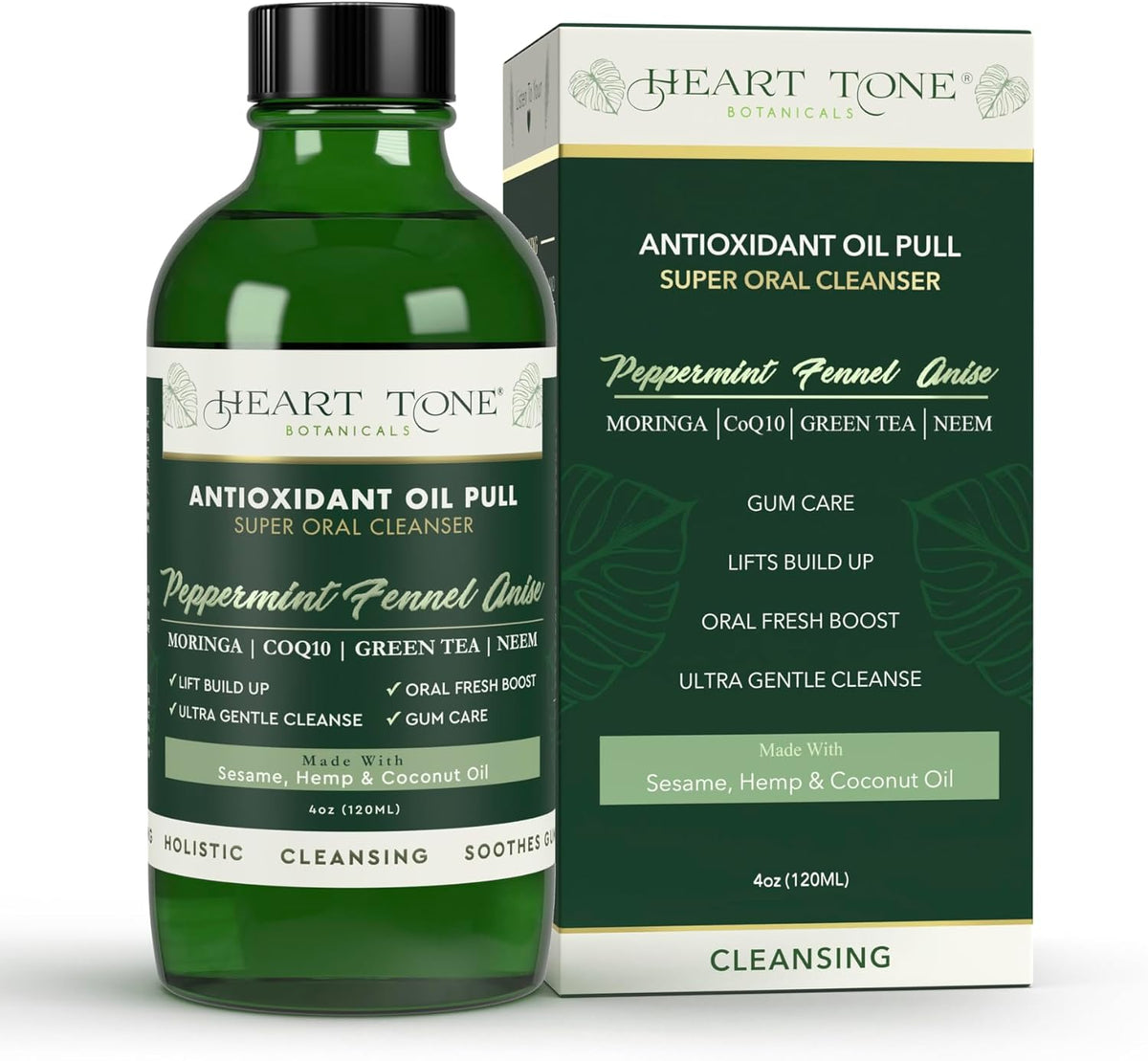
Rather than choosing one oil over the other, Heart Tone Botanicals' Antioxidant Oil Pull is built on a blend of organic liquid coconut oil (MCT) and organic sesame seed oil, along with organic hemp seed oil, camellia seed oil, and moringa seed oil. The coconut oil keeps the base light and easy to swish at any room temperature, while the sesame oil contributes to the traditional character of the ritual. A peppermint fennel anise flavor blend sits on top of that oil base specifically so the experience doesn't come down to raw sesame or plain coconut oil alone.
For people who want the same base blend with an added step, the Ozonated Oil Pull starts from the same coconut-and-sesame foundation, with ozonated sesame seed oil in place of the plain version, plus additional botanical extracts like organic neem oil and organic turmeric CO2.
Choosing Between Them
If you're deciding which base to reach for on your own:
- Pick sesame oil if you want the traditional Ayurvedic base and don't mind a stronger, nuttier flavor, or if you live somewhere cold and don't want to deal with solid coconut oil
- Pick coconut oil if flavor is your main hesitation about starting an oil pulling routine, or if you plan to add your own essential oils to the base
- Pick a blended formula if you'd rather not choose at all — a formula built on both oils, flavored specifically for the ritual, sidesteps the tradeoff entirely
None of these choices changes the basic mechanics of oil pulling: swish, don't swallow, spit into the trash rather than the sink, and rinse your mouth afterward. The oil is the vehicle for the ritual, not a variable that changes what the ritual is.
The Bottom Line
Coconut oil and sesame oil are both legitimate, traditional bases for oil pulling, and the real differences between them come down to texture, temperature behavior, and taste — not effectiveness of the ritual itself. Sesame oil carries the historical pedigree and stays liquid in the cold; coconut oil is milder-tasting and easier for most people to start with. A blended formula that combines both, finished with a real mint flavor complex, is one way to get the traditional base without picking a side.
If you'd rather not choose between them, Antioxidant Oil Pull combines organic coconut and sesame oils with CoQ10 and a peppermint fennel anise flavor for a ritual that's easy to stick with. Pair it with Living Crystal Toothpaste for a complete fluoride-free oral care routine, or browse the full natural oral care collection.
For more on the ritual itself, read our guide to 6 Oil Pulling Mistakes That Cancel Out the Ritual.

Leave a comment
This site is protected by hCaptcha and the hCaptcha Privacy Policy and Terms of Service apply.