












If you've ever stood in the shower aisle trying to decide between a bottle of castile soap and a trendy body wash, you're not alone. On the surface, they seem interchangeable — both liquid, both lathering, both promising clean skin. But underneath the packaging, they are built completely differently. And that difference matters far more than most people realize.
This is the complete guide to castile soap vs body wash: what each one actually is, how they affect your skin, and which one deserves a place in your shower.
What Is Castile Soap — Really?

Castile soap is a true soap. That sounds simple, but it's a meaningful distinction. True soaps are made through saponification — a chemical reaction between a plant-based oil (traditionally olive, but often coconut, hemp, jojoba, or a blend) and an alkali like potassium hydroxide. The result is a genuine soap molecule that lifts dirt and oil from your skin and rinses clean away.
The name comes from the Castile region of Spain, where olive oil soap was made and traded for centuries. Today it refers to any soap made entirely from plant oils, without animal fats or synthetic detergents.
What you get in a quality castile liquid soap:
- A short ingredient list you can actually read
- No synthetic surfactants, foaming agents, or preservatives
- No petroleum-derived ingredients
- Fully biodegradable formula
- Often vegan and cruelty-free
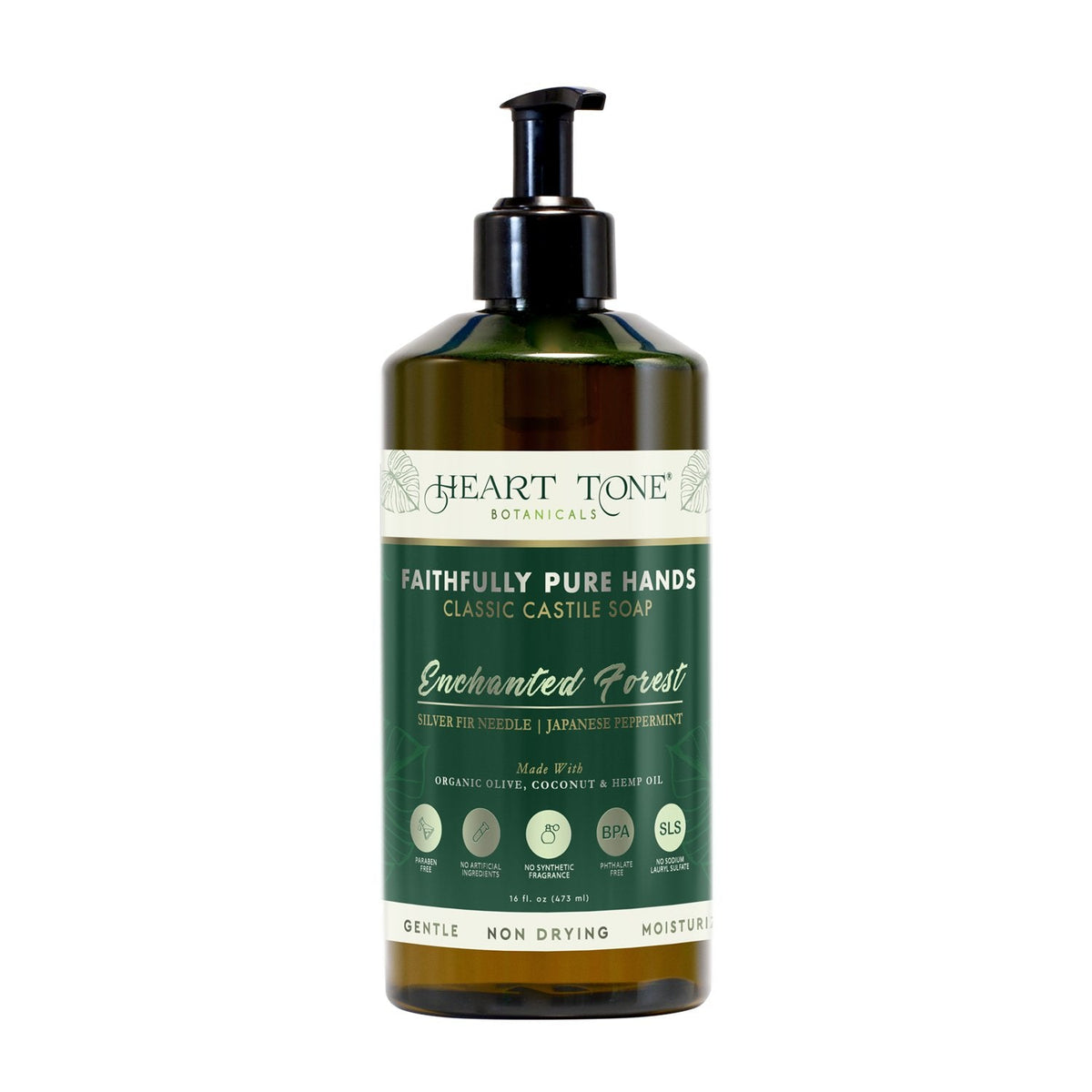
Our Herbal Castile Liquid Soap is a great example — a clean, plant-oil-based liquid soap made to clean effectively without the chemical load. The Faithfully Pure Hands Castile Liquid Soaps take it a step further, coming in thoughtfully crafted botanical varieties like Enchanted Forest, Florida Citrus, Pure Native, and Wild Blossom — all made with real botanical ingredients, no synthetic shortcuts.
What Is Body Wash — Really?
Most commercial body washes are not soap. They are synthetic detergent cleansers — technically called syndets (synthetic detergents). They clean your skin through a completely different mechanism: lab-engineered surfactant molecules that are specifically designed to be stable, lathery, and shelf-friendly.
Body washes typically contain:
- Synthetic surfactants like sodium lauryl sulfate (SLS) or sodium laureth sulfate (SLES)
- Foam boosters to create that rich lather feel
- Silicones or film-forming polymers to leave skin feeling soft
- Synthetic preservatives (parabens, phenoxyethanol)
- Fragrance blends — often dozens of undisclosed synthetic chemicals under the word fragrance
- Colorants, pH adjusters, and stabilizers
To be clear: not all body washes are harmful. But the average drugstore body wash is a far cry from natural regardless of what the marketing says. The feeling of moisturized, conditioned skin that many body washes leave behind often comes from silicone coatings — not from skin health.
The Core Differences: A Side-by-Side Look
| Factor | Castile Soap | Conventional Body Wash |
|---|---|---|
| Base | Plant oils (olive, coconut, hemp, etc.) | Synthetic detergents |
| Ingredient list | Short, recognizable | Long, often chemical-heavy |
| Lather | Moderate, natural | Rich (often boosted by synthetic foam agents) |
| Skin feel | Clean, non-coated | Soft (often from silicone film) |
| pH | Alkaline (9–10) | Closer to neutral (5–7, adjusted synthetically) |
| Biodegradable | Yes | Often partially or not fully |
| Vegan/cruelty-free | Typically yes | Varies widely |
| Fragrance | Essential oils or fragrance-free | Usually synthetic fragrance blends |
The pH Question: Is Castile Soap Too Alkaline?
One real difference worth understanding is pH. True soaps — including castile — are naturally alkaline, typically around pH 9–10. Skin's natural surface is slightly acidic, around pH 4.5–5.5. This gap is one of the most common reasons people worry about castile soap stripping the skin.
Here's the context that often gets left out:
Healthy skin recovers quickly. After washing with a mild alkaline soap and rinsing thoroughly, your skin's acid mantle typically restores itself within 30–60 minutes. For people with a strong, intact skin barrier, this is rarely an issue.
Dilution helps. Castile soap is concentrated. A small amount in a large palm of water dramatically reduces the effective pH contact with your skin. Most castile soap manufacturers recommend diluting 1 part soap to several parts water for body use.
What you apply after matters. Following with a natural moisturizer — like our Botanical Renew Body Butter — seals in hydration and helps the skin barrier stay strong regardless of what you washed with.
If you have very dry, reactive skin, very dry skin, or a compromised skin barrier, castile soap is still worth trying — just be mindful of dilution and always moisturize after. The synthetic fragrance and preservatives in most body washes are frequently a bigger trigger for sensitive skin than alkalinity.
What About Bar Soap? Where Does It Fit?
Bar soap and liquid castile soap are close cousins. Both are true soaps made from saponified plant oils. The main difference is the alkali used: liquid soaps typically use potassium hydroxide (softer result), while bar soaps use sodium hydroxide (harder result).
Quality bar soaps — made with nourishing oils and minimal additives — are often the most underrated option in the shower. They rinse cleanly, leave no residue, and last longer per use than liquid products. Our Ancient Organic Soap Aloe Fields, Alpha Bar, and Coconut Creme varieties are crafted with this philosophy — real ingredients, real results.
And for anyone who wants cleansing plus serious exfoliation in a single step, the Moroccan Exfoliating Black Soap is in a category of its own — a traditional Beldi soap made with eucalyptus oil and black olives that has been used in North African hammam rituals for generations. It deep-cleans, softens, and exfoliates simultaneously, with no synthetic anything.
Which Is Better for Your Skin Type?
Normal to Oily Skin
Castile soap is typically an excellent match. It cleanses effectively without leaving a silicone or conditioner film that can clog pores. The Herbal Castile or Faithfully Pure varieties give you botanical botanicals without synthetic additives that can interact unpredictably with oil-prone skin.
Dry or Dehydrated Skin
Castile soap can work well for dry skin — but follow-through is key. Dilute generously, rinse thoroughly, and always apply a rich moisturizer while skin is still slightly damp. The Botanical Renew Body Butter is made for this: deep, plant-oil moisture that absorbs without greasiness. Pair it with your castile soap and dry skin becomes much less of an issue.
Sensitive or Reactive Skin
Here is where many body washes fail. Synthetic fragrances, preservatives like methylisothiazolinone, and cocktails of surfactants are among the most common drivers of skin reactions — and they're concentrated in most conventional body washes. Castile soap with essential oil-based scenting (or fragrance-free) is often the cleaner choice for sensitive skin. If you're dealing with active irritation or compromised barrier, try the Botanical Skin Gel as a soothing post-shower treatment.
very dry, reactive skin or Chronic Skin Conditions
A simple, short-ingredient castile soap is usually far preferable to fragrance-laden body washes. That said, every skin is different — patch test, dilute well, and focus heavily on moisturizing immediately after washing while skin is still slightly damp.
The Environmental Case for Castile Soap
Beyond skin, there's a clear environmental argument for true soap. Plant-oil soaps biodegrade cleanly and completely. Synthetic surfactants and the long list of additives in most body washes do not break down the same way — they end up in waterways and ecosystems.
Castile soap is also more concentrated, meaning you use less per wash. A single bottle goes further than its volume suggests. That's less packaging, less waste, lower footprint per shower.
The Verdict
For most people who want a cleaner, more natural approach to body care, castile soap wins — not because body wash is automatically harmful, but because castile soap achieves everything you need it to with far fewer ingredients, no synthetic detergents, no mystery fragrance blends, and no plastic-like residue on your skin.
The trade-off is real: it may feel drier at first, especially in hard water. But that's solved by diluting properly, rinsing thoroughly, and following with a quality natural moisturizer. Once you make the adjustment, the clean, uncoated feel of true soap is hard to go back from.
If you're ready to make the switch, start with the Herbal Castile Liquid Soap or explore the full personal care collection at Heart Tone Botanicals. Real ingredients. No shortcuts. Your skin will feel the difference.

Leave a comment
This site is protected by hCaptcha and the hCaptcha Privacy Policy and Terms of Service apply.