












Antiperspirant vs. Deodorant: What's Really the Difference?

Walk down any drugstore aisle and you'll notice two distinct categories: antiperspirants and deodorants. Most people use these terms interchangeably, but they work in completely different ways — and that difference matters more than most people realize.
Antiperspirants contain aluminum salts (like aluminum chlorohydrate or aluminum zirconium) that are absorbed into the skin and temporarily plug sweat gland ducts. The goal is simple: reduce the amount of sweat reaching the surface. Less moisture means less bacterial activity, which means less odor.
Aluminum-free deodorants take the opposite approach. They don't try to stop you from sweating. Instead, they target the odor-causing bacteria themselves — neutralizing smell at the source while letting your body's natural sweating process continue uninterrupted.
Here's the thing most people don't know: sweat itself is almost completely odorless. The smell comes from bacteria that live on your skin breaking down sweat compounds. An aluminum-free deodorant works by changing the environment those bacteria need to thrive.
Why People Are Choosing Aluminum-Free
The shift toward aluminum-free deodorants isn't just a passing trend — it's part of a larger conversation about what we're putting on our bodies every single day.
The aluminum question. While major health organizations like the American Cancer Society have stated there's no conclusive evidence linking aluminum antiperspirants to breast cancer, many people prefer the precautionary approach: if something isn't proven safe, why absorb it daily into your underarm skin — one of the most permeable areas of your body?
The clothing problem. Those yellow stains on the underarms of your white shirts? They're not from sweat. They're from the reaction between aluminum compounds and the proteins in sweat. Switching to aluminum-free eliminates that chemical reaction entirely.
Skin sensitivity. Many people experience chronic irritation, redness, or itching from conventional antiperspirants. The culprit is often the aluminum itself — along with the alcohol and synthetic fragrances common in mass-market formulas. Aluminum-free deodorants, especially those made with plant butters and oils, tend to be far gentler on delicate underarm skin.
The naturalness argument. Sweating is a biological function. It regulates body temperature. It's how your skin breathes. Blocking it entirely with a chemical plug can feel, to many people, fundamentally at odds with the body's design. Aluminum-free deodorant respects that process.
How Aluminum-Free Deodorant Actually Controls Odor
The skeptic's question is always: "But does it actually work?" The honest answer is: yes — if it's formulated correctly.
Effective aluminum-free deodorants rely on a few key mechanisms:
Odor neutralization. Ingredients like baking soda raise the underarm pH, creating an environment where odor-causing bacteria struggle to thrive. Some formulas use enzyme-based odor neutralizers that break down smell molecules chemically rather than just masking them.
Moisture management. Arrowroot powder and cornstarch absorb moisture at the surface, helping you feel drier even when you are sweating. They don't block the glands — they just absorb what comes out.
traditional botanicals. Plant-derived ingredients like coconut oil, tea tree oil, and certain essential oils have well-documented botanical properties. They help control the bacterial populations responsible for odor without harsh synthetic preservatives.
Skin conditioning. Unlike conventional antiperspirants that can leave underarm skin dry and irritated, quality natural deodorants often include shea butter, aloe, or plant oils that actively nourish the skin. Healthier skin supports a healthier microbiome — meaning better odor control over time, not worse.
The Transition Period: What to Expect
If you've been using an aluminum antiperspirant for years, switching to aluminum-free deodorant involves a real adjustment period. This isn't a myth — it's biology.
When your sweat glands have been partially blocked for an extended time, the transition back to normal sweating takes a few weeks. You may notice more moisture, and possibly more odor, during the first one to three weeks. This is temporary.
What's happening: your skin's bacterial balance is recalibrating. The population of bacteria that causes odor tends to be higher at first. Over several weeks, as the natural microbiome rebalances, most people find that their odor levels return to normal — and often improve beyond where they started.
A few things that help during the transition:
- Wash underarms thoroughly with a gentle cleanser (a diluted castile soap works well) once or twice daily
- Wear breathable natural-fiber fabrics when possible
- Reapply deodorant in the afternoon if needed
- Give it a full three to four weeks before evaluating
Most people who push through the transition period report that they're glad they did.
What to Look For in a Quality Aluminum-Free Deodorant
Not all aluminum-free deodorants are created equal. The clean beauty market has plenty of products that are free of aluminum but still loaded with synthetic fragrances, alcohol, or problematic preservatives. When evaluating a formula, look for:
A clear odor-control mechanism. The formula should explain how it controls odor — not just claim to. Look for specific active ingredients like baking soda, magnesium hydroxide, or enzyme systems.
Skin-nourishing base ingredients. Plant butters (shea, cocoa, mango) and oils (coconut, jojoba, sunflower) should appear in the formula — not just fragrance and filler.
No synthetic fragrance. "Fragrance" on a label is a catchall term that can represent dozens of undisclosed chemicals, some of which are known irritants. Look for products scented only with essential oils — or unscented.
Baking soda sensitivity disclosure. Baking soda is effective, but some people with sensitive skin find it irritating. Quality brands either offer a baking soda-free option or clearly disclose the concentration so you can make an informed choice.
Heart Tone Botanicals' Approach: Bioactive Deodorant
At Heart Tone Botanicals, we formulated our deodorant line around a specific philosophy: your underarm deserves the same quality of botanical care as the rest of your skin. That means zero aluminum, zero synthetic fragrance, and a base built on real plant ingredients — not petrochemicals.
Our The Classic Bioactive Deodorant is exactly what the name implies: a foundational, clean formula designed for daily use by anyone making the switch from conventional antiperspirant. It's effective, gentle, and built to work with your body's natural chemistry.
For those who want a more botanical sensory experience, our scented varieties each offer something distinct:
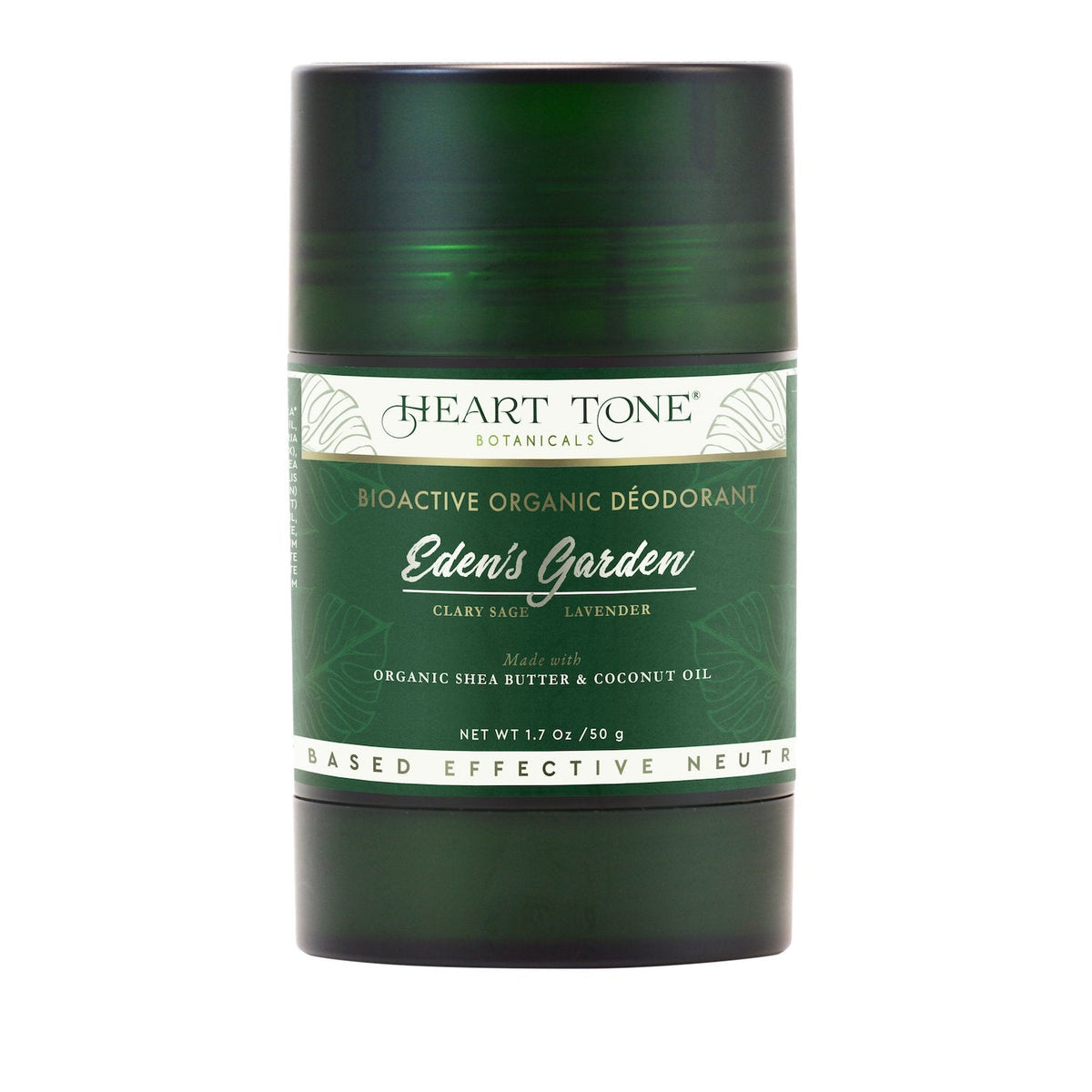
- Eden's Garden Bioactive Deodorant — a garden-fresh botanical blend, light and clean
- Gentleman's Reserve Bioactive Deodorant — a sophisticated, woody botanical profile
- Grove Island Bioactive Deodorant — tropical and uplifting, with a warm island character
- Jamaica Estate Bioactive Deodorant — deep, rich botanicals with a tropical warmth
All five are aluminum-free, formulated with skin-conditioning plant ingredients, and free from synthetic fragrance. They're designed not just to work on day one, but to become more effective as your skin's natural microbiome comes back into balance.
If you're also looking to support your body care routine beyond deodorant, our Botanical Renew Body Butter is a deeply nourishing post-shower moisturizer built on the same clean botanical philosophy — and our Botanical Skin Gel is an excellent option for soothing sensitive or post-shave underarm skin during the transition period.
Making the Switch: A Realistic Timeline
Week 1: You may sweat more than usual. Apply in the morning on clean, dry underarms. Don't panic if you notice more moisture than you're used to — this is normal and temporary.
Week 2: Bacterial balance is shifting. Some people experience increased odor this week. Stay the course, wash thoroughly, and reapply as needed.
Weeks 3–4: Most people start to see real improvement. The skin has adjusted, the microbiome has rebalanced, and the natural deodorant is working as intended.
Month 2 and beyond: You've made the switch. Most people report their sweat levels returning to normal (or lower), their odor is well-controlled, and their underarm skin feels noticeably healthier than it did with conventional antiperspirant.
The aluminum-free transition takes patience — but the people who stick with it rarely go back.
The Bottom Line
Aluminum-free deodorant works differently than what most of us grew up using. It doesn't stop you from sweating — and that's actually the point. By working with your body's natural functions instead of against them, a well-formulated natural deodorant can deliver genuine odor control while supporting your underarm skin with the care it deserves.
The key is finding a formula built on real botanical ingredients, giving your body time to adjust, and not settling for anything that trades aluminum for a different list of questionable synthetics.
Your armpits have been patiently waiting for something better. Ready to make the switch? Explore our full bioactive deodorant collection and find the scent — or no-scent — that fits your life.

Leave a comment
This site is protected by hCaptcha and the hCaptcha Privacy Policy and Terms of Service apply.