












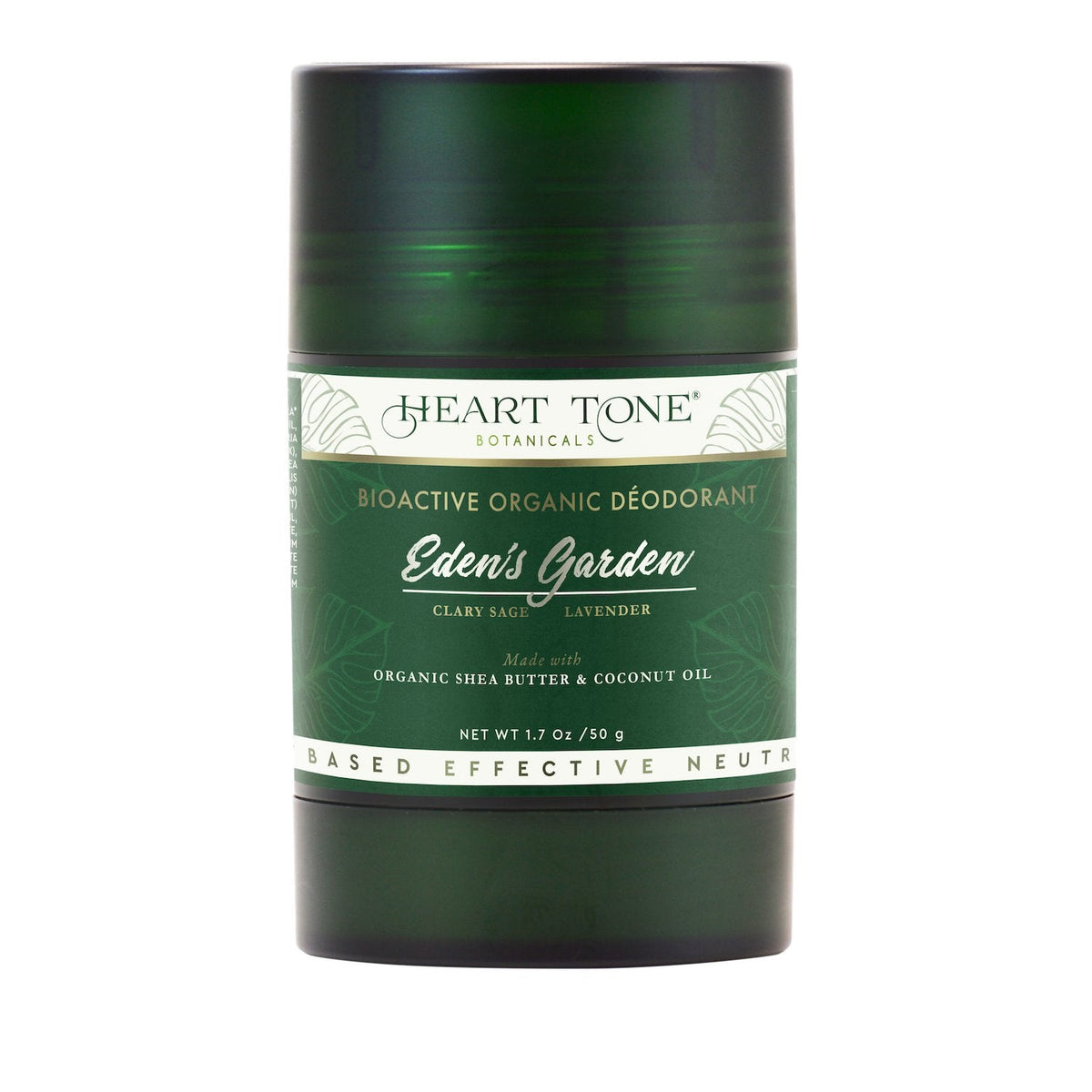
If you have ever read the ingredient list on one of our deodorants all the way to the end, you have met tamanu oil — though it may not have introduced itself by that name. On the label it reads CALOPHYLLUM INOPHYLLUM* (TAMANU) OIL, sitting a little past halfway down, between the arrowroot powder and the neem.
Tamanu is one of those ingredients that almost nobody outside of formulation circles can place. It is not a marketing flourish and it is not a filler. It is a genuinely unusual oil with a genuinely unusual production story, and the story is the reason it costs what it costs. Here is what the plant is, how the oil is made, and how to read it on any label — ours or anyone else's.
What Calophyllum inophyllum actually is

Calophyllum inophyllum is a broad, low-branching evergreen tree that grows along coastlines across the Indo-Pacific — Polynesia, Melanesia, Southeast Asia, coastal India, Madagascar, and East Africa. It tolerates salt spray and sandy ground that most trees will not, which is why you find it lining beaches rather than inland forests.
It carries a lot of names. Botanists use Calophyllum inophyllum, which translates roughly as "beautiful leaf". Tahitian speakers say tamanu. In Madagascar and across the francophone trade it is foraha. In India it is punnai, and in parts of Southeast Asia nyamplung. Same tree, same oil — so if you see foraha oil on an ingredient list, you are looking at tamanu.
The tree fruits twice a year. Each fruit is about the size of a small apricot, green ripening to a shrivelled brown, with a single round kernel inside. That kernel is the whole point.
The part most ingredient guides leave out: the kernel has to age first
This is the fact that makes tamanu different from nearly every other cold-pressed oil we use, and it is the one worth knowing.
A freshly opened tamanu kernel is pale, damp, and yields almost no oil at all. Press it straight away and you get very little for your effort. The kernels have to be laid out and dried slowly — traditionally on racks in the shade or in the sun over a period of roughly four to eight weeks — before they will give oil up. Over those weeks the kernel darkens, shrinks, turns sticky, and shifts from pale cream to a deep chestnut brown.
A tamanu kernel pressed on the day it is collected yields almost nothing. The same kernel, dried for six weeks, yields an oil so thick it barely pours.
Only then does it go to the press. That waiting period is unpaid labour and warehouse space, it happens before a single drop of oil exists, and it is the main reason tamanu sits at a very different price point from coconut or sunflower oil. When you see tamanu partway down an ingredient list rather than at the top, that is usually economics rather than indifference.
Why it is dark green and smells like that
Unrefined tamanu oil is startling the first time you see it. It is a deep, opaque green — closer to bottle glass than to olive oil — and it is thick enough that it moves slowly in the bottle. The aroma is strong, nutty, and faintly resinous. People tend to either like it immediately or find it surprising.
Both the colour and the smell come from the fact that the oil is unrefined. A cold-pressed tamanu carries its full resin fraction along with the fats, and that resin is where the colour and the aroma live. Industrially refined tamanu is a completely different-looking material: pale yellow, thin, and close to odourless, because the refining step strips the resin out along with the smell.
Neither version is wrong, but they are not interchangeable, and a label will rarely tell you which one is in the bottle. The practical tell is the finished product. If a deodorant or a soap has a faint green cast and a nutty note you cannot quite name, there is unrefined tamanu in it.
Where tamanu sits in our formulas
Tamanu appears in two places in our catalogue, and it is worth being precise about which.
All five of our Bioactive Deodorants carry it — Eden's Garden, Gentleman's Reserve, Grove Island, Jamaica Estate, and The Classic. In every one of them it appears in the same position: after the arrowroot powder and immediately before the neem CO2, in a base built on coconut oil, carnauba wax, sunflower oil, jojoba, shea, and beeswax. That mid-list position tells you it is a considered inclusion at a modest percentage, not a headline ingredient.
It also appears in the Ancient Organic Soap Alpha Bar, where the label reads simply "Organic Tamanu Oil*" — the asterisk marking certified organic. There it joins pine tar, hemp oil, and castor oil in a cold-process bar that is already on the darker, more resinous end of our body care range.
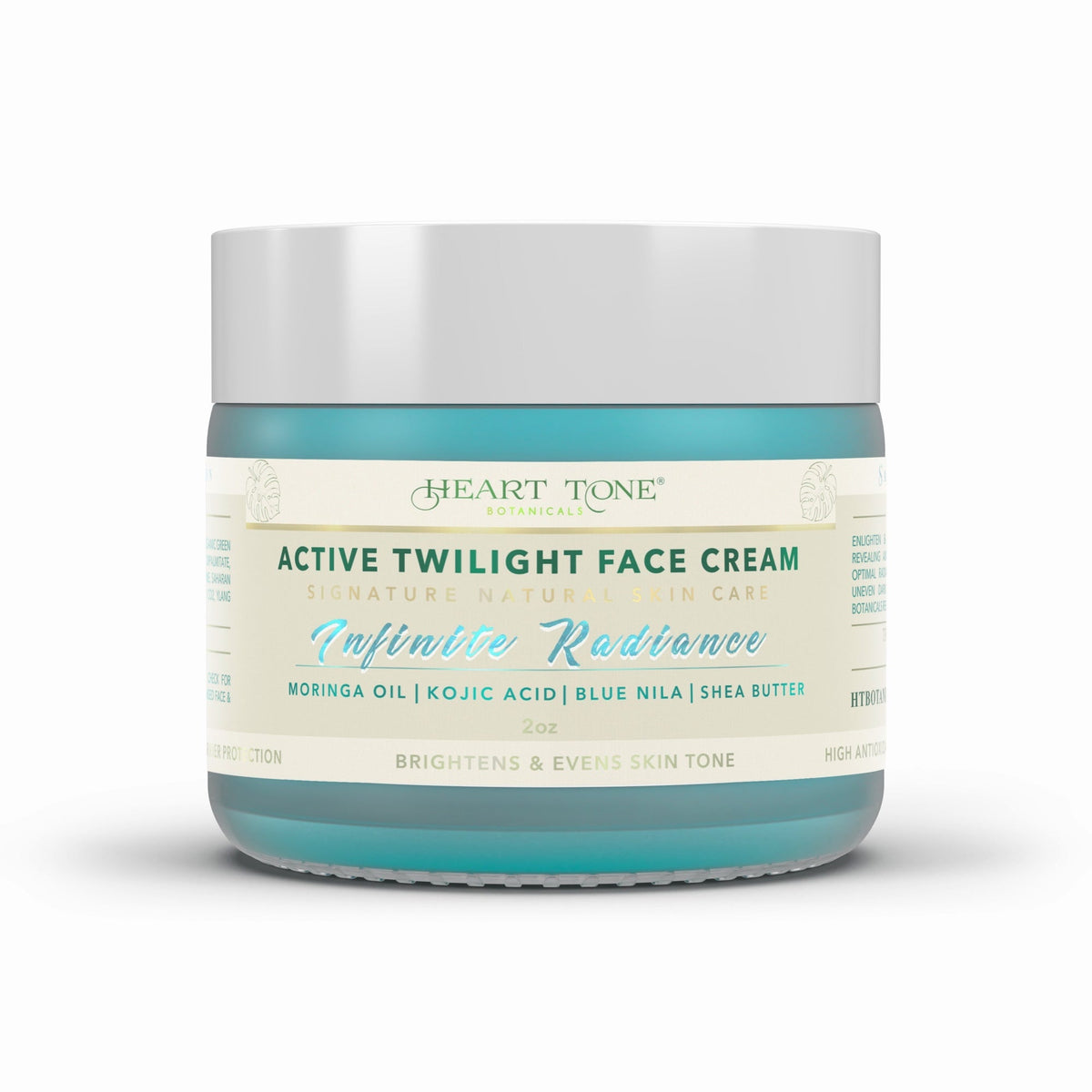
Just as usefully: tamanu is not in our facial line. It is not in the Active Twilight Face Cream, not in the Complete Daily Face Moisturizer, and not in the Dynamic Hydrogel Face Serum. Tamanu is widely discussed as a facial oil elsewhere, so it is worth saying plainly that when we talk about it, we are talking about a body-care ingredient in a deodorant and a soap bar.
How to read tamanu on any label
A few things to look for when you are comparing products:
- The INCI name is Calophyllum inophyllum. If a label gives you only "tamanu oil" with no botanical name anywhere, that is a small flag — a full INCI listing is the norm.
- Check for "foraha". Same oil, different trade name, and it turns up more often than people expect.
- Position matters more than presence. Ingredients are listed in descending order by weight down to the one percent mark. Tamanu near the very bottom of a long list is a trace.
- Refined or unrefined is usually invisible on the label. Colour and aroma in the finished product are your best available clue.
Storing it
Tamanu is semi-solid at cool room temperature. Below roughly 20°C it thickens noticeably, and in a cold bathroom it can go almost firm. That is completely normal behaviour for this oil and not a sign that anything has gone off — it loosens again in a warm hand. In a deodorant stick, where tamanu is a minor component in a wax-and-butter base, you will not notice it at all.
Like any unrefined oil, it does better away from direct light and heat. The resin fraction that gives tamanu its colour and aroma is also the part that changes first with age, so a bottle stored on a sunny windowsill will lose its character faster than one kept in a cupboard.
The short version
Tamanu is the oil of a coastal Indo-Pacific tree whose kernels have to be dried for a month or more before they will press at all. Unrefined, it is dark green, thick, and distinctly nutty. On our labels it reads CALOPHYLLUM INOPHYLLUM* (TAMANU) OIL, it lives in the five Bioactive Deodorants and the Alpha Bar soap, and it does not appear in our facial products.
If you want to keep going down the deodorant ingredient list, we have written about neem, which sits directly beside the tamanu, and about what replaces baking soda in a formula like this one. There is also a fuller walkthrough of how to read a deodorant label end to end.

Leave a comment
This site is protected by hCaptcha and the hCaptcha Privacy Policy and Terms of Service apply.