












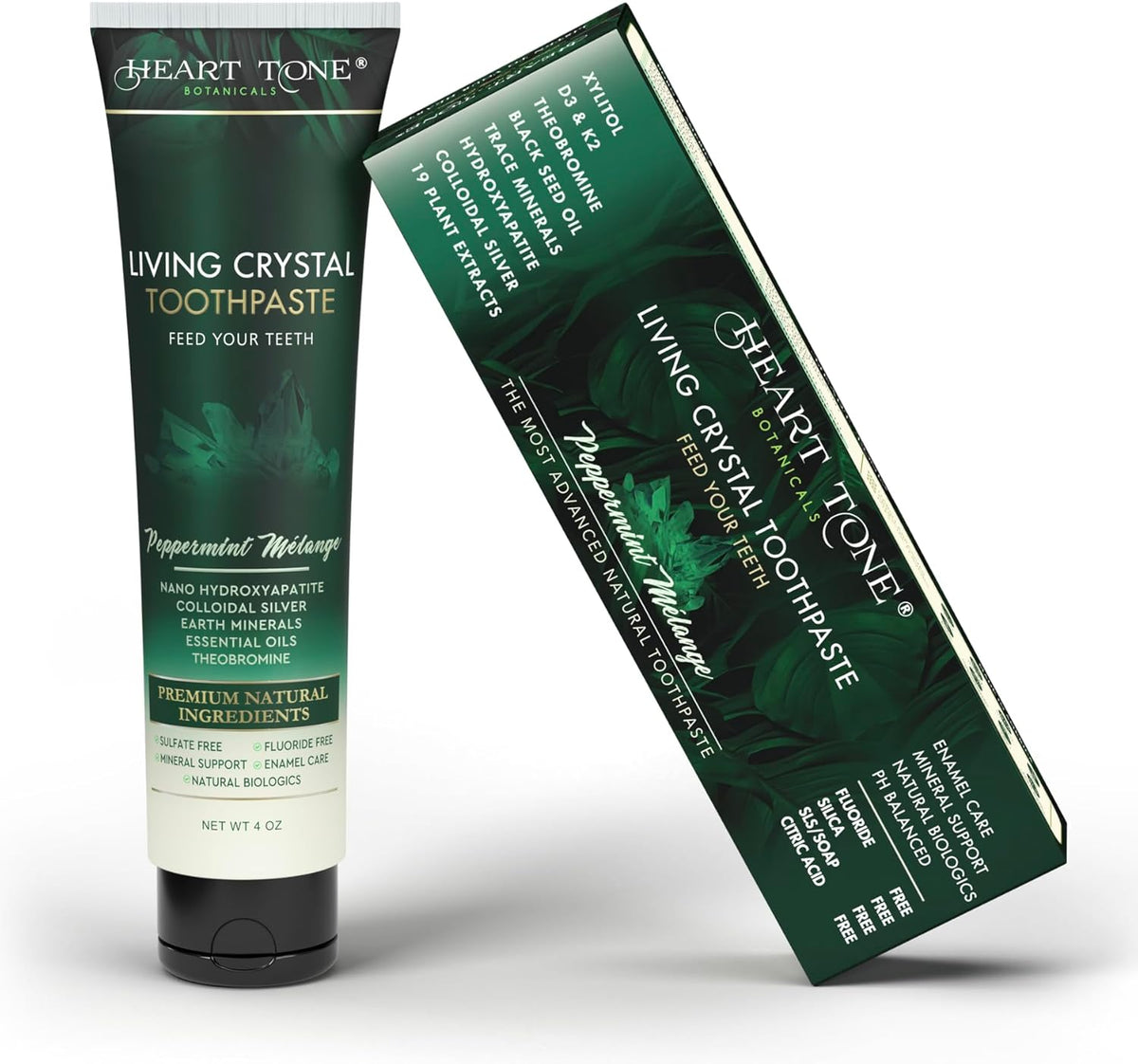
If you've spent any time in the natural oral care aisle — or down a rabbit hole of ingredient research — you've probably come across xylitol toothpaste. Brands feature it prominently. Holistic dentists recommend it. Parents reach for it because the word "xylitol" feels safer than "sodium fluoride."
But what does xylitol actually do in your toothpaste? How strong is the science? And is it enough on its own?
This is the honest breakdown.
What Is Xylitol (And Why Is It in Toothpaste)?

Xylitol is a naturally occurring sugar alcohol found in small amounts in fruits, vegetables, and hardwood trees like birch. Unlike table sugar (sucrose), xylitol is a non-fermentable sweetener — which is precisely why it has become a popular ingredient in natural toothpastes and oral care formulas designed without fermentable sugars.
Xylitol is also associated with mild saliva stimulation. More saliva contributes to a more comfortable moisture balance in the mouth throughout the day.
What the Science Actually Shows
The research interest in xylitol as an oral care ingredient has grown consistently over the past few decades. A few things the literature consistently points to:
- Format and frequency matter: Xylitol has been studied across multiple delivery formats — gum, rinse, and toothpaste. Reviewers note that frequency and concentration both matter, and that toothpaste provides shorter contact time than gum or lozenges, which affects the overall outcome.
- Surface feel: Many users note that xylitol-containing formulas leave teeth with a cleaner, less sticky feeling after brushing — a sensory quality that has contributed to xylitol's popularity in natural oral care.
- Mineral support: Xylitol does not directly provide mineral support to enamel. Its contribution is as a non-fermentable sweetener — not as a calcium- or phosphate-based mineral ingredient.
- Evidence limits: Reviewers consistently note that results vary across individuals and delivery formats. The ingredient's contribution depends significantly on how often and how consistently it's used.
The takeaway: xylitol is a legitimate oral care ingredient with a meaningful track record. But it works best as part of a complete formula, not as a standalone solution.
What Xylitol Toothpaste Can and Can't Do
Here's an honest look at what xylitol contributes — and where it falls short on its own:
What it CAN do:
- Provide a non-fermentable sweetener that makes toothpaste palatable without fermentable sugars
- Contribute to a comfortable moisture balance in the mouth
- Leave teeth feeling clean with a fresh, pleasant taste
- Help reduce the stickiness of surface plaque, supporting a cleaner-feeling tooth surface
- Offer a comfortable daily brushing experience for those who find conventional formulas harsh
What it CAN'T do (or does weakly on its own):
- Directly provide mineral support to enamel — xylitol is a sweetener, not a mineral ingredient
- Replace a complete oral care formula that includes a full range of botanical and mineral ingredients
- Deliver the same oral care experience as longer-contact xylitol formats like gum or lozenges
- Cover the full range of what a well-rounded natural toothpaste can address
This is why the most thoughtfully formulated xylitol toothpastes pair xylitol with other carefully selected ingredients that address what xylitol alone can't.
What to Look for Beyond Xylitol
If you're choosing a natural toothpaste and xylitol is on the label, look at what else is in the formula — because those companion ingredients often determine the overall quality of the daily experience:
Micro-Hydroxyapatite (mHAp): Hydroxyapatite is the primary mineral compound found naturally in tooth enamel. In oral care, micro-sized spherical hydroxyapatite has been used as a gentle, non-abrasive mineral ingredient — with a particularly long tradition of use in Japanese oral care. It's a natural mineral alternative to synthetic additives.
Theobromine: Found naturally in cacao, theobromine has attracted considerable attention in the oral care world and has built a following among those seeking fluoride-free formulas. It contributes a clean, pleasant sensation and is a distinctive botanical component in premium natural toothpaste blends.
Colloidal Silver: A traditional ingredient used in oral care for generations. Colloidal silver contributes a clean, comfortable character to toothpaste formulas without alcohol or harsh synthetic additives — and carries a long history of traditional use in personal care.
Aloe Vera: Known for its soothing, non-drying properties, aloe vera has been used in traditional oral care for centuries. In toothpaste, it supports a comfortable, gentle brushing feel — particularly valued by those who find conventional formulas irritating on oral tissues.
The Living Crystal Standard
At Heart Tone Botanicals, xylitol is part of a broader philosophy: choose ingredients that work with the mouth rather than against it. Living Crystal Toothpaste includes organic xylitol alongside micro-hydroxyapatite, theobromine, colloidal silver, earth minerals, and botanicals in a pH-balanced formula — all without fluoride, SLS, or synthetic foaming agents.
The result is a toothpaste built around what teeth encounter in nature. Clean, functional, and designed for consistent daily use — a fresh-feeling brushing experience without the synthetic additives found in conventional formulas.
For a complete oral care ritual, pairing Living Crystal with our Restorative Mouth Rinse gives you both the brushing foundation and a full botanical rinse — 22 ingredients including farm-grown aloe vera and colloidal silver — working together throughout your daily routine.
Practical Guidance: Getting the Most from Xylitol Toothpaste
Whether you're using a xylitol-forward formula or one where xylitol plays a supporting role, a few habits make the biggest difference:
- Brush twice daily, consistently. The benefits of xylitol and companion oral care ingredients build with regular, consistent use. Skipped sessions reset any progress you've built.
- Don't rinse immediately after brushing. Letting the formula stay on your teeth for a moment before rinsing gives all the ingredients — including xylitol, mHAp, and theobromine — more contact time. This is a simple habit change that many people find makes a noticeable difference.
- Consider your full routine. A toothpaste alone only goes so far. Oil pulling, a botanical mouthwash, and mineral-rich dietary choices all compound the benefit of a quality toothpaste.
- Wait 30 minutes after eating before brushing. After acidic foods and drinks, enamel can be temporarily more sensitive to abrasion. Letting saliva do its natural work first is a habit many oral care professionals recommend.
The Bigger Picture
Xylitol toothpaste marked a genuine step forward in natural oral care — moving toward sweeteners that don't work against a healthy oral environment. That's a meaningful shift.
But the best natural oral care formulas have kept going. The range of carefully selected ingredients available in fluoride-free formulas — micro-hydroxyapatite, theobromine, botanical blends — has expanded considerably, giving those seeking alternatives to conventional toothpaste more to choose from than ever before.
Xylitol is a solid ingredient. It's just not the whole story anymore.
If you're ready to see what a complete botanical approach to oral care looks like, explore the Heart Tone Botanicals oral care collection — everything we make is fluoride-free, SLS-free, and built around the same philosophy: clean ingredients that actually do something.

Leave a comment
This site is protected by hCaptcha and the hCaptcha Privacy Policy and Terms of Service apply.