












The Word "Botanical" Is Everywhere. The Farm Behind It Usually Isn't.

Walk down the personal care aisle and you'll see botanical claims everywhere. "Infused with aloe." "Botanically enriched." "Plant-based." These words sound meaningful — but they rarely come with a story about where those plants came from, how they were grown, or what the journey from field to formula actually looked like.
That's the gap that farm-to-bottle beauty tries to close.
"Farm-to-bottle" isn't just a marketing phrase. At its best, it's a supply chain commitment: knowing exactly where key botanical ingredients are grown, and keeping that connection as close as possible. For brands that live this in practice, it changes what goes into the formula — and what doesn't.
Where Most Botanical Ingredients Actually Come From
Most personal care brands, even thoughtful ones, source their botanical extracts through ingredient distributors. This is standard practice. A distributor aggregates ingredients from many sources, processes them into standardized extracts, and sells them at scale. There's nothing inherently wrong with this — but it creates distance.
When a brand works through a distributor, they're relying on that distributor's quality controls, sourcing standards, and transparency. They may not know which country the aloe came from, whether pesticides were used, or how the plant was processed. They receive a specification sheet, not a relationship with a grower.
A farm-to-bottle brand operates differently. Either they grow key botanicals on their own land, or they source directly from farms they know personally. The result is traceability — the ability to answer the question where did this come from? with a real address and a real story.
Why Growing Conditions Change What's in the Bottle
A plant is the product of its environment. The soil it grows in, the water it receives, whether synthetic fertilizers and pesticides were used in its cultivation — all of these affect the quality and character of the plant material that eventually becomes a botanical extract.
Aloe vera, for example, has a very different sensory profile depending on how it was grown and processed. Aloe cultivated on a small permaculture farm without synthetic inputs, freshly extracted, contributes a light, cooling quality to a formula. Commodity-grade aloe processed from large industrial fields — where yield is the primary concern — is a different material in practice, even if the ingredient name on the label reads the same.
The same is true of neem, moringa, and the many other botanicals with long traditional histories in personal care. Growing conditions, harvest timing, and extraction methods all matter — and they're details a brand can only speak to if they're actually connected to the source.
Three Botanicals With Long Traditions in Personal Care
Aloe Vera
Aloe vera has been cultivated and used in traditional personal care for thousands of years. Prized for its light, water-rich texture, fresh aloe gel leaves skin feeling hydrated and comfortable without heaviness. It has long been a staple in facial care, body care, and botanical rinse formulas — one of the few ingredients with deep traditional roots across multiple continents and cultures.
Neem
Neem is one of the most extensively used botanicals in Ayurvedic tradition, where the leaves, oil, and bark of the neem tree have been part of daily personal care rituals in South Asia for centuries. In contemporary personal care formulas, neem extract and neem CO2 are valued for their distinctive earthy profile and their long history in botanical body care — from natural deodorants to hair care products.
Moringa
Moringa — sometimes called the drumstick tree in regions where it has been cultivated for generations — yields a seed oil with an exceptionally light, fast-absorbing texture. It has a long history in traditional personal care across parts of Africa and South Asia. In modern formulas, moringa oil and moringa leaf extract are valued for the silky, comfortable finish they leave on skin and hair.
What to Look For When a Brand Claims "Farm-to-Bottle"
The phrase "farm-to-bottle" is not regulated, which means it can be used loosely. Here's how to evaluate whether a brand is actually delivering on the claim:
- Named ingredients with sourcing context. A brand serious about traceability will tell you which specific ingredients come from their farm or from a directly sourced partner — not just that their products contain "botanicals."
- A real place. A genuine farm-to-bottle brand can point you to a location. A farm name, a region, an address. Not just "grown in nature."
- Honesty about what is and isn't farm-sourced. Complex formulas often include both farm-grown and supplier-sourced ingredients. A transparent brand will distinguish between them rather than implying that everything in the bottle came off their land.
- Minimal processing between field and formula. Cold-pressed oils, CO2 extracts, and fresh-extracted leaf juices preserve more of the plant's original character than high-heat industrial processing. Farm-to-bottle brands tend to be more specific about extraction methods.
- Small-batch or handcrafted production. Not a requirement — but smaller batches typically allow closer oversight of every ingredient that goes in.
At Heart Tone Botanicals: The Vero Beach Farm
JD and Christina built Heart Tone Botanicals around a simple idea: make personal care products from ingredients they grew themselves. Their family farm in Vero Beach, Florida is where aloe vera, neem, moringa, and soursop are cultivated — without pesticides, without synthetic fertilizers, on regenerative land.
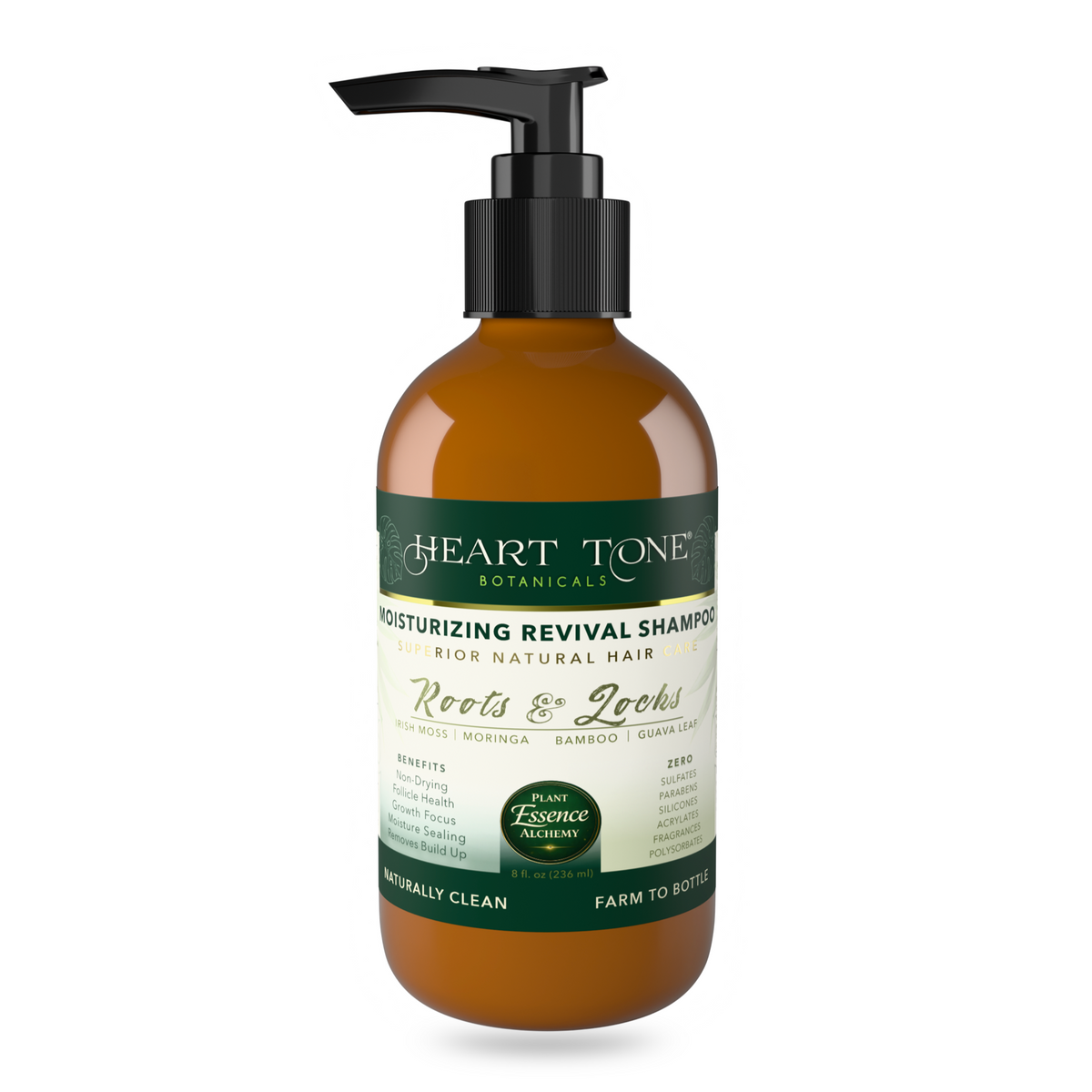
Those farm-grown ingredients show up directly in the products. The aloe vera leaf juice in the Restorative Mouth Rinse is sourced from the Vero Beach farm. The moringa and neem leaf extracts in the Roots & Locks Moisturizing Revival Shampoo and Roots & Locks Conditioner come from the same land. The neem CO2 in the Eden's Garden Bioactive Deodorant traces back to the farm as well.
The other 30+ botanical extracts in these formulas are sourced from trusted supplier partners, not the farm itself. JD and Christina are clear about that distinction — what's farm-grown is specifically aloe vera, neem, moringa, and soursop. That specificity is what makes the claim honest when it appears on a label.
One product takes the farm connection as literally as possible: the Premium Egyptian Loofah Sponge is grown on the Vero Beach farm itself, harvested without pesticides or synthetic inputs, and shipped to you with no middlemen and no distributors involved at any step.
The Ancient Organic Soap Aloe Fields is handcrafted with farm-grown aloe vera, cold-pressed organic oils, and a botanical herb profile — a simple, traceable formula in bar form.
Why It Matters Beyond the Bottle
Choosing a farm-to-bottle brand means something beyond what goes on your skin or in your hair. It supports a different model of personal care production — one where the distance between grower and customer is short, where the growing practices are legible, and where a brand's claims about their ingredients can be verified by pointing at the ground they came from.
It also reflects a different relationship with what "natural" means. Not a marketing decision. Not a distribution catalog choice. A specific place, a specific plant, a specific season — and someone who knows the difference.
If you're evaluating whether a brand's farm-to-bottle story is real, ask them to point to the farm. Ask which ingredients are actually farm-grown and which come from suppliers. A brand willing to answer that question honestly — rather than stretch the term across an entire product line — is worth your trust.
At Heart Tone Botanicals, the farm is in Vero Beach. The address is real. The botanicals are named. That's the standard farm-to-bottle beauty should be held to.


Leave a comment
This site is protected by hCaptcha and the hCaptcha Privacy Policy and Terms of Service apply.