












The Short Answer: Not All "Damaged Hair" Is Damaged the Same Way

If you've tried a rich conditioner and it barely made a dent, the formula might not be the problem — the diagnosis might be. "Damaged hair" isn't one condition. Heat damage, chemical damage, and mechanical damage each change the hair shaft differently, and they respond best to different routines. Knowing which one (or which combination) you're dealing with is the difference between a conditioner that finally works and one more bottle that sits half-used under the sink.

Here's how to tell the three types apart, and where a botanical shampoo and conditioner routine genuinely fits into caring for each one.
Heat Damage: Concentrated at the Ends, Worse With Styling
Heat damage comes from flat irons, curling wands, and high-heat blow drying. It tends to show up gradually and concentrate wherever the tool touches most — usually the mid-lengths and ends.
Signs to look for:
- Straight, limp pieces mixed into otherwise curly or wavy hair
- Dry, brittle texture that feels different from the rest of the strand
- Dullness and a rougher, less reflective look at the ends
- Breakage that seems to happen "for no reason" during detangling
Because heat damage is concentrated rather than spread evenly through the shaft, a rich, moisture-focused conditioner applied mid-length to ends — not scalp to root — tends to make the most visible difference. Lowering heat tool temperature and reducing frequency going forward matters just as much as what you put on afterward.
Chemical Damage: Throughout the Shaft, Often With Extreme Porosity
Coloring, bleaching, perming, and relaxing all work by chemically altering the hair's internal structure. Unlike heat damage, which mostly affects the outer cuticle, chemical processing changes hair from the inside out — which is why the effects tend to run the full length of the strand rather than staying at the tips.
Signs to look for:
- Hair that feels gummy or overly elastic when wet, and snaps rather than stretches back
- Rapid moisture loss — hair that feels dry again within hours of conditioning
- Color that fades or shifts unevenly faster than expected
- A rough, straw-like texture that runs the whole length of the strand, not just the ends
Chemically processed hair usually reads as high porosity, meaning the cuticle sits open and lets moisture in and out quickly. That calls for a conditioner formulated to help seal and soften after rinsing, applied generously and left on longer than a quick 60-second rinse. Spacing out chemical services gives the hair shaft time between processes, which matters more here than with any single product change.
Mechanical Damage: Isolated to Specific Points on the Strand
Mechanical damage comes from everyday friction and tension — rough towel-drying, tight hair elastics, aggressive brushing, sleeping on cotton pillowcases, or styles pulled tight at the same point night after night.
Signs to look for:
- Breakage clustered at one specific point, like where an elastic sits
- Split ends that seem to reappear quickly after a trim
- Thinning or snapping along the hairline in tightly styled areas
- Overall look of damage that's patchy rather than uniform
Because mechanical damage is about friction and tension rather than moisture loss, a conditioner that improves slip and detangling — so hair pulls less during brushing and styling — does more here than a heavier, richer formula. Switching to satin pillowcases and looser, lower-tension styles addresses the cause directly.
Why Mixing Types Is the Norm, Not the Exception
Most people dealing with "damaged hair" aren't dealing with just one type. Color-treated hair that's also flat-ironed weekly and pulled into a tight bun every day is managing chemical, heat, and mechanical stress at once — which is exactly why a single generic "repair" product so often underdelivers. Reading your hair's actual pattern of damage, rather than reaching for whatever the label promises, is what makes a conditioning routine effective.
What a Botanical Conditioner Can Realistically Do
It's worth being honest about the limits here: once hair has grown out past the scalp, it's no longer biologically active tissue, and no conditioner — natural or otherwise — can rebuild it from the inside. What a well-formulated botanical conditioner can do is work on the outside of the strand: smoothing the cuticle so hair feels softer and looks visibly shinier, improving slip so detangling causes less mechanical stress, and helping the strand hold moisture between washes so it feels less brittle day to day.
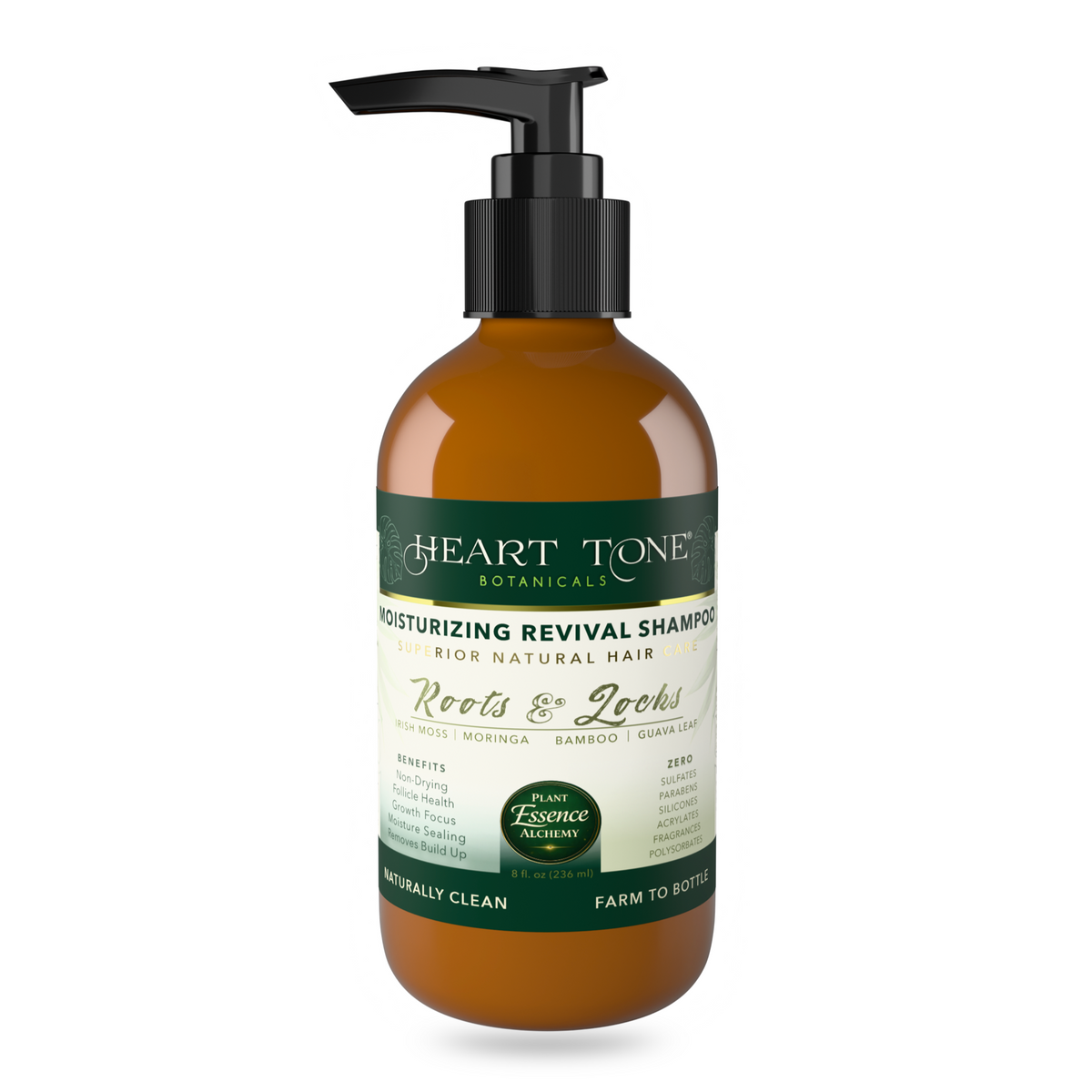
The Roots & Locks Moisturizing Revival Conditioner is formulated with papaya leaf, moringa leaf, neem leaf, and guava leaf extracts along with aloe leaf juice, coconut milk, and organic shea nut butter — ingredients chosen to seal, soften, and condition the strand rather than promise a structural fix that hair simply can't deliver once it's left the follicle. Pairing it with the Roots & Locks Moisturizing Revival Shampoo, which is formulated without harsh sulfates, keeps the cleansing step from undoing what the conditioner is working to restore.
The Bottom Line
Damaged hair isn't a single problem with a single fix. Heat damage concentrates at the ends, chemical damage runs through the whole shaft with high porosity, and mechanical damage clusters at specific points of friction and tension — and most real-world damage is some mix of the three. Identify the pattern first, then choose a conditioning routine that matches it: richer and end-focused for heat, deeply moisturizing and porosity-aware for chemical, and slip-focused for mechanical.
Ready to build a gentler wash day routine? Explore the Roots & Locks Moisturizing Revival Shampoo and Roots & Locks Moisturizing Revival Conditioner, or browse the full natural hair care collection for a complete botanical routine.

Leave a comment
This site is protected by hCaptcha and the hCaptcha Privacy Policy and Terms of Service apply.